


It happens every year about this time. We get a rush of customers with battery issues because of the rapid rise in temperature. It catches people off guard in Mount Airy because we’re used to the extreme cold weather, but never quite as prepared for the heat of summer. To help our customers be more prepared we’ve provided information, special cost savings on batter installation, and tips from our expert mechanics.
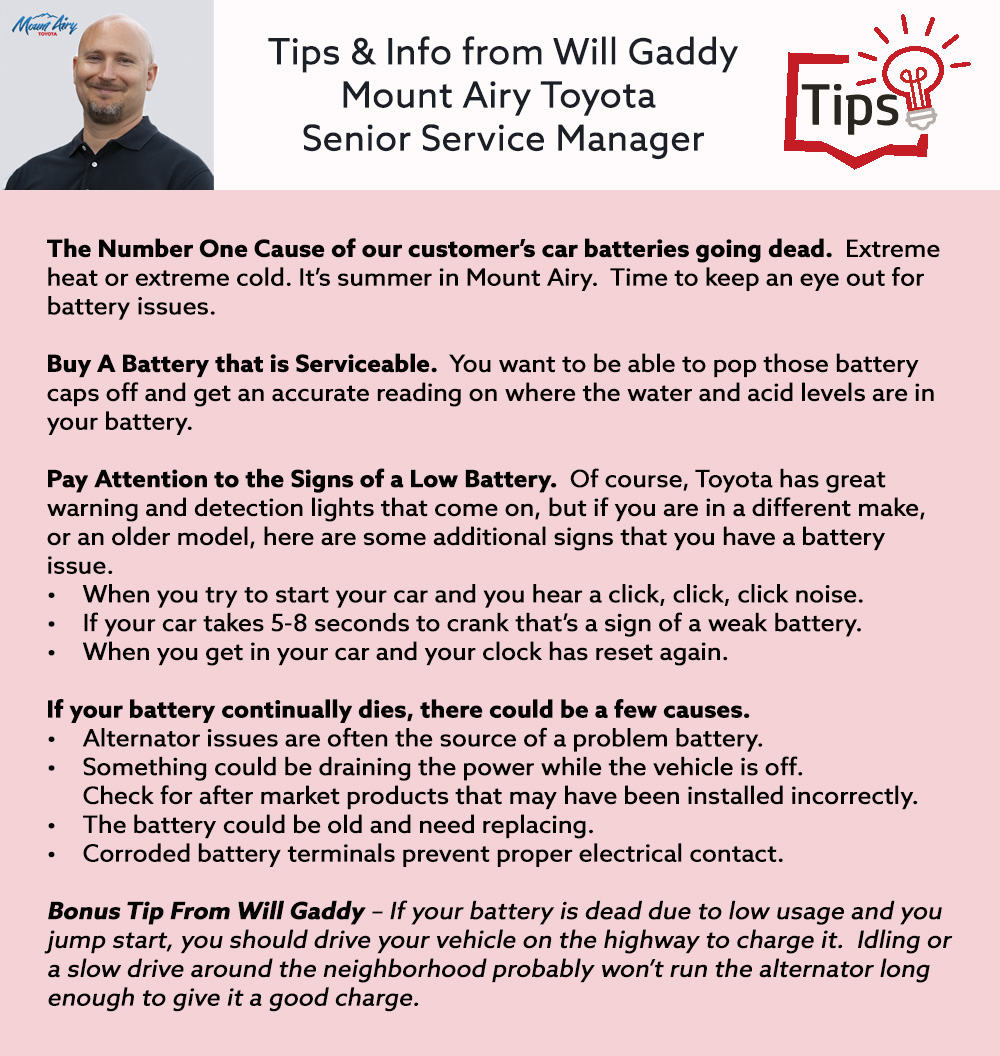
Dead Battery? Here’s What You Need to Know (Before It Happens to You)
We’ve all experienced that sinking feeling when you hop in your car, press the start button or turn the key, and nothing happens. No engine noise, no dashboard lights, no response at all. A dead battery can leave you stranded at the worst possible moment, whether you’re heading to work, picking up the kids, or preparing for a road trip.
Fortunately, a little knowledge goes a long way. Understanding how your car battery works, recognizing the warning signs, and knowing what to do in an emergency can help you avoid unnecessary stress. In this guide, we’ll break down everything you need to know about your vehicle’s battery so you can stay powered up and prepared for the road ahead.
What Exactly Does Your Car Battery Do?
Your car’s battery is much more than a simple power source. It plays a vital role in the operation of your vehicle from the moment you turn it on.
At its core, the battery provides the jolt of electricity needed to start your engine. Without it, your car simply won’t run. Once the engine is started, the alternator takes over to generate electricity and recharge the battery—but that initial burst is critical.
In addition to helping your vehicle start, the battery powers all of your electronic components when the engine is off. These components include:
- Interior and exterior lights
- Power windows and locks
- Infotainment systems and radios
- Climate control systems
- USB chargers and other accessories
If your battery is weak or dying, any of these systems may become sluggish, glitchy, or stop working altogether.
What To Do If Your Battery Dies
If you find yourself with a car that won’t start, there’s a good chance your battery is to blame. But don’t panic, there are a couple of reliable methods to get back on the road. If you’re near Mount Airy Toyota, give us a call or schedule service. We’re ready to help!
1. Try a Jump Start
Jump-starting is one of the most common and immediate solutions when dealing with a dead battery. You’ll need a pair of jumper cables and another vehicle with a fully charged battery.
Step-by-Step Instructions:
- Position the vehicles: Park the working car close enough to the dead car so the cables can reach, but make sure the vehicles are not touching.
- Turn off both engines and remove the keys.
- Connect the cables in the following order:
- Red clamp to the positive terminal (+) on the dead battery.
- Red clamp to the positive terminal (+) on the working battery.
- Black clamp to the negative terminal (–) on the working battery.
- Black clamp to an unpainted metal surface on the engine block or chassis of the dead car (not the battery).
- Start the working car and let it run for a few minutes.
- Try starting the dead vehicle.
Safety Tip: If you’re unsure of where the battery terminals are or how to properly connect the cables, consult your owner’s manual or call a professional. Incorrect connections can cause sparks, damage to the battery, or even injury.
2. Use a Portable Battery Jump Starter
A more modern solution is the portable battery jump starter, often called a “jump box.” These compact, rechargeable devices are a must-have for emergency preparedness.
Unlike jumper cables, a jump starter doesn’t require a second vehicle. Simply connect the clamps to your battery, turn it on, and start your car. Many models feature automatic polarity detection, spark-proof technology, and built-in safety alarms, making them very user-friendly.
Some jump starters also double as:
- USB phone chargers
- Flashlights
- Tire inflators or air compressors
If you travel frequently, live in a remote area, or simply want peace of mind, a jump starter is a smart investment.
Why You Should Check Your Battery Regularly
Like any other part of your vehicle, car batteries don’t last forever. On average, a battery will last between 3 to 5 years, depending on usage, weather conditions, and maintenance habits.
Extreme heat and cold are especially hard on batteries. In hot weather, internal fluids evaporate faster, leading to corrosion and reduced performance. In freezing temperatures, a battery’s ability to hold a charge can drop significantly.
That’s why routine battery checks should be part of your regular vehicle maintenance plan. At Mount Airy Toyota, our technicians can test your battery in just a few minutes during any scheduled service and, if the battery needs replacing, we can have it done in around 15-20 minutes.
We check:
- Voltage – Is your battery fully charged?
- Cold Cranking Amps (CCA) – Can it deliver the power needed to start the car in cold conditions?
- Overall health – Is your battery near the end of its useful life?
Pro Tip: Identifying a weak battery before it fails can save you the cost and inconvenience of a tow truck or emergency repair.
What Happens If You Don’t Replace a Weak Battery?
Ignoring the warning signs of a failing battery might seem harmless at first, until your car refuses to start when you need it most. A dying battery can cause a variety of problems beyond just an inconvenient breakdown.
Here’s what you risk by waiting too long:
- Car won’t start – Often at the worst possible moment (late at night, in bad weather, far from home).
- Strain on the alternator – The alternator may work overtime to compensate, potentially shortening its lifespan.
- Malfunctioning electronics – Lights, radios, navigation systems, and other electronics may start acting erratically.
- Roadside assistance costs – Towing, jump-starts, or emergency service calls can get expensive fast.
Prevention is always cheaper and easier than an emergency.
Signs Your Battery Might Be Failing
Car batteries usually don’t die suddenly. In most cases, they provide warning signs days or even weeks in advance. Recognizing these early symptoms can help you take action before you get stranded.
Common Signs of Battery Trouble:
- Slow engine crank – The engine takes longer than usual to turn over.
- Dim headlights – Especially noticeable when idling or using multiple electronics.
- Clicking noise – A rapid clicking sound when you turn the key or press the start button.
- Dashboard warning lights – Battery or check engine lights may flash intermittently.
- Electrical issues – Infotainment system resets, malfunctioning power windows or locks.
- Corrosion – White or blue powder around the battery terminals is a sign of acid leakage.
- Swollen battery case – This can be caused by overcharging or extreme temperatures.
If you notice any of these, it’s time to have your battery inspected by a professional.
Pro Tips to Make Your Battery Last Longer
While you can’t control everything, good maintenance habits can significantly extend your battery’s lifespan.
Here are some tips to help you get the most out of your car battery:
- Drive regularly: Short trips or long periods of inactivity can drain your battery. Try to drive your car at least once a week.
- Turn off electronics: Before shutting off the engine, turn off lights, radio, and climate control to reduce drain.
- Clean battery terminals: Dirt and corrosion can prevent proper current flow. Use a wire brush and baking soda solution for cleaning.
- Tighten loose connections: Make sure the cables and terminals are snug and secure.
- Avoid extreme temperatures: Park in a garage or shaded area when possible. Extreme heat and cold are tough on battery cells.
- Disconnect when storing: If you’re storing your vehicle for a long time, consider disconnecting the battery or using a trickle charger.
Final Thoughts: Stay Charged, Stay Confident
Your car’s battery might not be something you think about often—but when it fails, you’ll notice immediately. That’s why staying proactive is so important. A simple battery check today could prevent a major inconvenience tomorrow.
Whether you’re gearing up for a summer road trip or just commuting to work, take a few minutes to ensure your vehicle is ready to roll. Don’t wait for warning signs or bad weather to catch you off guard.
Need your battery checked or replaced? Come visit Mount Airy Toyota! Our expert technicians are here to help with quick, reliable battery inspections and replacements. We’ll make sure your Toyota stays powered up, safe, and ready for every mile ahead.