Blog

All Toyota Toyota Safety Camry Rav4 Tacoma Trucks Highlander Events Corolla Service 4Runner Tundra Electric Cars Auto News by Mount Airy Toyota Toyota History Toyota Technology Car Care Sienna Tires Avalon Mount Airy Toyota Dealer Toyotathon Trade- In Mount Airy Toyota Service Prius Supra Toyotacare Used Trucks Prius V Sequoia Used Cars C-HR Landcruiser SUV Crossover Employees End of the Year Savings Hatchback New Pickup Trucks Yaris ARB Safari Snorkel Explained Crown Difference between i-Force Max & i-Force Fox Internal Bypass QS3 Shocks Mount Airy Used Cars Old Man Emu Shocks Tacoma Onboard Air Compressor Toyota Hybrid Trucks & Cars Toyota Tundra Trailhunter vs TRD Pro TRD vs Trailhunter Suspension Venza What are Rock Sliders

Why Regularly Servicing Your Vehicle Saves You Money

It’s the beginning of a new year, which means it’s the perfect time to begin scheduling your vehicle’s regular maintenance with us at Mount Airy Toyota. Sure, maintaining your car might not sound like the most exciting resolution, but once you realize how much money regular service saves you, it gets exciting. It doesn't take a car enthusiast or a professional mechanic to know that once you purchase a car, old or new, it will need to be regularly serviced—tires, brakes, radiator, etc. But despite this understanding, many people today drive their vehicles into the ground, forcing them into an early grave. The truth is, it takes minimal effort to keep your car maintained and it can save you thousands of dollars and many headaches. From tire rotation to a quick oil change, you should follow the factory guidelines that have been laid out for your vehicle. These complicated machines we so dearly rely on need care and attention to keep them running well, and often—if not always—this care and attention costs money. A new radiator can be upwards of $500; tires and brakes each the same amount or more. Yeah, it’s not cheap owning a car, but it doesn’t have to break the bank if you plan ahead. So where to begin? Start by grabbing the manual from the glove box and opening it up for once. Reading your manual won’t turn you into an expert technician, but it will provide you with basic information about your specific vehicle that you need to know. Getting acquainted with your car is step number one in establishing longevity. Six Reasons to Regularly Maintain Your Car Beyond saving you tons of money by servicing your vehicle on a regular basis, there are plenty of other benefits. Check out these five big ones: Increased Safety. Cars these days have incredible safety features. From Lane Assist to a constant 360-camera view of your surroundings, it’s easy to see why drivers today feel pretty safe on the road. But what about when a tire blows when you’re moving at 75 miles an hour? Or, out of nowhere, your car’s temperature gauge shoots up into the red and your engine begins to smoke? What do you do then? Regular maintenance can keep these, and other, things from happening unexpectedly. Top Performance At All Times. Keeping everything under the hood, beneath the car, and around the rear in check won’t only keep your car running. It will keep it running well—like it did when you first bought it. Lower Cost of Fuel. A well-maintained car savors every drop of fuel. A vehicle that is struggling down the road, however, tends to burn a bit more, as well as spill a little along the way. When everything’s in its right place, doing what it was built to do, your car will run like a gem for as long as its combined parts continue to work together. Your Time Saved. It takes time to open the hood and check the fluids; it takes time to drive to Mount Airy Toyota and have a technician check out your water pump. But no matter how long it takes you to figure out how to even open your trunk, or no matter how many miles you live from Mount Airy, the time lost during a breakdown is always worse. Stranded on the side of the road, trying to get your car started in your own driveway while you are late for work, these time wasters have added stress that makes them even worse. Higher Resale Value. How can you tell someone buying a used car knows what he’s doing? The first question he asks is, “So what maintenance has been done to this car?” And if all your paperwork is current—showing regular maintenance year after year—he will have no problem paying top dollar for it. Cold Weather And Your Car It is important to take extra precautions in order to make sure your car runs correctly this winter. Extreme temperatures of any kind can do major damage to integral parts of your car. And if these things are not checked regularly, you could end up stranded. Or worse, you could end up needing a new vehicle. Here are four ways to keep your car alive and well during the cold winter months: Have your battery checked. Cool air paired with the jolting vibration of a running vehicle can cause your battery harm if it’s not up to par. Likewise, a car that sits in the cold weather all day can cause sluggishness and poor performance. And taking a long trip during any season can cause your battery to wriggle free from its connections. Once extreme weather is upon us, the best bet is to bring your car into Mount Airy Toyota for a quick battery check in order to make sure it is operating as it should. Have your coolant flushed. Your vehicle’s coolant fluid keeps the engine from overheating. You might not think it, but this is something very important during the winter. After long periods of time, the coolant can become contaminated and much less effective, and if you are driving long distances there is always the chance of your thermostat going bad. Once this happens, your engine doesn’t know when to cool down, which can cause it to heat up enough to do some permanent damage. It’s a good idea to have this fluid flushed and replaced with fresh coolant that can keep your car running smoothly. Check all other important fluids. Your car runs the best when the oil, transmission fluid, power steering fluid, and brake fluid are all topped off. These are relatively easy to check and should be looked at about once a week. If you have trouble finding any of these, contact a service member at Mount Airy Toyota and he can tell you exactly what to do. Get your heating system checked by a certified professional. Driving without heat in the winter is not comfortable—or safe. Even if you’re heating system seems to be okay, it’s a great idea to have it checked anyway. You never know when it could break down. And you do not want to be in the middle of a winter road trip when this happens. Avoid being stranded this winter by scheduling a maintenance appointment at Mount Airy Toyota today. Mount Airy’s Service Specials As we have seen, if you keep your vehicle maintained, it will last longer—years longer. This simple act of keeping things current can save you money and frustration, which is why we at Mount Airy Toyota are always offering service discounts. This winter, we have some extra special discounts that can keep your vehicle ready to handle even the toughest driving situations. Check out these deals: Oil and Filter Change. When the weather gets cold, so does the oil in your car. And if the oil is not fresh and pure, it becomes difficult for your engine to work with which, in turn, can cause some major damage in the long run. Right now we are offering a $29.95 regular oil change and $39.95 synthetic oil changes. Battery Replacement. Nobody wants to be left out in the cold due to a dead car battery. Extreme weather asks a lot of your car, and if your battery is old or corroded, it's simply not worth the risk of getting stuck out in the elements. This is why we are offering a battery replacement only at $95.95, which includes installation, a 60-month warranty, and an 18-month free replacement. Wiper Blade Replacement. With cold weather approaching, you can count on icy roads, which results in salt and sludge. Nothing makes your windshield wipers work harder than dirt and grime buildup. Stop in today and we'll even install them for you! Act now and get brand new blades for only $19.95. Brake Pad Inspection. Needless to say, your brakes are important. At Mount Airy Toyota, we can take a look at your existing brakes and let you know about how much longer you have until you will need new pads. And if you happen to need them right then, we can take care of that too. But act now to receive a FREE inspection! And if they are in need of changing, we have plenty of options to offer. The service department at Mount Airy Toyota wants to keep your used vehicle running as it should. Whether you need a part, repair work, or just someone to find and fix that clunky noise that won’t go away, our team can take care of you.   At Mount Airy Toyota, a technician will run diagnostics on your vehicle to make sure everything is working and running properly. And if something is not, he can pinpoint the exact issue and fix it immediately. But what if the vehicle wasn’t purchased from Mount Airy Toyota, will they charge me more to work on it? Absolutely not. As a matter of fact, if your old ride still has a factory warranty, you could actually save even more. Setting up an appointment is easy. Simply go to the dealership’s website navigate to the service department link, and click on the “Schedule Service” tab. From there you will be asked a few questions about your vehicle and availability to stop in. It’s really that easy.   What sort of things will your service technician look for? Anything that is not performing properly. He or she will also look for things that could go wrong in the near future. Intricate pieces like engine belts, hoses, and plugs. These all need replacing every so often, and if you wait until they completely malfunction you could be left stranded. And even worse, they could cause damage to other parts of your engine. So don’t wait until something breaks. It’s time to head into Mount Airy Toyota’s service department now. Let a professional look over your vehicle so that you can keep it running for years to come. There are plenty more rebates and discounted services currently being offered at Mount Airy Toyota. Check out our service website and find the discounted services you need before they expire!

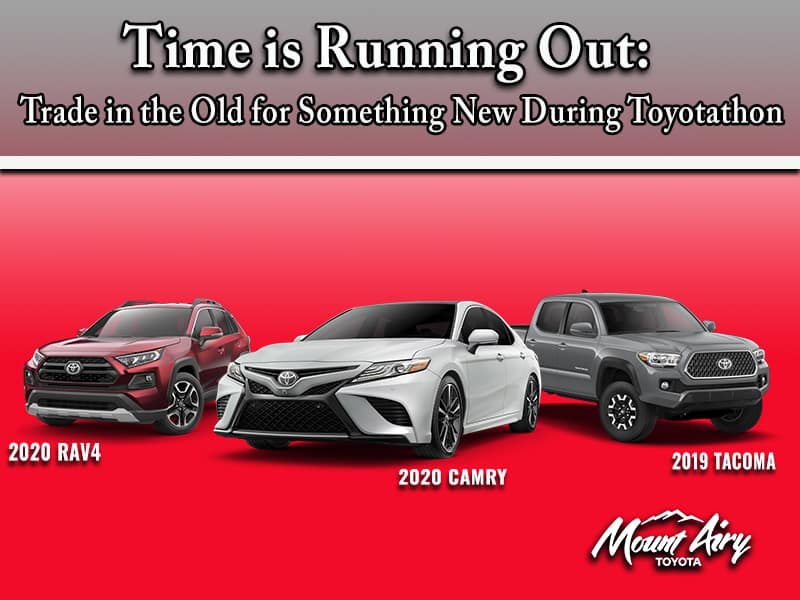
Time is Running Out: Trade in the Old for Something New During Toyotathon

We are at the tail end of 2019, which means it’s the perfect time to trade in your old vehicle for a new one here at Mount Airy Toyota. Toyotathon is here, but not for much longer so you had better act fast in order to take advantage of the best possible prices on a large inventory of Toyota vehicles. There is no easier and faster way to upgrade your Toyota than by trading it in for a newer, better one from Mount Airy Toyota. Our dealership is known for accepting a wide range of trade-ins, and we like to make the process as simple as possible. In no time, you can be driving away in a brand-new Camry, Corolla, Prius, or Avalon. Or, if you are looking for something more like the RAV4, 4Runner, Tacoma, or Sienna, we have those too. Reasons to Trade in Your Old Vehicle for a New One Yes, trading in your current vehicle when you purchase a new one at a dealership is the simplest way to go, but that’s not the only reason to go this route. From convenience to tax savings, here are several reasons why trading in your vehicle could be the best move for you to make: Ease First, let’s expand on the most obvious reason trading in your car can be a good decision: it’s easy and fast, especially compared to other methods. For example, if you opt to sell your car privately, you usually have to handle any major and minor repairs, take good photos of the car, meet with multiple prospective buyers, haggle the price, and complete a ton of paperwork. If you’ve decided to buy a new vehicle, however, you simply walk into the dealership and explain to a team member that you want to trade in your current vehicle. The dealership will do the heavy lifting from that point. Typically, someone in the pre-owned vehicle department will take your current car for a test drive and perform an appraisal. The dealership will then bring an offer to you, and if you accept, you will sign the title over. That’s it. Convenience When you trade-in your vehicle and buy a new one from the same dealership, everything can be handled at the dealership itself. Selling through a third party or at a different dealership usually requires you to drive to multiple places, such as the dealership you’re selling your car to, the dealership you’re purchasing the new car from, the DMV, and so on. Reduce paperwork! There is so much paperwork involved when selling a vehicle, and if you sell across state lines, it can become downright overwhelming. However, if you trade-in your car at a dealership, they will handle all the paperwork on the spot. Since car dealers are well-versed in such transactions, they will know how to quickly file each document to the corresponding DMV, and all you’ll have to do is sign on the dotted line. Lower Price on New Car Another advantage to trading in your vehicle is the lower price you will receive on the new one. This is particularly the case if you own your old car outright. That is, if the dealer purchases your old vehicle for $8,000, and your new vehicle costs $29,000, you will only be paying or getting a loan for $21,000. This also means that you will pay less sales tax on the new car since the final price is thousands of dollars less. Compatibility with Existing Loan Many people think you can’t trade in your vehicle if you have an existing loan that you are still paying down. Here’s the good news: You can! And it’s actually a common occurrence for dealers to acquire old loans as part of a new car transaction. Typically, a dealership will pay the remaining balance of your loan, acquire the title directly from the lender, and if you have equity in the car, that amount will go toward the down payment for your new car. Some consumers are afraid to trade their old vehicle into a dealership if they owe more on the loan than the vehicle is worth. However, while being upside down in a loan may not bring you the most money, trading it in is still the easiest and least stressful method of getting rid of your old vehicle. Tax Savings Trading in your vehicle has the potential of saving you a significant amount of money. In many states, you are only required to pay sales tax on the final sale price of your new vehicle after it is reduced by the amount that you and the dealership agree upon for the trade. Then, you only have to pay sales tax on the remaining net cost—or final price—of the new vehicle. So, if the sale price of your new car is $24,000, and your trade-in is valued at $7,000, you will pay $17,000 on the new car, and you will only pay taxes on the $17,000. What’s Special About the End of the Year? In the Fall, many automobile manufacturers begin to roll out the next year’s models. During this time, dealerships often have a lot of inventory, which means two things for consumers: There are a lot of models to choose from. Dealerships will want to make room for the newer models coming in. At Mount Airy Toyota, we have hundreds of 2019 and 2020 Toyota models to choose from. And since we need to make room for even more 2020 models streaming in, we need to move out the 2019s. In other words, we are ready to negotiate a good deal on trade-ins, especially for the 2019 models! And don’t forget about Toyotathon, as you can score the biggest deals on new Toyota models through the end of the year. Other Factors that Determine the Best Time to Trade-In While the end of the year is a great time to trade in your old vehicle for a new one, there are other circumstances that indicate it’s time for a change: Vehicle Depreciation Depreciation is a big factor in whether you should trade in your vehicle now or later. All cars lose value once they leave the dealer lot. What you want to consider is how long you have owned the vehicle and whether it was new or pre-owned when you originally purchased it.   The fastest depreciation typically occurs during the first three years of owning a vehicle. So, if you bought your vehicle new, it’s best to wait until the depreciation rate begins slowing down (for some vehicles it doesn’t slow down until four or five years of ownership, so research your particular make and model). You will come out better in the trade-in once your vehicle’s depreciation has leveled off.   If the vehicle in question was pre-owned when you bought it, chances are the depreciation has already leveled off. And, since age and mileage are sometimes factored in during a trade-in, it’s usually best to trade the vehicle in as soon as you can. Major Repairs When your old vehicle needs a repair that will cost more than what the vehicle is worth, it’s a good time to trade it in. Sure, you should take care of little fixes, but get an estimate for the repair needed, and keep in mind that dealerships can do major repairs for less than you would have to pay. Safety and Reliability Anytime you have a vehicle that gives you safety or reliability concerns, consider trading it in. This could be due to an accident, age, mileage, or any other factor that compromises the safety or reliability of the vehicle—and, more importantly, those inside of it. Everyday Needs There may be nothing wrong with your vehicle, but if your daily needs have changed, it still might be time to trade in the vehicle for a new one. Perhaps your family has grown and you need to upgrade to a full-size SUV or minivan. Or, maybe you’re commuting a longer distance for work than you used to and will be better suited with a more fuel-efficient car. Quick Tips for Getting Prepared If you’ve decided to go the trade-in route while purchasing your new vehicle, here are some simple tips to help you get started: Research Your Vehicle Knowing what your car is worth is important when it comes to negotiating its trade-in value. Go online and research the value of your car; Kelly Blue Book is a great source for this. Be sure to include all the information in your search, including the make, model, year, mileage, and condition of the vehicle. It also might make a difference if the vehicle has been in an accident. Once you get the information, bring a printed copy or show a digital copy to the car dealer you’re working with. Clean Up the Vehicle It’s important to fix your car up as nice as you can before bringing it into the dealership. No, you don’t need to worry about having major repairs done since the dealership will take care of that. However, cosmetic issues (e.g., scratches on the bumper, dings on the panel, etc.) can bring down your trade-in value. If your vehicle has cosmetic damage like this, get a repair estimate from a trusted repair shop so you can determine if it’s worth fixing.   Moreover, it never hurts to do some simple cleaning before you present your car to the dealer. Be sure to run it through a car wash and vacuum the interior (shampoo it if it’s especially dirty).   It’s hard to go wrong by trading in your old vehicle for a brand-new Toyota model. Here at Mount Airy Toyota, we’ll make the process easy and convenient, and we’ll work with you if you have a loan that you still owe money on. Plus, it’s the end of the year, which means some crazy deals are happening for 2019 and 2020 models!   If it’s time for you to ditch your old car for a new one, give us a call at (336) 786-2118 or drop by our dealership for a test drive. We look forward to seeing you!

Let’s Be Honest: Why Buy During the Toyotathon?

Mount Airy Toyota is rocking the very best deals of the year during The Mount Airy Toyotathon! Toyota doesn’t promote huge sales all year long like many other car brands.  Our customers know that the best savings opportunities come at the end of the year Toyotathon event! At the top of the bargains this year, is the 2020 Toyota Rav4 on sale now thru November 30th for as low as $24,949. Why Are the Specials So Great! New Models - With a new year just around the corner, new 2021 models are rolling off the transport trucks.  We know many of our customers wait for the new models to roll in each year.  The more we pre-sell, the more cars are sent from the factory. Tax Considerations - We still have a huge inventory of 2020 models on the lot.  The dealership owner has to pay taxes on those vehicles so we need to get them off our lot before the clock strikes midnight.  Out with old, in with the new! Sales Goals - Next, the Toyotathon beats all other sales during the year because it is our very last chance to meet our sales goals. To reach these goals, we need your help. With just a few weeks left in 2020, there is not much time left before we will be ready to set new goals. This means it is time to crank up the deals and give it our best shot by offering the very best deals and incentives. Customer Loyalty – We know our customers wait for this event each year and we want them to get the very best brand on the market at the prices they can afford.  Why not take advantage and buy that new car you’ve always wanted during Toyotathon! Financing The Toyotathon doesn’t just mean great prices, it also means great financing. Financing is a huge part of the car buying process. How will you be financing your next car? Are you buying or leasing the vehicle? Will you be paying for the vehicle up front, putting a large down payment on the vehicle, getting a full loan? These are important things to think about when it comes to financing your vehicle. Depending on whether or not you’re getting a loan and making monthly payments, your interest rate makes a big difference. During the Toyotathon, the 2020 Rav4 can be financed for as low as 0.0% annual percentage rate. The 2020 Rav4 The 2020 Toyota Rav4 has been redesigned to put past models to shame. This vehicle has a bold new design along with some great new highlights. This powerful, luxury, quality car is nothing shy of impressive. This stunning vehicle is one of a kind and lives up to the Toyota reputation. Exterior The all-new exterior of the 2020 Toyota Rav4 solidifies its reputation as being one of the most sporty compact SUVs in the industry. A few other notable features include: Two Tone Paint Scheme- This paint gives the Rav4 the dramatic and sharp look that makes it stand out among other competitors. TRD Off-Road Trim- This not only includes bigger tires, but it also means off-road suspension to match the increased torque. Sport- Tuned Suspension- exclusive for XSE models. This give the Rav4 a more aggressive spring rate and retuned shocks. LED Headlights and Taillights- illuminate your path with these extraordinary lights giving both an exotic design and a brightness that lights up the night. The 2020 Toyota Rav4 has fully integrated LED Daytime Running Lights to add a special pop to its appearance. Standard Toyota Safety Sense Safety always comes first when it comes to Toyota vehicles. The engineers of the Toyota brand have a strong reputation of making sure safety is at the forefront of their model. The 2020 Rav4 takes safety to the next level, giving drivers peace of mind when they get in the vehicle and drive down the road. Being a car that takes safety first, the 2020 Toyota Rav4 is the perfect vehicle for new drivers or as a family starter vehicle. A few Toyota safety features include: Toyota Safety Sense 2.0 Blind Spot Monitoring Rear Cross Traffic Alerts Automatic High Beams An Overhead Camera- providing a 360- degree view Performance It’s all about performance and the 2020 Toyota Rav4 won’t let you down with its totally revamped system, which allows for the very best performance. The new Rav4 is ranked #1 in MPG combined with 30 MPG thanks to the two impressive engine choices: an all-new 2.5-liter Dynamic Force 4-cylinder engine and a 2.5-liter Atkinson-Cycle engine. Both have the D-4S direct-injection system; this helps create a customizable driving experience. Enjoy a comfortable ride with the all-new double-wishbone style multi-link rear suspension and the independent MacPherson Strut front suspension. The new Rav4 also has an 8-speed automatic transmission with intelligence and a 3-mode driving switch. The driving switch allows drivers to switch between ECO, Normal, and Sports mode. Interior Comfort and Technology The interior of the new 2020 Toyota Rav4 was design just for you by the top engineers. This driver-focused design has the best comfort and technology to make every ride enjoyable. Whether you have short commute or are travelling long distances, this vehicle creates long lasting comfort and entertainment so you and your guests can enjoy the ride.  With the steering wheel controls, everything you need is right at your fingertips to keep you safe and focused on the road. A few of the key features include: 8-inch Multimedia Touch-Screen 10-inch Color Head-Up Display 7-inch Color Multi-Information Display 12 V Power Outlet Wi-Fi Connection Remote Connect The Hybrid If you are eager to help the environment and get even better gas mileage, the 2020 Toyota Rav4 Hybrid is a great option for you. This hybrid vehicle is just like the classic vehicle with great performance, style, and comfort. The Hybrid runs on the Dynamic Force Engine. The Hybrid vehicle has an even better gas mileage than the standard, coming in at a whopping 40 miles per gallon. You just can’t beat that! The Hybrid battery is strategically placed to maximize efficiency. The battery is a lighter weight and provides larger trunk space. Overall, the best time to buy a new car is now! The cat is out of the bag and now that you know our secrets for hosting these sales, we invite you to run with it. Take advantage of the huge sales and buy a new 2020 Toyota Rav4 during the Toyotathon. Whether you are looking for a 2019 or 2020, we have deals on everything at Mount Airy Toyota.   Test drive a sedan, a crossover vehicle, a SUV, or a truck. The special Toyotathon event is running now through November 30 th. Call 336-786-2118 or come by Mount Airy Toyota to take a test drive in your Toyota vehicle of choice.

Sibling Rivalry: the Toyota RAV4 vs. the Toyota Highlander—Which One to Buy the Family for Christmas

It’s no secret SUVs have become the vehicle of choice for a wide variety of drivers. The popularity of sport-utility vehicles is largely due to the fact they are equally family-friendly, sporty, rugged, smooth, fast, comfortable, luxurious, and so much more. At Mount Airy Toyota, we have two of the best and most beloved SUVs on the market today: the Toyota RAV4 and the Toyota Highlander. Which one should you buy this Christmas Season? Here is a quick comparison of the RAV4 and Toyota Highlander—our two favorite siblings! Both SUVs are equally formidable and fit for any family, and both come with varying features that are sure to wow anyone looking for a new car this Christmas. Let’s Talk Space The most noticeable difference between the RAV4 and Highlander is in the category of size. Both are roomy and comfortable, but the RAV4 is a bit smaller than its big brother, the Highlander. The RAV4 easily seats five people, while the Highlander is capable of holding up to eight passengers. Regardless of how many people you need to fit inside, both vehicles offer tons of space for an average-sized adult in the second row, while the third row (in the Highlander) is best suited for children and young adults. Let’s look specifically at the Highlander: All three rows of seats sit upright and the total room offered in the trunk area is 13.8 cubic feet. This means there is plenty of room for groceries, sports equipment, school supplies, etc. even when the Highlander is at full capacity. And if you happen to need even more cargo space in the back, the entire third row of seats can be stowed to allow for a total of 42.3 cubic-feet of space—perfect for a long road trip or vacation. Wait, need even more storage space? Stow the second row, in addition to the third, to create 83.7 cubic-feet of open area. The RAV4: Though there is less cargo space in the RAV4, it’s still plenty for the average family. With all five seats occupied, there is 38.4 cubic-feet of open room in the back. By taking away the second row, you can open the area up to 73.4 cubic-feet of cargo space, which is only ten feet less than the Highlander with all three rows intact. A Look Under the Hood A notable feature of these Toyota SUVs is their raw power. Both the RAV4 and Highlander pack a punch due to the caliber of engine resting under the hood. Let’s start with the RAV4: The Toyota RAV4 comes with a 2.5-liter, four-cylinder engine that provides 176-horsepower and 172 pounds-feet of torque. This is just enough power to put this SUV ahead of the game and to allow for 23 miles-per-gallon city and 30 mpg highway. And if you need to use your new RAV4 for towing, it can pull up to 1500 pounds—that’s easily a snowmobile or four-wheeler. For those looking to go a little lighter on the use of fuel, Toyota offers a hybrid version of the RAV4 that has a 2.5-liter engine that gives 34 mpg city and 30 mpg highway. The Highlander: Big brother needs a bigger engine, and the 2.7-liter, four-cylinder engine gets the job done. It has 185 horsepower and 184 pounds-feet of torque that is paired with a six-speed transmission and Snow Mode, which provides improved handling for snowy and icy conditions. The Highlander comes as front-wheel-drive only and gets 20 mpg city and 24 highway. And it can tow up to 1,500 pounds without a problem. If you need more power in the Highlander, Toyota also offers a 3.5-liter, V-6 engine that has 295 horsepower and 263 pound-feet of torque. This model comes in either front- or all-wheel drive. To save money on gas, go with the front-wheel drive, which gets you 21 mpg city and 27 highway. And for towing, there is a capacity of up to 5,000 pounds. Which Works for You? The best thing about both the Toyota RAV4 and Toyota Highlander is their unmatched reliability. Through the years, both SUVs have won plenty of awards and have even been rated by U.S. News & World Report as two of the most reliable SUVs on the market today. The Christmas season is the perfect time to buy a RAV4 or Highlander, and at Mount Airy Toyota, we can help you narrow down which is the perfect fit for you and your family. Come see us today!

Toyotathon is Coming to Town!

The most wonderful time of the year has arrived. ‘Tis the season for—you guessed it...Toyotathon! While Toyota offers several impressive sales and savings opportunities throughout the year, none of them come close to the mega deals you can get through this end-of-year sale. Toyotathon is when inventory levels and factory incentives come together for one big blowout sale. And as one of the premier Toyota dealers in North Carolina, we’ve got the inventory here at Mount Airy Toyota. There are tons of new vehicles in our lot that have been waiting for just the right home. We also have big incentive. As more of the new 2020 models roll into our showroom, we must make room. This will inevitably result in hundreds of 2019 and 2020 Toyota models going home this Toyotathon at a steal. Has the new Tundra been on your wishlist for some time now? We’ve got ‘em. How about the new 4Runner or Camry? Or maybe you’ve been dreaming of getting your hands on the new souped-up Supra? Yes, we have all those too—and so much more. As incredible as these Toyotathon deals are, however, don’t expect them to last. Our inventory is whittling down as we speak, so make sure to come by for a test drive soon! Now, to get some ideas flowing for what your next big gift to yourself could be, we’ll take a look at the some of the top-selling Toyota models available today. But first, here’s a brief background on the Toyotathon event: TOYOTATHON EXPLAINED Since 1957, when manufacturing began in the United States, Toyota has been leading the American automobile industry in many respects. This is largely due to their continued dedication to quality and innovation, which has resulted in one best-selling vehicle after another and many groundbreaking designs. Another major way in which Toyota has been a forerunner in the industry has its origins in 1977, when the company launched its first Toyotathon event. The sales team posed the question: What if we held several minor sales throughout the year and ended the year with the biggest sale anyone has ever seen? Thus, the first Toyotahon was born—a 24-hour sales event that set new records. Since then, Toyota has held the blowout sales event every single year, frequently crushing sales records and always thrilling customers. Many automobile companies now follow this format, but none of them quite match the magnitude of Toyotathon.   Without further ado, let’s look at some of the Toyota models you can expect to see at his year’s Toyotathon. We’ll cover a few features of each, as well as what experts are saying about each model in general: Tundra The Tundra is Toyota’s full-size pickup, and it comes in six trim levels: SR, SR5, Limited, Platinum, 1794 Edition, and TRD Pro. Rear-wheel drive is standard, but four-wheel-drive is available. The Tundra’s most powerful engine, which is available in the four higher trims, is a 5.7-L, V8 engine good for 381 horsepower and 401 foot-pounds of torque. Buyers of the 2019 SR or SR5 can opt for a 4.6-L, V8 engine that produces 310 hp and 327 lb-ft of torque, though this engine is not offered on the incoming 2020 Tundra. “It pulls strongly off the line and there's a burbly exhaust note trailing in your wake. The six-speed automatic shifts smoothly, and always seems to be in exactly the gear I want.” — CNET RoadShow Perhaps the most impressive characteristic of the Tundra is the size and storage space of the backseat, which is a cut above the competition—especially when you opt for the crew cab. It also has better standard safety features than others in its class (e.g., Ford F-150, Chevrolet Silverado, Nissan Titan), as well as some stellar off-road capability. If you like the outdoors and/or need a solid pickup for towing, the Tundra will get the job done. And it’ll look good doing it. If you’ve been looking for just the right Toyota Tundra for sale, chances are we have it! Tacoma Now for the Tundra’s little brother—the Toyota Tacoma. The Tacoma is a midsize pickup also available in six trims: SR, SR5, TRD Sport, TRD Off-Road, Limited, and TRD Pro. The SR and SR5 trims are stocked with a 2.7-L, four-cylinder engine that yields 159 hp and 180 lb-ft of torque. The other four trims come with a 3.5L V6 that produces 278 hp and 265 lb-ft of torque. “The midsize pickup truck market has been growing, but it's fair to say that the Toyota Tacoma is still the odds-on favorite for a lot of shoppers. From its basic work-truck configuration to luxury-oriented or off-road variants, the Tacoma is simply one of the most well-rounded pickups on sale today.” — Edmunds The Tacoma has been a leading compact/midsize truck since its advent in 1995, and it seems to evolve into an even better pickup each year. If you’ve been looking for a Toyota Tacoma for sale in NC, look no further than Mount Airy Toyota. We also have a great selection of used Toyota Tacoma trucks for sale! 4Runner Built on the same body-on-frame construction as the Tacoma, buyers can find the Toyota 4Runner in seven trim levels: SR5, SR5 Premium, TRD Off-Road, TRD Off-Road Premium, TRD Pro, Limited, and Limited Nightshade. A 4.0-L, V6 engine is standard on the 4Runner, and it delivers 270 hp and 278 lb-ft of torque. Paired with this engine is a five-speed Electronically Controlled Automatic Transmission with Intelligence (ECT-I). This combo makes for the best acceleration, power and stability yet in a 4Runner. “Toyota's solid 4Runner remains one of the last truck-based mid-size SUVs and serves as a multitool on wheels. With a respectable 5,000-pound towing capacity and nearly 90 cubic feet of maximum cargo volume, the 4Runner blends capability and off-road prowess.” — Cars.com Like many other Toyota models, the 4Runner has a well-established reputation and only gets better with time. To find the right Toyota 4Runner for sale in NC, simply come to our dealership! RAV4 The 4Runner’s smaller sibling, the RAV4, comes in five different trim levels: LE, XLE, XLE Premium, Adventure, Limited, and XSE Hybrid. Each one comes standard with a 2.5-L, four-cylinder engine good for 203 hp and 184 lb-ft of torque, as well as, an eight-speed automatic transmission. “Don’t let the rugged styling of the all-new 2019 Toyota RAV4 fool you: Underneath that off-road-inspired design is a compact SUV that still offers a roomy interior, easygoing comfort, a slew of standard advanced safety features, good fuel economy, and is backed by a tradition of excellent resale value and reliability.” — Kelley Blue Book Perhaps more than any other Toyota model, the RAV4 is consistently evolving in pretty much every area—from appearance to performance to comfort. Maybe that’s why it was the best-selling SUV and fourth overall best-selling vehicle in the U.S. in 2019. The best place to find the RAV4 of your dreams is at a premier Toyota dealer of NC like Mount Airy Toyota! Camry The Camry has been the best-selling sedan for so many years that it needs no introduction. It comes in five trims—L, LE, SE, XLE, and XSE. There are three different engines available on the Camry. The first is a 2.5-L, four-cylinder that produces 203 hp and 184 lb-ft of torque. Then there’s a 3.5-L, V6 that’s good for 301 hp and 267 lb-ft of torque. The available Hybrid system includes a 2.5-L, four-cylinder that exudes 176 hp and 163 lb-ft of torque. “The new Camry offers sleeker styling, but it's the improved fuel economy and handling, plus standard advanced safety systems, that distinguish it among the crowd of midsized sedans.” — Consumer Reports When it comes to all-around great vehicles for families, it’s hard to beat the Camry. Since its major overhaul in platform, styling and dynamics in 2018, the Camry doesn’t really have any weak spots. It’s safe, it rides and handles great, it provides impressive performance, it looks awesome, and the list goes on. If you’re dreaming of a Camry as your Toyotathon purchase, we’ve got plenty of them! Corolla As with the Camry, the Corolla has been a staple in the automobile industry for many years. It currently comes in six trims: L, LE, LE Eco, XLE, SE, and XSE. All of the trim levels come stock with a 1.8-L, inline-four engine that boasts more than 30 miles per gallon. “You should buy the Corolla if you are in search of a well-built compact car that's loaded with lots of safety and technology features.” — US News and World Report It’s extremely hard to beat the Corolla when it comes to overall quality in compact cars. Along with superior fuel economy and class-leading standard safety features, the Corolla holds the highest predicted reliability rating on the market. Plus, it has a lot of passenger space (especially the sedan models), and it looks really, really good coming and going. Mount Airy Toyota is the place to come if you’re looking for a Toyota Corolla in NC! Supra The first fifth-generation Supra is on the way, and there are three trim levels available: 3.0, 3.0 Premium, and Launch Edition. Like the rest of the car, the engine was built in cahoots with BMW; the B58 engine is a turbocharged beast. It’s a 3.0-L, inline-six capable of 335 hp and 365 lb-ft of torque, and it’s paired with an eight-speed automatic transmission. The Supra will have you at 60 mph in just 3.8 seconds, and you’ll cover a quarter-mile in 12.3 seconds at 113 mph. “This is a genuinely transcendent product, pushing the limits of what's possible in a competitive class … get behind the wheel and the end result is a product that far exceeds any preconceived notions.” — Motor 1 It truly is something to behold. For those searching for a Toyota Supra for sale in NC, roll on over to Mount Airy Toyota!   Indeed, there is a plethora of deals at our dealership this Toyotathon season. You can expect incredible offers on a wide variety of Toyota models, including more than we mentioned here! Some even include special financing and lease options, as well as military and college graduate rebates. Along with new cars, we also have tons of new trade-ins that we need to move fast. For those in the market for a used vehicle, don’t miss out on a deal of a lifetime—keep posted on our inventory, give us a call, and/or come in and meet one of our experienced team members. If you’re wanting to trade in a vehicle, don’t wait—value your trade and apply for financing online today.   There’s no better time to buy a vehicle. Come by Mount Airy Toyota during Toyotathon to talk to our sales agents and take your dream car for a test drive. We’re located at 508 N Andy Griffith Parkway, Mount Airy, NC 27030. You can also find us online at mountairytoyota.com or call us at (336) 786-2118.   Happy Toyotathon!

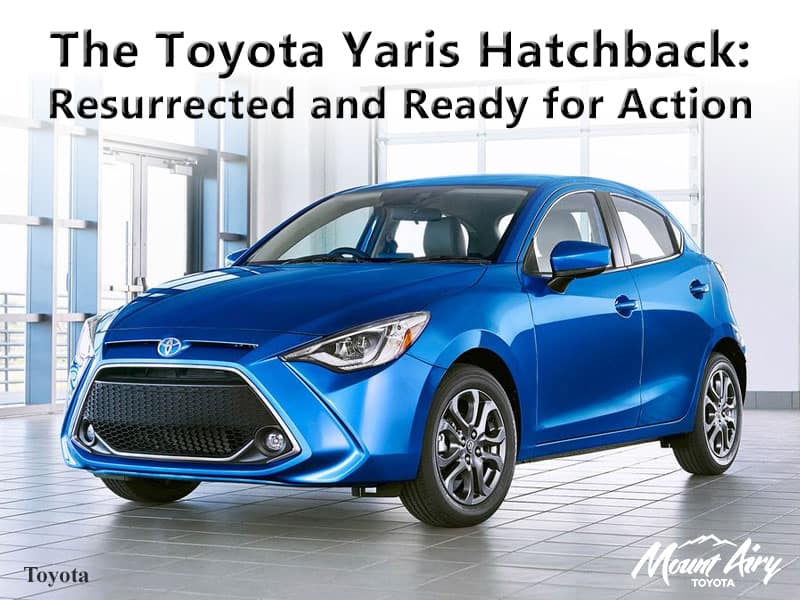
The Toyota Yaris Hatchback: Resurrected and Ready for Action

The Toyota Yaris Hatchback managed to create a cult-like following due to its small, sporty design that slightly resembled that of a smart car—at least one that has been steadily hitting the gym. So when Toyota announced the discontinuation of the venerated hatchback, there was immediate pushback. Now, one year since sporty three-door sedan was silenced, it is slated to return. Towards the end of the 90s and into the 2000s, amidst a car market filled with SUVs, Toyota unleashed the Yaris Hatchback. It was small, a blast to drive, and practically ran forever (you can still see tons of these early models cruising the streets today). And with a price tag around $16,000, it was not difficult talking drivers into trying out a classic, three-door sedan. But in 2018 Toyota announced it would not be including the Yaris Hatchback in the 2019 lineup. So now it’s a year later and Toyota has some good news—scratch that, great news: the Toyota Yaris Hatchback is back and added to the 2020 lineup! Moreover, this three-door model has a few surprises up its sleeve. What brought about the resurrection? Well, it seems that Toyota’s close relationship with Mazda (both companies have already partnered on a subcompact model) continues, as Mazda has taken the reins to help rebuild the Yaris Hatchback by repurposing the Mazda 2. But don’t get the wrong impression. The 2020 Yaris Hatchback is fully a Toyota, and it’s way better than ever. So Why Go Hatchback? If you are in the market for a new car, and are considering a hatchback—as many car buyers these days are—there are a few things to consider. In fact, we’ve come up with a list of five tips to think about before you get too far along in the process. Here they are: They’re for fun and family. Today’s hatchbacks typically come in two styles: compact and midsize. The compact is closest in form to its ancestors, except that it has much more power and flare. These are sporty, fun-to-drive cars with two doors and the iconic scrunched rear. Though they’re small, they are the perfect weekend ride with or without the family. The midsize is a four-door wagon-like car that maintains the hatchback look (as it does have the hatch in the back), but it is considerably larger than the compact model and does not seem to maintain the same amount of zippiness expected in such a cool looking vehicle. Is the new hatchback an SUV crossover? Not really, but some hatchbacks coming out are large enough to be considered a small SUV, or a large sedan. The 2020 Yaris Hatchback fits somewhere in the middle—not quite an SUV but not really a sedan either. It’s unique, to say the least. Unlike the sport utility vehicle and the sedan, new hatchbacks still allow for the rear seats to fold down in order to provide even more cargo space. This might seem like a minor detail, but once you actually lay eyes on the space created from losing the back seats, you’ll realize this is a big selling point, one that may be part of the reason the Yaris is back. An easier drive. Since the hatchback integrates the trunk space into the rear of the car more so than any other, it is shorter in length. This means it is easier to park and maneuver around tight spaces. This is great for big cities and congested areas and can make your life so much better. And the ease doesn’t stop there. Take any modern hatchback and compare its turning radius to that of a typical sedan of the same price range and you’ll notice a big difference. Hatchbacks make sharp turns simple, quick, and fun. And you can’t help but feel a little safer knowing that. Low cost is a big selling point. Because they are smaller in nature than a sedan (and definitely smaller than an SUV or crossover), hatchbacks don't cost as much. Not only that, but they also do better on fuel, and that's not even considering the hybrid and all-electric versions of the hatchback. Rise in Popularity. Don’t believe the naysayers who love to hate on the hatchback, whether old or new. The truth is, the American hatchback is on its way up! The New Yaris Hatchback at a Glance Here is a quick look at what to expect in the 2020 Yaris Hatchback: It has a 1.5-liter inline-four engine with 106 horsepower and 103 lb-ft of torque It comes with a six-speed automatic transmission It’s close to ten inches shorter (161.6-inches) than the Yaris sedan, but somehow offers more cargo space behind the first row and on into the trunk It offers an estimated 40 mpg highway Comes in two trim levels: the LE and XLE The starting price is around $19,000 A Bold New Look The 2020 Yaris Hatchback has a different look from years past; as a matter of fact, it doesn’t much look like any other hatchback on the road today. The biggest difference is that the Yaris looks tough. Cool, rugged, tough, these words do not usually describe a mini sedan, especially one with only three doors. But the new Yaris Hatchback is different. Looking at the Yaris dead-on it resembles that of a bulldog with its legs and body hunkered down, ready to attack. The sharp headlights and flashy hexagon grille stare boldly ahead and project an unexpected confidence. And car-buyers have the option to add daytime running lights, as well as, a palette of vibrant colors to choose from: Stealth, Graphite, Pulse, Sapphire, Chromium, Frost, and Icicle. Quality in a Small Package 16-inch aluminum-alloy wheels, body-color side mirror and door handles, and a chrome tailpipe tip all come standard on the new Yaris. In addition, the side mirrors are power-adjustable, heated, and house LED turn signals. Here are a few more standard features offered: A first aid kit Driver and front passenger sun visors with illuminated vanity mirrors Chrome interior door handles A tilt and telescoping steering wheel A rear backup camera Variable intermittent windshield wipers Fog lights Smart Key Entry with Push Button Start Now, let’s talk multimedia. The 7-inch touchscreen uses six speakers perfectly placed throughout the interior to blast your favorite music while you zip around curves and maneuver into tight spaces. And the Yaris Hatchback comes with both Apple CarPlay and Android Auto—as well as voice recognition and Bluetooth wireless technology. Also, the 7-inch screen can be operated by touch or remote. With the purchase of the car comes a three-month All Access trial of SiriusXM Satellite Radio; this means commercial free stations and over 150 channels. Audio and phone can be operated from the steering wheel, so the driver can concentrate on things like, you know, driving. There are also plenty of USB ports throughout to keep everyone charged and connected. One added surprise to the 2020 Yaris Hatchback is the inclusion, for both the LE and XLE, of a navigation system. All the car owner has to do is purchase the necessary SD card from the Toyota dealer and activate the navigation hardware. And, looking only at the XLE model, Toyota adds leatherette-seating surfaces of either black or gray, as well as automatic climate control; a shift knob and parking brake handle; a leather-trimmed steering wheel; rain-sensing windshield wipers; and automatic climate control. Big on Safety One of the best qualities of the Toyota Hatchback is its commitment to safety. The 2020 model comes equipped with a Low-speed Pre-collision Safety System that scans the road ahead of you for potential collisions. And if danger is detected, an audio/visual and braking system is engaged—in conditions where a collision is certain and the driver does not respond, the Yaris will automatically apply the brakes. Here are a few more safety features found standard on both trim levels of the 2020 Yaris Hatchback: Dynamic Stability Control (DSC) Traction Control System (TCS) Anti-lock Brake System (ABS) Electronic Brake-force Distribution (EBD) Brake Assist (BA) Brake Override System (BOS) Plus, there are six airbags, including curtain airbags that help protect those sitting in the rear. Other Hatchbacks Toyota Has to Offer Can’t wait for the arrival of the new 2020 Yaris Hatchback? Worry not, we have plenty to offer: Corolla Hatchback: Comes with a starting MSRP of $20,140 Offers 30/38 estimated miles-per-gallon Has three trim levels—SE (L4 2.0L, 6MT); SE (L4 2.0L, CVT); and XSE (L4 2.0L, 6MT) Available with a dynamic force engine; optimized suspension; leather-trimmed sport seats; 6-speed intelligent manual transmission; rear window spoiler; and wearable connectivity It also comes with a chrome grille surround, LED taillights, LED fog lights, 18-inch alloy wheels, and piano-black accents and soft-touch materials throughout Prius C: Comes with a starting MSRP of $21,530 Has an estimated 48/43 mpg Available in seven different colors—Tide Pool Pearl, Blizzard Pearl, Classic Silver Metallic, Magnetic Gray Metallic, Black Sand Pearl, Absolutely Red, and Blue Streak Metallic Offered in an L or LE trim level Features the following: pre-collision system with pedestrian detection; lane departure alert; automatic high beams; a sporty exterior shape; 15-inch alloy wheels; versatile design; 60/40 split rear seating; and a premium interior And as far as technology goes, there is a standard backup camera, a smart key system with a push-bottom start, and a multi-information display Come in today and test drive the all-new Toyota hatchbacks, and be sure to ask about the soon-to-come Yaris Hatchback. At Mount Airy Toyota we are confident you will be impressed with these blasts from the past and, as always, you simply won’t find better pricing anywhere else. See you soon!   -Andrae Bergeron https://www.mountairytoyota.com/new-vehicles/

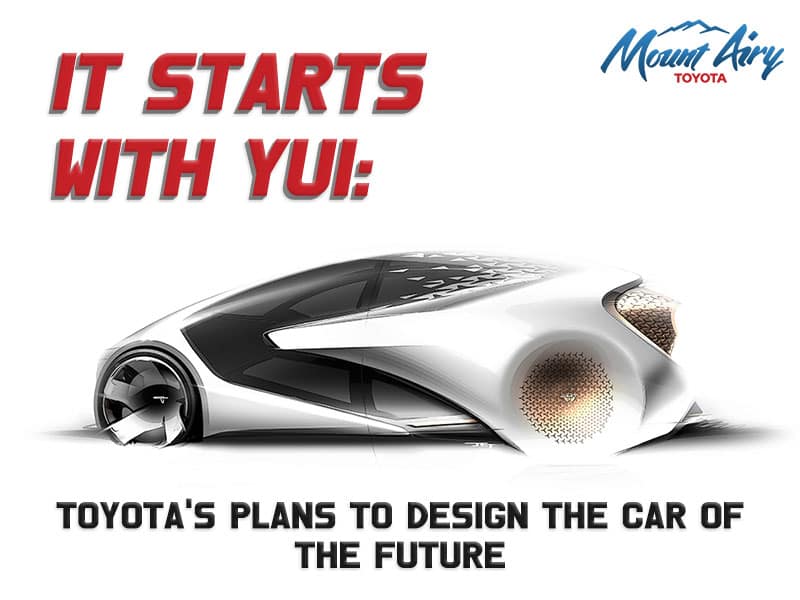
It Starts with Yui: Toyota’s plans to design the car of the future

It Starts with Yui: Toyota’s Plans to Design the Car of the Future

When you close your eyes and think of the future, do the cars look the same as they do now? Probably not. You probably envision something with clean lines, a sleek exterior, and an almost seamless interior. There probably are not a lot of buttons, but the vehicle is certainly still engaging. The car you see when you close your eyes is on another level from anything on the road today, but that car that you are thinking of is exactly what Toyota is striving for with the futuristic designs they have released for Concept-I, rightfully named “Yui.” While the images released of this vehicle appear strikingly realistic, they are just that, images; the Concept-I vehicle is not set to be released anytime soon. Rather, this concept is a plan for vehicles of the future. By creating this model, Toyota hopes to begin to predict how vehicles of the future will behave and look. To accomplish this, Toyota has had to ponder some of the most important questions to drivers everywhere: What will our cars look like? How will they function? Will we drive them, or will they drive us? Appearance It should not come as a secret that drivers want their vehicles to take them places safely and efficiently; however, as sportier models have become more popular, many drivers have felt a need to enjoy the thrill of their drive at the same time. While Toyota is trying to cater to these driving desires, they also want the car to feel warm, friendly, and engaging. In order to have the vehicle meet the aesthetic they were chasing, Toyota took a user-centric approach to designing the concept, moving from the inside out with a strong focus on how the user would experience all that the vehicle has to offer. Toyota has released images of the white version of the vehicle; however, it is unclear if they already have other color options in mind. The trendy white and bronze-gold interior of the vehicle appears to comfortably seat four passengers, with room for rear storage. Functionality was not the only feature in consideration when designing Concept-I; the geniuses behind the vehicle also included expressive sculptural qualities and elegant graphic abilities. The minimal, yet stylistic, interior is designed to help further support the user experience and Yui’s ability to communicate with the driver using light, sound, and touch. Grow as Yui Go Along with its stellar interior appearance, the Concept-I is designed to focus on connecting with the actual mind of the driver. To do this, Yui is equipped with a powerful artificial intelligence system that learns the driver’s patterns and preferences to foster a beneficial relationship between the human and the vehicle. Along with understanding your schedule, there are also plans for the Concept-I to connect with the driver on a deeper level. By combining a range of intelligent technologies, there is hope that the vehicle will be able to gauge the driver’s emotions. For example, if the driver is beginning to feel tired or has been driving for a long time, the vehicle might offer to take over driving functions so the user can sit back and enjoy the rest of the ride. The same can also be said if the driver is feeling sad. Having the ability to understand the driver and their needs means that the intelligence system within the vehicle will eventually be able to anticipate when and where a driver might need assistance. Because of this, the Concept-I will be able to increase driving safety, hopefully creating a bond between the human and the vehicle that is more friendly than necessary. Building these types of personal connections will help ensure that the user connection is built like any other strong relationship on the values of trust and loyalty. Toyota has even said that they hope the immersive technology will lead drivers to feel like Yui is more of a friend than a car that they are navigating the road with. Planning Ahead Since the release of the concept, there has been a great deal of excitement around when the vehicle will be available for purchase. According to the masterminds at Toyota, the vehicle should be released for testing and public trials sometime in 2020. While some critics have said that the release of these vehicles has been too long, Toyota executives have made it clear that their focus on the importance of user safety far outweighs the timeframe these critics had in mind for the vehicle’s release.     Written by Morgan Evans

Electric Cars

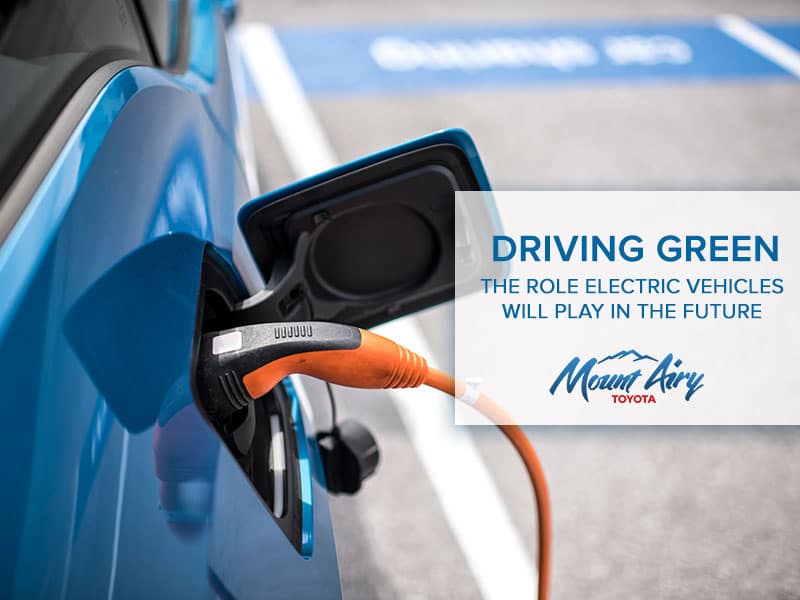
How BEVs Could Be the Future (And Why They May Not Be)

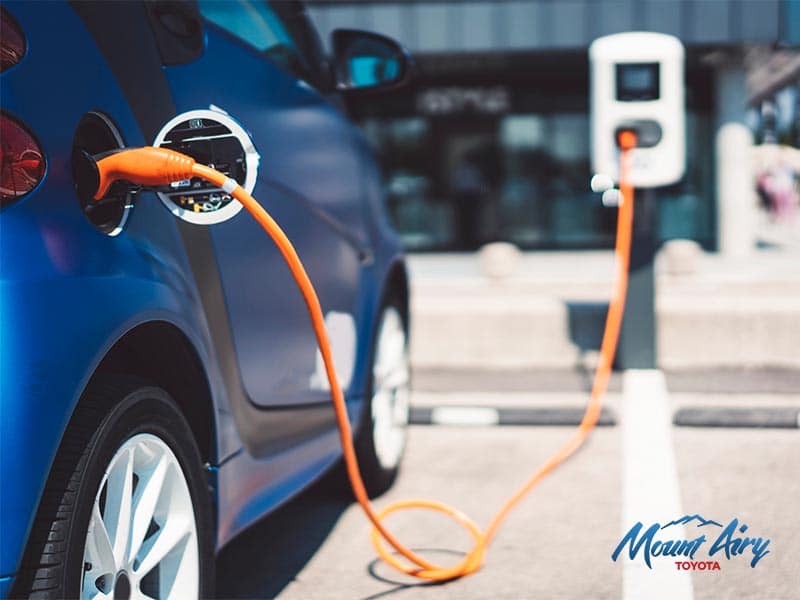
Demand for plug-in electric vehicles (EVs) is growing, though they still only claimed about 2% of the U.S. market share in 2018 (global market share is similar). That number includes battery-operated vehicles (BEVs) and plug-in hybrid electric vehicles (PHEVs). The thought on everyone's mind: is this the future of driving? The primary difference between the two types of vehicles is that a BEV runs solely off the energy from the vehicle's battery, while a PHEV uses the battery alongside a fuel tank that kicks in at various intervals. There would be clear benefits to drivers and the environment if BEVs were to become mainstream. However, there are currently just too many drawbacks to know how successful the BEV market can become. While many proponents are hopeful that BEVs will eventually become commonplace, the future of these vehicles remains largely unknown due to a number of unanswered questions and issues yet to be resolved. For instance, how will drivers have access to charging their vehicles? Will there be convenient charging stations like there are gas stations? Also, can we expect improvements to be made with batteries in the future? This article will explore the potential advantages of a BEV-driven world and the challenges that BEV drivers currently face, and we'll take a look at some of the main questions and issues that are too prevalent to be ignored. ADVANTAGES OF A BEV-HEAVY MARKET Even though we are still in the early stages of developing electric vehicles, BEVs currently come with many benefits, and it's not hard to see how these benefits could become even more impactful as technology improves. Lower Operating Costs For one, it's much cheaper to charge a BEV than it is to run a traditional vehicle off of gas; it's actually about one-third of the cost. Also, a BEV contains very few moving parts compared to a traditional vehicle, which means it's less expensive to maintain. For instance, with a BEV you don't have to worry about servicing a starter motor, fuel injection system, exhaust system, or radiator, among many other components. Though many improvements need to be made to these vehicles' batteries, most BEV manufacturers provide an eight-year warranty on their batteries even now. Environmental Benefits Some of the most obvious advantages are those that benefit the environment. BEVs have virtually no exhaust emissions, which means they emit much less pollution than traditional vehicles do. And if you use renewable energy for charging, greenhouse gas emissions are reduced even lower. For example, rather than charging from the grid, you can use a polar PV system while there's daylight. If you must use the grid, you can still minimize greenhouse gas emissions by purchasing green power from your electricity company. Even the manufacturing of some of the top BEVs is eco-conscious. For instance, the Ford Focus Electric and Nissan Leaf are largely made of recycled and bio-based materials, such as plastic bags, water bottles, and second-hand car parts and home appliances. Health and Safety Along with the financial and environmental benefits, BEVs can help improve our health and safety. Less pollution from exhaust means better air quality, which can reduce health problems caused by pollution, and BEVs create much less noise pollution than traditional vehicles. Also, since BEVs typically have a lower center of gravity, they are less likely to roll over. Furthermore, fires aren't as much of a risk, and the body structure of BEVs can prove more durable in a collision. DISADVANTAGES OF CURRENT BEV MARKET Of course, there are also drawbacks to BEVs. While they have enjoyed success, it has been with a limited group of consumers. Charging Times Tesla has led innovation in the BEV market in many ways, including its Supercharger networks, which can charge vehicles in about 30 minutes. However, that's still a lot more time than it takes to fill the gas tank of a traditional vehicle. What's more, scientists behind the efforts of manufacturers like Tesla and Toyota have their doubts about the possibility of reducing charging times enough to satisfy mainstream consumers. And since Toyota has been in the electric vehicle game for over 20 years, that speaks to the magnitude of this problem. Electricity Generated Another prevalent issue with BEVs is that they require electricity, which must come from somewhere. In states like California, most of the electricity comes from natural gas supplies, but states like West Virginia use coal to generate up to 90% of its electricity. Overall, about 38% of electricity in the United States is generated by coal. This begs the question: just how clean and green are electric cars? In short, it depends on where in the country you are driving. Furthermore, the lithium-ion batteries used by manufacturers like Tesla contain components that can potentially harm the environment by way of ecological toxicity and contributing to global warming. Limited Categories Finally, you don't see any BEVs that fall under the heavy-duty truck category. This is mainly because the technology isn't workable for truck applications—and it won't be anytime soon. This is a serious problem because there are 2 to 3 million heavy-duty trucks on the road in the U.S. Much of the American economy depends on Class 8 commercial trucks, which guzzle 30 times more gas than the average automobile (about 35 billion gallons each year). It's difficult to see how BEV technology could advance enough to accommodate the heavy-duty truck category in the foreseeable future. However, if such trucks were able to be produced in an electric format, it could drastically decrease oil dependence and significantly benefit the trucking industry financially. THE IMPORTANCE OF CHARGING STATIONS There are currently about 20,000 public charging stations and 57,000 outlets for plug-in electric vehicles in the U.S. Here's the thing: 4,800 of those stations and 18,200 of those outlets are found in California. Not surprisingly, California has also accounted for almost half of all BEV sales in the country since 2011. If there is hope for the BEV market to experience continued growth—and especially if battery-operated cars are to become mainstream—there must be more charging stations created throughout the country. In a sense, the future popularity of BEVs in any particular area of the country depends on the accessibility of charging stations in that area. However, it gets tricky because states that don't sell a lot of BEVs are less inclined to invest in public charging stations, but if they never decide to invest, then their sales will probably not improve by much. Therefore, there must be a break in the cycle at some point if BEVs are to become commonplace in the future. Sure, there are some people who could charge their BEV at home, but that's a limited category of consumers. Without an adequate number of charging stations open to the public, much like gas stations are, BEVs will never reach the mainstream. To put it into perspective, there are approximately 168,000 public gas stations in the U.S.—more than eight times the number of charging stations. The majority of consumers will never make the jump to BEVs until that gap is dramatically closing. THE ROLE OF BATTERIES As essential as charging stations are for the future of BEVs, batteries may play an even more important role. And BEV batteries need to undergo a lot of development if electric vehicles are to become commonplace. Battery Anxiety The term "battery anxiety" is often used in reference to one running out of battery power on their smartphone. We've all seen the symptoms: a family member searching frantically for a charger cable; a co-worker turning their desk over, only to ask you if they can borrow a charger; even a stranger asking if they can PowerShare with your phone. Chances are you've experienced the symptoms yourself. In a study administered by electronics manufacturer LG, 9 out of 10 people showed signs of battery anxiety. The same logic is behind the term "range anxiety" in reference to electric vehicles. If such a phenomenon has that kind of grip on people with smartphones, you can imagine the impact of this anxiety when it comes to driving a car. Range anxiety is one reason why many consumers won't even consider going the BEV route. Most BEVs allow drivers to go about 100 miles fully charged (the Tesla Model S is an exception, as it allows drivers around 250 miles). This is another reason why the scarcity of charging stations is such a severe problem. Nonetheless, many manufacturers have pledged to develop BEVs that will hit about 200 miles per charge. That would surely make a big difference, but it's still a far cry from a conventional vehicle that can go 300 to 400 miles on a full tank of gas. The Problem with Lithium-Ion Batteries Most newer electric cars these days are powered by lithium-ion batteries. These batteries are not without their advantages, such as the fact that they are light-weight (as compared to lead-acid batteries), relatively low-maintenance and can last for 8-10 years. However, there are some serious issues to consider as well. For example, lithium-ion batteries are expensive. While a high-end lead-acid battery—as used in most traditional vehicles—costs around $120, a typical lithium-ion car battery costs in the $1,700 range. Also, lithium is highly reactive. This means if they are damaged or installed incorrectly, they can explode. Moreover, the cells used in lithium-ion batteries are made with rare-earth metals; the supply of these metals is limited, and they're dangerous to mine. Most workers who are tasked with retrieving rare-earth metals are laboring in harsh conditions, to say the least (and in some cases this means illegal child laborers). The Prospect of Flow Batteries Enter a new hope for BEV proponents: the "flow battery." Scientists are currently working on this new type of refillable battery that they hope will replace lithium-ion as the commonplace battery in BEVs. The strongest appeal of the flow battery is that it solves most of the biggest problems consumers have with BEVs. Depending on the model of vehicle and the power source used, it can take anywhere from 30 minutes to 10 hours to fully charge a lithium-ion battery in a BEV. If the flow battery is a success, it will allow drivers to empty their battery liquid and pump in new liquid in minutes—roughly the same time it would take to fill a gas tank. What's more, since the basic infrastructure is already there, it would be easier for gas stations everywhere to be retrofitted to pump this battery liquid in place of gas. This means that the scarcity of charging stations would no longer be a problem—thus, no more range anxiety. There is still a lot of progress to be made in the development of flow batteries, but it's possible we will see some form of them in the next three years. THE BOTTOM LINE It's easy to see how drivers and the environment would benefit from a BEV-driven market. All things considered, they are a more eco-conscious alternative to traditional vehicles, they are cheaper to operate, and they offer health and safety benefits. That said, BEVs have their share of drawbacks as well. If BEVs are ever to enter the mainstream, more charging stations and better batteries must be made available. It looks like the work is being done to solve these issues, but only time will tell whether or not BEVs are indeed the future.

America’s Darling: the History and Reemergence of the Hatchback

In the early 1960s, the hatchback vehicle was introduced to America and we fell in love with it…at least for a time. Though it lost some of its luster throughout the years, the hatchback’s innovative design has been a major influence on what we see on the roads today. Maybe this is why we are currently experiencing a strong reemergence of the hatchback vehicle—is it time for a blast from the past? At Mount Airy Toyota, we like the prospect of seeing more hatchback vehicles on the road, and we have plenty on our lot to offer, so we thought a little history lesson on the cool-looking car could benefit us all. Characteristics of the Hatchback The original hatchbacks were simple cars fitted with a rear door, hinged to the roof, that opened upwards much like a—you guessed it—hatch. These vehicles were rather squatted with a two-box body style. “Two-box” means the trunk and passenger area can easily consist of one volume of space by folding seats down, while the engine is separated into its own volume that can only be accessed by popping the hood. Most vehicles today are designed to be either a two- or three-box system. The original appeal of the hatchback car was not just its sleek, new (at least for its era) look. Car buyers simply loved the fact that you could fold the back seats down to create a massive trunk space, and that the vehicle often came with a removable rigid parcel shelf or a roll-up Tonneau Cover. These were features new to the car industry and they were quite impressive. There is also what’s known as a liftback, which is a hatchback with a single slope from the roofline to the bumper (picture a 1969 Ford Mustang) that has a more horizontal angle than the standard hatchback. Both versions were incredibly popular upon their arrival in the 1930s and 1940s, and the hatch-like door for which the vehicle gets its name can be seen in just about every SUV made today. Of course, nowadays we don’t even have to touch the hatch for it to open; just swing a leg under the back bumper and it magically rises on its own. Oh, how far we have come! The Early Stages of the Hatchback In 1938 Citroen produced the first hatchback, called the 11CV Commerciale. This large hunk of a machine possessed a tailgate that came in two pieces: a top door hinged from the roof, and a bottom door hinged from below. The car sold well enough for Citroen to continue marketing them, and soon after World War II they designed a version of the 11CV Commerciale that had one door hinged from the top only. Though this car was big and bulky and came with a massive rear hatch, it lead to later designs such as the 1949 Vagabond and Traveler vehicles that were more sleek and small, like a modern sedan. It is these models of the hatchback that have been described as the major influences for the hatchbacks manufactured in America sometime later. America’s Version of the Hatchback Just like our current obsession with crossover vehicles (a morphing of the modern sedan and SUV) when the hatchback hit the States, most Americans were quite impressed. Once they noticed their popularity in Europe, big car companies like Chrysler, Ford, and GM immediately went to work on designing a model of our own. Though the first models of the hatchback in the 1960s did well, like the Ford Pinto and Ford Bobcat, it was the Dodge Omni and the Plymouth Horizon, both released in 1978, that set the standard for America’s version of the vehicle. Then later, in the 1980s, the Dodge Shadow and Dodge Lancer managed to keep America’s love affair with the hatchback alive. Despite the decades of progress and popularity with the hatchback, its inclusion into modern life in the late 80s and into the 90s began to wane. We started to want bigger cars with more space and room to move around. Station wagons provided this, as did the entry of the Sport Utility Vehicle and, as fads always do, the American hatchback slowly lost its tracking. But just as fads fade away, it only takes a handful of years before they reemerge into popular culture, often with a new take on an old idea. And if you have been paying much attention to what’s new in the world of vehicles, it seems the hatchback is on its way back into our lives. A New Savior? It’s tough to say why things come back into fashion. Have we run out of ideas? Is there really nothing new under the sun? Just look at the fashion industry and you can see just how circular trends can be. Despite the dubious nature of American trends, there could be an easy explanation for why the hatchback is reemerging. There’s no disputing the fact we see more SUVs and crossovers on the road than sedans these days, as the car industry has had a massive drop in sedan sales over the last decade. With this in mind, it could be said the arrival of modernized hatchbacks is an effort to popularize the sedan again (or at least a modernized version of it). According to an article from USA Today, “In 2017, compact and subcompact car sales are down 25%.” Though this may not seem like much of a drop in number, even the smallest fluctuation in sales, either up or down, can have drastic repercussions. The article goes on to say that “Hatchbacks in those classes have risen 16%.” So with one (the sedan) going down, and the other (the hatchback) going up in sales, it’s safe to say the projected models of hatchbacks to come out in the next few years will test the market strength of this new style of sedan. Actually, that 16% figure already indicates an interest in the hatchback design by American car buyers, and the hope is this number will continue to rise. And judging from what we have seen in sales at Mount Airy Toyota, an increase does indeed seem probable. The Modern Hatchback So if you are in the market for a new car, and are considering a hatchback—as many car buyers these days are—there are a few things to consider. In fact, we’ve come up with a list of five tips to think about before you get too far along in the process. Here they are: Fun or Family? Today’s hatchbacks typically come in two styles: compact and midsize. The compact is closest in form to its ancestors, except that it has much more power and pizazz. These are sporty, fun-to-drive cars with two doors and the iconic scrunched rear. Though they’re small, they are the perfect weekend ride. The midsize is a four-door wagon-like car that maintains the hatchback look (as it does have the hatch in the back), but it is considerably larger than the compact model. This car could actually serve as a nice family vehicle with plenty of room to stretch and store goods. A New Crossover? Not all, but some hatchbacks coming out are large enough to be considered a small SUV, or a large sedan. But unlike the sport utility vehicle and the sedan, new hatchbacks still allow for the rear seats to fold down in order to provide even more cargo space. This might seem like a minor detail, but once you actually lay eyes on the space created from losing the back seats, you’ll realize this is a big selling point. An Easier Drive. Since the hatchback integrates the trunk space into the rear of the car more so than any other, it is shorter in length. This means it is easier to park and maneuver around tight spaces. This is great for big cities and congested areas and can make your life so much better. And the ease doesn’t stop there. Take any modern hatchback and compare its turning radius to that of a typical sedan of the same price range and you’ll notice a big difference. Hatchbacks make sharp turns simple, quick, and fun. And you can’t help but feel a little safer knowing that. Low Cost, Big Results. Because they are smaller in nature than a sedan (and definitely smaller than an SUV or crossover), hatchbacks don’t cost as much. Not only that, but they also do better on fuel, and that’s not even considering the hybrid and all-electric versions of the hatchback—yes, the modern hatchback can come as gas-powered, hybrid, or electric! Rise in Popularity. Don’t believe the naysayers who love to hate on the hatchback, whether old or new. The truth is, the American hatchback is on its way up! That 16% rise in sales mentioned earlier is just the tip of the iceberg. Hatchbacks are back and they’re here to win America’s hearts all over again. Toyota’s New Hatchbacks Currently, Toyota has some impressive hatchbacks to offer, two of which we find to be our favorites: one in the Corolla and another in the Prius. Let’s have a look at some of the specs for each. Corolla Hatchback: Comes with a starting MSRP of $20,140 Offers 30/38 estimated miles-per-gallon Has three trim levels—SE (L4 2.0L, 6MT); SE (L4 2.0L, CVT); and XSE (L4 2.0L, 6MT) Available with a dynamic force engine; optimized suspension; leather-trimmed sport seats; 6-speed intelligent manual transmission; rear window spoiler; and wearable connectivity It also comes with a chrome grille surround, LED taillights, LED fog lights, 18-inch alloy wheels, and piano-black accents and soft-touch materials throughout Prius C: Comes with a starting MSRP of $21,530 Has an estimated 48/43 mpg Available in seven different colors—Tide Pool Pearl, Blizzard Pearl, Classic Silver Metallic, Magnetic Gray Metallic, Black Sand Pearl, Absolutely Red, and Blue Streak Metallic Offered in an L or LE trim level Features the following: pre-collision system with pedestrian detection; lane departure alert; automatic high beams; a sporty exterior shape; 15-inch alloy wheels; versatile design; 60/40 split rear seating; and a premium interior And as far as technology goes, there is a standard backup camera, a smart key system with a push-bottom start, and a multi-information display See to Believe There are plenty more specs to both Toyota hatchbacks, but this is one type of vehicle you really have to see to believe. There’s just something about its performance, its comfortable-cool atmosphere that just can’t be explained. Like it or not, the hatchback is about to experience its own renaissance and we couldn’t be more excited. Just take a look at what we have on our lot right now— 2019 Toyota Corolla Hatchback (SE CVT) in Blizzard Pearl for only $21,842 2019 Toyota Corolla Hatchback (XSE CVT) in Blizzard Pearl for only $26,681 2019 Toyota Corolla Hatchback (SE CVT) in Classic Silver Metallic for only $21,692 Come in today and test drive the all-new Toyota hatchbacks. Mount Airy Toyota is confident you will be impressed with this blast from the past and, as always, you simply won’t find better pricing anywhere else. See you soon!     -Andrae Bergeron *Sources: https://www.globalcarsbrands.com/history-of-hatchbacks-and-the-best-hatchback-cars/ https://www.usatoday.com/story/money/cars/2017/05/28/hatchback-cars-stage-comeback/102258000/ https://www.toyota.com/hatchback-cars/

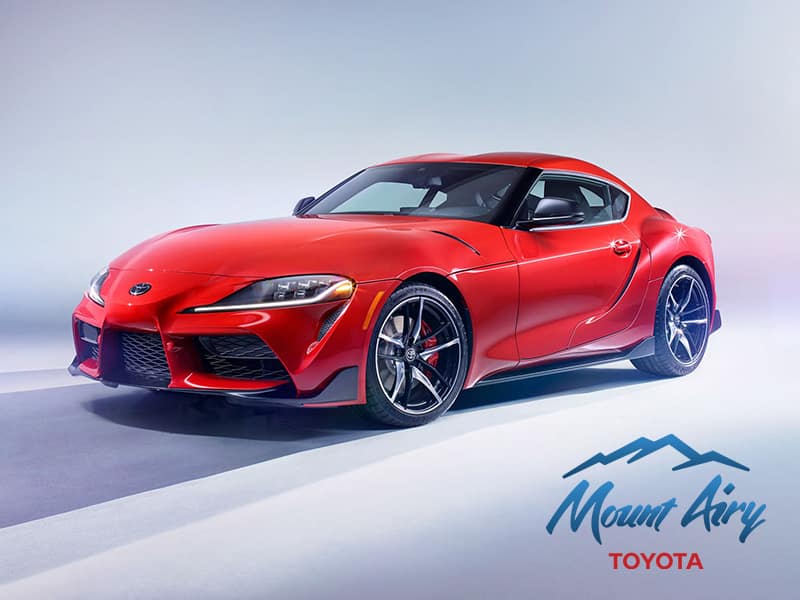
Red 2020 Toyota Supra Car Charlotte

The Resurrected Supra Coupe in 2020, and Why it’s Worth the Hype

If you have not heard already, the Toyota Supra is back after two decades of absence in North America. Its arrival in mid-2019 has caused an uproar among major Supra fans and Toyota enthusiasts. Here at Mount Airy Toyota, we are so excited to tell you all about the 2020 Supra, what it means for long-time fans of the car, and how a new generation will be ready to fall in love this year with the Supra. Witness the return of a legendary sports car this summer The Toyota Supra is back for 2020. In terms of hype, it is similar to witnessing the end of Avengers or the final season of Game of Thrones; there are definitely cult followings and there are major fans out there who have awaited its return. After 20 years, this beloved sports car is back. Revival does not even begin to cover it The revival of this 1980s and early 1990s classic, two decades after it was discontinued, was unveiled at the 2019 Detroit Auto Show. Every Supra shares the same core fundamentals with a smooth inline six up front, rear-wheel drive, and a modern chassis. The 2020 Supra will feature the classic long-hood, low-riding, two-door design, and short-deck proportion, as well. But, in line with Toyota’s mission to deliver the purest expression of performance, the 2020 Supra will redefine sports cars just as it has time and time again. Take a step back in time to appreciate the present The 1993 Supra Turbo was praised for its acceleration, skid pad performance, and antilock brakes that set records at a 70 mph stopping distance. The 3.0-liter engine did not rank well with American consumers, however, and with the $39,900 price tag, Toyota only sold 2,901 cars. In 1996, Toyota was required to re-engineer the Supra to include the OBD II systems, inflating the model’s base cost to $38,600. This made the ’93 Supra Turbo model soar to $50,400 in 1996. As a result, Toyota only sold 852 Supras in ’96, and at that time, had not reached the point of selling 10,000 Supras in the United States. By 1998, while Toyota sales were beginning to recover, the Supra just wasn’t selling as expected. Buyers simply were not willing to pay what the Supra costed, despite its incredible performance and advanced powertrain. This led to the development of racing enthusiasts who became cult followers of the Supra, as they understood that the Supra Turbo’s 2JZ-GTE had enormous amounts of power and boost. A true cinematic vehicle For the younger generations who are not long-time fans of the Supra, they just might get all the hype if they have watched one of the biggest film franchises of the past ten years, where the car was featured and gained a new reputation among the millennial audience. The timeline definitely did not stop in the year ’98 for the Toyota Supra. In the year 2000, the National Import Racing Associate director, Craig Lieberman, had modified a Supra Turbo to 600 horsepower and was showing it off at an imported car show. It was at this point that he was approached by a man who asked him to consult on a film about racing. This film was called Redline, and it featured a character named Officer Brian O'Connor, and an all-too-familiar plotline that we all recognize now about street racing and big-rig heists. The film we’re talking about here had a name change, from Redline to The Fast and the Furious. Before the script hit filming, the producers had to change a main character’s vehicle from a Nissan 240SX to, yes, you guessed it, the Supra. This was because the producers needed to pull a character off of a truck and through a car’s sunroof in the movie’s climactic scene, thus requiring a car with a Targa top and the credibility as a power-driven performance car. As the highest grossing film of 2001, and a classic series reaching millions and millions of fans, The Fast and the Furious was a landmark film for car culture and the racing scene across America. It was also because of the film that the Supra went from being unable to sell in ten years what the Corvette sold in one year, to a nine-second drag car capable of holding its line with major racing names. The launch of the 2020 Toyota Supra The Supra is finally back after 20 years, and the newest model is only being offered as an automatic and sporting a BMW engine. The top-end model has an inline-six twin-turbo engine producing 335hp, similar to numbers of the Supra that debuted in 1993. Will it deliver on the hype though? Let’s dive into it. Zero to (almost) 100, real fast If you are interested in power, then you will fall in love with the Toyota Supra. In its advertisements, the Supra reported 335 horsepower and 365-lb of torque. Needless to say, this car can really move. Then, Car and Driver gave it a run and revealed that it can hit 60 mph in only 3.8 seconds. Now that is fast. This powerhouse is being co-developed with BMW and will share its architecture with the upcoming Z4, meaning the 3.0-liter turbocharged engine is shared with the Z4. It will boast a 3-liter, 6-cylinder engine with 335 horsepower, 365-lb-ft. of torque, and an 8-speed automatic transmission. This means going from 0-60 miles an hour in an estimated 4.1 seconds and a top speed of 155 with a curb weight of 3397 pounds. The engine is as far back and as low as possible, which optimizes the center of gravity for a 50:50 front/rear weight distribution—making your drive, no matter the speed, as smooth as possible. Toyota’s approach to the design was to create the best driver’s car, full stop. Drivers in the Supra can control the throttle with millimeter precision. The Supra is extremely well positioned in the market with its manageable and impressive performance. Toyota never sells on just one feature Toyota understands that one of the main selling points of the original supra was the incredible engine and powertrain, but they also know that the rest of the car has to measure up to consumer expectations. That is why Toyota invested so much time into engineering the rest of the car just as carefully as the engine itself. This is not to mention, too, that Toyota has definitely learned from its longstanding history and fan base with the Supra. If the car performed so well, followed by years of low sales, then temporarily forgotten, then Toyota will only build a successor that will be remembered and revered. So let us fully focus on what the Mk.5 has to offer. Styling The first thing you will notice about the 2020 Supra is that it is truly a work of art. The science behind the design is just as impressive and is what really makes the car a masterpiece. The wide grille is designed to channel cool air directly to the turbocharged engine, which in turn, helps optimize performance. The “double-bubble” roof adds space inside the vehicle, while also reducing aerodynamic drive outside. Intakes and vents are everywhere. And, as with any expectation for a sports car, the rear spoiler reduces body life and keeps the Supra planted at high speeds. The wheelbase is 97.2 inches and the length is 172.5. Unlike previous Supras, the 2020 only seats two, with more than sufficient space for someone over 6ft. The cargo area, albeit narrow, can more than handle your weekend getaway luggage. The 2020 Supra has already received great reception on the look and feel of the vehicle, as it remained true to its highly regarded lineage. Control Toyota provided a rigid chassis, adaptive suspension, and Michelin Pilot Super Sport tires to ensure that the Supra drives as good as it looks. Long turns will have you feeling what the car can do, plus you can steer with the extremely responsive throttle. Slide into Sport mode, turn off traction control, and you can really enjoy the Supra’s suspension tuning, steering feel, and body rigidity. With the tightness in the center of the vehicle, the car turns in quickly and provides a comforting sense of confidence at high speeds. Even with high winds and broken pavement, the rigid chassis delivers a sensational ride quality. Safety The Supra is equipped with its active differential and Brembo front brakes, ensuring that the driver has ultimate control over the vehicle. This new model will, of course, come decked out with LED headlights, a 6.5” infotainment screen, forward collision warning, automatic rain-sensing windshield wipers, and a sports mode. Trim levels The Supra will be available in three trim levels: 3.0, 3.0 Premium, and Launch Edition. The standard 3.0 trims include a 6.5-inch touchscreen with Bluetooth connectivity, adaptive suspension, forward collision warning, launch control, and shift paddles. The 3.0 Premium trim upgrades the infotainment screen to an 8.8-inch touchscreen, navigation, wireless Apple CarPlay, a 12-speaker sound system, wireless charging, a color head-up display, and heated, leather-upholstered seats. The GR Supra Launch Edition will only be available to a lucky few. Why? Because the GR Supra Launch Edition is limited to only 1500 units. The Launch edition will include 19-inch, unique matte-black wheels, and a red leather interior, red mirror caps, and an individually numbered interior badge with Akio Toyoda’s signature. The Supra Launch edition is available in Renaissance Red 2.0, Nocturnal or Absolute Zero. Fun fact: The very first globally produced all-new 2020 GR Supra was auctioned off for $2.1 million dollars this year. This all happened at the Barrett-Jackson Auction, where proceeds benefitted the American Heart Association and the Bob Woodruff Foundation, which aids injured veterans and their families. The buyer’s identity hasn’t been released yet, but we do know that the first Supra was flat gray with red mirror caps, black wheels, and had red upholstery. The winner’s car was signed by Toyota CEO Akio Toyoda on the engine bay, and received a racing suit, driving gloves, shoes, and the helmet Akio wore when he personally tested the Supra during its development. Price The base price for this vehicle is $45,000. The Launch edition has a starting MSRP of $55,250. The 3.0 Premium has a starting MSRP of $53,990. The 3.0 has a starting MSRP of $49,990. Additional Specs At A Glance 365lb.–ft. of torque 3397 pounds, total 155 mph top speed 24 city mpg 31 highway mpg The Supra and Mount Airy Toyota The 2020 Supra has had car fanatics awaiting its return for many years, and 2019 has unveiled the iconic sports car once and for all. With the incoming influx of driving impressions and personal reviews, it will be exciting to see how this light, agile, fun, and overall reasonable sports car will deliver to consumers. Mount Airy Toyota is excited to recommend the Supra to any eager sports car fan, and with the starting price at less than $50,000, you’re definitely getting the bang for your buck!


The Future of Electric Cars at Mount Airy Toyota

Electric vehicles are growing in demand each year, and creating more and more buzz as the technology continues to become better and more efficient. At Mount Airy Toyota, we’re interested not only in the overall automotive shift away from fossil fuels, but also in what that means for our dealership, our city, and way of life in Mount Airy. We wanted to know more about where Toyota fits into the electric vehicle market, when we might be seeing a full electric car release from Toyota, and what it means for Mount Airy Toyota in the future. Electric cars are the future; it's a statement we have heard before, that we have seen come into reality, and seems to become more and more standard, albeit at a slow pace, every year. With every global climate report delivering the same message about limited fossil fuels and negative climate impact, electric cars are gaining more traction and popularity. If you’re 35 or younger, it’s inevitable that you will be driving an electric car in your lifetime. The face of the automotive industry is rapidly producing new technologies to fill the needs of an electric driven economy. What is an electric vehicle? Electric vehicles are battery charged, and run at least partially on electricity. There are a variety of options to consider when you think about electric cars. Electric vehicles can range from plug-in hybrid electric vehicles, fuel-cell electric vehicles, hybrid electric vehicles that use plug-in rechargeable batteries, and there are pure electric vehicles. How do they work? Instead of vehicles running on gasoline like in internal combustion engine vehicles, electric vehicles run either partially or completely on electricity stored in a battery. Thus, electric vehicles don’t produce tailpipe pollution. They also minimize wasted energy by turning the car off when stopped and by charging the battery when braking. Electric vehicles are more energy- efficient than gasoline or diesel powered engines, which explains why they are in such high demand. Are electric vehicles clean? Producing electricity isn’t necessarily clean; electricity can produce heat-trapping gases, pollution at the source of the electricity generation, or in the extraction of fossil fuels. It’s definitely worth noting though that battery electric cars charged off of the dirtiest coal grid still produce lower pollution than their gasoline-powered counterparts. If electric vehicles are charged by wind or solar energy sources, they are virtually emission free! How do they charge? As mentioned before, they can charge when braking as you drive, but mainly they are charged at home. With a 240-volt outlet (a power similar to what it takes to run clothes in the dryer), most electric vehicles can charge fully overnight. Once fully charged, electric vehicles can typically drive between 70 to 100 miles per day (which is within the average range of what most Americans drive daily). Fast-charging stations can provide 60 to 80 miles of range for every 20 minutes of charging. Battery technologies will change, as we realize things such as the fact silicon batteries provide 30% more range, and as we find less expensive batteries. Battery technology is progressing so quickly, and it’s only going to get better. Between 2008 and 2014, the price of batteries dropped more than 70 percent. The development of larger and more powerful batteries means that batteries will also require larger charging systems and longer time requirements. Manufacturers are now willing to put the money forward to develop more electric vehicles. But, the main issue manufacturers face is the cost-curve of having electric vehicles more competitive in the market place, versus demand actually pulling them out of the manufacturers. EV’s are less than 2% of vehicle sales in America. In 2017, electric cars reached a global sales record with 1 million cars sold. What or who do you think of when you hear about electric vehicles? Elon Musk probably comes to mind, and for good reason. As recently as January 2019, the American-made company, Tesla, released their goal to have 400,000 new electric vehicles on the road. In March 2016, the Tesla Model 3 was released, and has, since then, reigned as the electric car to turn the electric vehicle market mainstream. Starting at $35,000, the Tesla Model 3 is reasonably affordable, and comes in with 220 miles of range and all the equipment to drive autonomously. With software updates that increase the mileage and efficiency of the vehicle without taking a trip to the dealership, the Model 3 has ruled in the electric vehicle domain, and we can see why. Tesla has put more electric cars on the road than any other company, but across the automotive industry, everyone has electric cars in the works for the coming years. What are the hurdles automotive industries are facing with electric vehicles? As battery-electric vehicles and hybrids become more popular, infrastructure everywhere will have to adapt. Beyond city hubs in California, and select other cities, the reality is that of fall 2018, there were an estimated 22,000 public charging stations between the US and Canada. Therefore, before most consumers can consider, or much less, commit to an electric car, they would have to consider the distances they want to drive in their electric vehicle, and if there are charging stations within reasonable distances. Of course, automotive manufacturers have to be concerned about the charging stations as well. Automakers can either build their own charging networks or rely on third-party networks. Tesla has 1,344 Supercharger stations worldwide, with around 580 of those in the US. While they have discussed the possibility of opening their network to other automakers, the stations only currently serves Tesla. Volkswagen plans to install 2,800 charging stations in 17 US cities by June 2019. Other automakers rely on third-party companies, which can be cheaper, but more uncertain with a lack of consistency for coverage. For example, Electrify America is installing charging stations at more than 100 Walmarts in 34 states. ChargePoint is increasing their charging stations 50-fold by 2025, building up from 53,000 charging stations. Building electric charging stations can be a bureaucratic situation with lots of red tape in the way, whether that’s finding real estate to build the station, or to negotiate with local utility companies. But the demand for charging stations is increasing, as more apartment and condo complexes are providing charging opportunities, and bus and trucking industries are also shifting towards electric power. Fun fact: Just as a comparison, there are about seven times more gas stations than charging stations in the US and Canada—about 168,000! What are the cons of owning or leasing an electric vehicle? It is not a surprise to the average American that electric vehicles are more expensive than the average car. The average price of an electric vehicle is about $30,000-$35000. But, the savings in gasoline can average about $1400 on gas, costing about $540 a year to charge an electric car, in comparison. To break even and offset the fuel savings, you would have to keep the car for around 11 years, which is actually the average time that most US drivers keep a car before trading in or selling. What are the pros? Although there is not a lot of data on what the exact savings are on electric car maintenance, there is a lesser chance of breaking down, the service packages are cheaper, and the vehicles themselves are much better than gasoline alternatives at converting energy to movement from a standing start. They don’t require oil changes or experience as much wear and tear on the brakes. Electric and hybrid vehicles can also enjoy discounts of up to 10% on car insurance, because they tend to be safer and less likely to break down. Some electric vehicles also receive tax breaks! How do they drive? For automotive enthusiasts, there’s something about the control over the vehicle, the roar of the engine, the power behind the wheel… and it’s enough to never consider making the switch to an electric vehicle. Electric vehicles do lack manual shifting, they are extremely quiet, and of course, there won’t really be a reason to stop at a gas station unless you’re needing snacks. Any electric car you sit behind the wheel of is a totally different drive than any other car. They are quiet, smooth, and refined. They are high-quality and are equipped with the latest technology. Why has Toyota not been seen in the electric car market yet? Toyota does not offer any full-electric vehicle in the United States. Moreover, Toyota has almost conspicuously not been producing or teasing any line-up of full battery-electric cars to come, and the reason might surprise you. Basically, it comes down to Toyota believing that hybrids are a better option between internal-combustion vehicles and hydrogen fuel cell-vehicles. There is a serious question about the range and capability of the electric car and what redesigns it will have to face in order to get adopted by the average American. Those challenges are being addressed with better batteries, larger range capabilities, and the implementation of charging stations. In the mean time, Toyota has an astounding line up of hybrid options, and they’re available at Mount Airy Toyota. Ranging from full-size sedans to sporty crossovers, these Toyota vehicles are all incredibly fuel efficient, cool, and provide ample battery capacity. Corolla Hybrid $22,950 starting msrp 53/52 est. mpg Pruis $27,770 starting msrp 54/50 est. mpg Prius c $21,530 starting msrp 48/43 mpg Prius Prime $27,350 starting msrp 54/133 est. mpg Camry Hyrbid $28,250 starting msrp 51/53 est. mpg Avalon Hybrid $36,550 starting msrp 43/44 est. mpg RAV4 Hybrid $27,700 starting msrp 41/38 est. mpg Highlander Hybrid $37.320 starting msrp 30/28 est. mpg What’s to come for Toyota? Currently, Toyota is able to produce enough batteries for 28,000 electric vehicles each year, which equates to 1.5 million hybrid cars. The amount of gas-electric hybrid cars Toyota sells currently impacts the environment more positively than it would by selling far fewer electric vehicles due to the market. Toyota has been more interested in hydrogen fuel-cell vehicles, but as the market slowly evolves in the U.S., Toyota is opening some of its patents to help hybrid car production. In total, Toyota has sold more than 13 million hybrids, globally dominating more than 80% of the market for hybrid vehicles. Mount Airy Toyota: The Future is Here Due to economic feasibility, battery efficiency, and the increase of Americans finding fossil fuel alternatives, electric cars are here to stay. Mount Airy Toyota has some of the leading hybrid vehicles on our lot. If you have never driven an electric vehicle before, we encourage you to come test drive and experience the difference. Give us a call today at (336) 786-2118, visit us online at mountairytoyota.com, or stop by and see us at 508 N Andy Griffith Parkway in Mount Airy, North Carolina. Learn more: Charlotte Talks: WFAE with Mike Collins If you’re interested in hearing more about this topic, check out the local broadcast, Charlotte Talks on WFAE with Mike Collins, where last month they discussed the future of electric cars with Brian Jenkins, Ezra Dyer, and Matt DeLorenzo.

This Spring Mount Airy Toyota Gives Back

Mount Airy Toyota is pleased to announce our participation with local community partners in upcoming fundraiser events around the Charlotte and Mount Airy regions. Check out the golf fundraisers that we are playing in and learn more about what special programs we are supporting around our community. 11 th Annual Pfc. Adam Lee Marion Memorial Golf Tournament On Thursday, April 25 th, Mount Airy Toyota is participating in the 11 th Annual Pfc. Adam Lee Marion Memorial Golf Tournament. This golf tournament has been held eleven years in a row in honor of Private First Class Adam Lee Marion. Private First Class Adam Lee Marion was killed in Iraq on April 28, 2008 while serving in the military.  Adam was 26 years old when a rocket attack outside of Sadr City, Iraq claimed his life. He was deployed as part of a North Carolina National Guard unit tasked with performing route-clearance missions. Family friends of the Marion’s, John Lawson and Ralph Holt organized the golf benefit in Adam Marion’s names and had the idea to put the proceeds towards supporting the Children’s Center. The original mission was to raise about $10,000 a year for the center; this amount has gone above and beyond their expectations, growing each year. 4 th Annual Destiny Lives On Golf Tournament On Friday, May 10th, you can find us out at the Cramer Mountain Club participating in the 4 th Annual Destiny Lives On Golf Tournament. This event includes a day of golf (the tournament will be a Captain’s Choice format), followed by lunch and an awards ceremony with prizes and raffles. The proceeds from the tournament go towards the Destiny Lives On Foundation. The tournament itself aims to honor and support families that have given or received an organ donation, and supports efforts to promote and educate people about the importance of organ donation. Space to participate is limited, and we recommend that you register early to guarantee your spot. It costs $520 per foursome team, and this includes green fees, cart, swag bag, breakfast/lunch/beverages, and 4 mulligan packets per team. Cash prizes are awarded to the winning team. Player registration opens April 10 th, 2019. You can mail a donation or a sponsor payment to: Destiny Lives On Foundation 4033 Avery Pl. Gastonia, NC 28056 Or if you’re interested in learning more about the event or have any questions, you can contact Kelly Stafford at (704) 913-4270 or at destinyliveson@hotmail.com. Check out their website at https://destinyliveson.org/. Spring Golf Classic 2019 Matthews Chamber of Commerce The Chamber hosts a golf tournament each year as a way for members and guests to promote their businesses, get to know their peers, raise money for the Chamber, and donate funds to a designated local non-profit. The title sponsor this year is Harris Teeter. The Matthew Chamber Golf Classic is on Tuesday, May 14 th at the Pine Lake Country Club at 5504 Lebanon Road, Mint Hill, NC 28227. The check-in begins at 11:00am, with a shotgun tee-off at 12:00pm. Lunch, dinner, beverages, and cart fee are all included. There will be lots of fun, giveaways, raffles, contests, and prizes, and dinner following the tournament. The event ends at 7:00pm. This year, the non-profit receiving the funds from the tournament is Bright Blessings. Bright Blessings serves over 13,000 children every year in partnerships with local school systems and dozens of shelters, housing facilities and community support agencies across a five-county area. The mission of Bright Blessings is to bring joy, care, and hope to homeless and impoverished children by mobilizing volunteers of all ages. You can learn more about Bright Blessings on their website at: https://www.brightblessingsusa.org/ Registration is now open; you can click here to register. Each player receives 18 holes of golf, golf cart, range balls, beverages, lunch from Chic-fil-A, and dinner from Beantown Tavern. The $20 Mulligan package is optional. Individual Player: $100 (fun golf attire encouraged!) Foursome: $400 You can also take part in the sponsor opportunities: Hole/Tee Sponsor: $150 Putting Green Sponsor: $500 Driving Range Sponsor: $250 Scorecard Sponsor: $250 Dinner/Awards Presentation: $20 If you are interested in learning more about any of these upcoming events around the Charlotte area, whether you want to donate, participate, or attend, feel free to come by Mount Airy Toyota and we would be happy to share more information. We hope to see you out at some of these events in April and May, and we encourage you to give back to your greater Charlotte community this spring!

Contact Us

Fill out this form below and we'll contact you shortly
*Required Fields