Blog / Toyota Safety

Blog

All Toyota Safety Toyota Camry Rav4 Tacoma Trucks Highlander Events Corolla Service 4Runner Tundra Electric Cars Auto News by Mount Airy Toyota Toyota History Toyota Technology Car Care Sienna Tires Avalon Mount Airy Toyota Dealer Toyotathon Trade- In Mount Airy Toyota Service Prius Supra Toyotacare Used Trucks Prius V Sequoia Used Cars C-HR Landcruiser SUV Crossover Employees End of the Year Savings Hatchback New Pickup Trucks Yaris ARB Safari Snorkel Explained Crown Difference between i-Force Max & i-Force Fox Internal Bypass QS3 Shocks Mount Airy Used Cars Old Man Emu Shocks Tacoma Onboard Air Compressor Toyota Hybrid Trucks & Cars Toyota Tundra Trailhunter vs TRD Pro TRD vs Trailhunter Suspension Venza What are Rock Sliders
Mount Airy Toyota tire deals

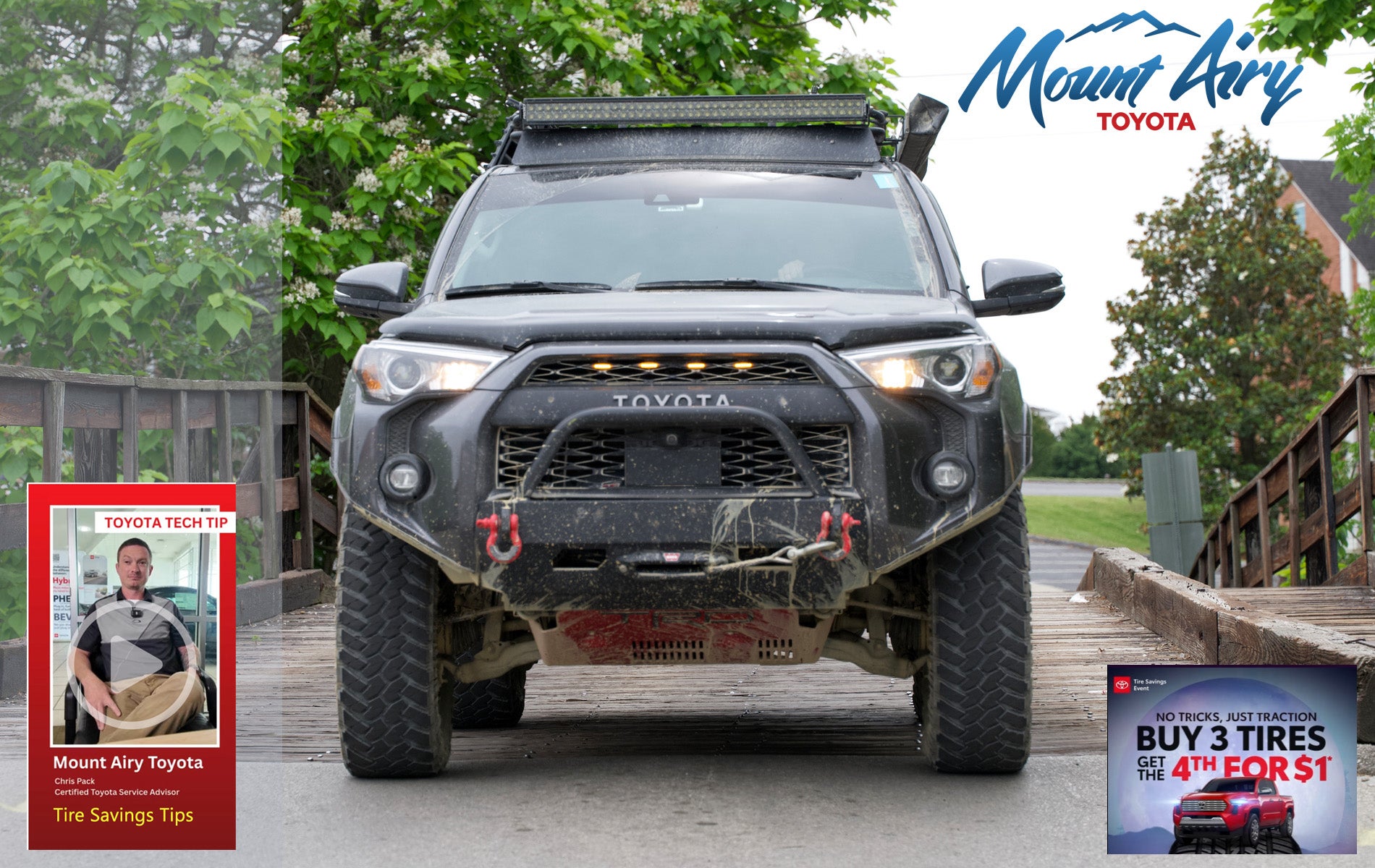
Chris Pack’s Tire Tips | Mount Airy Toyota Expert Explains Tire Types & Maintenance

Choosing the Right Tires for Your Toyota in Mount Airy, NC When you live and drive in the foothills and mountains around Mount Airy, NC, your tires aren’t just rubber on the road—they’re your first line of defense against unpredictable mountain weather, icy roads, and rugged terrain. At Mount Airy Toyota, our service team knows that choosing the right tires can make all the difference in safety, performance, and comfort. In our recent YouTube Short, our Service Manager, Chris Pack, walks through how different vehicles, driving styles, and terrain demand different tires. You’ll learn of how tire treads vary and why one size doesn’t fit all. That visual short helps bring this tire education to life. Whether you drive a sedan, SUV, or truck, your tire needs are unique. Add in the challenges of snow, ice, rain, and gravel roads—and it’s easy to see why one-size-fits-all tires simply don’t work. Let’s explore how to choose the perfect tires for your Toyota—and why now is the perfect time to take advantage of Toyota’s Buy 3, Get the 4th for $1 Tire Sale! Why Tire Choice Matters in the Mountains Driving in Mount Airy means tackling steep inclines, winding roads, and seasonal snow or ice. Your tires must handle all of it while providing grip, comfort, and fuel efficiency. T he right tire for the right vehicle and terrain means safer driving. Elevation changes create more stress on tires, snow and ice require flexibility, rough terrain demands durability, and rain needs special tread channels. The right tires keep you safe and performing year-round. Types of Tires and Their Best Uses Different vehicles and driving styles call for different tire types. Here’s a breakdown of the most common categories—some of which you’ll see demonstrated in the video. Tire Type Best For Ideal Vehicles Terrain & Conditions Key Features All-Season Tires Everyday driving Sedans (Camry, Corolla), Crossovers (RAV4) Moderate climates, light snow Balanced tread for comfort & fuel economy All-Terrain Tires Mixed on/off-road use SUVs (Highlander, 4Runner), Trucks (Tacoma, Tundra) Dirt, gravel, mud, snow Deep treads & reinforced sidewalls Winter / Snow Tires Cold and icy conditions Any vehicle used in winter Snow, slush, ice Softer rubber and added siping Performance Tires Sporty handling Sport models (GR86, Camry XSE) Dry roads, high speeds Low tread depth for cornering & braking Mud-Terrain Tires Off-road adventure 4×4s and lifted trucks Mud, rocks, deep ruts Aggressive tread & self-cleaning Touring Tires Long-distance comfort Sedans, hybrids Highways & paved roads Quiet ride and even wear Tires for Sedans Toyota sedans like the Camry, Corolla, and Avalon need tires that balance comfort, fuel efficiency, and traction for changing weather. Recommended: All-Season or Touring tires. They offer a quiet ride and handle light snow well. If you compare all-season tire against a winter-rated tire on a frozen surface you will see that traction differences can be dramatic. For sportier handling, performance tires are great, but they’re not ideal for snow. Tires for SUVs SUVs like the RAV4, Highlander, and 4Runner face mixed terrain—from city pavement to gravel backroads and snow. Recommended: All-Terrain or All-Season tires. They provide traction on mountains while staying smooth on highways. Swap to winter tires if you drive in higher elevations. The difference between an SUV highway tire and a mixed-terrain tire is in the stiffer sidewalls and deeper grooves that improve control in the mountains. Tires for Trucks For trucks like the Tacoma and Tundra, tire choice depends on use. Daily drivers benefit from All-Season or Touring tires for comfort and fuel economy. Work and towing trucks do better with All-Terrain tires for durability. Off-roaders will want Mud-Terrain tires for maximum traction. Heavy-duty tires differ in construction. Those load ratings matter for mountain towing. Truck tires also feature reinforced sidewalls for steep, heavy hauls. Tires for Different Terrains Mount Airy roads can mean pavement one day and ice the next.  Here's how tread patterns perform across different conditions: Paved Roads: Smooth tread reduces road noise and improves efficiency. Snow & Ice: Winter tires stay flexible and grip cold surfaces. Look for the snowflake symbol. Gravel & Dirt: All-terrain tires have wider grooves that grip loose surfaces. Mud & Trails: Mud-terrain tires clean themselves to maintain traction. Rain: Deep circumferential grooves prevent hydroplaning by channeling water out from under the tire. How to Check Your Tires for Wear and Tear Keep your tires in top shape with these checks: Tread Depth: Use a penny—if you see all of Lincoln’s head, replace the tire. In the video, the manager uses a tread gauge to show this difference. Uneven Wear: Can signal alignment issues. The video shows how edge wear looks on a misaligned tire. Cracks or Bulges: These are signs of damage and need immediate replacement. Pressure: Cold weather and altitude changes can lower pressure quickly—check monthly. When to Replace or Rotate Tires Replace tires every 5–6 years or 40k–60k miles, depending on use. Rotate every 5k–7.5k miles to ensure even wear. Alignment should be checked yearly or if your car pulls to one side. R otation may not be optional for mountain drivers because curves and elevation make uneven wear happen faster. How Long Tires Last in the Mountains of NC Mountain driving wears tires faster. Expect: All-Season: 45k–60k miles All-Terrain: 40k–50k miles Winter: 3–4 winter seasons Keep them inflated, balanced, and rotated for maximum life. Take Advantage of Toyota’s Tire Sale Now’s the perfect time to get new tires for your Toyota! Mount Airy Toyota is proud to offer Toyota’s Buy 3, Get the 4th for $1 Sale, available for a limited time. Waiting to replace worn tires means risking your safety—so take advantage of this deal before the first snow hits. Our certified team will match the best tires to your Toyota, terrain, and driving style. Schedule Your Tire Service Today Don’t wait for the ice to find out your tires aren’t ready. Visit MountAiryToyota.com or call our Service Center to schedule your tire inspection or replacement today. Drive safer, smoother, and smarter—with the right tires for your Toyota and your mountain lifestyle.

Rodents are small, but the damage they leave behind inside a car engine can be surprisingly big.

Rodents and Brakes Are Squeaking in Your Car! How to Catch Damage Before It Costs You Big

The Problem of Waiting Too Long Tech Tips from Chris Pack at Mount Airy Toyota Many drivers treat auto inspections like an afterthought — “I’ll schedule it when something breaks.” But the reality is, by the time symptoms are obvious (squealing brakes, pulling, fluid leaks), damage is often deep enough to require expensive repair or replacement. A multi-point inspection catches small issues—worn pads, fluid level drops, loose components—before they evolve into bigger problems. The cost of treating early warning signs is negligible compared to full part replacement or safety failures. Set your service appointment today! RATS! RATS! RATS! Rodents are small, but the damage they leave behind inside a car engine can be surprisingly big. Warm engine bays attract rats and mice looking for shelter, and once they settle in, chewing becomes inevitable. Wiring harnesses, hoses, and insulation are prime targets because rodents use them to sharpen their teeth. What may look like a minor bite mark can quickly escalate into warning lights, electrical issues, or even a car that won’t start. The cost of replacing chewed wiring harnesses often shocks vehicle owners, since what seems like a small problem usually requires major repairs. Why the Air Filter Area Matters Most One of the first places rodents tend to show up is in the air filter box. It’s an easy entry point, and the filter material makes convenient nesting material. The bigger danger, however, comes from rodent droppings. Rat feces inside or around your air filter can contaminate the air moving into your cabin and circulate harmful bacteria and allergens into the vehicle. Beyond the health risk, droppings and debris can clog the filter, reducing airflow and hurting engine performance. This is why routine checks of the air filter are so important—they’re often the first line of defense against a bigger infestation. Catching the Problem Early The best way to avoid expensive repairs and potential health hazards is through regular vehicle service. Trained technicians know where to look for early signs of rodent activity, from chewed wiring to nests near the intake. If caught early, rodents can be deterred before they make it past the air filter and into critical components. Waiting too long can turn what could have been a simple cleaning into a costly replacement job. By keeping up with inspections, you not only protect your engine but also ensure the air you breathe inside your car stays safe and clean. Why Brakes & Pads Deserve Extra Attention Brakes and pads are among the most critical components for safe driving — and also among the ones that deteriorate gradually. Wear can be uneven, pads may degrade without you hearing or feeling it right away, and brake fluid leaks can sneak up. During a multi-point inspection, technicians closely examine rotor thickness, pad depth, fluid levels, and hardware integrity. They can spot unusual wear patterns, impending failures, and other red flags well before you ever need to hit the brakes hard in an emergency. The Hidden Benefits That Go Beyond Safety Of course, safety is paramount — but early detection brings a cascade of benefits. You’ll enjoy lower repair costs, improved fuel efficiency (no dragging or misaligned parts), and enhanced vehicle longevity. Regular inspections also build trust between you and your auto shop; you’re not paying for “surprises,” you’re paying for maintenance. In the long run, a proactive maintenance mindset means fewer breakdowns, fewer roadside emergencies, and more confidence behind the wheel.

Toyota maintenance tips

Mount Airy Toyota Insider Tips: Straightforward Advice on Car Maintenance, and Hidden Features

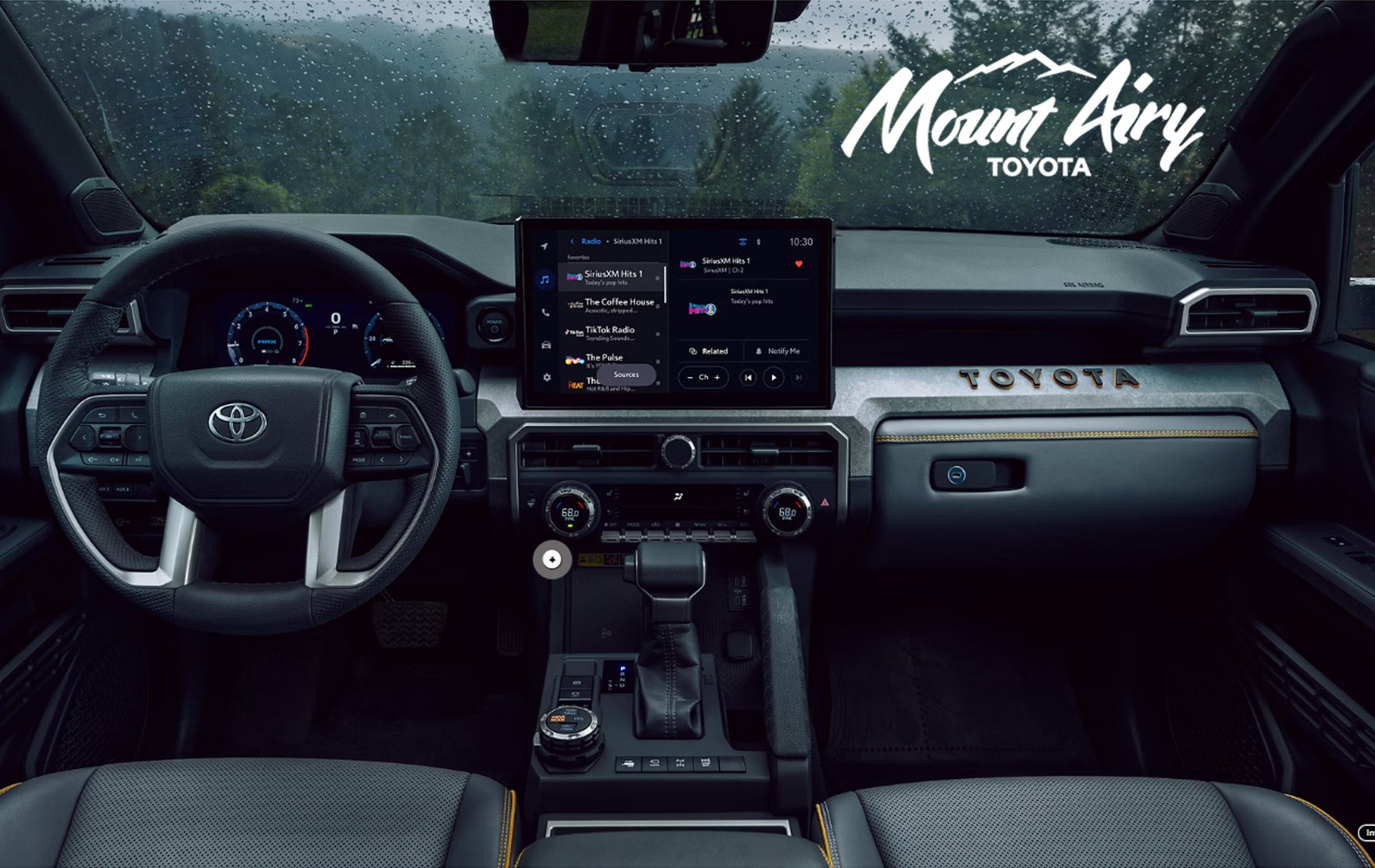
At Mount Airy Toyota, we believe car ownership should be empowering—not confusing. That’s why we created the Insider Tips Series, a collection of straightforward tutorials and proven advice on everything from car buying to maintenance, ownership, and service. Each episode takes a practical look at real-world driving challenges and offers expert guidance that helps you save money, avoid costly mistakes, and get more out of your Toyota. To kick off the series, we’re highlighting two important topics: how mountain driving affects your car and the hidden features built into Toyotas that many drivers never use. Mountain Driving: What Wears Out First Driving in the North Carolina mountains is a unique experience. The steep climbs, sharp descents, and winding roads don’t just challenge drivers—they also put extra stress on vehicles. In one of our first videos, Mount Airy Toyota Certified Technician Chris Pack explains that tires, brakes, and fuel consumption take the biggest hit when you drive in the mountains. Tires The constant uphill climbs and downhill braking cause tires to wear out faster than on flat terrain. Mountain drivers often find themselves replacing tires sooner than expected, making regular inspections essential. Keeping an eye on tire tread and alignment can prevent uneven wear and extend the life of your tires. $$$ SAVINGS TIP - Keep your Toyota driving safely with a fresh set of tires—and save big while you do it! Watch our website and social media for the Mount Airy Toyota Tire Sales.  We often advertise buy three tires and get the fourth tire FREE. Expert Toyota Certified installation Tires matched for your model and driving needs Boost safety, performance, and fuel efficiency Brakes Brakes are one of the most important—and most overlooked—parts of mountain driving. Frequent downhill braking generates more heat and friction, which can wear out pads and rotors at a much faster rate. Getting your brakes serviced on time doesn’t just improve safety; it also saves money. When brake pads are replaced before they wear down completely, you avoid damaging rotors and calipers, which can lead to costly repairs. In other words, preventative service now means avoiding major expenses later. Fuel Efficiency Steeper terrain requires more power, which means more fuel. While there’s no way around the physics of climbing mountains, keeping your tires properly inflated, maintaining a clean air filter, and following regular service intervals can help maximize your fuel economy. The takeaway is simple: regular maintenance is not optional—it’s essential. Staying ahead of tire and brake service not only keeps you safe on mountain roads but also protects your wallet from unexpected repair bills. Hidden Features: Getting the Most From Your Toyota Our second video in the series dives into something many drivers overlook: the hidden features built into their Toyotas. These features are designed to make daily driving easier and more convenient, but too often, owners never use them. Key Fob Technology Your Toyota key fob is more than just a way to lock and unlock your car. Depending on your model, it can roll down your windows, open the trunk remotely, and even activate a panic alarm with specific button combinations. These functions can save time, add convenience, and improve safety, yet many Toyota owners never take advantage of them. Watch this video by Mount Airy Toyota Certified Tech, Chris Pack to learn about your Key Fob. Additional Features Drivers Forget Automatic High Beams – Many Toyota models include this feature, which automatically switches between high and low beams to improve nighttime driving safety. Eco and Sport Driving Modes – These selectable modes adjust throttle response and fuel efficiency. Eco mode helps save gas, while Sport mode sharpens performance for a more responsive drive. Rear Seat Reminder – Designed to alert you to check the back seat before leaving the vehicle, this safety feature helps prevent accidents and forgotten belongings. Toyota Safety Sense Alerts – From lane departure warnings to adaptive cruise control, Toyota’s safety systems have customizable settings that many owners never personalize. Taking the time to adjust them can improve your driving comfort and confidence. By exploring these hidden features, our goal is to help you get the most out of your vehicle. After all, you invested in Toyota quality—you deserve to enjoy every feature it offers. Why This Series Matters Between car buying myths, confusing service schedules, and overlooked technology, drivers face a lot of uncertainty. Our Insider Tips Series was created to clear up that confusion. We want to provide: Clarity – Cutting through myths with honest, straightforward answers. Confidence – Helping you understand your vehicle so you can make informed decisions. Cost Savings – Showing you how preventative maintenance and smart ownership habits save money over time. Each video features our certified technicians and experienced team members, giving you access to insider knowledge without the jargon. Whether it’s understanding how mountain driving affects your brakes or learning a hidden feature on your key fob, the series is designed to make car ownership easier and more enjoyable. Who Should Watch This series is for everyone who owns—or is thinking about owning—a Toyota: New drivers will gain practical tips without feeling overwhelmed. Long-time owners will discover features they might not know about and learn ways to extend their vehicle’s life. Families on a budget will find strategies for saving money without compromising safety. In short, the Insider Tips Series is for anyone who values transparency, expertise, and peace of mind when it comes to their car. Join the Conversation The Mount Airy Toyota Insider Tips Series is more than just videos—it’s a resource for our community. We’re here to answer questions, share knowledge, and help you make the most of your Toyota ownership experience. 👉 Subscribe to our channel and follow along as we roll out new episodes. With each one, you’ll gain insights that make driving safer, smarter, and more affordable. At Mount Airy Toyota, we’re not just here to sell cars—we’re here to help you enjoy every mile.

Toyota vehicles are known for their impressive resale value.

Why a Toyota is a Smart Investment in 2025

Looking for a reliable, durable vehicle that holds its value? Look no further than a Toyota. Toyota has a long-standing reputation for quality and dependability, and that translates to excellent resale value. Let's explore why a Toyota is a smart choice for your next car. Toyota's Legacy of Durability and Reliability It's not just hype – Toyotas are built to last. A significant percentage of Toyotas sold in the past two decades are still on the road today. This impressive track record speaks volumes about their durability. When you buy a Toyota, you're investing in a vehicle designed to withstand the test of time, saving you money and headaches down the road. Less time in the shop means more money in your pocket. Resale Value: A Key Advantage Toyota vehicles are known for their impressive resale value. When it comes time to trade in or sell your Toyota, you can be confident you'll get a fair price. This is due to a combination of factors: their reputation for reliability, their longevity, and the consistent demand for Toyota models. What Contributes to Toyota's Value? Several factors contribute to Toyota's strong resale value: Brand Reputation: Toyota has consistently been ranked among the most reliable car brands. This trust, built over decades, is a major selling point. Consistent Improvement: Instead of radical redesigns, Toyota focuses on incremental improvements, refining existing models and maintaining a familiar aesthetic. This "if it ain't broke, don't fix it" approach resonates with buyers. Popularity: Toyota's popularity plays a significant role. Recognizable models with established track records hold their value well. Safety First: Toyota Safety Sense Toyota prioritizes safety, and many models come standard with Toyota Safety Sense, a suite of advanced safety features designed to protect you and your passengers. While specific features may vary by model and year, these systems often include: Pre-Collision System with Pedestrian Detection: Helps mitigate or avoid collisions with vehicles or pedestrians. Lane Departure Alert: Alerts you if you unintentionally drift from your lane. Automatic High Beams: Optimizes nighttime visibility by automatically switching between high and low beams. Dynamic Radar Cruise Control: Maintains a safe following distance by automatically adjusting your speed. Award-Winning Lineup Toyota's lineup has consistently earned awards and accolades. While specific awards change annually, Toyota models are frequently recognized for reliability, safety, and value. Check out the latest awards and recognitions on Toyota's official website. Beyond the Basics: Features that Add Value Toyota vehicles offer a range of features that enhance their value. From comfortable interiors to advanced technology, there's something for everyone. Features like smartphone integration, advanced infotainment systems, and driver-assist technologies make the driving experience more enjoyable and convenient. Be sure to check the specific features available on the model you're interested in. Affordability and Long-Term Savings Toyota aims to offer competitive pricing across its lineup. Combined with excellent fuel economy and lower maintenance costs due to their reliability, Toyota ownership can lead to significant long-term savings. Investing in a Toyota: A Smart Choice Whether you're looking for a sedan, SUV, truck, or hybrid, Toyota offers a wide range of vehicles known for their reliability, durability, safety, and excellent resale value. Visit your local Toyota dealer to explore the latest models and find the perfect Toyota for your needs. Do your research, compare models, and take a test drive to experience the Toyota difference firsthand.

Dashcams are a great way to capture evidence should you be in an accident.

The Dish on Dashcams

The Dish on Dashcams YouTube dashcam posts are everywhere now! Activities caught on dashcams include meteors, animals crossing, winding mountain roads and accidents. Beyond unbearably cute bear families, having dashcam footage can protect you from potential liability for accidents, particularly when the other driver is at fault, uninsured or drives off in a hurry. At Mount Airy Toyota, we want you to travel safely, and we know that anything can happen while you’re driving and it’s good to be prepared. Dashcams are a great way to capture evidence should you be in an accident. Dashcams (dash cameras) have become more popular than ever in recent years. In 2023, it was estimated that 10-15% of U.S. drivers had dash cams (Yahoo! finance). In early 2024, Yahoo Finance also reported that dashcams sales had a revenue of $4 billion in 2022 and it was estimated that this will increase to $12 billion by 2033. The article further went on to state, “The growth of the market is attributed to the amplifying rate of road accidents around the world. According to the World Health Organization, more than 1.19 million individuals die in road crashes and about 20 to 50 million people experience injuries that lead to disability. An increase in the number of cars and other vehicle purchases across the globe is projected to hike the demand for the dashboard camera market.” The desire to have a dashcam in vehicles varies by driver, but the main reason is to protect yourself from liability in a traffic accident, particularly from incidents such as a staged accident, false insurance claims or hit-and-runs. Dashcams can also be useful to monitor your vehicle when you are not in it or to record disputes or incidents. While insurance companies typically don’t offer discounts if you have one, it can help you with claim resolution by proving you were not at fault. Many commercial vehicles rely on dash cam videos to document road incidents. Law enforcement and emergency services use dashcam footage for a variety of purposes. There are many options to choose from on the market and here are some considerations: Do you need a dashcam with a screen? What about an interior camera? Would you like the dashcam to monitor vehicle speed and have GPS locating? How well does it work at night? Is it legal in your area and what does your car insurer think about them? It is legal in North Carolina to have a dashcam (be sure it’s not obstructing your view) and you should ask your insurance company if they offer any discounts for having one. Best Dashcams In 2024, Car and Driver Magazine compiled a list of their dashcam picks that focused on options, price and overall quality. For overall use, they chose the Vantrue N4. “The Vantrue N4 is an exceptional value, offering a dashcam, cabin-facing camera, and rearview camera. It attaches to the windshield with a suction mount, and its cameras can be adjusted for optimal coverage. The front dashcam records at 2560 by 2160 pixels but drops to 2560 by 1440 when all three cameras are used. The cabin and rear cameras have 1920 by 1080 resolution. The cameras have wide fields of view with minimal distortion, and the cabin camera includes infrared lighting for low-light conditions.” Car and Driver adds, “The N4's integrated screen features a picture-in-picture mode that displays all three cameras' feeds simultaneously, along with settings and recording modes. It offers low-frame-rate and low-bit-rate recording modes, but we found these can drain the car battery. The device also includes collision and motion detection, automatically saving relevant footage. A 128 GB micro SD card holds about 6.7 hours of footage.” Car and Driver noted this pick for best overall dashcam was because of the reasonable price point, quality of image in various lighting conditions and features.  List price $289.99 Amazon In the premium range, Car and Driver went with the Cobra SC 400D. “As far as pure visual performance, the Cobra SC 400D was the best dashcam we tested thanks to its 4K resolution. We agreed that its video footage genuinely looked the best too. We found the touchscreen to be easy to operate and responsive, and the Cobra uses its proprietary DriveSmarter app to provide police alerts and other driver reports. If we had one minor grumble, it would be that the mount only swivels forward and backward, not side to side. However, the wide angle of the lens practically eliminates the need to do so. The Cobra secures to the windshield via a large sticky pad for the mount and a very strong magnet for the camera itself.” Shares Car and Driver. List price $399.95 Amazon For a dashcam that won’t break your budget, Car and Driver picked the Car and Driver 1080P HD Dashcam. Shares Car and Driver, “We appreciate that we'll probably get some flak for including this model in this test when there are so many dash cams out there. But we were determined to evaluate our (licensed) namesake unit on its own merits—and darned if it didn't step up as the best budget option we tested.” “The Car and Driver 1080P Dashcam has front and rear cameras and a touchscreen interface for easy driver control. The unit has standard features like parking mode, collision detection, and a G sensor to keep one eye open after you've left the vehicle. “ “One thing we really liked about this model is its dual tripod option that allows different mounting iterations from the top or bottom of the camera. This feature made it easy to adjust the dash cam according to the angle of the windshield. This budget-friendly dual camera covers all the essential features and has adjustable orientations. It's an excellent choice for dashcam beginners.” List price $49.99 Walmart Another entry-level dashcam is the Nexar Beam. “ With a reasonable price tag, it boasts the standard features you'd expect to find, like parking guardian and G-sensor collision detection, and advanced features like GPS connectivity for data overlay. Another unique option is that the app can generate an insurance incident report aligning with footage and handy GPS coordinates.” List $129.99 Amazon For a compact model, Car and Driver’s petite pick is the Garmin Mini 2. “The Garmin Mini 2 is an excellent choice for someone looking to keep their dashcam discreet and out of the way. It's compact enough to tuck behind your rearview mirror if so desired. The app functionality is quite nice as well, and the 1080p matched up well against the competition despite its diminutive size.” Car and Driver continues, “While it's a nice set-and-forget dashcam, we found that it's a bit tricky to determine whether everything is set up correctly without checking it via the app. The lack of a screen makes it difficult to see if the camera is lined up properly. Additionally, there are a few different lights that blink on the cam, and it's confusing at first to know what they all mean. But once you get that all set, the Garmin Mini 2 is a solid choice for a tiny dash cam.” List price $129.99 Amazon. If you want to dash in a flash, The MAXcam 360c primarily serves as a radar detector with a secondary dash-cam function and is Car and Driver’s pick for a combination device.  It isn't ideal for those seeking only a dashcam. But for anyone wanting a radar detector with a competent camera, it’s a solid choice. “The dashcam boasts a 2560 by 1440 resolution with a Sony Starvis image sensor that captures 30 frames per second and offers a 143-degree field of view. The video quality is contrasty (sharp), with noticeable noise reduction and compression that significantly impacts image quality. We found the MAXcam 360c performed well in low-light conditions, although finer details became blurry. It clearly captured license plates up to ten feet away under ideal conditions, but beyond that, its clarity is a miss, even in the most ideal conditions.” Car and Driver adds, “This product isn't suitable for everyone due to its high cost and the complexity of using a radar scanner. But if you're looking for a radar detector as well as a dashcam and want to kill both birds with one stone, this Escort fits the bill.”  List $849.95 Amazon. What about my Toyota? Some recent Toyota models came with Toyota Integrated Dashcam. This was available on the following vehicles: 2022-2023 Toyota Camry 2022-2023 Toyota Highlander 2023 Toyota Prius 2023 Toyota RAV4 2023 Toyota RAV4 Prime 2023 Toyota Sequoia Hybrid 2021-2023 Toyota Sienna Hybrid 2022- 2023 Toyota Tacoma 2022-2023 Toyota Tundra 2021-2023 Toyota Venza Toyota Genuine Dashcam was available with the 2019-2023 Toyota 4Runner. Both of these systems include interesting event reporting, parking surveillance and more.  If you need assistance using your Toyota dash camera product, reach out to the team at Mount Airy Toyota.

Distracted Driving and Advanced Driver Assistance Programs

What You Need to Know About Advanced Driver Assistance Systems & Distracted Driving

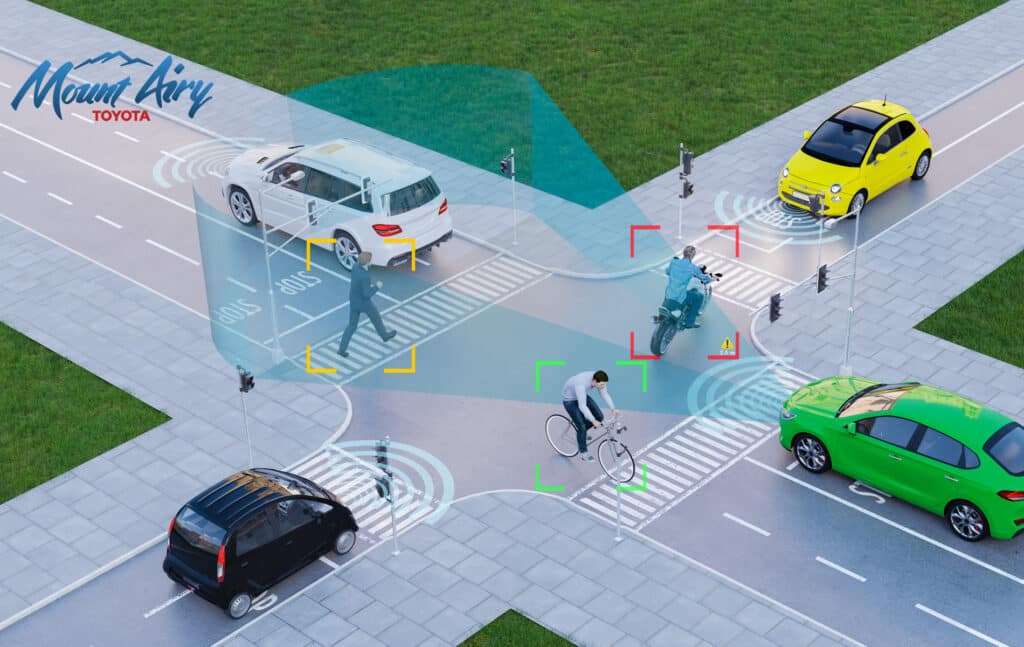
What You Need to Know About Advanced Driver Assistance Systems Though advanced driver assistance systems are considered a modern marvel when it comes to driving, there are some concerns being raised about them. These newer hands-free vehicle systems do provide a higher level of safety, there’s no question about that, but some believe they can cause additional distractions as well. Hands-free calling, texting, GPS, and other modern, high-tech features take our minds off traffic, especially in the evening hours, which heightens the possibility of drivers losing focus. Winston-Salem, NC made the news recently, as both television and print outlets all over the state (including Charlotte) have reported on the dangers of distracted driving, citing specific accidents in areas around town. Though some of the information provided in these reports was a bit cherry-picked, much of what was reported is insightful information. For instance, did you know that from 9 pm to 11:59 pm on Friday and Saturday nights is the most dangerous time to be on the road? Whether you are driving through a small or big town, a congested or seemingly open road, there are plenty of ways to become distracted while driving, and this report points to the fact that advancements in the way we drive are not necessarily eliminating distractions–conversely, they may be enhancing them. What Are Driver Assistance Systems? Advanced Driver Assistance Systems, or ADAS, are various technologies created to improve the driving experience, namely, to promote vehicle safety. This process involves the implementation of automated assistance to the driver to help reduce the possibility of human error. This is done by using sensors, cameras, radar, and other advanced tech features to monitor the vehicle’s surroundings at all times and to assist in various driving tasks–such as adaptive cruise control, lane-departure assistance, automatic emergency braking, and parking assistance. But are these systems doing too much for us? Are they causing us to pay less attention to the technicalities of driving and spending more time letting our minds wander?   For some car companies, like Toyota, these advanced systems are nothing new, though they are often updated. The availability of specific assistance features can depend on the trim level and options chosen for each vehicle, but a variety of them can be found in most versions of Toyota’s Camry, RAV4, Corolla, Highlander, Tacoma, Prius, Avalon, and Sienna.   Before we get into some details on how these systems work, and how we can keep from letting our minds wander while they are in use, let’s have a look into how incorporating ADAS provides clear benefits both drivers and passengers: Improved Safety: we can already see how ADAS helps prevent car accidents by providing safety assistance to drivers through the use of emergency braking, lane departure warning, and adaptive cruise control. Enhanced Convenience: ADAS can make the driving experience more comfortable and less stressful by assisting with tasks such as maintaining a safe distance behind other vehicles, keeping your vehicle centered in its lane, and aiding in parking maneuvers, such as the dreaded parallel parking. Reduced Driver Fatigue: by incorporating ADAS, drivers can get alerts and assistance when necessary if experiencing fatigue. These technologies can keep drivers from falling asleep and/or get them to pay attention to certain aspects of driving–for instance, if there is flooding, icy conditions, animals crossing, etc. Potential Insurance Discounts: some insurance companies offer discounts for vehicles equipped with ADAS, as these technologies have already proven their ability to reduce the likelihood of accidents and even minimize potential damage in the case of an actual collision. Environmental Benefits: certain features of ADAS, such as adaptive cruise control, can help with fuel efficiency by maintaining a consistent speed and following distance. Over time, this can lead to a drastic reduction in fuel consumption. Lower emissions means your car is better for the environment, and you are able to save money by visiting the gas station less often. Assistance for Drivers with Disabilities: ADAS can provide helpful assistance to drivers with disabilities by helping them operate aspects of the vehicle through automated prompting, the use of warning lights, etc. It can also assist those with limited mobility by setting itself to take care of things like the usage of blinkers and headlights without the prompting of the driver. Clearly, ADAS plays a crucial role in improving road safety and enhancing the driving experience, and this process of technological integration is only starting–who knows what the future holds! But how do we keep from losing focus since ADAS does so much of the work for us? To be honest, it doesn’t take special training or working through a series of steps. Focused driving simply requires a change in the way we communicate with our vehicle: though your car can now do more for you than ever before, it’s necessary to watch the processes take place. For instance, rather than constantly looking around your car as you drive alongside other vehicles on the highway, keep your attention on the dash and on your side mirrors, and let the ADAS system communicate to you what is going on through the sounds and images it shouts out to you. Always keep in mind that Advanced Driver Assistance Programs are meant to make driving easier, but they are not meant to take over completely. The same amount of attention is needed while driving, but now a lot of that attention can be directed to listening to what your car is telling you. You and your vehicle should be working in tandem to create a safe, enjoyable drive. How ADAS Works Integrated systems such as ADAS are quite complicated, but gaining a basic understanding of how they work can better inform drivers on how and when to use them. On the most basic level, ADAS uses a combination of sensors, cameras, radar, lidar, and software algorithms to monitor the vehicle’s surroundings. All of these technologies are used to assist the driver. Here is a general overview of how it all works: Sensors and Cameras – Small sensors and cameras are strategically placed around the vehicle so that they can continuously collect data on the car’s surroundings, including nearby vehicles, pedestrians, road markings, traffic signs, and obstacles. Data Processing – The data collected by sensors and cameras are processed in real time through the use of onboard computers. These computers use special algorithms to analyze the data received in order to identify objects on or around the road, detect potential hazardous situations, and assess the vehicle’s position in relation to the road and other vehicles. Decision Making – Once incoming data has been processed, ADAS makes decisions about the appropriate actions to take so that the driver is assisted, and safety mechanisms are enhanced. For example, if it is detected that the vehicle is drifting in and out of its lane without signaling, lane departure warnings and/or the steering assistant may be employed to alert the driver and to keep the vehicle in its proper placement on the road. Driver Feeback and Intervention – One of the great aspects of this sort of enhanced driving system is that ADAS provides feedback to the driver through visual, auditory, and haptic alerts in order to inform them of potential hazards in the moment. Not only that, but in some cases ADAS can also intervene directly by applying the brakes, adjusting steering, and even controlling the vehicle’s speed. Integration with Vehicle Controls – Most often, Advanced Driver Assistance is integrated with the vehicle’s existing control systems–like braking, steering, and throttle–so that there is active vehicle control when necessary without the prompting of the driver. Essentially, this means that ADAS does not have to wait for human interaction for it to kick in. This makes sense if you are heading towards danger without knowing it, you want your vehicle to know to apply the brakes whether your foot hits the brake pad or not. Continuous Monitoring and Improvement – What’s so great about ADAS is that it is continuously working. It is always monitoring the vehicle’s surroundings and performance–even if you are not–and it knows how to adapt and change driving conditions, and this effectiveness has actually improved over time. Manufacturers regularly update ADAS software to enhance performance, address potential issues, and introduce new safety features.   One other feature we like about the incorporation of ADAS is that if repairs or calibration are needed for the ADAS system in Toyota vehicles, a quick trip to the dealership is all that is required. Once on site, a certified technician can calibrate and/or repair any necessary areas. And there is no guesswork here, as your ADAS will let you know if there are necessary repairs or adjustments needed so that there is no compromise in the effectiveness of the system.   Driving is still about having fun and enjoying the open road but be careful driving your new Toyota Camry or Tundra. The hands-free features are terrific, but your mind still needs to be on the road. Take advantage of ADAS by letting your car communicate with you!

Mount Airy Toyota’s Comprehensive Guide to Advanced Driver Assistance Systems (ADAS)

Mount Airy Toyota’s Comprehensive Guide to Advanced Driver Assistance Systems (ADAS)

Toyota continues to lead the way with its commitment to safety and innovation in the ever-evolving automotive technology landscape. One essential advancement in the modern era is the implementation of Advanced Driver Assistance Systems (ADAS) — a suite of cutting-edge technologies designed to enhance vehicle safety, improve driving experience, and pave the way for a more connected and autonomous future. Below, Mount Airy Toyota explains ADAS more thoroughly, delves into which Toyota vehicles boast these systems in 2024, and more. Understanding ADAS Advanced Driver Assistance Systems, commonly known as ADAS, refers to a set of technologies integrated into vehicles to assist drivers and boost overall safety. These systems leverage sensors, cameras, radar, and other advanced technologies to monitor the vehicle's surroundings, detect potential hazards, and provide timely alerts or interventions to prevent accidents.   ADAS features many functionalities, including adaptive cruise control, lane departure warning, automatic emergency braking, blind-spot monitoring, and more. It employs a sophisticated blend of hardware and computer algorithms to enhance vehicle safety and help drivers in various aspects of their journeys. The primary goal of ADAS is to prevent accidents by providing real-time information about the vehicle's surroundings and potential hazards. Here's the gist of how it works: Sensors and Cameras: ADAS relies on an array of sensors strategically placed around the vehicle. These sensors include radar, ultrasonic sensors, and cameras. Cameras are crucial for visually recognizing the environment and detecting objects, lane markings, and traffic signs. Data Collection and Processing: The sensors continuously collect data from the vehicle's surroundings to capture information about the position of nearby vehicles, pedestrians, lane markings, and potential obstacles. Onboard computers then process this raw data in real-time. lgorithms and Decision-Making: Advanced algorithms analyze the processed data to make sense of the environment. These algorithms are designed to recognize patterns, identify objects, and assess potential risks. The system then makes decisions based on this analysis, determining whether intervention is necessary to avoid a collision or improve overall driving safety. Alerts and Interventions: ADAS can provide various notifications or interventions depending on the detected risks. For instance, if the system senses an imminent collision with a vehicle ahead, it might trigger automatic emergency braking to reduce the severity of impact. Lane departure warning systems can alert the driver if they detect unintentional lane drifting, and some systems can even assist steering to keep the vehicle within its lane. Adaptive Functionality: ADAS features often adapt to different driving conditions. Adaptive Cruise Control (ACC), for example, can automatically adjust the vehicle's speed to maintain a safe following distance from the car ahead, facilitating a more relaxed driving experience on highways. ADAS combines input from various sensors, cameras, and radar systems with sophisticated algorithms to enhance driver awareness and intervene when necessary. It ultimately makes driving safer and more enjoyable. ADAS vs. Toyota Safety Sense (TSS) ADAS is a general term encompassing various safety technologies, and Toyota Safety Sense is Toyota's specialized implementation of ADAS that brings a specific set of safety features to enhance the driving experience for Toyota owners. ADAS often includes automatic emergency braking, blind-spot monitoring, parking assistance, and more. Other automakers may have their own variations of ADAS with unique features and branding that reflect their commitment to safety and innovation. Toyota Safety Sense (TSS) Toyota Safety Sense is a comprehensive suite of safety features developed by Toyota to provide extra protection for drivers, passengers, and pedestrians. TSS integrates various ADAS technologies to address different safety aspects; it primarily focuses on collision prevention and mitigation. The TSS package typically includes a combination of the following features: Pre-Collision System (PCS): This feature uses sensors and cameras to detect potential collisions with vehicles or pedestrians ahead. It can then initiate automatic braking or warn the driver to avoid or mitigate the impact. Lane Departure Alert (LDA): LDA alerts the driver if the vehicle unintentionally drifts out of its lane. In some models, it can provide steering assistance to keep the vehicle centered in its lane. Dynamic Radar Cruise Control (DRCC): This technology maintains a set following distance from the vehicle in front by automatically adjusting the vehicle's speed. It offers a more relaxed driving experience, especially in highway traffic. Automatic High Beams (AHB): AHB enhances visibility during nighttime driving by automatically switching between high and low beams based on the presence of oncoming traffic. Blind Spot Monitor (BSM): This feature alerts the driver if there's a vehicle in the blind spot during lane changes, which does wonders for overall awareness and safety. Road Sign Assist (RSA): RSA recognizes traffic sign information and displays it on the vehicle's multi-information display; it essentially informs drivers of speed limits and other important road signs. TSS focuses on a core set of safety features integrated into the vehicle to prevent and mitigate collisions. Whether you're driving a compact sedan, a versatile SUV, or a powerful truck, there's a good chance your Toyota is equipped with some level of ADAS. Which Toyota Models Incorporate ADAS? As of 2024, Toyota has made significant strides in integrating ADAS across its diverse lineup of vehicles. These systems are designed to enhance safety, improve overall driving experience, and pave the way for a future of connected and autonomous driving. Let's take a closer look at some of the Toyota models that feature ADAS: Toyota Camry The Toyota Camry, a staple in the sedan segment, is equipped with an array of ADAS features. Drivers can benefit from technologies like Pre-Collision System (PCS), Lane Departure Alert (LDA), Adaptive Cruise Control (ACC), and more. It’s widely recognized as one of the safest cars for daily commutes and longer journeys. Toyota RAV4 The popular Toyota RAV4 is a versatile and stylish SUV that includes a lot of ADAS features in  a compact form. Automatic High Beams (AHB), Road Sign Assist (RSA), Blind Spot Monitor (BSM), and many other technologies contribute to an elevated driving experience. Toyota Corolla Similar to the RAV4, the Toyota Corolla is a compact vehicle that embraces many ADAS technologies. Features like Lane Tracing Assist (LTA) — which helps keep the vehicle centered in its lane — and Dynamic Radar Cruise Control (DRCC) are integrated into the Corolla's safety suite. High reliability and efficiency ratings also make this car one of the best overall purchases for consumers. Toyota Highlander The Toyota Highlander is a midsize SUV designed for families and boasts a comprehensive suite of ADAS features. With technologies like Rear Cross-Traffic Alert (RCTA) and Bird's Eye View Camera, the Highlander prioritizes safety and convenience for both the driver and passengers. And it looks beautiful on the road! Toyota Tacoma Toyota's durable and capable pickup truck, the Tacoma, is most known for its fantastic blend of ruggedness and style. It also happens to incorporate ADAS to enhance safety on and off the road. Technologies like Pre-Collision System with Pedestrian Detection (PCS w/ PD) and Lane Departure Alert with Sway Warning System (LDA w/ SWS) contribute to a secure driving experience. The modern “Taco” is as safe as it is attractive and functional. Toyota Prius As a pioneer in hybrid technology, the Toyota Prius also embraces ADAS to complement its fuel efficiency. The Prius features Lane Departure Alert with Steering Assist (LDA w/ SA) and Intelligent Clearance Sonar (ICS) for added safety during city driving and parking. Save money on gas while keeping yourself and your passengers secure on the road. Toyota Avalon The Toyota Avalon is a full-size sedan known for its comfort and sophistication. Full-Speed Range Dynamic Radar Cruise Control (DRCC), Automatic High Beams, and a slew of other features contribute to a refined and secure driving experience. This car is classy, safe, and smooth to drive. Toyota Sienna Redesigned as a hybrid minivan, the Toyota Sienna prioritizes safety for families. It includes ADAS features like Front and Rear Parking Assist with Automatic Braking (PA w/ AB) and Road Sign Assist (RSA), which make it a reliable choice for anyone seeking a spacious and secure family vehicle. These are just a few examples of the Toyota models equipped with ADAS in 2024. It's important to note that Toyota continues to innovate and update its lineup, and additional models may feature advanced safety technologies to meet evolving industry standards. Toyota remains committed to integrating ADAS into its vehicles so that drivers across various segments benefit from these sophisticated safety features. TSS technologies contribute to a safer and more enjoyable driving experience whether you're navigating city streets, highways, or off-road terrain. Repairing and Calibrating ADAS As technology continues to play a crucial role in enhancing vehicle safety, your vehicle’s ADAS is integral to your driving experience. These systems are designed for durability and reliability, but there may be instances when repairs or calibrations are necessary. Here are seven things to do if your car's ADAS requires attention. Be attentive to warning signs. Pay close attention to any signs of issues with your ADAS. Unusual error messages on your dashboard, malfunctioning safety features, or minor collisions can trigger the need for repairs or calibration. Ignoring these warnings can compromise your safety on the road. Refer to your owner's manual. Your Toyota's owner's manual is a valuable resource for understanding the intricacies of your vehicle's ADAS. Familiarize yourself with the manual's TSS section to grasp the functions of each system and learn potential troubleshooting steps. A well-informed owner is better equipped to address issues promptly. Contact Mount Airy Toyota Service Center. In the event of ADAS concerns, promptly contact our authorized Mount Airy Toyota Service Center. Our skilled technicians have the expertise and specialized tools required to accurately diagnose and effective resolve ADAS issues. Early intervention can prevent minor problems from escalating. Provide detailed information. When communicating with our service center, provide clear and detailed information about the symptoms or incidents that led to the ADAS malfunction. A precise account helps our technicians assess the situation accurately and expedite the repair or calibration process. In other words, accurate information streamlines the diagnostic process! Trust certified technicians. ADAS repairs and calibrations demand precision and technical knowledge. Trust our certified technicians at Mount Airy Toyota to handle these tasks. They have access to genuine Toyota parts and cutting-edge equipment to ensure your ADAS functions optimally post-repair. Certified technicians guarantee the quality of service that other mechanics cannot. Consider regular maintenance checks. Take a proactive approach by incorporating regular maintenance checks for your ADAS during routine service appointments. These checks can help identify potential issues early on, prevent more significant problems, and keep your ADAS features working reliably. Regular checks contribute to long-term system health. Be patient and stay informed. Depending on the issue’s complexity, ADAS repairs or calibrations may take some time. Exercise patience, and feel free to ask our technicians about the progress. We strive to keep you informed every step of the way to ensure your satisfaction. Anyone driver can tell you that patience and communication contribute to a positive service experience! The Bottom Line Toyota continues to push the boundaries of automotive technology with the widespread integration of ADAS in 2024. These cutting-edge features ultimately contribute to safer roads and redefine the driving experience for car owners. As you embark on your journey with a Toyota vehicle equipped with TSS, remember to stay informed about these systems’ capabilities  and proactively address any repair or calibration needs. With Toyota's unwavering commitment to safety and innovation, the road ahead promises to be exciting and secure. Connect with Mount Airy Toyota today to learn about the vehicles on our lot or schedule a service for your existing model!

Don't Drive in a Flood

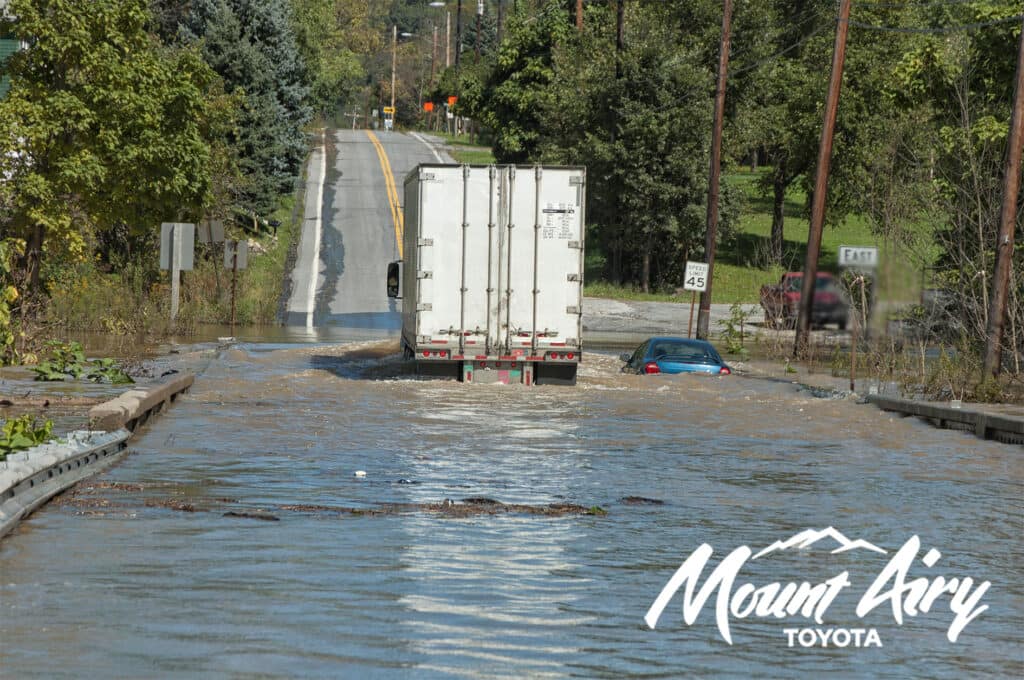
Rain Forecasted in Mount Airy - Don't Drive In A Flood

Driving during heavy rains can be treacherous especially if flash floods are predicted. Weather forecasters are already expecting heavier rainfall for this summer. According to Weather.com, El Nino might cause “wetter than average” conditions and may cause more thunderstorms for the Carolinas. According to co.surry.nc.us, the most dangerous place to be during flooding is on the road. At Mount Airy Toyota, we want drivers to be prepared and know how to drive in a flood. If you are driving when it is or has recently been raining heavily, you could have to deal with flooded roads. Here are some tips for driving in a flood: Prepare in Advance. The old adage from the Boys Scouts of “Always Be Prepared,” is still great advice. Pack an emergency kit that includes maps, drinking water, radio with batteries, flares, blanket, and flashlight. Also, be aware of roads and areas that are more likely to flood and avoid those routes during heavy rains. Slow Down. When you are approaching standing water, slow down. If there are other cars, let each car pass through the water one at a time. Only drive through standing water if it is less than six inches deep Estimate Depth. Before driving through standing or pooling water, estimate the depth of the water by looking at other indicators on the road. If it appears to be more than 6 inches, turn around. A car can stall in as little as six inches. A foot of water can make a car or even an SUV float and 2 feet of water can make the car float away. Respect Closed Roads. If you see a barricade, do not try to drive through it or around it. The barricade means the passage is unsafe and you should turn around. Get to Higher Ground. If your car stalls while driving through water, get out of the car and get to higher ground. Be sure to call 9-1-1 for help. If you can’t get to higher ground without wading through the flood water, get on top of your car to wait for emergency help. Remember, your car is not a boat! Driving through floodwaters can be a dangerous gamble. Be aware of alternate routes, so that you can always turn around and go a different way. For more information on preparing for a flood, visit: https://ncdisaster.ces.ncsu.edu/disaster-factsheets/preparedness/ Mount Airy Toyota is located just south of the Virginia state line at 508 N Andy Griffith Pkwy, Mount Airy, NC.  For more information call 336-786-2118 or visit their website at MountAiryToyota.com.

Car Seat Installation Tips

Safety Features and Gadgets for Your New Toyota

The safety features that come with a car have become increasingly important when consumers are considering what to buy next. Some reports say well over half of car buyers want features that assist with driving, blind spot recognition, backup cameras, and other features that help guarantee well-being. Mount Airy Toyota offers top-of-the-line Toyota products that lead the market in safety measures, made possible with state-of-the-art technology. This is because all Toyota products come with Safety Sense, a patented technology unique to the brand and designed to keep your family safe. For those with a family, keeping your children, pets, friends, and others safe is likely a driving force behind many of your decisions. A safe car is the first piece, but there are other measures you can take and invest in that can better protect your loved ones. Car Seat Installation Crashes are a leading cause of injury for children from 1 to 13. Properly installing and utilizing a car seat for your children is a key way to protecting your child from injury in the event of a crash. A car seat alone isn’t enough to increase safety, it’s vital that you properly install the seat to minimize risk. Tips For Installation While it may seem as simple as placing it in your backseat and clicking the buckle, you’d be surprised at what comes with your car seat. Here are some key ways to get the most out of your car or booster seat for your young ones. Read Up Car seats don’t include an instruction manual for the sake of light reading, they include it because it’s necessary to understand how it can help. Car seats need to be secure, using anchors or the seatbelt as a way to include the piece in its place. Making sure it’s not moving side to side is a key way to tell if the installation is going correctly. Know What You’ve Bought Car seats are varied, with differences between forward-facing and backward-facing seats, convertible seats, and booster seats, all with a wide arrangement of materials. Being aware of what you have and how to best aid its effectiveness is important. Make Sure the Seat Works For Your Child A car seat that isn’t designed for your child can prove more dangerous than you may expect. Seats not made to hold a child of a specific size, that secure your child properly, or that are compatible with your vehicle can all provide a false sense of safety when driving. Knowing when to move your child to a booster, the number of straps necessary, or when to take them out of a safety seat altogether is another vital part of child safety. A good rule of thumb is that the harness needs to be snug and secure, and children should age out of car seats into boosters somewhere around age 8. Innovation In Car Seats Car seats are constantly evolving and tackling issues that are prevalent risks for children. As the weather warms up headlines may appear discussing the tragedy of a child being left in a hot car. This isn’t just a possibility, leaving a child in the car is a reality for some. Horribly, 37 children a year die from being left in a hot car. Hectic days and errands can leave a parent slipping from the car without checking the back seat and any amount of time spent in the car alone is likely too much. For instance, children’s bodies can heat up around 3 to 5 times as quickly as an adult's. This means that even on cold days, heatstroke is something to worry about. Innovations in car seats have created alerts and sensors that can let you know if your children are still in the car. And while the measure may seem unnecessary, sometimes being safe is better than being sorry. A Nod To Pets While we’re on the topic of heat-related injuries, it’s important to touch on our furry friends. Hundreds of dogs a year die from being left in a hot car. While some folks think that a cracked window or a cooler day will make the car a safe place for your pet, it’s more dangerous than you may think. On a 70-degree day, a car is capable of hitting temperatures of up to 100 within 20 minutes, temperatures well over the amount safe for every pet possible. The only real way to protect your pet is to leave the car running while occupied by another adult, allowing the AC to work its magic and keep your beloved pet safe and cool. If your pet is a frequent ride-along, it’s also necessary to teach them good commands related to exiting a vehicle. Parking lots can be dangerous for pets, making sure they respect wait commands and come commands can make it easier when you both hit the road. Toyota As A Safety Leader For those who have read most of this article, you’re likely truly dedicated to safety. While the tips listed earlier are a great way to improve safety, they’re only as useful as the vehicle they’re in. Vehicles with the highest safety ratings are rated that way because of diligent testing and numerous metrics that validate their safety measures. Toyotas consistently rank as some of the safest cars on the market. Scoring as leaders in surveys from multiple national leaders. Safety sense is a great example of a brand’s commitment to safety as a core tenant of the product they provide. Safety sense is included in every new model of Toyota and boasts a few key ways to make driving as safe as possible. Pre-Collision Detection: Camera and radar systems alert the driver of both cars and pedestrians, reducing the likelihood of countless collision possibilities. Dynamic Radar Cruise Control: Cruise control that adapts to the car in front of you, maintaining a safe speed and distance away from others, preventing rear-ends, and making long drives easier. Lane Departure Alert: Cameras help keep you in your lane and alert you when you’ve crossed too far, keeping your attention and your vehicle on the straight and narrow. Automatic High Beams: Using cameras to detect the lights of vehicles around you, your Toyota can identify when to turn on and off your high beams, maximizing your vision during dark drives. Lane Tracing Assist: Lane tracing assist can help you stay in the line by using tracing of your surroundings, helping you stay centered and away from danger. Road Sign Assist: Your Toyota can detect the signs around you, displaying them for ease of your travel. This can range from speed limits, do-not-enters, yields, etc. Whatever the case, you’ll know what the signage is saying. With all of these features being included in newer Toyota models, you’ll have peace of mind in the safety of your new car. Buying For Safety If you’re planning on buying a safe vehicle, check out Mount Airy Toyota today. A leading dealership in providing some of the safest cars on the market. As mentioned earlier, all new models come with the included safety sense features. And if you’re still unsure about making the jump into the Toyota brand, just examine some of the few customer testimonials after buying from Mount Airy Toyota. While at the end of the day, there’s more to safety than just the car. Car seats, preventative measures, and attention to detail help create and build a robust safety experience. Still, a safe car is the most important foundation in the building block to safety. If keeping safety drives your decision in vehicle buying, consider joining the Toyota family today.

Car Safety and Your Dog

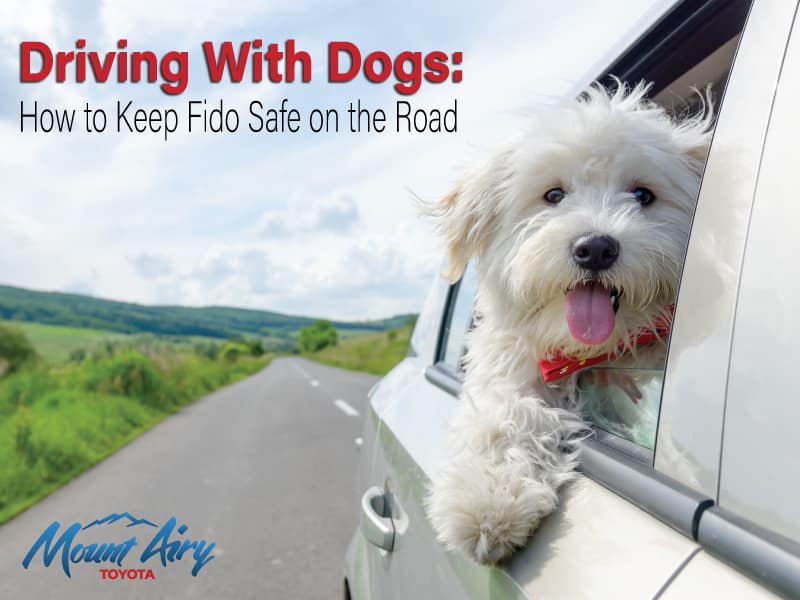
Driving With Dogs: How to Keep Fido Safe on the Road

Many dogs can’t wait to go for a joyride, while others suffer from vehicle anxiety. But no matter what side of the spectrum your pup falls on, you want them to be as safe and comfortable as possible anytime they are in the car. There are many potential dangers to consider. Your dog could jump out of an open window from excitement or anxiety, get injured from an airbag in the front seat, or even become a projectile during a collision, to name a few. But your furry family member can also distract you from safe driving, whether it’s by incessant barking, leaping into your lap, or bustling around the cabin and blocking your sight. By taking some precautions and making a purchase or two, you can provide an extra level of protection for Fido. Below, Mount Airy Toyota discusses how you can keep your dog safe and secure during car trips. Safety Precautions First of all, dogs should always ride in the backseat of a moving vehicle. Sure, it might be cute when your pup plops down in your lap (or even the passenger’s lap), but this can prove dangerous for you and your dog. It not only can cause distractions for the driver, but if your dog gets excited or anxious, they could even hit the steering wheel unintentionally. And whether or not your dog is in a carrier, they could be crushed if an airbag in the front seat is deployed. Another common hazard for dogs in vehicles is when the owner allows them to hang their head out the window. While this can be exhilarating for canines, it can also result in sand, dirt, and other debris flying into their eyes and ears. Plus, a window that is open too far can tempt dogs to jump out of the vehicle. Furthermore, your dog will be the safest during car trips if they are contained via a crate, carrier, seat belt, or barrier. Crates and Carriers Perhaps the most practical way to ensure your dog is secure in your vehicle is to invest in a crate or carrier. There are many quality products by PetSafe, Petmate, Diggs, Sleepypod, Sherpa, and other manufacturers that will do the trick. Make sure your dog’s crate or carrier is the right size; you want your pup not to feel too restricted, but you also don’t want them to be able to stand up and turn around too easily. Plus, you’ll need to be able to get the crate or carrier in and out of your car without issue. And choose a product that is made of quality materials and provides adequate ventilation. Seat Belts Yes, you read that correctly! These days, there are seat belts designed specifically for our four-legged companions. Just like with the human versions, these seat belts can go a long way in restraining your pup and protecting them from harm. Consider your dog’s size and breed, and research the market for the best product you can find. Vastar, Kurgo, Pawaboo, Bwogue, and Mighty Paw manufacture some of the best-reviewed safety belts, harnesses, and tethers for canines. Barriers Another option for securing Fido while on the road is to install a barrier between the front and rear seats. There are a lot of different barrier styles on the market—the perfect option for your dog will depend on your dog’s size and tenacity, as well as what kind of vehicle you have. You can find metal or mesh barriers that stretch across the front seats. You can find barriers that fit between the two front seats, or hammocks that encompass the entire backseat. There are even barriers that are tailored to fit either sedans, SUVs, or trucks. Look to brands like PetSafe, Starroad-Tim, Dykeson, Bushwacker, and Frisco for quality products. Ramps Let’s not forget about getting your pup in and out of your car! Some dogs can benefit from a ramp, especially those that are older, have joint problems, or deal with other limitations. Similar to barriers, there are ramps specifically designed for sedans, SUVs, or trucks. But there are also products, such as telescoping and collapsible ramps, that can work with a wide range of vehicles. Petstep, Pet Gear, Titan, and PetSafe manufacture some of the best dog ramps available. Conclusion Your furry friend means the world to you, which is why it’s critical to ensure their safety on the road. Consider the precautions and products above as you look to keep your dog secure during car trips. Visit us at Mount Airy Toyota to find the perfect vehicle for you and your furry friend. You’ll have more peace of mind knowing you are minimizing distractions and other dangers!

Service Centers Mount Airy NC

Save Yourself from Costly Repair: Get Your Vehicle Serviced!

You don’t want your car to break down. And you don’t want to find out that you have to fork out money for an expensive repair that you weren’t budgeting for. But unfortunately, this can easily happen if you don’t take the necessary precautions. By scheduling vehicle service and knowing what signs to look for, you can prevent minor issues from progressing into major, costly ones by scheduling vehicle service and knowing what signs to look for. So, how do you know when it’s time to bring your vehicle in? Below, Mount Airy Toyota explains when to have your brakes checked, change your windshield wipers, get an inspection, and more! When Should I Get My Brakes Checked? Generally speaking, it’s best practice to bring your car in for service at least once a year, and that includes having the brakes inspected. But if you notice signs of brake problems in the meantime, you don’t want to wait before getting them checked. Perhaps the most common indicator that you have a brake problem is if you hear grinding, thumping, or squealing noises while applying your brakes. But there are many other signs to consider, such as: An oily, yellow-like substance leaking from under your vehicle. Vibration or pulsing from your brake pedal. Vibration throughout other components (such as the steering wheel) or the entire car. Sudden pulls of the steering wheel to the left or right when you apply the brakes. Less resistance when applying the brakes, leaving the need to push the brakes harder. An increase in distance needed to come to a complete stop. The smell of burning rubber when applying the brakes. Besides bringing your vehicle in for annual servicing and looking out for signs of brake issues, most automakers and mechanics suggest replacing brake fluid every two years (or 30,000 miles). And your brake pads should be replaced every 20,000 to 60,000 miles, depending on your driving style and the quality of the pads. When Should I Change My Windshield Wipers? Your windshield wipers are critical for staying safe on the road. But it’s probably not something you think much about unless your wipers go bad! It’s best to plan on replacing your wipers every six months to a year, but you should replace them immediately if you notice them becoming ineffective. The whole point of wipers is to clear rain, snow, and other substances from your windshield so that you can maintain proper visibility. If your wipers aren’t performing that basic function, then it’s a good indicator that it’s time for a replacement! And this applies if your wipers start to streak, split, skip, or squeak as well. It’s also a good idea to regularly inspect the wipers themselves. If there is a broken frame, cracks or tears in the rubber, limited flexibility in the squeegee, or corrosion on the metal parts, it’s time for a replacement. Using higher quality windshield wipers will typically mean that you need to replace them less often than if you use cheaper ones. How Often Do I Need an Inspection? For most Americans, car inspections are just part of being a car owner. Most states require you to have regular inspections in order to register a new vehicle or renew your registration. In North Carolina, your car must pass a statewide safety inspection each year. During this inspection, your mechanic will assess the vital components of your vehicle to ensure it is drivable and safe for the road. There is no statewide emissions law in North Carolina, but 22 counties require registered vehicles to pass an emissions inspection each year. The emissions inspection is usually performed in conjunction with the safety inspection. Other Signs Your Vehicle Needs Servicing Along with watching out for brake and windshield wiper issues, there are many other ways your vehicle can tell you if there’s a problem. For example, squealing noises could indicate a loose or worn-out timing belt, as could a whining sound under the hood. Inconsistent engine noises could mean that you need to have your engine inspected. And if you hear scraping sounds, you might have loose car parts rubbing together. Moreover, a grinding or crunching noise when shifting gears could be a sign of a transmission problem. Conclusion You don’t want to wait until it’s too late. Bring your vehicle in for servicing and inspection at least once a year. And if you notice any signs of a problem with your brakes, windshield wipers, or any other components of your car, address the concerns immediately. At Mount Airy Toyota, we offer full service on any and all Toyota models. Don’t hesitate to contact our team for any of your servicing needs!

2022 Toyota Highlander North Carolina

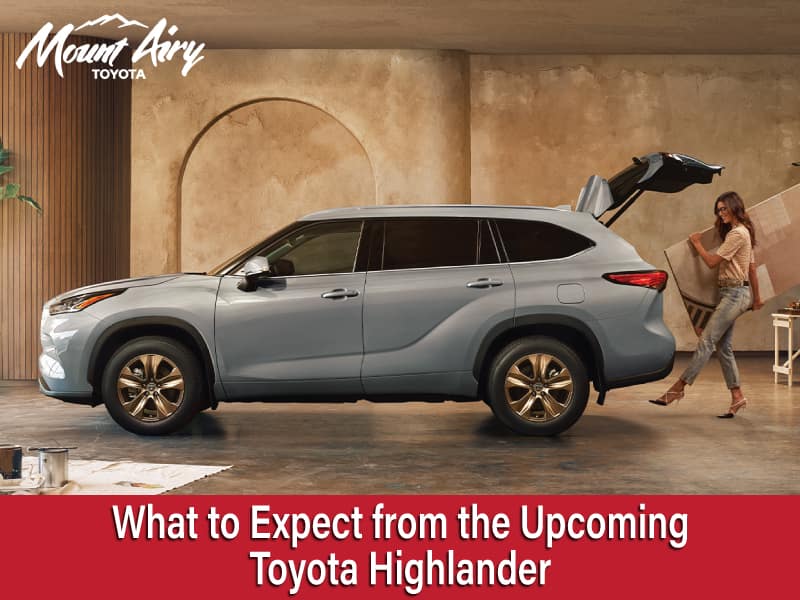
What to Expect from the Upcoming Toyota Highlander

Over the years, the Highlander has solidified itself as a mid-size SUV that can take on any other model in the category. Buyers have come to expect comfort, practicality, and exceptional style in the family-oriented crossover. Indeed, it rivals more expensive three-row SUVs in looks, ride quality, and technology. And of course, it comes with Toyota’s unmatched reputation for reliability and overall value. So, what can we expect from the 2022 Toyota Highlander? The manufacturer has made a few notable changes for the upcoming model, including an entirely new grade—the Bronze Edition. Below, Mount Airy Toyota will discuss these changes in more detail, highlight some of the 2022 Highlander’s features, and compare it to its staunchest competitors. Changes for 2022 Unquestionably, the biggest change for the upcoming model year is the all-new Hybrid Bronze Edition. Available in Wind Chill Pearl or Cement paint, the Bronze Edition rides on 18-inch bronze-colored wheels, among other striking features. In addition to this new model, the Highlander XLE and higher grades now offer a height-adjustable power front passenger seat. And other than minor updates to the exterior and interior, the 2022 Highlander mainly carries over from previous years. Highlander Hybrid Bronze Edition This new special edition Highlander is, in a word, stunning. Anywhere this vehicle treks, it’s guaranteed to turn heads. Rather than the typical blacked-out appearance of Toyota models that include the Nightshade package, the 2022 Highlander Hybrid Bronze Edition is attempting to capture a moment in design, according to Toyota. Available in either gray (Cement) or white (Wind Chill Pearl) exterior paints, the Bronze Edition will boast several bronze accents on the exterior and interior. All models will come with a hybrid powertrain, and they will also be available in either front- or all-wheel drive. If you like bronze, chances are you’ll be drawn to the Bronze Edition like a moth to a flame. 18-inch bronze-finished alloy wheels are accompanied by illuminated bronze-colored door seals and plenty of bronze interior elements. The seats are simply beautiful. Designed with mid- century modern fans in mind, the Bronze Edition seats are wrapped in Toyota’s leather-like SofTex material—bronze stitching and fabric inserts included. As if that wasn’t enough, the mats on the floor and in the cargo section come with attractive bronze logos stitched into them. In short, if you’re down with the current bronze and mid-century modern trends in architecture, you’ll likely appreciate the aesthetics of this three-row SUV. Mechanically, the Highlander Hybrid Bronze Edition is built off of the Hybrid XLE grade. That said, the Bronze Edition does offer some unique features, including: · Hands-free power liftgate · LED strip-type daytime running lights · Digital rearview mirror · Puddle lamps with Highlander logo · 10-way power-adjustable driver’s seat (with memory technology) · Rain-sensing windshield wipers · A house-style power outlet · Ambient lighting As with the standard 2022 Highlander Hybrid model, the Bronze Edition joins a 2.5-liter four-cylinder engine with two electric motors. One of the best parts about the Hybrid powertrain is that it is expected to provide a combined 36 mpg, yet thanks to the battery pack being concealed beneath the rear seats, the passenger and luggage space are not compromised. Front-wheel drive is standard on the base Hybrid Bronze Edition, and the optional all-wheel-drive configuration, which is unique to Highlander Hybrid models, powers the rear wheels via an electric motor mounted on the rear. This motor functions separately from all the other elements of the drive system, including the transmission, and drivers can choose when they want to operate it. No official release date or pricing has been announced for the 2022 Bronze Edition. However, we do know that it falls between the Hybrid XLE and Hybrid Limited in the Highlander lineup. This puts the expected MSRP at about $43,000 (not including the destination charge). And Toyota has hinted that the Bronze Edition will be released sometime in the Fall of 2021. Be sure to keep a lookout for more information from the automaker in the coming weeks, and don’t hesitate to contact Mount Airy Toyota for any questions you have! Performance Now that you have a fundamental idea of what to expect from the 2022 Toyota Highlander Hybrid Bronze Edition, let’s discuss what is in store for all of the new Highlander models, starting with performance: Engine and Transmission A 3.5-liter V6 engine comes standard on the Toyota Highlander. This engine is good for 295 horsepower and is matched with an eight-speed automatic transmission. You can get the SUV in either front- or all-wheel drive. This power train is ideal for daily commutes, as it can take care of on-ramps with ease and get you from zero to 60 mph in 6.7 seconds. The Highlander Hybrid utilizes a 2.5-liter four-cylinder engine and two electric motors. This model gives you exceptional fuel economy, but it’s not quite as powerful as the combustible engine models. The Hybrids are also available in either 4WD or AWD. And the powertrain includes a continuously variable automatic transmission (CVT). All and all, this results in a maximum of 243 hp and a zero-to-60 of 7.3 seconds. Fuel Economy According to EPA estimates, all Highlander V6 4WD models give you 29 mpg on the highway, and models with the AWD configuration will deliver 27 mpg. Not surprisingly, the Hybrid models provide much better results; 4WD variants will deliver about 36 mpg city and 35 mpg highway, and AWD models will deliver roughly 34 mpg city and 33 mpg highway. Driving Perhaps one of the most appealing qualities of the Toyota Highlander has always been its ride quality. If you didn’t know what vehicle you were driving, you might mistake it for a luxury model. The Highlander’s handling may not provide you with the dynamic experience of a sports car, but driving feels stable, responsive, and secure. And the SUV will feel smooth on most road conditions, even over rougher pavement and minor potholes. In short, this is one of the most comfortable three-row SUVs on the market for family commutes. Interior The interior of the 2022 Highlander is can be summed up as comfortable. The cabin has been constructed with top-tier materials, providing an overall sense of luxury. There is plenty of room in the cabin as well. You can choose between a seven-seat and eight-seat configuration. Many enthusiasts prefer the seven-seat configuration because it includes uber-comfortable captain’s chairs in the second row. Headroom in the front row comes to 39.9 inches in the Toyota Highlander, while second-row headroom is 39.4 inches. The headroom is 36.1 inches in the third row. As far as legroom is concerned, you’ll get 40.4 inches in the front row, 41 inches in the second row, and 27.7 inches in the third row. These are not the highest numbers on the market, but the Highlander provides enough space to be competitive in the segment. Additionally, the Highlander provides 6.0 cubic feet of cargo space behind the third row, which increases to 48.4 cubic feet with the third-row seats folded down. Furthermore, you can fold both the third and second rows for a total of 84.3 cubic feet of cargo room. In terms of infotainment technology, most Highlander grades are equipped with an eight-inch infotainment display, though the Limited and Platinum grades include a 12.3-inch screen. Buyers can opt for an eleven speaker JBL sound system. And every Highlander model comes equipped with Apple CarPlay, Android Auto, and Amazon Alexa compatibility to go with a 4G LTE Wi-Fi hotspot and Sirius XM Satellite Radio. Exterior The overall exterior styling and design of the 2022 Toyota Highlander will carry over from those of previous years. After all, it’s incredibly fine, sleek, and attractive, which is likely why the manufacturer hasn’t prioritized making any major changes. Along with distinguished design lines and curves, the Highlander has a short wheelbase and a bulky body (and if you see how it all comes together, you’ll see that’s a good thing). Plus, the wheel size is just disproportionate enough to turn heads. Overall, the Highlander boasts a sporty design, 20-inch alloy wheels, and provides features like optional twin-tip exhaust and auto-leveling LED headlights. Safety While neither the NHTSA nor IIHS has tested the 2022 Toyota Highlander, we can expect nothing but greatness. In the 2021 model year, the Highlander received an incredible five-star overall safety rating from the NHTSA, and the IIHS made the Highlander a top safety pick for 2020. Seeing as how minimal changes have been made to this model, we expect the 2022 Highlander to be among the safest vehicles on the road. Blind-spot monitoring and rear traffic alert are standard on Highlander XLE models, and automatic braking and front and rear parking assistance will be included on the Limited grade. Moreover, adaptive headlights with auto-leveling will come standard on Platinum models. A Top Safety Pick honor was largely presented to the 2020 Highlander because of its curve-adaptative LED headlights. Even without that feature, however, the SUV received a “Good” score and all six crash tests. The 2022 Highlander offers a ton of standard safety features, including Toyota’s Safety Sense package (i.e., lane departure warning with steering assist, pre-collision system with pedestrian detection, etc.), traction and stability control, full-speed range dynamic radar cruise control, cyclist detection, road sign recognition, lane tracing assist, and much more. Other Available Grades We talked about the 2022 Highlander Hybrid and Hybrid Bronze Edition, but let’s cover the other grades available for this model: Highlander L The base Highlander offers drivers LED headlights and taillights, body-color door handles and mirror caps, and 18-inch allow wheels to go with an eight-passenger configuration and cloth seats. For convenience, the Highlander L comes with three-zone automatic climate control, cargo tie-downs, and one-touch up/down window control. Highlander LE Step up to the Highlander LE and LED fog lights, as well as a power liftgate, are added. You also get sunshades in the second row, a leather-trimmed shift knob, and blind-spot monitoring among other features. Highlander XLE Right in the middle of the pack, the Highlander XLE comes with premium 18-inch wheels, roof rails, and a power moon roof. Inside, drivers get a seven-inch instrument gauge display, captain chairs in the second row, leatherette seats, heated front seats, and a height/tilt power-adjustable passenger seat. Wireless device charging and auto-dimming rearview mirror are also included. Highlander XSE The XSE grade essentially takes the XLE and makes it sportier. The 20-inch dark finished alloy wheels are joined by black headlight backing and a shorter exterior styling. You can opt for red leather seats on this model, and you’ll also receive features like ambient cabin lighting and a sport-tuned suspension system. Highlander Limited The Toyota Highlander Limited approaches luxury’s door. Drivers get 20-inch alloy wheels finished in chrome to go with a chrome grille surround and body-color side paneling. The interior includes a heated steering wheel, heated and ventilated front seats, and wood-like trim adorning the cabin. The step up to the Limited grade also comes with a load of convenience features, including front and rear parking sensors, driver’s voice amplification, a hands-free power liftgate, and more. Highlander Platinum The top-tier 2022 Toyota Highlander Platinum offers a rear cargo area bumper protector and an amazing panoramic moon roof. Heated seats in the second row and a head-up display also come standard, as do built-in navigation, a 360-degree camera system, a digital review mirror, and rain-sensing wipers. Primary Competitors The midsize SUV segment is extraordinarily competitive. There’s no shortage of three-row SUVs on the market, and nearly every automaker is spending ample time and energy keeping up with an ever-growing market. That said, the 2022 Highlander can be expected to hold its own in a crowded class. Let’s talk about three of the fiercest competitors the Highlander will face in this next model year: Ford Explorer There’s no denying that the Ford Explorer is a venerable competitor. It has a long reputation for being one of Ford’s best-selling vehicles. The Explorer has garnered praise for its overall performance, and it narrowly beats the Highlander in terms of interior space and cargo volume. However, the Highlander trumps the explorer in fuel economy. Then you have to consider the reliability and safety features provided by the Highlander. The Explorer is a good SUV, but unless you need the extra space and cargo room, the Highlander is the superior vehicle. Kia Telluride One of the newer SUVs on the marker is the Kia Telluride, and it’s had a strong start in the segment, largely thanks to the SUV’s focus on new technologies. The Telluride is also a practical vehicle with reasonable performance. But seeing as it’s only a few years old, there’s much to learn about the reliability of this model. Besides, it’s a completely different style of SUV in terms of exterior and interior design. If you’re going for reliability and safety, the Highlander is the clear choice between the two. Hyundai Palisade The Hyundai Palisade is another SUV that has entered the scene within the last few years. Essentially, the Palisade looks like a combination of the 2022 Highlander and 2021 Telluride. On par with other Hyundai models, the Palisade provides a lot of technology features for the money. But as far as ride quality, standard safety features, and reliability, it doesn’t come anywhere close to the Highlander. Conclusion The future looks bright for the Toyota Highlander. The all-new Bronze Edition is sure to garner attention with its mid-century modern aesthetics and excellent fuel efficiency. Moreover, every 2022 Highlander grade will provide buyers with the performance, design, features, and safety that has come to be expected from the vehicle’s fourth generation. If you’re looking for a three-row SUV that looks and feels more luxurious than the price suggests, the 2022 Toyota Highlander should be on your shortlist. And if you would like to stay posted on availability or schedule a test drive, remember to contact Mount Airy Toyota today!


Contact Us

Fill out this form below and we'll contact you shortly
*Required Fields