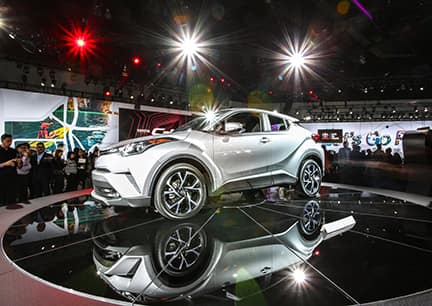

Blog / C-HR

Blog

All C-HR Toyota Toyota Safety Camry Rav4 Tacoma Trucks Highlander Events Corolla Service 4Runner Tundra Electric Cars Auto News by Mount Airy Toyota Toyota History Toyota Technology Car Care Sienna Tires Avalon Mount Airy Toyota Dealer Toyotathon Trade- In Mount Airy Toyota Service Prius Supra Toyotacare Used Trucks Prius V Sequoia Used Cars Landcruiser SUV Crossover Employees End of the Year Savings Hatchback New Pickup Trucks Yaris ARB Safari Snorkel Explained Crown Difference between i-Force Max & i-Force Fox Internal Bypass QS3 Shocks Mount Airy Used Cars Old Man Emu Shocks Tacoma Onboard Air Compressor Toyota Hybrid Trucks & Cars Toyota Tundra Trailhunter vs TRD Pro TRD vs Trailhunter Suspension Venza What are Rock Sliders

The Complicated Beast of Car Insurance

We would make a significant wager that more people dislike shopping for car insurance than like it. The very premise of insurance is weighing “what if” scenarios versus probability statistics like some kind of mind-boggling word problem in an upper-level math class you never wanted to take in the first place. How do you make sure you’re protected but not overpay for what you don’t need? How do different state laws impact your coverage? What if your needs change? We get it. Whether you’re buying car insurance for the first time, are considering making changes to your policy after buying a new car, or just want to shop around to see what deals are available, we at Mount Airy Toyota have put together a few tips we hope will help you. What is auto insurance? Auto insurance is a contract between you and an insurance company to protect you against financial loss in the event of an accident or theft. You pay a premium, and in exchange the insurance company agrees to pay your losses as outlined in your policy. Auto insurance provides coverage for: Property – such as damage to or theft of your car Liability – your legal responsibility to others for bodily injury or property damage Medical – the cost of treating injuries, rehabilitation, and sometimes lost wages and funeral expenses Policies are generally issued for six-month or one-year timeframes and are renewable. What is a premium? The premium is the amount you pay for an auto insurance policy. Insurance premiums for different types of insurance are determined using a diverse set of statistics and factors, such as age, health, credit rating, field of work, driving history, and geographic location. Your driving record will have the largest impact on your insurance premium. Premiums are paid in regular installments, such as monthly, quarterly, or semi-annually. Car insurance premiums may have discounts if paid in certain ways, such as in a lump sum or via automatic bank draft. Always ask insurance carriers whether they offer any such discounts. Who is covered under an auto insurance policy? An auto insurance policy follows a car — not a driver. For example, if someone borrows your car (whether for a few hours or a few years), that person is using your insurance policy. Laws do vary a bit from state to state. For example, a few states (Kansas, Michigan, New York, Virginia, and Wisconsin) do not allow you to exclude a driver from your policy. So in those states, if your spouse has a string of DUIs, he or she will be factored in to your premium costs. However, maybe you have a young driver in the household who only is allowed to drive one particular car — let’s pretend that car isn’t the new Toyota Supra you’ve got parked in the garage. That young driver could have his or her own policy and not be an insured driver on the adult/family policy thus potentially saving money. If you habitually lend your car to someone, whether that person is a relative or boyfriend, consider adding that person as a covered driver on your policy. And make a point to remember that if that person gets into an accident or has a DUI, it will be reflected in your insurance policy. Be sure to inquire about these kinds of situations with every insurance carrier providing you with a quote. What is the law in North Carolina? North Carolina Motor Vehicle Law requires that Automobile Liability coverage be continuously maintained. The minimum coverage requirements are $30,000 Bodily Injury for each person, $60,000 total Bodily Injury for all persons in an accident, and $25,000 for Property Damage. Motor Vehicle Law also requires Uninsured/ Underinsured Motorists coverage. Auto insurance policies with the minimum Bodily Injury and Property Damage limits are required to include Uninsured Motorists coverage. Policies with limits greater than the minimum must provide combined Uninsured/Underinsured Motorists coverage. What is Uninsured/Underinsured Motorist coverage? Uninsured Motorists (UM) Coverage will provide protection when an uninsured driver, who is at-fault, injures you or another covered individual. It also provides property damage coverage. Underinsured Motorists (UIM) Coverage will provide protection when an underinsured driver, who is at fault, causes injury to a covered individual. An underinsured driver is one whose limits of liability are less than your UIM limits, and not enough to cover the losses of the people the underinsured driver injures in an at-fault accident. What is GAP Insurance? Guaranteed Auto Protection insurance is the difference between the actual cash value of a vehicle and the balance still owed on the financing. For example, let’s say you financed a car for $25,000. Over time you paid off $2,000 of the loan. Then you had an accident. It may be the case that while you still owe $23,000 on your car, its actual cash value is only $19,000 — a $4,000 gap. If you have gap insurance, it can help you cover the $4,000 gap between what you owe on your loan and what your car is worth, after your deductible. GAP insurance only covers damage to your vehicle, not other property or bodily injuries resulting from an accident. A GAP policy will not cover your deductible. It is only used in the event of a total loss from a covered accident, not for mechanical repairs. GAP coverage is mainly used on new and used small vehicles and heavy trucks that are being leased or on which payments are being made. Several insurers sell GAP insurance including Allstate, State Farm, Progressive, and AAA, although it may be called loan/lease gap coverage, or new car replacement coverage. What is the best way to shop for car insurance? Most states have a buyer's guide for auto insurance to get you started. Consider what your needs will most likely be — are you a commuter in work traffic or a Sunday driver? Are you towing farm equipment or carting the family to soccer practice? Consider using the following resources to narrow down which companies you’ll want to ask for a quote: Consumer Reports Car Insurance Buying Guide NC Department of Insurance: A Consumer’s Guide to Automobile Insurance Also consider whether you have access to any discounts through special memberships. Various professional, civic, and recreational organizations offer discounts, such as American Business Women’s Association, Mary Kay, National Federation of Federal Employees, AARP, and BJ’s Wholesale Club. (Remember that there are discounts to be had for multi-car coverage, bundling policies such as homeowners or renters, and various programs such as driver monitoring.) You may also wish to look for a local agent to be your primary point of contact. Independent agents can offer policies from several insurance companies while providing you with personal service. This way no matter if you stick with one insurance carrier for years or make a change whenever your personal situation changes, you have greater continuity in terms of an agent who knows you and your needs. What’s the best way to compare car insurance policies? Comparing the fine print details of policies can get overwhelming fast. Remember that coverage is often sold with a per-person and total-per-loss-maximum amount. For example, 100/300/50 coverage means you have coverage of $100,000 bodily injury liability insurance per person, $300,000 total bodily injury liability insurance per accident, and $50,000 property damage liability per accident. In North Carolina the minimum is 30/60/25. Decide what kind of deductible you want, i.e. $500 or $1,000. Decide whether you want things like towing and labor coverage, or if you don’t need it because you already belong to an organization like AAA. Be clear about what you need covered, whether it’s one car or two cars, or one car and a motorcycle and a golf cart and an RV (bundles bring discounts). Once you can get quotes to be as “apples to apples” as possible, then you can determine which quotes are worth pursuing further. Don’t be afraid to ask questions and have your agent run numbers on a few different configurations, like changing the deductible, paying in a lump sum vs. monthly, or scraping optional add-ons like rental reimbursement coverage. It’s an agent’s job to work with you to find the best options! How do I keep my insurance premiums from going up? Drive safe. In North Carolina speeding 10 mph or less over a speed limit under 55 mph can result in a 30-percent rate increase. Speeding 10 mph or less over the speed limit at 55 mph or higher will increase rates by 45-percent. Passing a stopped school bus can result in an 80-percent increase. Aggressive driving may raise your rates by 195 percent, while a DUI or racing brings a whopping 340-percent rate increase. Also know that certain cars cost more to insure than others. The Insurance Institute of Highway Safety, a nonprofit research organization funded by auto insurers, collects data on insurance claim frequency and insurance cost per vehicle. In a given year, insurance companies make claim payments of roughly $900 on average per vehicle. Some vehicles get into more accidents, and some have higher payouts for each accident. As it turns out, many of the cars that are most expensive to insure are large or midsize luxury vehicles, while the least expensive to insure are small to midsize SUVs. Published in USA Today in 2018, the data for 575 vehicles of 2014-2016 model years revealed that among the most expensive to insure are the following: 25. Kia Forte 24. Mercedes-Benz C class four-door 2WD 23. Nissan Versa 22. Nissan Sentra 21. Lexus IS 350 four-door 2WD 20. Audi A4 four-door 2WD 19. Land Rover Range Rover Sport four-door 4WD 18. Infiniti Q50 four-door 4WD 17. Dodge Dart 16. Kia Rio 15. Nissan Maxima 14. Scion tC 13. Chrysler 200 2WD 12. Scion iA 11. Ford Mustang two-door 10. Lexus GS 350 four-door 2WD 9. BMW 4 series two-door 2WD 8. Audi A7 four-door 4WD 7. Dodge Challenger 6. Kia Optima hybrid 5. Dodge Charger 2WD 4. Scion FR-S 3. Mitsubishi Lancer 2WD 2. Mercedes-Benz S class four-door LWB 2WD 1. Tesla Model S four-door electric 4WD   Of course there are also the 25 cheapest vehicle models to insure. We weren’t surprised to see Toyota on this list. 25. Toyota Sequoia four-door 4WD 24. Chevrolet Traverse four-door 4WD 23. GMC Acadia four-door 2WD 22. Ford Edge four-door 2WD 21. Ford F-150 SuperCab 4WD 20. Toyota 4Runner four-door 4WD 19. Ford F-250 SuperCab 4WD 18. Subaru XV Crosstrek 4WD with Eyesight 17. Mini Countryman 4WD 16. Honda Odyssey 15. Honda CR-V four-door 4WD 14. Honda Pilot four-door 2WD 13. Nissan Leaf electric 12. Chevrolet Corvette convertible 11. Subaru Legacy 4WD with Eyesight 10. Volvo XC60 four-door 2WD 9. Ford Expedition four-door 2WD 8. Acura MDX four-door 2WD 7. Mazda CX-5 four-door 2WD 6. Jeep Wrangler two-door SWB 4WD 5. Subaru Forester four-door 4WD with Eyesight 4. GMC Canyon crew cab 4WD 3. Chevrolet Silverado 1500 4WD 2. Acura RDX four-door 2WD 1. Subaru Outback 4WD with Eyesight   No matter what kind of car you are considering buying, new or used, Mount Airy Toyota can help find what’s right for you. We know you have several decisions to make, but rest assured that shopping with us is always a good one! Come visit us at 508 N. Andy Griffith Parkway in Mount Airy, N.C. We’re open from 9 a.m. to 8 p.m. Monday through Saturday. Plus you can always find us online at mountairytoyota.com or give us a call to schedule a test drive at 336.786.2118.

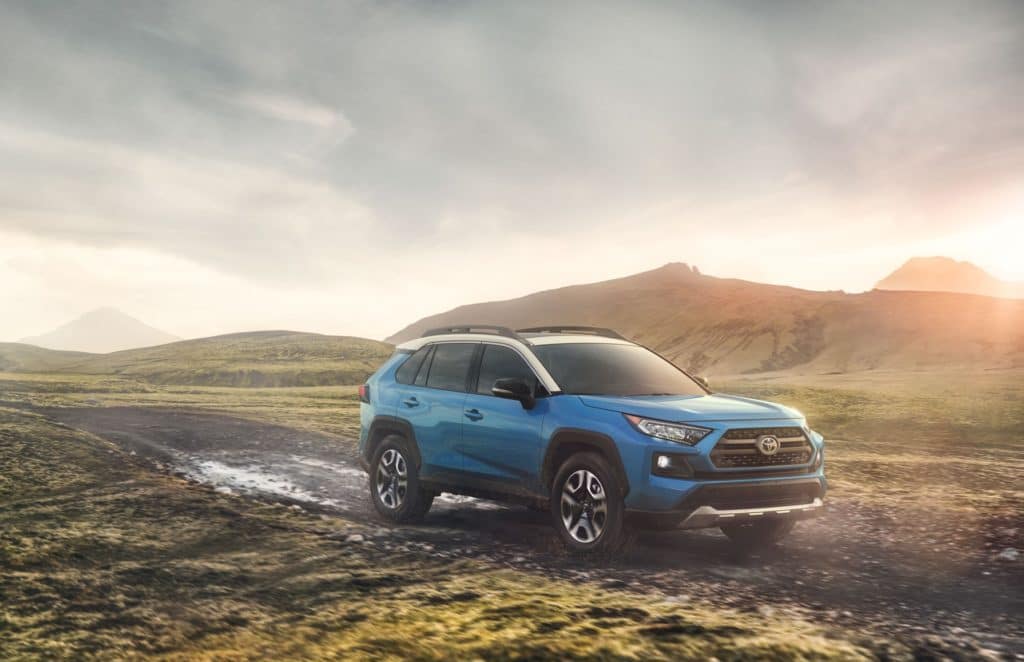
2019 RAV4 Mount Airy Toyota

The 2019 RAV4: Why You Should Buy an SUV Instead of a Sports Car

Look on the road these days and you’ll see a lot of one thing and not a lot of another – SUVs vs. sports cars. Buyers have driven away from small, cramped, and low and toward spacious seating with a view from a higher vantage point. At least for the traditional consumer, having room for the family and all their things, or perhaps the crew of friends and all their dogs, has made SUVs more popular than ever before. Toyota's recent release of the C-HR and its upcoming release of the 2019 RAV4 are strong contenders in a crowded market. Toyota has long earned love and loyalty for its RAV4, 4Runner, Highlander, Landcruiser, and Sequoia models. This year brought the introduction of the crossover C-HR, which was designed to fit a particular niche missing from the traditional Toyota lineup: something to bridge the gap between the SUVs, sedans, and compact cars. Edmunds named the C-HR as one of the Best Small SUVs for 2018. Those who remember the Toyota FJ Cruiser will recognize the signature white roof available on the C-HR with a Radiant Green Mica, Ruby Flare Pearl, or Blue Eclipse Metallic body. Its body styling is edgier than typically seen from Toyota, in part because the C-HR carried over from the maker’s now defunct Scion brand. The C-HR’s comes with push-button start, a 7-inch touch screen, 4.2-inch information display for the driver, auto-dimming rear view mirror, electric parking brake, and folding mirrors. Walk up to your C-HR with smart key technology and once you touch the door handle, the mirrors will unfold and display an illuminated logo on the ground. These lights complement the car’s halogen headlines, LED daytime running lights, and sculpted taillights. However, Toyota shoppers will have noticed a lack in connectivity across the line. There’s no Apple CarPlay or Android Auto currently available, but this tech is expected to be added in 2019. What else is coming from Toyota in 2019? The fifth-generation RAV4. The RAV4 was the bestselling non-pickup in the US in 2017. It was last redesigned in 2013. The new model will feature Dynamic Torque Vectoring All-Wheel Drive with rear Driveline Disconnect, meaning that the engine can not only direct available power to the rear wheel, it can pick the wheel that has the most traction. When all-wheel drive no longer is needed, the system disconnects and reverts to front-wheel drive. Partnered with the Toyota New Global Architecture platform, which Toyota started using 2015 with the Prius, the result is a vehicle built to go further and do more. “The implementation of the TNGA platform allows RAV4 to adopt the charisma of a bolder and tougher SUV, but in a package that is lower and wider,” writes Toyota. “The longer wheelbase and wider front and rear tracks provide a stable, confident driving platform. For off-road prowess, the shorter front and rear overhangs will aid in RAV4’s ability to overcome rugged terrain.” To be released in winter 2018 (soon!), the RAV4 will come in three versions: the premium Limited, rugged Adventure grade, or stylish XSE Hybrid that will be available spring 2019. On the Limited edition, standard features include a front-row moonroof and 8-way power-adjustable driver’s seat with memory and 2-way lumbar support, plus a newly-designed 7-inch Multi-Information Display (MID) and, for the first time in a Toyota vehicle in North America, a Digital Display Rearview Mirror. Options include ventilated front seats, heated rear seats, a panoramic moonroof, and hands-free liftgate. With the expected arrival of the 2019 RAV4, our specials at Mount Airy Toyota on the 2018 RAV4 are better than ever. From the XLE to the LE to the SE, you’ll find saving of up to $3,799 on select models. In fact, there’s savings to be had on every Toyota model now through the end of the year. Plus our pre-owned vehicles also are marked down. Toyotathon is on at Mount Airy Toyota. Come visit us at 508 N. Andy Griffith Pkwy. in Mount Airy, NC, visit us online at mountairytoyota.com, or give us a call at 336.786.2118.

Toyota C-HR Unveiled at LA Auto Show

Toyota’s C-HR Wins Top Safety Ratings as Eye-Catching New Addition to the Crossover Market

Need to tote around 1,500 venti Starbucks cups or 150 bowling balls? Have we got the compact SUV for you! Toyota C-HR Unveiled at LA Auto Show Some cars are more visually distinctive than others. At Mount Airy Toyota, we have the brand new 2018 Toyota C-HR on the lot, and we can’t stop looking at it. This coupe high rider (hence the C-HR name) is Toyota’s new entry to the crossover/small SUV category. It’s a vehicle that’s not a sedan, not a wagon, and not for heading off road. But when it comes to running around town with a little more height to your undercarriage, the C-HR is rated at 27 mpg in the city and 31 mpg on the highway, which beats the RAV-4, Ford Escape, and Mazda CX-3 while being on par with the Honda CR-V. There’s rumor of a hybrid C-HR engine in 2019. The C-HR seats five and has folding back seats with a 60/40 split. Folding down the seats gives 36.4 cubic feet of space – enough to hold more than 1,500 venti Starbucks cups or 150 bowling balls, if you’re in to that kind of thing. The C-HR was designed to fit a particular niche missing from the traditional Toyota lineup: something to bridge the gap between the SUVs, sedans, and compact cars. “The C-HR is smaller and more affordable than the RAV4. In fact, it was originally developed for Toyota's now-defunct Scion brand, which largely explains the C-HR's flamboyant styling and sporty handling. These two key attributes, along with the extensive list of standard safety features, are the main reasons to consider the C-HR in our opinion,” writes Cameron Rogers of Edmunds. Edmunds named the C-HR as one of the Best Small SUVs for 2018. The C-HR comes with Toyota Safety Sense suite, which includes integrated turn signal mirrors, pre-collision alert with pedestrian detection, lane departure warning, lane assist, automatic high beams, and adaptive cruise control plus a rearview camera as standard features. We love the standard hill start assist, which is great for mountain driveways. Rear cross traffic alert and blind spot monitoring are optional. The C-HR earned a five-star overall safety rating from the National Highway Transportation Safety Board and one of the highest predicted reliability ratings in its class: a 4.5 out of five from J.D. Power. Because the C-HR is, above all else, a Toyota, and Toyota’s are built to last. “It's taken for granted that a Toyota will work for decades without costing too much or breaking a lot,” writes Dan Roth of Forbes. Reliability is underappreciated until one is left standing on the side of the road in the middle of nowhere. Plus the C-HR, like all Toyotas, comes with Toyota Care – a free program that provides 24-hour roadside assistance for 2 years and unlimited miles as well as covers normal factory scheduled service for 2 years or 25,000 miles, whichever comes first. Like the Nissan Juke, Subaru Baja, and Pontiac Aztec before it, the C-HR is unique. Marketing materials call it: “Distinctive Diamond … matchless, sexy, muscular and edgy." The suspension system was designed for a sporty ride, according to Toyota deputy chief engineer Hiro Koba, a race car enthusiast; however, the C-HR takes 11 seconds to go 0 to 60 and 18.4 seconds to do the quarter-mile. It’s got a 2.0-liter four-cylinder engine with 144 horsepower and a continuously variable transmission (CVT). Note that a CVT technically doesn't have gears which is why drivers don't feel shifts like in a normal car. Instead RPMs run higher for acceleration, lower for cruising. So is the C-HR fun to drive? It depends on who you ask. “Driving the C-HR is a surprise,” Roth writes. “It’s stiff and solid, the steering is precise, and the ride is controlled. Careful suspension tuning included laps at the famous-to-car-people Nürburgring race track, where all the best Continental sports cars turn their wheels. Whatever secret sauce imparted by a racetrack in southwestern Germany and Deputy Chief Engineer Hiro Koba’s obsessive efforts has paid off.” All C-HRs come wearing 18-inch wheels inside 225/50R-18 all-season tires with "Vortex" styling. The C-HR engine may not have the most pull for passing – plus the car weighs 300 pounds more than an all-wheel drive Mazda CX-3 – but what it lacks in acceleration it makes up for in cornering. “It really does handle tight turns quite nicely, with little body roll and excellent control,” writes Scott Evans of MotorTrend. After all, a car with so much edge isn’t going to roll. How edgy? Toyota put the C-HR’s rear door handles at the top of the door – no little kiddos creeping into the backseat of this thing! That said, the backseat will indeed hold a baby’s car seat, if you decide to intentionally put one there. Those who remember the Toyota FJ Cruiser will recognize the signature white roof available on the C-HR with a Radiant Green Mica, Ruby Flare Pearl, or Blue Eclipse Metallic body. Full body colors selections include the blue and red plus Black Sand Pearl, Magnetic Grey Metallic, Silver Knockout Metallic, and Blizzard Pearl. Clear coat paint protection for the hood and doors is an option. On the lot right now at Mount Airy Toyota, we have three CH-Rs: one in Blizzard Pearl, one in Silver Knockout Metallic, and one with the special R-Code paint treatment in Blue Eclipse. Both XLE Premium models, the cars have smart key, push button start. There’s just something cool about push button start – it’s like launching a rocket into space. The C-HR’s other technology includes a 7-inch touch screen, 4.2-inch information display for the driver, auto-dimming rear view mirror, electric parking brake, and folding mirrors. Walk up to your C-HR with smart key technology and once you touch the door handle, the mirrors will unfold and display an illuminated logo on the ground. These lights complement the car’s halogen headlines, LED daytime running lights, and sculpted taillights. Inside the leather-trimmed steering wheel, dual zone climate control, and six-way adjustable, heated seats, enrich the C-HR’s environment. The C-HR does not offer leather seats. What the C-HR lacks in features – there’s no Apple CarPlay or Android Auto – it looks to make up for next year. A Toyota exec has said the 2019 C-HR will get Apple CarPlay when it arrives in a few months, according to The Torque Report. The connectivity is supposed to be added to other Toyota models – including the Avalon, Corolla, and RAV4 – as well. Come to Mount Airy Toyota to test drive this C-HR in Blue Eclipse Metallic. The C-HR comes in under $25,000. On our lot, the three premium models run $24,385, $23,885, and $23,275 with the savings specials currently offered including a financing offer and $500 bonus cash, which expires in early July. Schedule a test drive and calculate payments on our website to get started on bringing a brand new C-HR home with you. The C-HR is the kind of car that isn’t designed for everybody but may be designed just for you. “This hodgepodge of parts and pieces is a genre-bender that can warp your face into a smile,” writes Roth. If the C-HR turns out not to be the SUV for you, Mount Airy Toyota has plenty else from which to choose. We have new and used Highlanders, RAV4s, 4Runners, and more. Need a sedan, four wheel drive, or a truck? We’ve got that covered too. Call us today at 336.786.2118 or come by 508 N. Andy Griffith Parkway, Mount Airy, N.C. 27030.

Contact Us

Fill out this form below and we'll contact you shortly
*Required Fields