Blog / Toyotacare

Blog

All Toyotacare Toyota Toyota Safety Camry Rav4 Tacoma Trucks Highlander Events Corolla Service 4Runner Tundra Electric Cars Auto News by Mount Airy Toyota Toyota History Toyota Technology Car Care Sienna Tires Avalon Mount Airy Toyota Dealer Toyotathon Trade- In Mount Airy Toyota Service Prius Supra Used Trucks Prius V Sequoia Used Cars C-HR Landcruiser SUV Crossover Employees End of the Year Savings Hatchback New Pickup Trucks Yaris ARB Safari Snorkel Explained Crown Difference between i-Force Max & i-Force Fox Internal Bypass QS3 Shocks Mount Airy Used Cars Old Man Emu Shocks Tacoma Onboard Air Compressor Toyota Hybrid Trucks & Cars Toyota Tundra Trailhunter vs TRD Pro TRD vs Trailhunter Suspension Venza What are Rock Sliders
Rodents are small, but the damage they leave behind inside a car engine can be surprisingly big.

Rodents and Brakes Are Squeaking in Your Car! How to Catch Damage Before It Costs You Big

The Problem of Waiting Too Long Tech Tips from Chris Pack at Mount Airy Toyota Many drivers treat auto inspections like an afterthought — “I’ll schedule it when something breaks.” But the reality is, by the time symptoms are obvious (squealing brakes, pulling, fluid leaks), damage is often deep enough to require expensive repair or replacement. A multi-point inspection catches small issues—worn pads, fluid level drops, loose components—before they evolve into bigger problems. The cost of treating early warning signs is negligible compared to full part replacement or safety failures. Set your service appointment today! RATS! RATS! RATS! Rodents are small, but the damage they leave behind inside a car engine can be surprisingly big. Warm engine bays attract rats and mice looking for shelter, and once they settle in, chewing becomes inevitable. Wiring harnesses, hoses, and insulation are prime targets because rodents use them to sharpen their teeth. What may look like a minor bite mark can quickly escalate into warning lights, electrical issues, or even a car that won’t start. The cost of replacing chewed wiring harnesses often shocks vehicle owners, since what seems like a small problem usually requires major repairs. Why the Air Filter Area Matters Most One of the first places rodents tend to show up is in the air filter box. It’s an easy entry point, and the filter material makes convenient nesting material. The bigger danger, however, comes from rodent droppings. Rat feces inside or around your air filter can contaminate the air moving into your cabin and circulate harmful bacteria and allergens into the vehicle. Beyond the health risk, droppings and debris can clog the filter, reducing airflow and hurting engine performance. This is why routine checks of the air filter are so important—they’re often the first line of defense against a bigger infestation. Catching the Problem Early The best way to avoid expensive repairs and potential health hazards is through regular vehicle service. Trained technicians know where to look for early signs of rodent activity, from chewed wiring to nests near the intake. If caught early, rodents can be deterred before they make it past the air filter and into critical components. Waiting too long can turn what could have been a simple cleaning into a costly replacement job. By keeping up with inspections, you not only protect your engine but also ensure the air you breathe inside your car stays safe and clean. Why Brakes & Pads Deserve Extra Attention Brakes and pads are among the most critical components for safe driving — and also among the ones that deteriorate gradually. Wear can be uneven, pads may degrade without you hearing or feeling it right away, and brake fluid leaks can sneak up. During a multi-point inspection, technicians closely examine rotor thickness, pad depth, fluid levels, and hardware integrity. They can spot unusual wear patterns, impending failures, and other red flags well before you ever need to hit the brakes hard in an emergency. The Hidden Benefits That Go Beyond Safety Of course, safety is paramount — but early detection brings a cascade of benefits. You’ll enjoy lower repair costs, improved fuel efficiency (no dragging or misaligned parts), and enhanced vehicle longevity. Regular inspections also build trust between you and your auto shop; you’re not paying for “surprises,” you’re paying for maintenance. In the long run, a proactive maintenance mindset means fewer breakdowns, fewer roadside emergencies, and more confidence behind the wheel.

Toyota maintenance tips

Mount Airy Toyota Insider Tips: Straightforward Advice on Car Maintenance, and Hidden Features

At Mount Airy Toyota, we believe car ownership should be empowering—not confusing. That’s why we created the Insider Tips Series, a collection of straightforward tutorials and proven advice on everything from car buying to maintenance, ownership, and service. Each episode takes a practical look at real-world driving challenges and offers expert guidance that helps you save money, avoid costly mistakes, and get more out of your Toyota. To kick off the series, we’re highlighting two important topics: how mountain driving affects your car and the hidden features built into Toyotas that many drivers never use. Mountain Driving: What Wears Out First Driving in the North Carolina mountains is a unique experience. The steep climbs, sharp descents, and winding roads don’t just challenge drivers—they also put extra stress on vehicles. In one of our first videos, Mount Airy Toyota Certified Technician Chris Pack explains that tires, brakes, and fuel consumption take the biggest hit when you drive in the mountains. Tires The constant uphill climbs and downhill braking cause tires to wear out faster than on flat terrain. Mountain drivers often find themselves replacing tires sooner than expected, making regular inspections essential. Keeping an eye on tire tread and alignment can prevent uneven wear and extend the life of your tires. $$$ SAVINGS TIP - Keep your Toyota driving safely with a fresh set of tires—and save big while you do it! Watch our website and social media for the Mount Airy Toyota Tire Sales.  We often advertise buy three tires and get the fourth tire FREE. Expert Toyota Certified installation Tires matched for your model and driving needs Boost safety, performance, and fuel efficiency Brakes Brakes are one of the most important—and most overlooked—parts of mountain driving. Frequent downhill braking generates more heat and friction, which can wear out pads and rotors at a much faster rate. Getting your brakes serviced on time doesn’t just improve safety; it also saves money. When brake pads are replaced before they wear down completely, you avoid damaging rotors and calipers, which can lead to costly repairs. In other words, preventative service now means avoiding major expenses later. Fuel Efficiency Steeper terrain requires more power, which means more fuel. While there’s no way around the physics of climbing mountains, keeping your tires properly inflated, maintaining a clean air filter, and following regular service intervals can help maximize your fuel economy. The takeaway is simple: regular maintenance is not optional—it’s essential. Staying ahead of tire and brake service not only keeps you safe on mountain roads but also protects your wallet from unexpected repair bills. Hidden Features: Getting the Most From Your Toyota Our second video in the series dives into something many drivers overlook: the hidden features built into their Toyotas. These features are designed to make daily driving easier and more convenient, but too often, owners never use them. Key Fob Technology Your Toyota key fob is more than just a way to lock and unlock your car. Depending on your model, it can roll down your windows, open the trunk remotely, and even activate a panic alarm with specific button combinations. These functions can save time, add convenience, and improve safety, yet many Toyota owners never take advantage of them. Watch this video by Mount Airy Toyota Certified Tech, Chris Pack to learn about your Key Fob. Additional Features Drivers Forget Automatic High Beams – Many Toyota models include this feature, which automatically switches between high and low beams to improve nighttime driving safety. Eco and Sport Driving Modes – These selectable modes adjust throttle response and fuel efficiency. Eco mode helps save gas, while Sport mode sharpens performance for a more responsive drive. Rear Seat Reminder – Designed to alert you to check the back seat before leaving the vehicle, this safety feature helps prevent accidents and forgotten belongings. Toyota Safety Sense Alerts – From lane departure warnings to adaptive cruise control, Toyota’s safety systems have customizable settings that many owners never personalize. Taking the time to adjust them can improve your driving comfort and confidence. By exploring these hidden features, our goal is to help you get the most out of your vehicle. After all, you invested in Toyota quality—you deserve to enjoy every feature it offers. Why This Series Matters Between car buying myths, confusing service schedules, and overlooked technology, drivers face a lot of uncertainty. Our Insider Tips Series was created to clear up that confusion. We want to provide: Clarity – Cutting through myths with honest, straightforward answers. Confidence – Helping you understand your vehicle so you can make informed decisions. Cost Savings – Showing you how preventative maintenance and smart ownership habits save money over time. Each video features our certified technicians and experienced team members, giving you access to insider knowledge without the jargon. Whether it’s understanding how mountain driving affects your brakes or learning a hidden feature on your key fob, the series is designed to make car ownership easier and more enjoyable. Who Should Watch This series is for everyone who owns—or is thinking about owning—a Toyota: New drivers will gain practical tips without feeling overwhelmed. Long-time owners will discover features they might not know about and learn ways to extend their vehicle’s life. Families on a budget will find strategies for saving money without compromising safety. In short, the Insider Tips Series is for anyone who values transparency, expertise, and peace of mind when it comes to their car. Join the Conversation The Mount Airy Toyota Insider Tips Series is more than just videos—it’s a resource for our community. We’re here to answer questions, share knowledge, and help you make the most of your Toyota ownership experience. 👉 Subscribe to our channel and follow along as we roll out new episodes. With each one, you’ll gain insights that make driving safer, smarter, and more affordable. At Mount Airy Toyota, we’re not just here to sell cars—we’re here to help you enjoy every mile.

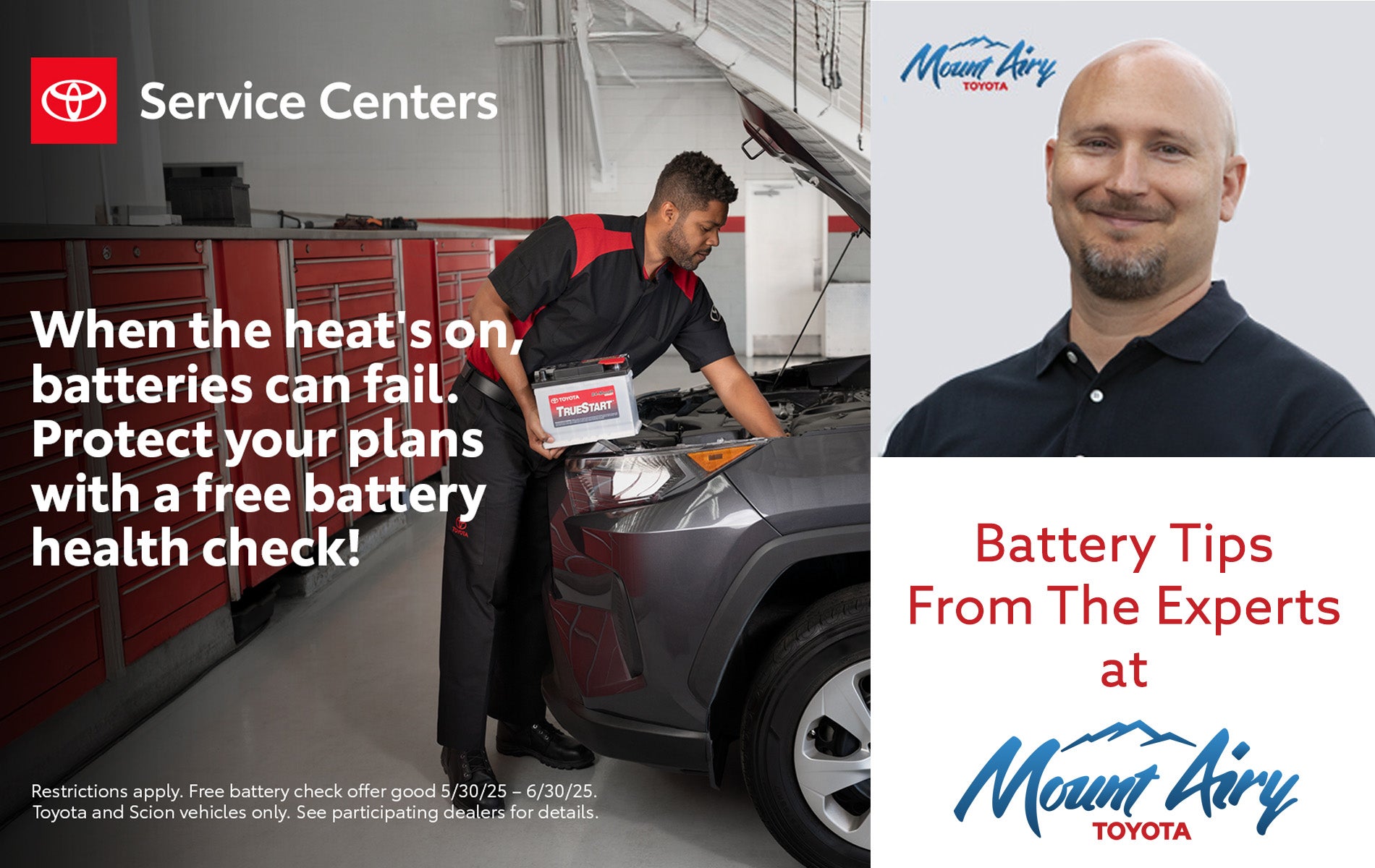
Battery Information from Mount Airy Toyota

July Is the Month for Watermelon and Dead Batteries!

It happens every year about this time.  We get a rush of customers with battery issues because of the rapid rise in temperature.  It catches people off guard in Mount Airy because we're used to the extreme cold weather, but never quite as prepared for the heat of summer.  To help our customers be more prepared we've provided information, special cost savings on batter installation, and tips from our expert mechanics. Dead Battery? Here’s What You Need to Know (Before It Happens to You) We’ve all experienced that sinking feeling when you hop in your car, press the start button or turn the key, and nothing happens. No engine noise, no dashboard lights, no response at all. A dead battery can leave you stranded at the worst possible moment, whether you're heading to work, picking up the kids, or preparing for a road trip. Fortunately, a little knowledge goes a long way. Understanding how your car battery works, recognizing the warning signs, and knowing what to do in an emergency can help you avoid unnecessary stress. In this guide, we’ll break down everything you need to know about your vehicle’s battery so you can stay powered up and prepared for the road ahead. What Exactly Does Your Car Battery Do? Your car’s battery is much more than a simple power source. It plays a vital role in the operation of your vehicle from the moment you turn it on. At its core, the battery provides the jolt of electricity needed to start your engine. Without it, your car simply won’t run. Once the engine is started, the alternator takes over to generate electricity and recharge the battery—but that initial burst is critical. In addition to helping your vehicle start, the battery powers all of your electronic components when the engine is off. These components include: Interior and exterior lights Power windows and locks Infotainment systems and radios Climate control systems USB chargers and other accessories If your battery is weak or dying, any of these systems may become sluggish, glitchy, or stop working altogether. What To Do If Your Battery Dies If you find yourself with a car that won’t start, there’s a good chance your battery is to blame. But don’t panic, there are a couple of reliable methods to get back on the road.  If you're near Mount Airy Toyota, give us a call or schedule service.  We're ready to help! 1. Try a Jump Start Jump-starting is one of the most common and immediate solutions when dealing with a dead battery. You’ll need a pair of jumper cables and another vehicle with a fully charged battery. Step-by-Step Instructions: Position the vehicles: Park the working car close enough to the dead car so the cables can reach, but make sure the vehicles are not touching. Turn off both engines and remove the keys. Connect the cables in the following order: Red clamp to the positive terminal (+) on the dead battery. Red clamp to the positive terminal (+) on the working battery. Black clamp to the negative terminal (–) on the working battery. Black clamp to an unpainted metal surface on the engine block or chassis of the dead car (not the battery). Start the working car and let it run for a few minutes. Try starting the dead vehicle. Safety Tip: If you’re unsure of where the battery terminals are or how to properly connect the cables, consult your owner’s manual or call a professional. Incorrect connections can cause sparks, damage to the battery, or even injury. 2. Use a Portable Battery Jump Starter A more modern solution is the portable battery jump starter, often called a “jump box.” These compact, rechargeable devices are a must-have for emergency preparedness. Unlike jumper cables, a jump starter doesn’t require a second vehicle. Simply connect the clamps to your battery, turn it on, and start your car. Many models feature automatic polarity detection, spark-proof technology, and built-in safety alarms, making them very user-friendly. Some jump starters also double as: USB phone chargers Flashlights Tire inflators or air compressors If you travel frequently, live in a remote area, or simply want peace of mind, a jump starter is a smart investment. Why You Should Check Your Battery Regularly Like any other part of your vehicle, car batteries don’t last forever. On average, a battery will last between 3 to 5 years, depending on usage, weather conditions, and maintenance habits. Extreme heat and cold are especially hard on batteries. In hot weather, internal fluids evaporate faster, leading to corrosion and reduced performance. In freezing temperatures, a battery’s ability to hold a charge can drop significantly. That’s why routine battery checks should be part of your regular vehicle maintenance plan. At Mount Airy Toyota, our technicians can test your battery in just a few minutes during any scheduled service and, if the battery needs replacing, we can have it done in around 15-20 minutes. We check: Voltage – Is your battery fully charged? Cold Cranking Amps (CCA) – Can it deliver the power needed to start the car in cold conditions? Overall health – Is your battery near the end of its useful life? Pro Tip: Identifying a weak battery before it fails can save you the cost and inconvenience of a tow truck or emergency repair. What Happens If You Don’t Replace a Weak Battery? Ignoring the warning signs of a failing battery might seem harmless at first, until your car refuses to start when you need it most. A dying battery can cause a variety of problems beyond just an inconvenient breakdown. Here’s what you risk by waiting too long: Car won’t start – Often at the worst possible moment (late at night, in bad weather, far from home). Strain on the alternator – The alternator may work overtime to compensate, potentially shortening its lifespan. Malfunctioning electronics – Lights, radios, navigation systems, and other electronics may start acting erratically. Roadside assistance costs – Towing, jump-starts, or emergency service calls can get expensive fast. Prevention is always cheaper and easier than an emergency. Signs Your Battery Might Be Failing Car batteries usually don’t die suddenly. In most cases, they provide warning signs days or even weeks in advance. Recognizing these early symptoms can help you take action before you get stranded. Common Signs of Battery Trouble: Slow engine crank – The engine takes longer than usual to turn over. Dim headlights – Especially noticeable when idling or using multiple electronics. Clicking noise – A rapid clicking sound when you turn the key or press the start button. Dashboard warning lights – Battery or check engine lights may flash intermittently. Electrical issues – Infotainment system resets, malfunctioning power windows or locks. Corrosion – White or blue powder around the battery terminals is a sign of acid leakage. Swollen battery case – This can be caused by overcharging or extreme temperatures. If you notice any of these, it’s time to have your battery inspected by a professional. Pro Tips to Make Your Battery Last Longer While you can’t control everything, good maintenance habits can significantly extend your battery’s lifespan. Here are some tips to help you get the most out of your car battery: Drive regularly: Short trips or long periods of inactivity can drain your battery. Try to drive your car at least once a week. Turn off electronics: Before shutting off the engine, turn off lights, radio, and climate control to reduce drain. Clean battery terminals: Dirt and corrosion can prevent proper current flow. Use a wire brush and baking soda solution for cleaning. Tighten loose connections: Make sure the cables and terminals are snug and secure. Avoid extreme temperatures: Park in a garage or shaded area when possible. Extreme heat and cold are tough on battery cells. Disconnect when storing: If you're storing your vehicle for a long time, consider disconnecting the battery or using a trickle charger. Final Thoughts: Stay Charged, Stay Confident Your car’s battery might not be something you think about often—but when it fails, you’ll notice immediately. That’s why staying proactive is so important. A simple battery check today could prevent a major inconvenience tomorrow. Whether you're gearing up for a summer road trip or just commuting to work, take a few minutes to ensure your vehicle is ready to roll. Don't wait for warning signs or bad weather to catch you off guard. Need your battery checked or replaced? Come visit Mount Airy Toyota! Our expert technicians are here to help with quick, reliable battery inspections and replacements. We’ll make sure your Toyota stays powered up, safe, and ready for every mile ahead.

Mount Airy Toyota’s Comprehensive Guide to Advanced Driver Assistance Systems (ADAS)

Mount Airy Toyota’s Comprehensive Guide to Advanced Driver Assistance Systems (ADAS)

Toyota continues to lead the way with its commitment to safety and innovation in the ever-evolving automotive technology landscape. One essential advancement in the modern era is the implementation of Advanced Driver Assistance Systems (ADAS) — a suite of cutting-edge technologies designed to enhance vehicle safety, improve driving experience, and pave the way for a more connected and autonomous future. Below, Mount Airy Toyota explains ADAS more thoroughly, delves into which Toyota vehicles boast these systems in 2024, and more. Understanding ADAS Advanced Driver Assistance Systems, commonly known as ADAS, refers to a set of technologies integrated into vehicles to assist drivers and boost overall safety. These systems leverage sensors, cameras, radar, and other advanced technologies to monitor the vehicle's surroundings, detect potential hazards, and provide timely alerts or interventions to prevent accidents.   ADAS features many functionalities, including adaptive cruise control, lane departure warning, automatic emergency braking, blind-spot monitoring, and more. It employs a sophisticated blend of hardware and computer algorithms to enhance vehicle safety and help drivers in various aspects of their journeys. The primary goal of ADAS is to prevent accidents by providing real-time information about the vehicle's surroundings and potential hazards. Here's the gist of how it works: Sensors and Cameras: ADAS relies on an array of sensors strategically placed around the vehicle. These sensors include radar, ultrasonic sensors, and cameras. Cameras are crucial for visually recognizing the environment and detecting objects, lane markings, and traffic signs. Data Collection and Processing: The sensors continuously collect data from the vehicle's surroundings to capture information about the position of nearby vehicles, pedestrians, lane markings, and potential obstacles. Onboard computers then process this raw data in real-time. lgorithms and Decision-Making: Advanced algorithms analyze the processed data to make sense of the environment. These algorithms are designed to recognize patterns, identify objects, and assess potential risks. The system then makes decisions based on this analysis, determining whether intervention is necessary to avoid a collision or improve overall driving safety. Alerts and Interventions: ADAS can provide various notifications or interventions depending on the detected risks. For instance, if the system senses an imminent collision with a vehicle ahead, it might trigger automatic emergency braking to reduce the severity of impact. Lane departure warning systems can alert the driver if they detect unintentional lane drifting, and some systems can even assist steering to keep the vehicle within its lane. Adaptive Functionality: ADAS features often adapt to different driving conditions. Adaptive Cruise Control (ACC), for example, can automatically adjust the vehicle's speed to maintain a safe following distance from the car ahead, facilitating a more relaxed driving experience on highways. ADAS combines input from various sensors, cameras, and radar systems with sophisticated algorithms to enhance driver awareness and intervene when necessary. It ultimately makes driving safer and more enjoyable. ADAS vs. Toyota Safety Sense (TSS) ADAS is a general term encompassing various safety technologies, and Toyota Safety Sense is Toyota's specialized implementation of ADAS that brings a specific set of safety features to enhance the driving experience for Toyota owners. ADAS often includes automatic emergency braking, blind-spot monitoring, parking assistance, and more. Other automakers may have their own variations of ADAS with unique features and branding that reflect their commitment to safety and innovation. Toyota Safety Sense (TSS) Toyota Safety Sense is a comprehensive suite of safety features developed by Toyota to provide extra protection for drivers, passengers, and pedestrians. TSS integrates various ADAS technologies to address different safety aspects; it primarily focuses on collision prevention and mitigation. The TSS package typically includes a combination of the following features: Pre-Collision System (PCS): This feature uses sensors and cameras to detect potential collisions with vehicles or pedestrians ahead. It can then initiate automatic braking or warn the driver to avoid or mitigate the impact. Lane Departure Alert (LDA): LDA alerts the driver if the vehicle unintentionally drifts out of its lane. In some models, it can provide steering assistance to keep the vehicle centered in its lane. Dynamic Radar Cruise Control (DRCC): This technology maintains a set following distance from the vehicle in front by automatically adjusting the vehicle's speed. It offers a more relaxed driving experience, especially in highway traffic. Automatic High Beams (AHB): AHB enhances visibility during nighttime driving by automatically switching between high and low beams based on the presence of oncoming traffic. Blind Spot Monitor (BSM): This feature alerts the driver if there's a vehicle in the blind spot during lane changes, which does wonders for overall awareness and safety. Road Sign Assist (RSA): RSA recognizes traffic sign information and displays it on the vehicle's multi-information display; it essentially informs drivers of speed limits and other important road signs. TSS focuses on a core set of safety features integrated into the vehicle to prevent and mitigate collisions. Whether you're driving a compact sedan, a versatile SUV, or a powerful truck, there's a good chance your Toyota is equipped with some level of ADAS. Which Toyota Models Incorporate ADAS? As of 2024, Toyota has made significant strides in integrating ADAS across its diverse lineup of vehicles. These systems are designed to enhance safety, improve overall driving experience, and pave the way for a future of connected and autonomous driving. Let's take a closer look at some of the Toyota models that feature ADAS: Toyota Camry The Toyota Camry, a staple in the sedan segment, is equipped with an array of ADAS features. Drivers can benefit from technologies like Pre-Collision System (PCS), Lane Departure Alert (LDA), Adaptive Cruise Control (ACC), and more. It’s widely recognized as one of the safest cars for daily commutes and longer journeys. Toyota RAV4 The popular Toyota RAV4 is a versatile and stylish SUV that includes a lot of ADAS features in  a compact form. Automatic High Beams (AHB), Road Sign Assist (RSA), Blind Spot Monitor (BSM), and many other technologies contribute to an elevated driving experience. Toyota Corolla Similar to the RAV4, the Toyota Corolla is a compact vehicle that embraces many ADAS technologies. Features like Lane Tracing Assist (LTA) — which helps keep the vehicle centered in its lane — and Dynamic Radar Cruise Control (DRCC) are integrated into the Corolla's safety suite. High reliability and efficiency ratings also make this car one of the best overall purchases for consumers. Toyota Highlander The Toyota Highlander is a midsize SUV designed for families and boasts a comprehensive suite of ADAS features. With technologies like Rear Cross-Traffic Alert (RCTA) and Bird's Eye View Camera, the Highlander prioritizes safety and convenience for both the driver and passengers. And it looks beautiful on the road! Toyota Tacoma Toyota's durable and capable pickup truck, the Tacoma, is most known for its fantastic blend of ruggedness and style. It also happens to incorporate ADAS to enhance safety on and off the road. Technologies like Pre-Collision System with Pedestrian Detection (PCS w/ PD) and Lane Departure Alert with Sway Warning System (LDA w/ SWS) contribute to a secure driving experience. The modern “Taco” is as safe as it is attractive and functional. Toyota Prius As a pioneer in hybrid technology, the Toyota Prius also embraces ADAS to complement its fuel efficiency. The Prius features Lane Departure Alert with Steering Assist (LDA w/ SA) and Intelligent Clearance Sonar (ICS) for added safety during city driving and parking. Save money on gas while keeping yourself and your passengers secure on the road. Toyota Avalon The Toyota Avalon is a full-size sedan known for its comfort and sophistication. Full-Speed Range Dynamic Radar Cruise Control (DRCC), Automatic High Beams, and a slew of other features contribute to a refined and secure driving experience. This car is classy, safe, and smooth to drive. Toyota Sienna Redesigned as a hybrid minivan, the Toyota Sienna prioritizes safety for families. It includes ADAS features like Front and Rear Parking Assist with Automatic Braking (PA w/ AB) and Road Sign Assist (RSA), which make it a reliable choice for anyone seeking a spacious and secure family vehicle. These are just a few examples of the Toyota models equipped with ADAS in 2024. It's important to note that Toyota continues to innovate and update its lineup, and additional models may feature advanced safety technologies to meet evolving industry standards. Toyota remains committed to integrating ADAS into its vehicles so that drivers across various segments benefit from these sophisticated safety features. TSS technologies contribute to a safer and more enjoyable driving experience whether you're navigating city streets, highways, or off-road terrain. Repairing and Calibrating ADAS As technology continues to play a crucial role in enhancing vehicle safety, your vehicle’s ADAS is integral to your driving experience. These systems are designed for durability and reliability, but there may be instances when repairs or calibrations are necessary. Here are seven things to do if your car's ADAS requires attention. Be attentive to warning signs. Pay close attention to any signs of issues with your ADAS. Unusual error messages on your dashboard, malfunctioning safety features, or minor collisions can trigger the need for repairs or calibration. Ignoring these warnings can compromise your safety on the road. Refer to your owner's manual. Your Toyota's owner's manual is a valuable resource for understanding the intricacies of your vehicle's ADAS. Familiarize yourself with the manual's TSS section to grasp the functions of each system and learn potential troubleshooting steps. A well-informed owner is better equipped to address issues promptly. Contact Mount Airy Toyota Service Center. In the event of ADAS concerns, promptly contact our authorized Mount Airy Toyota Service Center. Our skilled technicians have the expertise and specialized tools required to accurately diagnose and effective resolve ADAS issues. Early intervention can prevent minor problems from escalating. Provide detailed information. When communicating with our service center, provide clear and detailed information about the symptoms or incidents that led to the ADAS malfunction. A precise account helps our technicians assess the situation accurately and expedite the repair or calibration process. In other words, accurate information streamlines the diagnostic process! Trust certified technicians. ADAS repairs and calibrations demand precision and technical knowledge. Trust our certified technicians at Mount Airy Toyota to handle these tasks. They have access to genuine Toyota parts and cutting-edge equipment to ensure your ADAS functions optimally post-repair. Certified technicians guarantee the quality of service that other mechanics cannot. Consider regular maintenance checks. Take a proactive approach by incorporating regular maintenance checks for your ADAS during routine service appointments. These checks can help identify potential issues early on, prevent more significant problems, and keep your ADAS features working reliably. Regular checks contribute to long-term system health. Be patient and stay informed. Depending on the issue’s complexity, ADAS repairs or calibrations may take some time. Exercise patience, and feel free to ask our technicians about the progress. We strive to keep you informed every step of the way to ensure your satisfaction. Anyone driver can tell you that patience and communication contribute to a positive service experience! The Bottom Line Toyota continues to push the boundaries of automotive technology with the widespread integration of ADAS in 2024. These cutting-edge features ultimately contribute to safer roads and redefine the driving experience for car owners. As you embark on your journey with a Toyota vehicle equipped with TSS, remember to stay informed about these systems’ capabilities  and proactively address any repair or calibration needs. With Toyota's unwavering commitment to safety and innovation, the road ahead promises to be exciting and secure. Connect with Mount Airy Toyota today to learn about the vehicles on our lot or schedule a service for your existing model!


Toyotacare

Car Care Roadside Assistance: Yet Another Reason to Buy Toyota

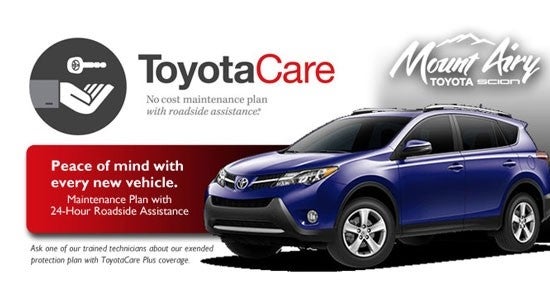
With the purchase of any new Toyota from Mount Airy Toyota comes a no-cost maintenance plan for two years or 25,000 miles. Included in this maintenance plan is 24-hour roadside assistance, which lasts for two years no matter how many miles you put on your new Toyota.   No one likes to be stranded on the road when a vehicle breaks down. Now Toyotas are not known to do this, but occasionally something might go wrong. Driving through Bristol, VA and the battery dies, a tire blows, or you are so focused on getting to your destination you run out of gas. What do you do if any of these things happen? Well that all depends on the brand of car you drive. And if you happen to be driving a Toyota that you purchased within the last two years, you have absolutely nothing to worry about.   Here is a list of what Toyota’s celebrated Car Care Roadside Assistance covers: Battery jump start. It doesn’t matter if the battery is dead or simply has a bad connection. Call the toll-free number and a service provider will be there to bring your car back to life. Lockout protection. Lock your keys in your car? No problem, it happens to all of us. And this is a simple fix for a Car Care Roadside Assistance technician. Emergency Fuel Delivery. Ever see those people walking down the highway with a gas-can in hand? That will never be you. If you run out of gas unexpectedly, a service provider will come fill up your car and get you back on your way. Free Towing. If, for some reason, your Toyota stops running and you don’t know why, you can get towed to the nearest Toyota dealership (or a Mount Airy Toyota if you are within 25 miles) for free. Preventative thinking combined with smart purchasing can keep you from every being stranded on the highway. Come shop at Mount Airy Toyota today and find the vehicle that suits you best.

Contact Us

Fill out this form below and we'll contact you shortly
*Required Fields