
Blog / Auto News by Mount Airy Toyota

Blog

All Auto News by Mount Airy Toyota Toyota Toyota Safety Camry Rav4 Tacoma Trucks Highlander Events Corolla Service 4Runner Tundra Electric Cars Toyota History Toyota Technology Car Care Sienna Tires Avalon Mount Airy Toyota Dealer Toyotathon Trade- In Mount Airy Toyota Service Prius Supra Toyotacare Used Trucks Prius V Sequoia Used Cars C-HR Landcruiser SUV Crossover Employees End of the Year Savings Hatchback New Pickup Trucks Yaris ARB Safari Snorkel Explained Crown Difference between i-Force Max & i-Force Fox Internal Bypass QS3 Shocks Mount Airy Used Cars Old Man Emu Shocks Tacoma Onboard Air Compressor Toyota Hybrid Trucks & Cars Toyota Tundra Trailhunter vs TRD Pro TRD vs Trailhunter Suspension Venza What are Rock Sliders
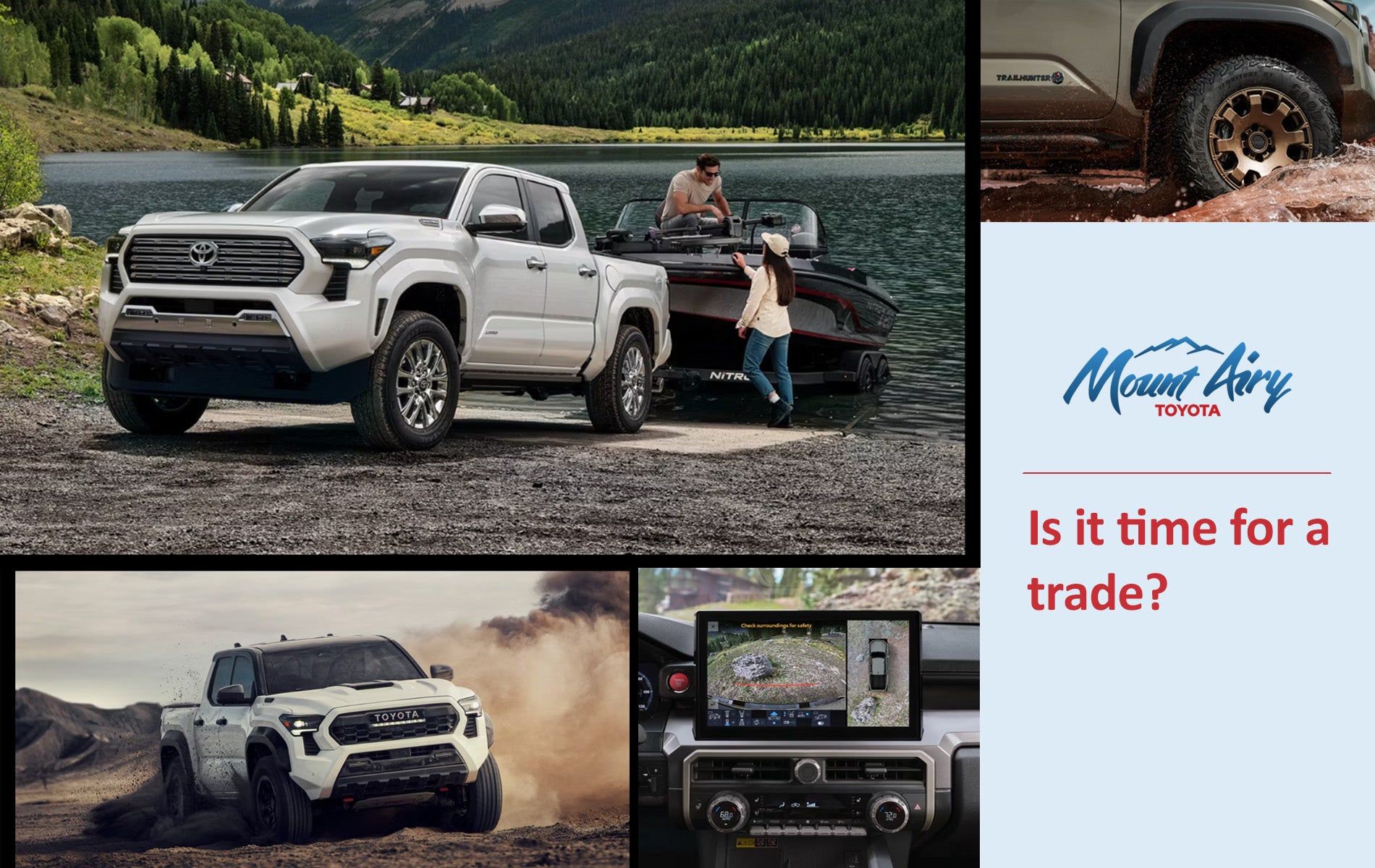
Is it time to trade your truck. Get insider information on truck trades and financial value.

How Long Should You Really Keep a Truck in North Carolina?

How Long Should You Really Keep a Truck in North Carolina? (And What Most Truck Buyers in Mount Airy Get Wrong) If you’re driving a truck around Mount Airy, Pilot Mountain, Cana, or anywhere in Surry County, you’ve probably asked yourself: “How long should I actually keep this truck before I trade it in for a new one?” Most modern trucks, including Toyota Tacoma, Ford Ranger, F-150, or RAM, can be reliable and relatively low cost up to 150,000 to 250,000 miles if properly maintained. So the question isn’t about the truck breaking down. It’s more about finding the smartest financial timeframe to trade. When does it stop making financial and practical sense to keep a truck? It’s also a very different situation if you are a truck driver versus a car or SUV driver. More is expected out of a truck, and they are more often used for work than for pleasure. How Long Do Most People Keep Their Trucks? Let’s start with the facts... We did a little research and found that across the U.S., the following ownership trends are fairly consistent with truck drivers in Surry County: The average vehicle on the road in the U.S. is about 12.5 years old Many truck owners keep their vehicles 10 years or longer The most common trade cycle is between 5 to 7 years That 5 to 7 year window is where things get interesting. That is usually the point where: Warranty coverage is ending or already gone Mileage is starting to climb between 60,000 and 100,000 miles Repair costs start creeping in Trade-in values are still relatively strong Why 5 to 7 Years Is the Sweet Spot Most trucks today come with: 3 year or 36,000 mile basic warranty 5 year or 60,000 mile powertrain warranty Once you move past that 5 year mark, you are on your own for most repairs. Now, that doesn’t mean your truck is about to fall apart. Not even close. But it does mean: Brake systems, tires, and suspension components start wearing down Electronics and sensors become more expensive to fix Maintenance costs become less predictable At the same time, your truck still holds solid resale value, especially if it has been well maintained. That is why a lot of financially savvy buyers in North Carolina choose to trade somewhere in that 5 to 7 year range. The idea is that you are not running the truck into the ground, but you are also not taking the biggest depreciation hit. How Trucks Wear in Surry County There are some differences between national averages and Surry County truck drivers because pickup trucks and work trucks wear differently in mountain areas. Not all miles are equal. Driving a truck in Surry County is not the same as driving one in flat city traffic somewhere else. Around Mount Airy and Northwest North Carolina, trucks tend to work harder. Hauling tools, materials, and equipment Driving up and down mountain roads like NC Highway 103 Towing trailers Stop and go driving combined with elevation changes All of that adds wear to brakes, suspension, transmission, and tires.  So while a truck can last 200,000 miles, how it is used locally matters. Many people work in the trades between Greensboro and up into Galax, Virginia. The long miles combined with the demands of construction work often age a truck faster than a commuter vehicle in a flat urban area.  It is similar to trucks from northern states. They tend to age faster because of salt, snow, and severe weather conditions.  These are important factors to keep in mind when you are considering the value of your truck. Why People Trade Trucks Sooner Than Planned Mileage and wear are the top reasons people trade between 5 and 7 years, but drivers commonly report the following reasons for trading sooner: Emotional - They want the enjoyment of driving a newer model. Jobs - A career change may require a different type of truck. Family - Adding a car seat changes everything. Towing C apacity - Some trucks simply handle towing better than others. Commuting Distance - Newer trucks often offer better fuel efficiency. Technology Improvements - Better sound, navigation, and comfort. Reliability Concerns  - Avoiding the risk of breakdowns. In a place like Surry County, your truck is not just transportation. It is part of your daily life. We may be a little biased as truck people, but most would agree it matters in this part of North Carolina. What Most Truck Buyers Get Wrong So how can you mess this up? Here is where a lot of buyers get it wrong. When it is time to buy, many people get caught up comparing numbers: Payload capacity Horsepower Towing ratings Price differences A few inches of space here or there On paper, a full size truck like an F-150 can look like the better deal. But here is the problem.  Most people do not actually use all those features they spent hours comparing.  And those small differences, like a few pounds of payload or a couple inches of bed space, do not matter three months after the purchase. What Actually Matters After You Buy Once you have owned the truck for a few months, the numbers fade away.  What does not fade is your daily experience. Are you comfortable driving to work? Are you getting good gas mileage running Highway 52 to Winston-Salem or Greensboro? Can you navigate Mount Airy traffic and parking lots easily? Is your family comfortable when heading up NC Highway 103 into the mountains? When you hit that same speed bump every day, does your truck glide over it or bump along? People consistently report that comfort, maneuverability, ease of use, climate controls, cup holders, and storage space matter most after a few months of ownership.  That is the difference between Best Truck and Best Fit. Final Thought Sometimes one truck looks better on paper, especially when you are deciding whether to keep your old one or trade.  The numbers might say one thing, but the reality is that you may be happier with a truck that fits your daily life.  For many drivers in Mount Airy, Pilot Mountain, and Surry County, a midsize truck like the Toyota Tacoma ends up being the better long term fit. Not because it wins every category, but because it is: Easier to live with day to day More comfortable on local roads Strong in resale value Known for long term reliability When you combine that with smart timing, trading before costs rise and value drops, it becomes a very practical ownership strategy. Insider Tip Sometimes the answer to “Should I trade this truck?” comes down to strategy. Watch this video from Rick Coburn to learn: Why Kelley Blue Book may not be your best pricing tool How dealers evaluate trade ins How to negotiate your trade more effectively If you are in Mount Airy, Pilot Mountain, Galax, or anywhere in Surry County and want to talk through your options, give us a call at 336-786-2118. We will help you find a truck that actually fits your life, not just your spreadsheet.

Mount Airy Toyota Service

Brakes & Tires in Mountain Country - Oh My!!!!

Why Mount Airy Drivers Need to Pay Extra Attention – Insights from Top Service Manager Chris Pack Driving in the Blue Ridge Mountains is beautiful—but it’s also harder on your vehicle than most people realize. Our top service manager, Chris Pack, explains in two recent videos that mountain driving and dramatic temperature swings put extra strain on both brakes and tires. Long downhill grades, constant elevation changes, sharp curves, and hot-cold seasonal extremes all speed up wear that would be mild in flatter regions. His message is simple: Stay ahead on brake and tire maintenance, and you’ll save money—and stay much safer—than waiting until something goes wrong. Below is your complete guide to brake and tire care in mountain conditions, including answers to the most-searched questions drivers ask online. Why Are the Mountains Tough on Brakes? In the Mount Airy region, the steep, twisty mountain roads mean drivers brake more often and more aggressively than those in flat areas. Add temperature swings—from freezing winter mornings to hot summer afternoons—and brake components expand, contract, and wear out faster. This combination makes proactive brake maintenance essential, not optional. Is it safe to drive with bad brakes? Driving with worn or failing brakes is dangerous anywhere—but especially in the mountains. If you must drive, stopping distance will be much longer, and you’ll need to avoid sudden braking. On steep grades, failing brakes can overheat quickly, leading to brake fade and a loss of stopping power. Can you replace your own brakes? Yes, some drivers choose to replace their own brake pads— but only if they truly understand the process. Brake work requires precision and proper safety handling. Front brakes are usually more straightforward, but rear drum brakes or advanced braking systems can be tricky. If in doubt, it’s safer (and often cheaper long-term) to let a certified Toyota technician handle it. What are the signs of worn brakes? Look and listen for: Squealing, grinding, or scraping noises A soft, spongy, or vibrating brake pedal Visible thin brake pads (check through the wheel spokes) Dashboard brake warning lights Longer distances required to stop your vehicle If you notice these signs, schedule service right away—mountain braking only accelerates the problem. Should I replace all four brake pads at once? Ideally, yes. At the very least, brakes should be replaced in axle pairs (both fronts together or both rears together). Installing pads unevenly can lead to unbalanced braking, which may cause pulling, extra wear, or unsafe stopping behavior—especially on winding NC mountain roads. What’s included in a full brake job? A comprehensive brake service typically includes: A complete brake system inspection Replacement of worn pads Resurfacing or replacement of rotors Inspection or servicing of calipers, brake lines, and hydraulic components Brake fluid check or replacement This ensures your entire system—not just one component—is operating safely. How much do new brakes cost at a typical Toyota dealership? Pricing varies by model, but generally: Brake pad replacement: $150–$300 per axle Pads + rotors: $500–$800 for all four wheels Your exact total depends on the vehicle, parts used, and how much wear has occurred. Mount Airy Toyota always provides upfront pricing so you know exactly what to expect. How often should car brakes be replaced? Most vehicles need new brakes somewhere between 25,000 and 65,000 miles. However, here in the mountains of North Carolina, brakes tend to wear out sooner due to: Repeated downhill braking Sharp curves requiring frequent speed adjustments Frequent temperature swings For mountain driving, we recommend inspections every 10,000–12,000 miles or at every oil change. Does the quality of my tires affect my brake life? Absolutely. High-quality, properly inflated tires help the vehicle grip the road more effectively, reducing the amount of work your brakes must do. Poor-quality or worn tires make your braking system work harder and wear out faster. Why Mountain Driving Is Tough on Tires Like brakes, tires suffer more in our region. Curvy, hilly roads, temperature fluctuations, and rougher mountain surfaces all contribute to faster wear. According to Chris Pack, neglecting tires in the mountains can be as dangerous as neglecting your brakes. Here’s how tires directly impact braking performance: How Tire Quality Impacts Brake Life Better grip = less brake strain High-quality tires use stronger rubber compounds and smarter tread patterns. When grip improves, stopping distance gets shorter—and your brakes don’t have to work as hard. Improved stopping power and less ABS activation Good tires maintain traction longer, allowing brakes to apply force without slipping. This means your ABS doesn’t need to intervene as often, which reduces stress on brake components. Worn tires increase brake wear As tires lose tread, they struggle to grip the pavement—especially on wet or sloped mountain roads. This causes brakes to work harder and heat up more quickly, accelerating pad and rotor wear. Proper tire pressure is critical Both underinflated and overinflated tires reduce your braking efficiency. Maintaining the recommended tire pressure helps ensure optimal traction, stability, and braking performance. Final Thoughts from Mount Airy Toyota Mountain driving demands more from your brakes and tires than typical conditions. That’s why Chris Pack and our entire service team emphasize regular inspections, timely replacement, and investing in quality components. By keeping up with brake and tire maintenance, you’ll: ✔ Stay safer on the road ✔ Prevent costly repairs ✔ Enjoy smoother, more controlled driving ✔ Extend the life of your vehicle If you have questions or want a complimentary brake or tire inspection, the Mount Airy Toyota Service Center is here to help.

Toyota maintenance tips

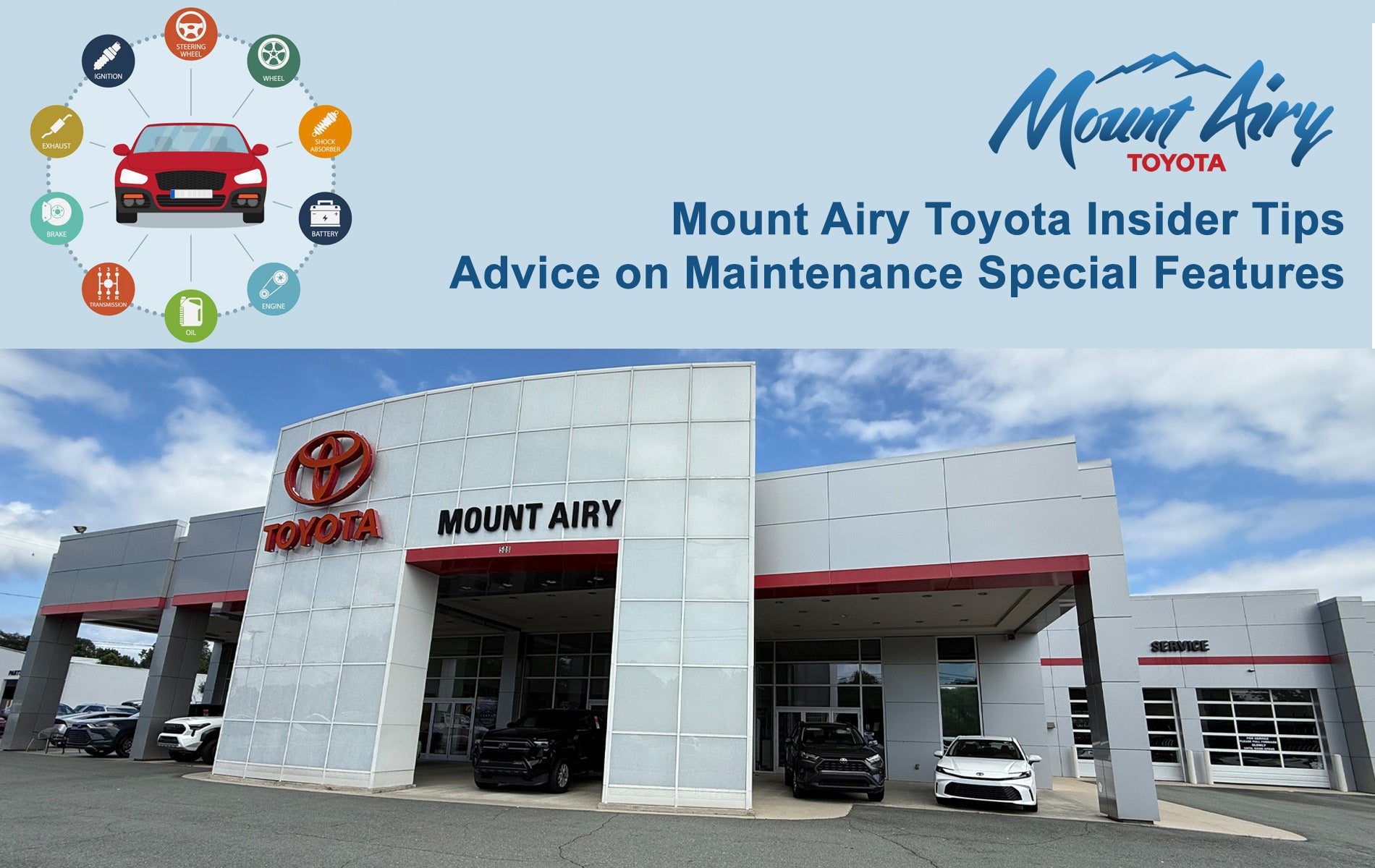
Mount Airy Toyota Insider Tips: Straightforward Advice on Car Maintenance, and Hidden Features

At Mount Airy Toyota, we believe car ownership should be empowering—not confusing. That’s why we created the Insider Tips Series, a collection of straightforward tutorials and proven advice on everything from car buying to maintenance, ownership, and service. Each episode takes a practical look at real-world driving challenges and offers expert guidance that helps you save money, avoid costly mistakes, and get more out of your Toyota. To kick off the series, we’re highlighting two important topics: how mountain driving affects your car and the hidden features built into Toyotas that many drivers never use. Mountain Driving: What Wears Out First Driving in the North Carolina mountains is a unique experience. The steep climbs, sharp descents, and winding roads don’t just challenge drivers—they also put extra stress on vehicles. In one of our first videos, Mount Airy Toyota Certified Technician Chris Pack explains that tires, brakes, and fuel consumption take the biggest hit when you drive in the mountains. Tires The constant uphill climbs and downhill braking cause tires to wear out faster than on flat terrain. Mountain drivers often find themselves replacing tires sooner than expected, making regular inspections essential. Keeping an eye on tire tread and alignment can prevent uneven wear and extend the life of your tires. $$$ SAVINGS TIP - Keep your Toyota driving safely with a fresh set of tires—and save big while you do it! Watch our website and social media for the Mount Airy Toyota Tire Sales.  We often advertise buy three tires and get the fourth tire FREE. Expert Toyota Certified installation Tires matched for your model and driving needs Boost safety, performance, and fuel efficiency Brakes Brakes are one of the most important—and most overlooked—parts of mountain driving. Frequent downhill braking generates more heat and friction, which can wear out pads and rotors at a much faster rate. Getting your brakes serviced on time doesn’t just improve safety; it also saves money. When brake pads are replaced before they wear down completely, you avoid damaging rotors and calipers, which can lead to costly repairs. In other words, preventative service now means avoiding major expenses later. Fuel Efficiency Steeper terrain requires more power, which means more fuel. While there’s no way around the physics of climbing mountains, keeping your tires properly inflated, maintaining a clean air filter, and following regular service intervals can help maximize your fuel economy. The takeaway is simple: regular maintenance is not optional—it’s essential. Staying ahead of tire and brake service not only keeps you safe on mountain roads but also protects your wallet from unexpected repair bills. Hidden Features: Getting the Most From Your Toyota Our second video in the series dives into something many drivers overlook: the hidden features built into their Toyotas. These features are designed to make daily driving easier and more convenient, but too often, owners never use them. Key Fob Technology Your Toyota key fob is more than just a way to lock and unlock your car. Depending on your model, it can roll down your windows, open the trunk remotely, and even activate a panic alarm with specific button combinations. These functions can save time, add convenience, and improve safety, yet many Toyota owners never take advantage of them. Watch this video by Mount Airy Toyota Certified Tech, Chris Pack to learn about your Key Fob. Additional Features Drivers Forget Automatic High Beams – Many Toyota models include this feature, which automatically switches between high and low beams to improve nighttime driving safety. Eco and Sport Driving Modes – These selectable modes adjust throttle response and fuel efficiency. Eco mode helps save gas, while Sport mode sharpens performance for a more responsive drive. Rear Seat Reminder – Designed to alert you to check the back seat before leaving the vehicle, this safety feature helps prevent accidents and forgotten belongings. Toyota Safety Sense Alerts – From lane departure warnings to adaptive cruise control, Toyota’s safety systems have customizable settings that many owners never personalize. Taking the time to adjust them can improve your driving comfort and confidence. By exploring these hidden features, our goal is to help you get the most out of your vehicle. After all, you invested in Toyota quality—you deserve to enjoy every feature it offers. Why This Series Matters Between car buying myths, confusing service schedules, and overlooked technology, drivers face a lot of uncertainty. Our Insider Tips Series was created to clear up that confusion. We want to provide: Clarity – Cutting through myths with honest, straightforward answers. Confidence – Helping you understand your vehicle so you can make informed decisions. Cost Savings – Showing you how preventative maintenance and smart ownership habits save money over time. Each video features our certified technicians and experienced team members, giving you access to insider knowledge without the jargon. Whether it’s understanding how mountain driving affects your brakes or learning a hidden feature on your key fob, the series is designed to make car ownership easier and more enjoyable. Who Should Watch This series is for everyone who owns—or is thinking about owning—a Toyota: New drivers will gain practical tips without feeling overwhelmed. Long-time owners will discover features they might not know about and learn ways to extend their vehicle’s life. Families on a budget will find strategies for saving money without compromising safety. In short, the Insider Tips Series is for anyone who values transparency, expertise, and peace of mind when it comes to their car. Join the Conversation The Mount Airy Toyota Insider Tips Series is more than just videos—it’s a resource for our community. We’re here to answer questions, share knowledge, and help you make the most of your Toyota ownership experience. 👉 Subscribe to our channel and follow along as we roll out new episodes. With each one, you’ll gain insights that make driving safer, smarter, and more affordable. At Mount Airy Toyota, we’re not just here to sell cars—we’re here to help you enjoy every mile.

How ChatGPT Can Help You Get the Best Trade-In Value

How ChatGPT Can Help You Get the Best Trade-In Value

At Mount Airy Toyota, we’re proud to say we have some of the best trade and finance managers in the business. Our team of auto buyers is honest, experienced, and incredibly sharp — and they do their best to give every customer a fair and accurate trade-in value. But let’s be honest: it’s a tough job. Most of the time, they’re working with just a few quick forms and maybe a photo or two of your vehicle. That’s not a lot to go on! So, what if you could help them — and help yourself — by walking in with a clearer idea of what your vehicle might actually be worth? That’s where ChatGPT can come in handy. Using AI to Prep for Your Trade-In ChatGPT is an Artificial Intelligence Tool that can help you gather all the right information that goes into calculating your car’s trade-in value. The more context you give it, the better it can guide you toward a realistic number — even before you set foot in the dealership. Here are some helpful questions and factors you can plug into ChatGPT to get a smarter, more customized idea of your car’s value: Vehicle Condition & History What’s the exact year, make, model, and trim? Trim levels matter — an LE and a Limited can have very different values. How many miles are on it? Mileage is one of the biggest value factors. Even “low miles” means different things depending on age. Have there been any accidents? Yep, even minor dings count. Transparency helps get a fair trade-in estimate. Any dents or scratches? Be honest — normal wear is expected, but big scratches or panel damage should be mentioned. How’s the paint looking? Fading, oxidation, or peeling? Or is it still shiny and showroom-fresh? Are there any warning lights on? That orange triangle or red exclamation point is something you don’t want to ignore. Is the check engine light on? It might be nothing — or something — but definitely worth disclosing. Are all systems working? We’re talking about the AC, power windows, radio, heated seats, cruise control, and beyond. Any leaks under the car? Oil, coolant, or anything else dripping? That could impact value or you may need to top it off before you visit the dealership. How are the brakes and suspension? Smooth stopping and a comfy ride are good signs. Squeaks or rattles? Not so much. Any weird noises when you drive? Squealing, grinding, knocking — anything strange should be shared upfront. Any active recalls? If there are outstanding recalls, they can affect the resale offer — and safety, too. Any history of flooding or water damage? Flood-damaged cars lose a lot of value — and it’s something dealers check for. Interior Condition How do the seats and upholstery look? Are they spotless or stained, torn, or sun-faded? Does it have any lingering smells? Smoke, mildew, food, pets — odors can seriously impact value. Has anyone smoked in it? Smoke is tough to get out and worth mentioning. Got kids? We love ‘em, but they’re tough on cars. Sticky fingers, melted crayons, ketchup stains and snack crumbs leave their mark. Any pets ride along? Hair, scratches, or that unmistakable “dog car” smell — be honest! Do the seatbelts and airbags work? Safety equipment needs to be in good shape to pass inspection. How’s the infotainment system? Touchscreens, speakers, navigation, or scratches on the screens — any issues there? Has the interior been cleaned or detailed regularly? Clean interiors say “well cared for” — and that helps. Usage & Ownership How many owners has it had? One-owner cars often mean better documentation and history. Has the title ever been branded? Salvage, rebuilt, flood, or lemon law branding will definitely affect value. How did you use the car? Was it a weekend cruiser, a daily commuter, or a worksite warrior? Was the vehicle used for Uber, Lyft, or delivery services? High daily mileage and heavy usage tell a different story than casual use. What kind of driving did it mostly do? Highway miles are easier on a car than city driving or off-road use. Was it used to tow? If you hauled trailers, boats, or campers, that’s something to note. Where do you live? Region affects value. A 4WD SUV in Colorado might be worth more than the same one in Miami. What’s the weather like there? Snow, salt, heat, and humidity all age a car in different ways. Where do you park your car? Home Garage, Public Garage, Driveway or Street parked? A garage adds a layer of protection and value. Maintenance & Care Do you have maintenance records? Receipts and service logs, especially from an authorized dealer, help you prove the car’s been cared for. Did you stay on top of routine service? Oil changes, filter swaps, tire rotations — consistency builds confidence. Was service done at a dealership or local shop? Both are fine, but brand dealerships tend to be yield more comprehensive service results over time. Have major parts been replaced? Think spark plugs, timing belt, or transmission fluid — the big-ticket stuff. How are the tires? Lots of tread or nearly bald? That affects road safety and trade-in value. Are they all-season, winter, or summer tires? The type tells a story about use and prep. Are the tires all the same brand and age? Mismatched tires may raise red flags. Matching sets look more cared-for. Any parts recently replaced? Battery, brakes, alternator — fresh parts are a bonus. Was it recently inspected or certified? A clean bill of health from an inspection or certified program can increase your offer. Modifications & Add-Ons Have you added any aftermarket parts? Upgraded wheels, lights, grills — let us know what’s custom. Were those installed professionally? Pro installs usually increase value (and reduce liability concerns). Any performance mods? Suspension kits, exhaust systems, or engine tuning definitely matter. Does it have a remote starter or roof rack? Those extras might be worth more than you think! Any tech upgrades? Dash cams, parking sensors, rearview cameras — small gadgets add convenience and appeal. Are the windows tinted? And was it done at a shop or DIY? That matters for legality and longevity. Added any upgrades or accessories? Running boards, cargo organizers, premium floor mats — even small things can add value. Most importantly, share your vehicle photos with ChatGPT.  Here’s how: How to Share Photos with ChatGPT for Trade-In Evaluation To help ChatGPT give a more complete evaluation of your vehicle, consider uploading clear, high-quality photos. Be sure to include: Exterior shots from multiple angles (front, back, sides, and diagonal views) Close-ups of any damage, scratches, or dings Interior shots showing seats, dashboard, infotainment, and any signs of wear Tire photos showing tread depth (hold a penny or tread gauge up close for scale) Photos of the odometer, VIN, and service stickers (if available) Once you upload these, ChatGPT can give you more insight into how your car’s condition may affect trade-in value. Keep in mind that while AI can’t replace an in-person appraisal, it can help you be better informed — and that means a stronger negotiating position when you’re ready to trade. Think Ahead: What’s Your Next Toyota? Once you’ve used ChatGPT to get a ballpark trade-in value, you can also start dreaming about your next Toyota. Let ChatGPT help you crunch the numbers and figure out what fits your budget. Just add some of your financial details, like: How much you owe (if anything) on your current vehicle How much you’ve saved for a down payment Your estimated monthly budget for a car payment Whether you're planning to finance or lease ChatGPT can then walk you through payment estimates, potential financing options, and what models might be a good fit based on your lifestyle, estimated trade-in, and budget. The Bottom Line Using ChatGPT doesn’t replace talking with our expert trade and finance managers — but it can absolutely help you come in more prepared. You’ll have a better sense of your car’s worth, be ready to ask the right questions, and maybe even speed up the whole process. At Mount Airy Toyota, we want you to feel confident, informed, and excited about your next car. So go ahead — chat with ChatGPT, gather your info, and then come see us. We’ll take it from there!

Toyota RAV4 - America’s favorite SUV for its stylish looks, resale value, fantastic features, solid performance, unmatched reliability, eco-friendly fuel economy.

Why the Toyota RAV4 Rules America - It's America’s Favorite SUV

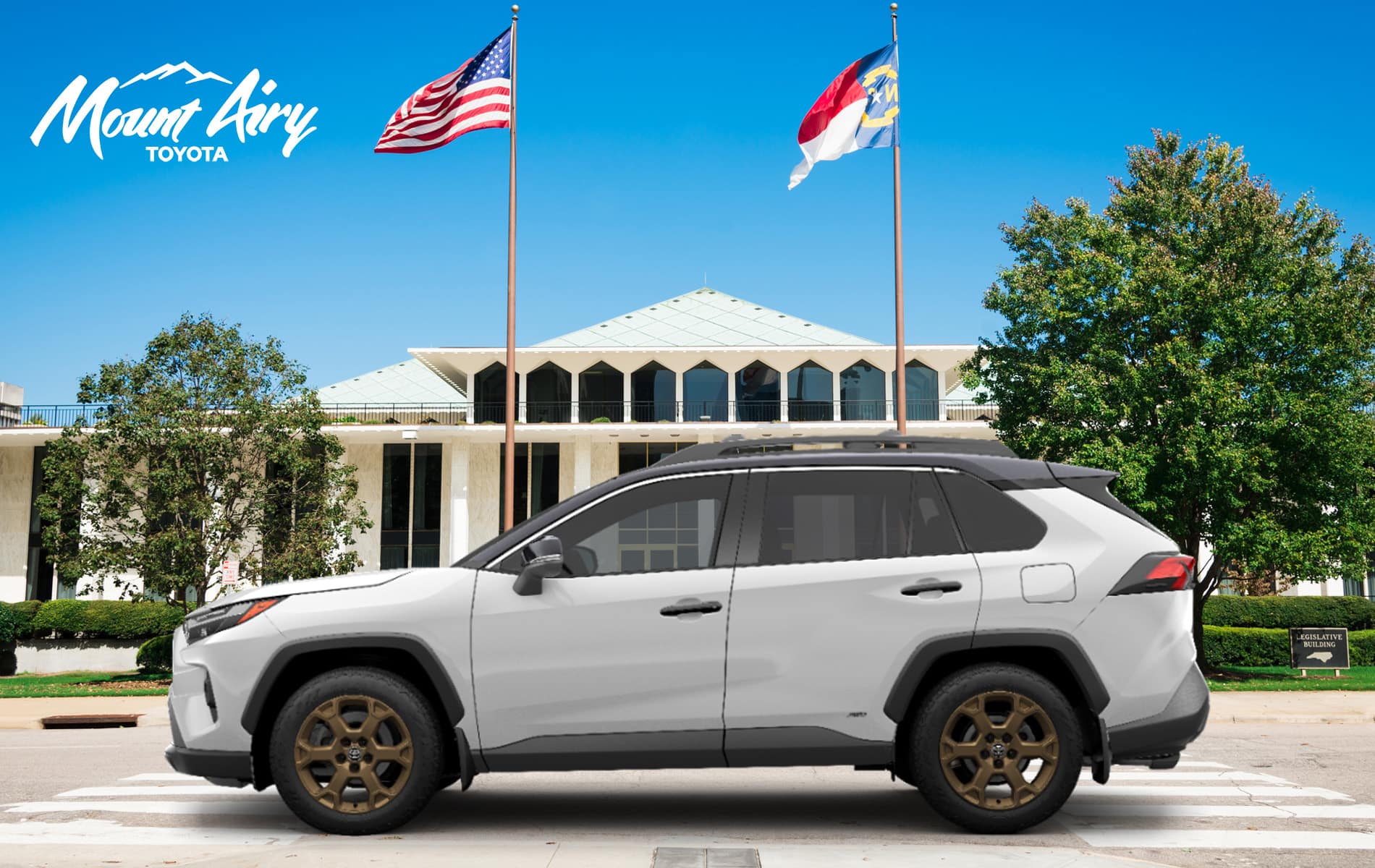
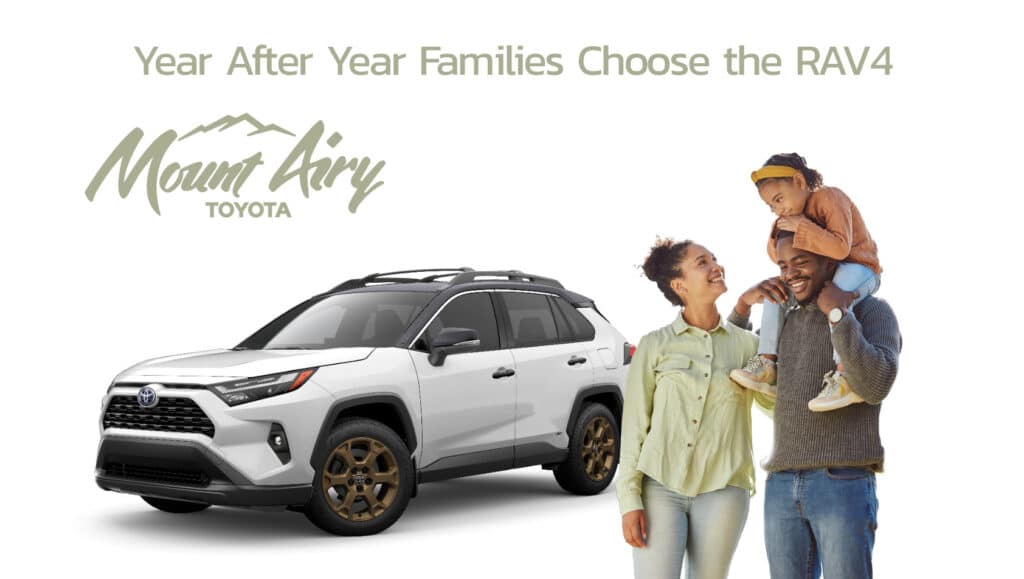
If you've been on the road lately, chances are you've seen a Toyota RAV4 zipping past or parked in every other driveway. Have you ever wondered why this compact SUV is everywhere? It's not just a coincidence—the Toyota RAV4 has become America's best-selling SUV for many reasons. From its sleek design and impressive fuel efficiency to its reliable performance and family-friendly features, the RAV4 has something for everyone. Below, Mount Airy Toyota explains why this powerhouse on wheels has captured the hearts (and garages) of so many drivers nationwide. History Rundown of the Toyota RAV4 The Toyota RAV4, short for "Recreational Activity Vehicle: 4-Wheel Drive," debuted in 1994 and revolutionized the automotive market by pioneering the compact crossover SUV segment. The innovative vehicle was designed to combine the benefits of an SUV (e.g., higher visibility, increased cargo capacity, off-road capability) with a car’s fuel efficiency and handling.   The first-generation RAV4 launched in Japan and Europe before making its way to North America in 1996; it was an instant hit. It featured a unibody construction, a front-wheel-drive layout (with optional all-wheel drive), and a modest yet efficient 2.0-liter engine. This combination appealed to a wide range of consumers, from urban dwellers looking for practicality to outdoor enthusiasts needing a versatile ride.   As the RAV4 evolved, Toyota continued to innovate. The second generation came out in 2000 with a larger body and more powerful engine options. By the time the third generation emerged in 2005, the RAV4 had grown in size and offered a third-row seat option, which made it even more family-friendly.   The fourth generation, which appeared in 2013, marked a significant shift in design and technology. It showcased a sleeker aesthetic, better safety features, and enhanced fuel efficiency. The introduction of the RAV4 Hybrid in 2016 catered to the growing demand for eco-friendly vehicles, solidifying its position as a market leader.   The fifth and current generation, launched in 2018, takes the RAV4's legacy to new heights. It boasts a rugged design inspired by Toyota’s off-road heritage, advanced tech features, and a suite of driver-assistance systems. The RAV4 Prime is a plug-in hybrid variant demonstrating Toyota’s commitment to sustainability and innovation. From its inception to its current status as a best-seller, the Toyota RAV4 has relentlessly adapted to consumer needs and market trends. By all appearances, it will remain a beloved choice for drivers across the globe—for many years to come. Flawless Design, Features for Days The Toyota RAV4 perfectly blends style, comfort, and technology, making it a top choice for a wide range of drivers. Let’s break down what makes the RAV4’s design and features so compelling: Exterior Design Sleek and Modern: The RAV4’s exterior design harmonizes ruggedness and sophistication. Its bold front grille, sharp LED headlights, and sculpted body lines give it a dynamic, unmistakable presence on the road. Rugged Appeal: The RAV4 Adventure and TRD Off-Road models offer higher ground clearance, all-terrain tires, and unique styling cues that distinguish them from the rest of the lineup. Versatility: The RAV4’s design is not just about looks. Features like roof rails and an available hands-free power liftgate make it easy to load up for a family trip, a weekend getaway, or any other journey. Interior Comfort Spacious Cabin: Inside, the RAV4 offers ample space for passengers and cargo. Generous legroom and headroom allow five to sit comfortably, so it’s ideal for families and carpoolers. Premium Materials: Toyota has upped the ante with high-quality materials and finishes. Options like SofTex-trimmed seats and a panoramic moonroof add a touch of luxury. User-Friendly Technology: The RAV4 is packed with tech features that enhance the overall driving experience. Among other things, the standard Entune 3.0 system includes a 7-inch touchscreen, Apple CarPlay, Android Auto, and Amazon Alexa compatibility. Safety Features Toyota Safety Sense 2.0: Standard across all trims, this suite of advanced safety features includes the Pre-Collision System with Pedestrian Detection, Lane Departure Alert with Steering Assist, and Dynamic Radar Cruise Control. Blind Spot Monitoring: This feature is available on higher trims and helps drivers stay aware of their surroundings; it reduces the risk of collisions when changing lanes. Rear Cross-Traffic Alert: This handy feature enhances overall safety by alerting drivers to approaching vehicles when backing out of parking spaces. The RAV4’s design and features transcend aesthetics and comfort—they yield a versatile, safe, and enjoyable driving experience. The SUV is designed to meet needs and exceed expectations, whether you’re navigating city streets or exploring off-the-beaten-path trails. Check out our inventory of new RAV4 models at Mount Airy Toyota! A Reliable Performer Performance and reliability are two areas where the RAV4 genuinely shines. Here’s why: Engine Options and Performance Specs The RAV4 offers a variety of engine choices to suit different driving preferences. The standard gas engine is a 2.5-liter 4-cylinder that delivers a solid 203 horsepower, providing plenty of get-up-and-go for everyday driving. It’s responsive and smooth, making your daily commute or weekend road trips a breeze.   For those looking to go green, the RAV4 Hybrid matches the same 2.5-liter engine with an electric motor for a combined 219 horsepower. It’s not just about power, though—the hybrid offers impressive fuel efficiency, which means fewer stops at the gas station. The plug-in hybrid variant (RAV4 Prime) is a game-changer; a whopping 302 horsepower makes it the most powerful RAV4 ever. Plus, it offers up to 42 miles of electric-only driving range and is ideal for short commutes and errands around town. Fuel Economy Fuel efficiency is one of the most important factors for drivers these days, and the RAV4 doesn’t disappoint. The standard RAV4 gets an EPA-estimated 28 mpg in the city and 35 mpg on the highway, while the hybrid model kicks it up a notch with an EPA-estimated 41 mpg in the city and 38 mpg on the highway. You’ll save money and reduce your carbon footprint! Toyota’s Reputation for Reliability To buy a Toyota is to buy peace of mind. These vehicles are known for their durability and longevity. In fact, seeing a RAV4 with well over 200,000 miles still running strong is quite common. Thanks to Toyota’s reliable engineering and expert service centers like Mount Airy Toyota, maintenance costs for the RAV4 are typically lower than average. And Toyota gives you a fantastic warranty to keep you covered. Driving Experience The RAV4 isn’t just reliable—it’s fun to drive. The suspension system is tuned for comfort and smooths out bumps to make every ride enjoyable. If you regularly navigate challenging weather or seek off-road adventures, the RAV4 offers several all-wheel drive options that enhance traction and stability.   In a nutshell, the RAV4’s performance and reliability make it a standout choice in the crowded SUV market. Power, efficiency, and peace of mind will have you feeling really good about your purchase! 3 Ways the RAV4 Appeals to Drivers The Toyota RAV4 has captured a broad spectrum of the market, appealing to various demographics with its versatile offerings. Here’s a look at what makes it so attractive: 1. Affordability and Value for Money One key reason the RAV4 is so popular is its competitive pricing. It arguably balances cost and features better than any other vehicle, which makes it accessible to a wide range of buyers. Starting at a reasonable price, it provides excellent value with standard features like advanced safety systems, a user-friendly infotainment setup, and a comfortable interior. Toyota’s renowned reliability and affordable maintenance further enhance its appeal. 2. Target Demographics The RAV4’s versatility means it appeals to a diverse group of drivers. The spacious interior and ample cargo space make it a practical choice for families. Toyota Safety Sense provides peace of mind for parents, while the Adventure and TRD Off-Road models offer rugged capabilities and all-terrain performance for outdoor enthusiasts. Meanwhile, eco-conscious drivers are drawn to the Hybrid and Prime models for their excellent fuel efficiency and reduced environmental impact. Daily commuters also appreciate the RAV4's comfortable ride, fuel efficiency, and tech-savvy features. 3. Comparison with Competitors The RAV4 shines in the convoluted compact SUV segment; the Honda CR-V, Mazda CX-5, Ford Escape, and other rivals don’t hold a candle. It combines reliability, fuel efficiency, and a comprehensive suite of standard safety features to keep an edge year after year. The availability of hybrid and plug-in hybrid variants also sets it apart, catering to the growing demand for eco-friendly vehicles. Moreover, the RAV4’s resale value remains strong, so it’s a stellar long-term investment. The RAV4’s Future Is Bright Despite its consistent success, the Toyota RAV4 isn’t resting on its laurels. Toyota is constantly looking ahead to keep the compact SUV at the forefront of the game. Here’s a glimpse into what the future holds for this popular model: Upcoming Models and Features New Trims and Editions: Toyota is always adding fresh trims and special editions—such as the RAV4 Woodland Edition with a trail-tuned suspension—to keep things exciting. You can expect other new variations with unique features and design elements to cater to evolving tastes and preferences. Enhanced Technology: Future RAV4 models will likely boast tech upgrades, including even more advanced driver-assistance systems and infotainment options. Think upgraded navigation systems, better connectivity, and more intuitive interfaces. Improved Hybrid Options: Toyota is expected to refine its hybrid offerings to meet the growing demand for green vehicles. In the next few years, we might see battery enhancements that yield better performance and longer electric ranges for the RAV4 Hybrid and Prime models. Toyota’s Plans for Innovation and Sustainability Advanced Safety Features: Toyota has always been committed to pushing the envelope on safety. Future RAV4s will likely provide new, cutting-edge technologies via the Safety Sense suite to make driving safer and more secure. Sustainability Initiatives: As part of its broader sustainability goals, Toyota plans to introduce more eco-friendly features. This could mean further improving fuel efficiency and releasing new hybrid or electric variants. Off-Road Capabilities: Expect Toyota to continue improving the RAV4’s off-road prowess through the Adventure and TRD Off-Road models; they’ll be even more capable of tackling rough terrain. Final Thoughts The Toyota RAV4 has become America’s favorite SUV for many good reasons. Its stylish looks and fantastic features achieve form and function like no other in its class. You can always count on its solid performance and unmatched reliability, making it a top pick for families, adventurers, and eco-friendly drivers. Toyota's dedication to innovation and sustainability means the RAV4 will get even better over the years. Whether you need a dependable ride for your daily commute or an adventure-ready vehicle for your weekend getaways, this compact SUV has your back. See for yourself why the RAV4 is so popular—head over to Mount Airy Toyota for a test drive!

Distracted Driving and Advanced Driver Assistance Programs

What You Need to Know About Advanced Driver Assistance Systems & Distracted Driving

What You Need to Know About Advanced Driver Assistance Systems Though advanced driver assistance systems are considered a modern marvel when it comes to driving, there are some concerns being raised about them. These newer hands-free vehicle systems do provide a higher level of safety, there’s no question about that, but some believe they can cause additional distractions as well. Hands-free calling, texting, GPS, and other modern, high-tech features take our minds off traffic, especially in the evening hours, which heightens the possibility of drivers losing focus. Winston-Salem, NC made the news recently, as both television and print outlets all over the state (including Charlotte) have reported on the dangers of distracted driving, citing specific accidents in areas around town. Though some of the information provided in these reports was a bit cherry-picked, much of what was reported is insightful information. For instance, did you know that from 9 pm to 11:59 pm on Friday and Saturday nights is the most dangerous time to be on the road? Whether you are driving through a small or big town, a congested or seemingly open road, there are plenty of ways to become distracted while driving, and this report points to the fact that advancements in the way we drive are not necessarily eliminating distractions–conversely, they may be enhancing them. What Are Driver Assistance Systems? Advanced Driver Assistance Systems, or ADAS, are various technologies created to improve the driving experience, namely, to promote vehicle safety. This process involves the implementation of automated assistance to the driver to help reduce the possibility of human error. This is done by using sensors, cameras, radar, and other advanced tech features to monitor the vehicle’s surroundings at all times and to assist in various driving tasks–such as adaptive cruise control, lane-departure assistance, automatic emergency braking, and parking assistance. But are these systems doing too much for us? Are they causing us to pay less attention to the technicalities of driving and spending more time letting our minds wander?   For some car companies, like Toyota, these advanced systems are nothing new, though they are often updated. The availability of specific assistance features can depend on the trim level and options chosen for each vehicle, but a variety of them can be found in most versions of Toyota’s Camry, RAV4, Corolla, Highlander, Tacoma, Prius, Avalon, and Sienna.   Before we get into some details on how these systems work, and how we can keep from letting our minds wander while they are in use, let’s have a look into how incorporating ADAS provides clear benefits both drivers and passengers: Improved Safety: we can already see how ADAS helps prevent car accidents by providing safety assistance to drivers through the use of emergency braking, lane departure warning, and adaptive cruise control. Enhanced Convenience: ADAS can make the driving experience more comfortable and less stressful by assisting with tasks such as maintaining a safe distance behind other vehicles, keeping your vehicle centered in its lane, and aiding in parking maneuvers, such as the dreaded parallel parking. Reduced Driver Fatigue: by incorporating ADAS, drivers can get alerts and assistance when necessary if experiencing fatigue. These technologies can keep drivers from falling asleep and/or get them to pay attention to certain aspects of driving–for instance, if there is flooding, icy conditions, animals crossing, etc. Potential Insurance Discounts: some insurance companies offer discounts for vehicles equipped with ADAS, as these technologies have already proven their ability to reduce the likelihood of accidents and even minimize potential damage in the case of an actual collision. Environmental Benefits: certain features of ADAS, such as adaptive cruise control, can help with fuel efficiency by maintaining a consistent speed and following distance. Over time, this can lead to a drastic reduction in fuel consumption. Lower emissions means your car is better for the environment, and you are able to save money by visiting the gas station less often. Assistance for Drivers with Disabilities: ADAS can provide helpful assistance to drivers with disabilities by helping them operate aspects of the vehicle through automated prompting, the use of warning lights, etc. It can also assist those with limited mobility by setting itself to take care of things like the usage of blinkers and headlights without the prompting of the driver. Clearly, ADAS plays a crucial role in improving road safety and enhancing the driving experience, and this process of technological integration is only starting–who knows what the future holds! But how do we keep from losing focus since ADAS does so much of the work for us? To be honest, it doesn’t take special training or working through a series of steps. Focused driving simply requires a change in the way we communicate with our vehicle: though your car can now do more for you than ever before, it’s necessary to watch the processes take place. For instance, rather than constantly looking around your car as you drive alongside other vehicles on the highway, keep your attention on the dash and on your side mirrors, and let the ADAS system communicate to you what is going on through the sounds and images it shouts out to you. Always keep in mind that Advanced Driver Assistance Programs are meant to make driving easier, but they are not meant to take over completely. The same amount of attention is needed while driving, but now a lot of that attention can be directed to listening to what your car is telling you. You and your vehicle should be working in tandem to create a safe, enjoyable drive. How ADAS Works Integrated systems such as ADAS are quite complicated, but gaining a basic understanding of how they work can better inform drivers on how and when to use them. On the most basic level, ADAS uses a combination of sensors, cameras, radar, lidar, and software algorithms to monitor the vehicle’s surroundings. All of these technologies are used to assist the driver. Here is a general overview of how it all works: Sensors and Cameras – Small sensors and cameras are strategically placed around the vehicle so that they can continuously collect data on the car’s surroundings, including nearby vehicles, pedestrians, road markings, traffic signs, and obstacles. Data Processing – The data collected by sensors and cameras are processed in real time through the use of onboard computers. These computers use special algorithms to analyze the data received in order to identify objects on or around the road, detect potential hazardous situations, and assess the vehicle’s position in relation to the road and other vehicles. Decision Making – Once incoming data has been processed, ADAS makes decisions about the appropriate actions to take so that the driver is assisted, and safety mechanisms are enhanced. For example, if it is detected that the vehicle is drifting in and out of its lane without signaling, lane departure warnings and/or the steering assistant may be employed to alert the driver and to keep the vehicle in its proper placement on the road. Driver Feeback and Intervention – One of the great aspects of this sort of enhanced driving system is that ADAS provides feedback to the driver through visual, auditory, and haptic alerts in order to inform them of potential hazards in the moment. Not only that, but in some cases ADAS can also intervene directly by applying the brakes, adjusting steering, and even controlling the vehicle’s speed. Integration with Vehicle Controls – Most often, Advanced Driver Assistance is integrated with the vehicle’s existing control systems–like braking, steering, and throttle–so that there is active vehicle control when necessary without the prompting of the driver. Essentially, this means that ADAS does not have to wait for human interaction for it to kick in. This makes sense if you are heading towards danger without knowing it, you want your vehicle to know to apply the brakes whether your foot hits the brake pad or not. Continuous Monitoring and Improvement – What’s so great about ADAS is that it is continuously working. It is always monitoring the vehicle’s surroundings and performance–even if you are not–and it knows how to adapt and change driving conditions, and this effectiveness has actually improved over time. Manufacturers regularly update ADAS software to enhance performance, address potential issues, and introduce new safety features.   One other feature we like about the incorporation of ADAS is that if repairs or calibration are needed for the ADAS system in Toyota vehicles, a quick trip to the dealership is all that is required. Once on site, a certified technician can calibrate and/or repair any necessary areas. And there is no guesswork here, as your ADAS will let you know if there are necessary repairs or adjustments needed so that there is no compromise in the effectiveness of the system.   Driving is still about having fun and enjoying the open road but be careful driving your new Toyota Camry or Tundra. The hands-free features are terrific, but your mind still needs to be on the road. Take advantage of ADAS by letting your car communicate with you!

The Toyota RAV4 is the best-selling SUV in America, and it’s the fourth best-selling vehicle overall. Get the new 2024 RAV4 at Mount Airy Toyota in NC.

Everyone’s Still Raving About the RAV4

The Toyota RAV4 is the best-selling SUV in America, and it’s the fourth best-selling vehicle overall, beaten only by the Ford F-150, Chevrolet Silverado, and the Ram 1500. Note that these three ahead of the RAV4 are high-performing, luxury trucks, which leaves Toyota’s midsize SUV alone and untouchable as one of the most famous cars in America. Learn about the key features that keep customers coming back year after year to the celebrated RAV4. When RAV4s began showing up on the roads in the early 1990s, they were compact and zippy little SUVs. They were built to last and perform well and you could, and still can, find a Toyota RAV4 clucking along with over 300,000 miles under its belt. Breaks, tires, and maybe a timing belt had to be changed, but that’s to be expected–the mechanics still intact and operating as they should, which is something you just don’t see in many vehicles made today. Over the years, new Toyota RAV4s have kept the respected stamina and have added a tougher-looking exterior, more comfortable interior, and showcase some impressive performance. Toyota’s iteration of the RAV4 has only gotten better with time, and in its more modern version, we find a bit more pluck and intuitive design than ever seen before in this vehicle. Performance & Variety The RAV4 was one of the first to try something that just about no other compact SUV maker dared to attempt at the time: the RAV4 came (and still does) with a hybrid version. When shopping for a RAV4, there are two big choices to make before you go through all the features and add-ons. Do you want a hybrid or gas? The answer to this question mostly depends on the level of performance you need, though you will be surprised by the power and performance both offer. Let’s begin with the non-hybrid. The 2024 RAV4 TRD comes with a 2.5-liter, inline-4 engine that has up to 203 horsepower. It gets great gas mileage (40 mpg combined). It offers an all-wheel-drive system, which has electric controls that tell the rear wheels when to kick in, so that they are not needlessly running every time you go for a spin. On the road, the RAV4 is as smooth as ever and fun to drive. And with the inline-4, you get a little extra boost. The RAV4 hugs sharp turns and scoots in and around town like a pro. Now for the hybrid. Believe it or not, this version actually has more power than the base, gas model. This electric-gas-powered machine operates with a 2.5-liter, 4-cylinder engine, and it has up to 219 net combined horsepower! The engine is paired with a Hybrid Synergy Drive System, which helps the vehicle to know when and when not to use gas. The RAV4 hybrid also comes with all-wheel-drive and gives the same smooth, sweet ride as its gas-only counterpart. Safety In terms of safety, Toyota has made many improvements to the RAV4. And not that they were bad before. RAV4s have always scored high in this department, but the newest version seems to get it perfect. The 2024 model has what Toyota calls, “Toyota Safety Sense.” This combination of safety mechanisms makes the RAV4’s safety ratings soar with forward collision warning, automatic emergency braking (just in case your foot can’t make it to the brake pedal in time), lane-departure alert, adaptive cruise control, automatic high beams, and pedestrian pre-collision. What’s more, the NHTSA has already given the 2024 Toyota RAV4 its highest safety rating, a 5 out of 5. With the inclusion of adaptive cruise control, lane keep assist, blind-spot monitoring, rear cross-traffic alert, and automatic high beams, how could it not? And there’s more! The 2024 RAV4’s line of safety features include a total of eight airbags, a rearview camera, a surround-view camera, plus the impressive safety systems previously mentioned. And what better peace of mind to have this holiday season than knowing you are driving around with some of the most high-tech safety features ever made. Comfort RAV4s, even the old ones, have never lacked in the area of comfort, and this year it only gets better. At the Platinum trim level, you can opt for all the usual upgrades, plus a heated steering wheel. You can also get Toyota’s SofTex upholstery, which has the look and feel of leather but comes at a fraction of the cost. No matter which trim level of RAV4 you choose, you will be comfortable. The driver’s seat sits perfectly upright, but still manages to cradle and keep you comfy. You have a perfect view of the road, everything is at arm's length, yet somehow you feel as though you are somewhat reclining. It’s nice. Really nice. All entryways and exits are easily accessible, and it offers plenty of cargo space with a section below the floor, and a liftgate. Whereas the RAV4 of old could truly be considered a small, crossover vehicle, the 2024 model leans more towards the end of medium/large SUV, and this shift greatly helps in way of space and comfort. With a smooth, quiet ride, soft interior lighting, and soft-touch materials throughout, you can’t beat the new RAV4. Features Toyota has turned the RAV4 into one of those vehicles that can come with a seemingly unlimited number of features to add or alter. This is a good thing, as you can end up driving away with something truly tailored to you. But it does take some time to figure out exactly what you want. That’s why it’s a great idea to come down to Mount Airy Toyota where we can help you through the process of picking out your perfect RAV4, and you can even take one for a drive. Here are a few of the best features offered with the 2024 RAV4: Interior LED Lighting Toyota’s Infotainment System Dual-Zone Automatic Climate Control Paddle Shifters A Unique Front Bumper and Grille Design Power Everything JBL Speakers Entune App Connectivity And there are so many more. You can use hands-free calling and texting. Can even use the OpenTable app to make dinner reservations while on the way to the restaurant! The possibilities become endless the more car companies are able to connect our vehicles with our smartphones. Fuel Economy One of the greatest things about driving a crossover SUV is that they know how to conserve fuel without losing power in performance. The 2024 RAV4 gets around 41 miles per gallon in the city and 38 mpg on the highway, which is not bad at all. Especially with the power this thing has. What this equates to is a family-fun sport utility vehicle that requires less trips to the gas station. And, if you go for the RAV4 hybrid, there is even better fuel economy, obviously. Toyota has thought of it all. Performance, safety, comfort, and fuel economy. Those are the big ones for any vehicle, and the RAV4 gets top marks on every single one. Don’t wait, come check out our lot of new and used RAV4s today.

The UAW Strike, Toyota, and You: Who Stands to Benefit the Most?

The UAW Strike, Toyota, and You: Who Stands to Benefit the Most? As unionized workers walk out of big-named auto manufacturing companies by the thousands, customers are left wondering how they will be impacted by this, as the possibility looms that even non-unionized car companies, like Toyota, could be making some changes. Presently, the United Auto Workers’ strike is in full swing, affecting more than 20 states across the country–including North Carolina. The strike is targeted towards The Big Three automotive companies: General Motors, Stellantis (Chrysler), and Ford, and this is the first time in history these three have been impacted by a strike at the same time. The strike came about at exactly midnight on September 14th, which is precisely when the union’s contract with the companies expired. The strike began with 13,000 workers walking out of each of the three assembly plants with a warning that more would be walking from other locations if significant progress in contract negotiations hadn’t taken place. Unfortunately, not enough progress was made through these negotiations, and the UAW announced more walk-offs. As it stands, 362,000 auto workers are on strike. What exactly are they negotiating for? The UAW wants better pay and better benefits, citing that the CEOs of these companies have made historic profits as of late, yet the workers have received nothing. The Effect on the Consumer Now that we know why the strike is taking place, what about its effect on the consumer? The good news is that you will still be able to shop for cars, even for those being targeted by the strike. Though pressure is being put on The Big Three, dealerships will not be shutting down since they are individual franchises that are owned independently of the company whose logo is shown on the front dealership. That said, these dealerships may receive their car orders from the car companies involved in the UAW strike, so although most–if not all–dealerships currently have plenty of vehicles on hand, it might not be that way for long. Luckily, economists (such as Jonathan Smoke, a chief automotive economist) are saying that the impact of the strike on consumers will not be anything like what we experienced during the Covid pandemic and the shortage of computer chips that ended up shutting down the entire auto industry for a little while. Something else to note, car dealers also sell used cars, and plenty of these are still on hand. So, if the new flow of cars were to stop all of the sudden, dealerships will still have plenty of older vehicles available–even if older means by a year or so. Thanks to the preparedness of auto dealers who have learned from previous periods of manufacturing crises, we–the consumers–may be able to skirt through this situation without much of a disruption. The Non-Unionized One thing to bear in mind is that not all automakers are unionized, and therefore are not all experiencing a strike at the moment. Toyota, one of the biggest, most trusted car companies in the world is not unionized and is still producing cars, trucks, and SUVs. Though the company is still in full production mode, it could be impacted by the UAW strikes to a degree. With the lack of production from The Big Three, there could be a period of time where there is a shortage of parts, even cars. This would leave a lot of The Big Three’s consumers left in the lurch, looking for a product. Will these consumers begin shopping at Toyota? They might have to. And if this were to happen, Toyota could –not to say that it would–capitalize even more by raising prices. So a new group of consumers and more money being made overall. But, wait, there’s more! If non-unionized car companies raise their prices on vehicles, The Big Three will most likely follow suit and raise theirs as well once the UAW strike is ended (whenever that may be). Only time will tell, but there is a clear risk of supplies being pushed down while prices go up, and in this situation it is the consumer who loses. Let’s hope negotiations are worked out soon. Buy Now or Wait and See What Happens? It’s a tricky spot to be in if you are looking at buying a car in the near future. How long these strikes will last, nobody knows. And even if they do end soon, when will we notice the lack of production that took place during the strike? Though you may not have been planning to start shopping yet, it could benefit you to trade in what you have now for that car you wanted later, while it’s still around. Despite what is happening in the world of auto production, trading in a car still carries true monetary worth and can save you tons of cash on your new purchase. Best of all, the process of trading in a car for a new one is quite easy and straightforward. The first step is to drive your car to Mount Airy Toyota and ask for some professional advice on how much money your car is worth and your best options for getting a new vehicle. You can then take the car you want to purchase for a test drive, and depending on how much research you have done already, yo can go over different trim levels, color options, etc. Once you return from your drive, an offer will be made on the car you wish to trade in, and that cash can be applied to the car you hope to buy. If you accept and find yourself a nice car, the deal is concluded by signing over the title and getting you into your new one. Another option is you can trade your car in for cash and take that money to a private seller, but there are two issues with this: 1) it takes more time and there is going to be more paperwork; 2) dealerships tend to give a bigger cash offer if you plan on buying your next one from them, and everything is done right there. If you do decide to wait it out, keep in mind that these strikes are happening at specific factories that make a few specific models of cars. There is a chance that the car you want, or will eventually want, will not be impacted by any part shortages. Do also keep in mind that the longer the strikes go on, the more likely car prices are to go up.

AM Radio Debate

AM Radio Controversy - Keep It or Kill It?

When was the last time you purposely listened to the AM radio? Chances are, it hasn’t been recently, as the wave of digital radio capabilities has even largely replaced FM bandwidth over the past few years. Another nail in the analog AM coffin, besides its lack of popularity, is the fact that it often interferes with electric vehicles’ ability to operate properly which is turning out to be a major manufacturing snafu. The issue itself is not detrimental to EVs, but AM frequency is causing an annoyance. And though the glaring solution of simply getting rid of AM radio seems obvious, lawmakers are fighting tooth and nail to mandate that all makes and models of vehicles–including EVs–retain AM radio capability. You may be thinking, “Why on earth would we keep AM radio, especially if it is inte rfering with our electric vehicles?” Seriously, who even uses AM radio these days? Consider this statement from Democratic Senator Ed Markey as he explains the controversy over the “AM Radio for Every Vehicles Act of 2023: “Broadcast AM radio is an essential part of our emergency alert infrastructure, but the responses to my letter show that far too many automakers are ignoring the critical safety benefits of AM radio. Although many automakers suggested that other communication tools— such as internet radio—could replace broadcast AM radio, in an emergency, drivers might not have access to the internet and could miss critical safety information.” Clearly, the controversy over AM radio is not regarding its popularity but rather its usefulness in an emergency situation. With that said, when was the last time any of us needed AM radio due to an emergency? What would an emergency needing such an antiquated method of communication like this look like? AM/FM Transmissions Am broadcasting was the first method of transmitting audio radio through the use of amplitude modulation. AM wavelengths can be short, medium, or long and it is, compared to digital transmissions, less expensive and more effective (can be pushed over longer distances) to use AM frequency. The downside to AM broadcasting is that it is more susceptible to interference than other transmission methods, and the audio quality of AM radio is at a lower fidelity than the others: FM, digital, satellite, HD, Internet, etc. So, why not get rid of AM and keep FM? Since amplitude modulation is so easy to produce and can be pushed for longer distances, it is a near-perfect method for broadcasting so that anyone with radio capability from within a large area can be reached. (AM broadcasts can typically reach as far as 100 miles.) Immediately, a scene from an apocalyptic Hollywood blockbuster unfolds: a long stretch of highway littered with cars quickly abandoned and doors left hanging open; maybe a few zombies walking around looking for fresh flesh. Then, from a distance, a voice can be heard coming from one of the empty cars, giving information and directions for survival. Where is this Godsend coming from?! Ah, yes, the only mode of communication still standing–the AM radio. This is Hollywood of course, and we have yet to have ourselves a zombie apocalypse; however, replace zombie apocalypse with any sort of natural disaster and this movie scene becomes very real. Whether it’s wildfires or hurricanes or earthquakes, large disasters like these can easily dismantle commonly used methods of communication, leaving us to rely on more traditional, basic ways of getting information to people, such as using amplitude modulation. This is why there is such a fight to keep AM radio. The Trouble With EVs It’s no wonder why electric vehicles are becoming so popular. They are powered only by electricity and can drive for over 200 miles on a single charge. With the absence of gas and oil, these driving machines provide a completely new driving experience. There is no loud engine. No dirty oil changes, and no mysterious puddles to be found underneath the engine. Driving an EV definitely has its perks. Here are a few pros and cons: Pros ● The cost of electricity is less expensive than gas—especially these days! ● The instant power provides quick response time on all levels of the car’s capabilities. ● Can be charged from home or anywhere else where the car can be plugged in. ● Since they have fewer parts than a non EV, the cost to maintain them is significantly less. ● Zero emissions are produced while driving. ● Ultra smooth and quiet ride. Cons ● Can cost as much as $10,000 more than a non EV. ● Long trips have to be planned around charging stations. ● Can be difficult to charge for those who live in compact, public areas without off-street or garage parking. ● Charging the vehicle can take up to an hour. ● Extreme temperatures reduce driving range. ● It’s unclear the cost of a new battery for EVs (rarely happens, but is possible). There is one more con against electric vehicles. Since EVs use the same wavelength as AM radio, a loud hum and/or buzzing sound occurs while driving. Here is what Ashruf El-Dinary, a senior vice president of digital platforms at Xperi had to say about this controversy: “The current system is the vehicle, a lot of them are pulse-width modulated, so it has some high current going through which creates inductance, which can transfer back into the antenna system.” This transfer is what causes the unwanted hum/whine/buzzing noise and is the reason automakers want to get rid of AM radio completely. So what should be done? Do we throw caution to the wind and kill AM (despite a possible, future zombie apocalypse)? Or do we try and ignore the whining hum sound? (Maybe we will learn to live with it?) The truth is, there is simply not enough information out there for an educated decision to be made. Surely there can be a way to keep AM and rid EVs of the interference, but unfortunately, we are not there yet. Until then, the production of EVs will most likely be stymied. Not An Easy Fix In order to figure out how to get AM and EVs to live in harmony (literally), it will take some time and money; two things electric car makers would rather be spending on making more EVs. But, it does not look like AM will be leaving without a fight, and it will be the more forward-thinking car companies that come up with a solution that allows EVs to operate and incorporate AM without disturbance. Until that time, stay tuned in to the legislation surrounding AM radio in EVs, and keep watch on which direction car companies are deciding to go: are they ignoring the issue and continuing to create their EVs, or are they looking for a way to resolve the controversy?

Contact Us

Fill out this form below and we'll contact you shortly
*Required Fields