
Blog / Auto News by Mount Airy Toyota

Everyone’s Still Raving About the RAV4
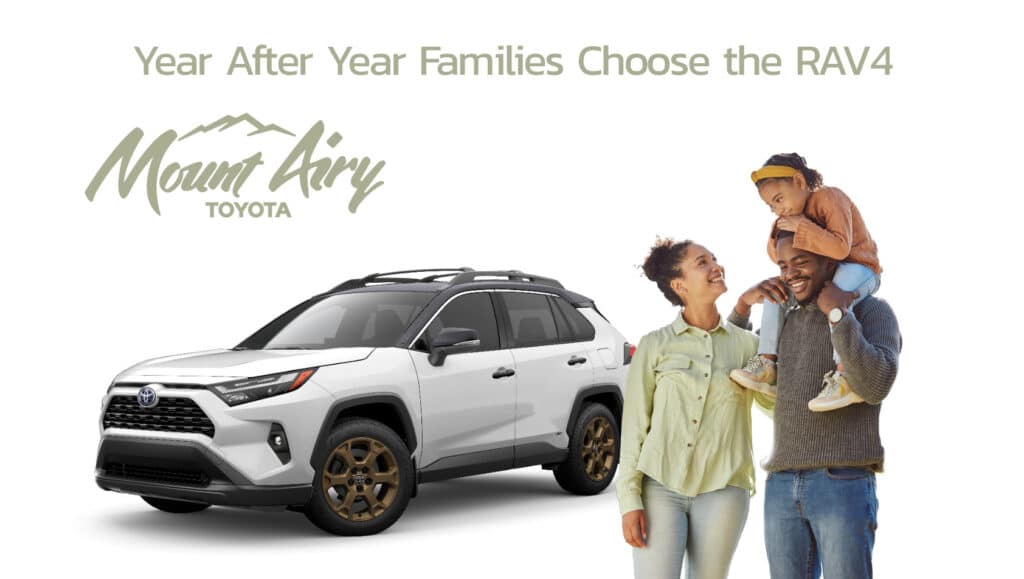
The Toyota RAV4 is the best-selling SUV in America, and it’s the fourth best-selling vehicle overall. Get the new 2024 RAV4 at Mount Airy Toyota in NC.
The Toyota RAV4 is the best-selling SUV in America, and it’s the fourth best-selling vehicle overall, beaten only by the Ford F-150, Chevrolet Silverado, and the Ram 1500. Note that these three ahead of the RAV4 are high-performing, luxury trucks, which leaves Toyota’s midsize SUV alone and untouchable as one of the most famous cars in America. Learn about the key features that keep customers coming back year after year to the celebrated RAV4. When RAV4s began showing up on the roads in the early 1990s, they were compact and zippy little SUVs. They were built to last and perform well and you could, and still can, find a Toyota RAV4 clucking along with over 300,000 miles under its belt. Breaks, tires, and maybe a timing belt had to be changed, but that’s to be expected–the mechanics still intact and operating as they should, which is something you just don’t see in many vehicles made today. Over the years, new Toyota RAV4s have kept the respected stamina and have added a tougher-looking exterior, more comfortable interior, and showcase some impressive performance. Toyota’s iteration of the RAV4 has only gotten better with time, and in its more modern version, we find a bit more pluck and intuitive design than ever seen before in this vehicle. Performance & Variety The RAV4 was one of the first to try something that just about no other compact SUV maker dared to attempt at the time: the RAV4 came (and still does) with a hybrid version. When shopping for a RAV4, there are two big choices to make before you go through all the features and add-ons. Do you want a hybrid or gas? The answer to this question mostly depends on the level of performance you need, though you will be surprised by the power and performance both offer. Let’s begin with the non-hybrid. The 2024 RAV4 TRD comes with a 2.5-liter, inline-4 engine that has up to 203 horsepower. It gets great gas mileage (40 mpg combined). It offers an all-wheel-drive system, which has electric controls that tell the rear wheels when to kick in, so that they are not needlessly running every time you go for a spin. On the road, the RAV4 is as smooth as ever and fun to drive. And with the inline-4, you get a little extra boost. The RAV4 hugs sharp turns and scoots in and around town like a pro. Now for the hybrid. Believe it or not, this version actually has more power than the base, gas model. This electric-gas-powered machine operates with a 2.5-liter, 4-cylinder engine, and it has up to 219 net combined horsepower! The engine is paired with a Hybrid Synergy Drive System, which helps the vehicle to know when and when not to use gas. The RAV4 hybrid also comes with all-wheel-drive and gives the same smooth, sweet ride as its gas-only counterpart. Safety In terms of safety, Toyota has made many improvements to the RAV4. And not that they were bad before. RAV4s have always scored high in this department, but the newest version seems to get it perfect. The 2024 model has what Toyota calls, “Toyota Safety Sense.” This combination of safety mechanisms makes the RAV4’s safety ratings soar with forward collision warning, automatic emergency braking (just in case your foot can’t make it to the brake pedal in time), lane-departure alert, adaptive cruise control, automatic high beams, and pedestrian pre-collision. What’s more, the NHTSA has already given the 2024 Toyota RAV4 its highest safety rating, a 5 out of 5. With the inclusion of adaptive cruise control, lane keep assist, blind-spot monitoring, rear cross-traffic alert, and automatic high beams, how could it not? And there’s more! The 2024 RAV4’s line of safety features include a total of eight airbags, a rearview camera, a surround-view camera, plus the impressive safety systems previously mentioned. And what better peace of mind to have this holiday season than knowing you are driving around with some of the most high-tech safety features ever made. Comfort   RAV4s, even the old ones, have never lacked in the area of comfort, and this year it only gets better. At the Platinum trim level, you can opt for all the usual upgrades, plus a heated steering wheel. You can also get Toyota’s SofTex upholstery, which has the look and feel of leather but comes at a fraction of the cost. No matter which trim level of RAV4 you choose, you will be comfortable. The driver’s seat sits perfectly upright, but still manages to cradle and keep you comfy. You have a perfect view of the road, everything is at arm's length, yet somehow you feel as though you are somewhat reclining. It’s nice. Really nice. All entryways and exits are easily accessible, and it offers plenty of cargo space with a section below the floor, and a liftgate. Whereas the RAV4 of old could truly be considered a small, crossover vehicle, the 2024 model leans more towards the end of medium/large SUV, and this shift greatly helps in way of space and comfort. With a smooth, quiet ride, soft interior lighting, and soft-touch materials throughout, you can’t beat the new RAV4. Features Toyota has turned the RAV4 into one of those vehicles that can come with a seemingly unlimited number of features to add or alter. This is a good thing, as you can end up driving away with something truly tailored to you. But it does take some time to figure out exactly what you want. That’s why it’s a great idea to come down to Mount Airy Toyota where we can help you through the process of picking out your perfect RAV4, and you can even take one for a drive. Here are a few of the best features offered with the 2024 RAV4:
  • Interior LED Lighting
  • Toyota’s Infotainment System
  • Dual-Zone Automatic Climate Control
  • Paddle Shifters
  • A Unique Front Bumper and Grille Design
  • Power Everything
  • JBL Speakers
  • Entune App Connectivity
And there are so many more. You can use hands-free calling and texting. Can even use the OpenTable app to make dinner reservations while on the way to the restaurant! The possibilities become endless the more car companies are able to connect our vehicles with our smartphones. Fuel Economy One of the greatest things about driving a crossover SUV is that they know how to conserve fuel without losing power in performance. The 2024 RAV4 gets around 41 miles per gallon in the city and 38 mpg on the highway, which is not bad at all. Especially with the power this thing has. What this equates to is a family-fun sport utility vehicle that requires less trips to the gas station. And, if you go for the RAV4 hybrid, there is even better fuel economy, obviously. Toyota has thought of it all. Performance, safety, comfort, and fuel economy. Those are the big ones for any vehicle, and the RAV4 gets top marks on every single one. Don’t wait, come check out our lot of new and used RAV4s today.
Posted in:

Related Posts

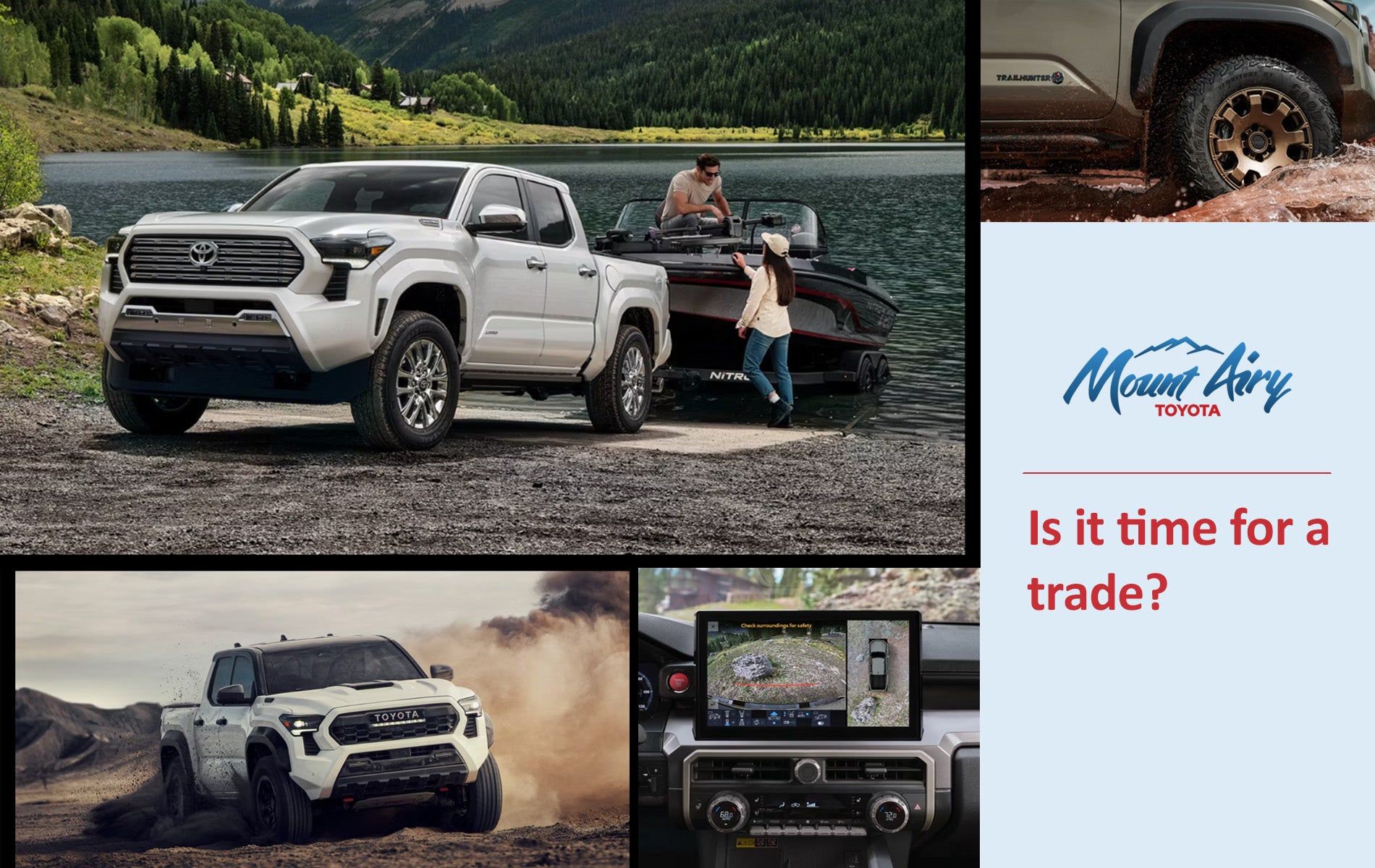
Is it time to trade your truck. Get insider information on truck trades and financial value.

How Long Should You Really Keep a Truck in North Carolina?

How Long Should You Really Keep a Truck in North Carolina? (And What Most Truck Buyers in Mount Airy Get Wrong) If you’re driving a truck around Mount Airy, Pilot Mountain, Cana, or anywhere in Surry County, you’ve probably asked yourself: “How long should I actually keep this truck before I trade it in for a new one?” Most modern trucks, including Toyota Tacoma, Ford Ranger, F-150, or RAM, can be reliable and relatively low cost up to 150,000 to 250,000 miles if properly maintained. So the question isn’t about the truck breaking down. It’s more about finding the smartest financial timeframe to trade. When does it stop making financial and practical sense to keep a truck? It’s also a very different situation if you are a truck driver versus a car or SUV driver. More is expected out of a truck, and they are more often used for work than for pleasure. How Long Do Most People Keep Their Trucks? Let’s start with the facts... We did a little research and found that across the U.S., the following ownership trends are fairly consistent with truck drivers in Surry County: The average vehicle on the road in the U.S. is about 12.5 years old Many truck owners keep their vehicles 10 years or longer The most common trade cycle is between 5 to 7 years That 5 to 7 year window is where things get interesting. That is usually the point where: Warranty coverage is ending or already gone Mileage is starting to climb between 60,000 and 100,000 miles Repair costs start creeping in Trade-in values are still relatively strong Why 5 to 7 Years Is the Sweet Spot Most trucks today come with: 3 year or 36,000 mile basic warranty 5 year or 60,000 mile powertrain warranty Once you move past that 5 year mark, you are on your own for most repairs. Now, that doesn’t mean your truck is about to fall apart. Not even close. But it does mean: Brake systems, tires, and suspension components start wearing down Electronics and sensors become more expensive to fix Maintenance costs become less predictable At the same time, your truck still holds solid resale value, especially if it has been well maintained. That is why a lot of financially savvy buyers in North Carolina choose to trade somewhere in that 5 to 7 year range. The idea is that you are not running the truck into the ground, but you are also not taking the biggest depreciation hit. How Trucks Wear in Surry County There are some differences between national averages and Surry County truck drivers because pickup trucks and work trucks wear differently in mountain areas. Not all miles are equal. Driving a truck in Surry County is not the same as driving one in flat city traffic somewhere else. Around Mount Airy and Northwest North Carolina, trucks tend to work harder. Hauling tools, materials, and equipment Driving up and down mountain roads like NC Highway 103 Towing trailers Stop and go driving combined with elevation changes All of that adds wear to brakes, suspension, transmission, and tires.  So while a truck can last 200,000 miles, how it is used locally matters. Many people work in the trades between Greensboro and up into Galax, Virginia. The long miles combined with the demands of construction work often age a truck faster than a commuter vehicle in a flat urban area.  It is similar to trucks from northern states. They tend to age faster because of salt, snow, and severe weather conditions.  These are important factors to keep in mind when you are considering the value of your truck. Why People Trade Trucks Sooner Than Planned Mileage and wear are the top reasons people trade between 5 and 7 years, but drivers commonly report the following reasons for trading sooner: Emotional - They want the enjoyment of driving a newer model. Jobs - A career change may require a different type of truck. Family - Adding a car seat changes everything. Towing C apacity - Some trucks simply handle towing better than others. Commuting Distance - Newer trucks often offer better fuel efficiency. Technology Improvements - Better sound, navigation, and comfort. Reliability Concerns  - Avoiding the risk of breakdowns. In a place like Surry County, your truck is not just transportation. It is part of your daily life. We may be a little biased as truck people, but most would agree it matters in this part of North Carolina. What Most Truck Buyers Get Wrong So how can you mess this up? Here is where a lot of buyers get it wrong. When it is time to buy, many people get caught up comparing numbers: Payload capacity Horsepower Towing ratings Price differences A few inches of space here or there On paper, a full size truck like an F-150 can look like the better deal. But here is the problem.  Most people do not actually use all those features they spent hours comparing.  And those small differences, like a few pounds of payload or a couple inches of bed space, do not matter three months after the purchase. What Actually Matters After You Buy Once you have owned the truck for a few months, the numbers fade away.  What does not fade is your daily experience. Are you comfortable driving to work? Are you getting good gas mileage running Highway 52 to Winston-Salem or Greensboro? Can you navigate Mount Airy traffic and parking lots easily? Is your family comfortable when heading up NC Highway 103 into the mountains? When you hit that same speed bump every day, does your truck glide over it or bump along? People consistently report that comfort, maneuverability, ease of use, climate controls, cup holders, and storage space matter most after a few months of ownership.  That is the difference between Best Truck and Best Fit. Final Thought Sometimes one truck looks better on paper, especially when you are deciding whether to keep your old one or trade.  The numbers might say one thing, but the reality is that you may be happier with a truck that fits your daily life.  For many drivers in Mount Airy, Pilot Mountain, and Surry County, a midsize truck like the Toyota Tacoma ends up being the better long term fit. Not because it wins every category, but because it is: Easier to live with day to day More comfortable on local roads Strong in resale value Known for long term reliability When you combine that with smart timing, trading before costs rise and value drops, it becomes a very practical ownership strategy. Insider Tip Sometimes the answer to “Should I trade this truck?” comes down to strategy. Watch this video from Rick Coburn to learn: Why Kelley Blue Book may not be your best pricing tool How dealers evaluate trade ins How to negotiate your trade more effectively If you are in Mount Airy, Pilot Mountain, Galax, or anywhere in Surry County and want to talk through your options, give us a call at 336-786-2118. We will help you find a truck that actually fits your life, not just your spreadsheet.

Mount Airy Toyota Service

Brakes & Tires in Mountain Country - Oh My!!!!

Why Mount Airy Drivers Need to Pay Extra Attention – Insights from Top Service Manager Chris Pack Driving in the Blue Ridge Mountains is beautiful—but it’s also harder on your vehicle than most people realize. Our top service manager, Chris Pack, explains in two recent videos that mountain driving and dramatic temperature swings put extra strain on both brakes and tires. Long downhill grades, constant elevation changes, sharp curves, and hot-cold seasonal extremes all speed up wear that would be mild in flatter regions. His message is simple: Stay ahead on brake and tire maintenance, and you’ll save money—and stay much safer—than waiting until something goes wrong. Below is your complete guide to brake and tire care in mountain conditions, including answers to the most-searched questions drivers ask online. Why Are the Mountains Tough on Brakes? In the Mount Airy region, the steep, twisty mountain roads mean drivers brake more often and more aggressively than those in flat areas. Add temperature swings—from freezing winter mornings to hot summer afternoons—and brake components expand, contract, and wear out faster. This combination makes proactive brake maintenance essential, not optional. Is it safe to drive with bad brakes? Driving with worn or failing brakes is dangerous anywhere—but especially in the mountains. If you must drive, stopping distance will be much longer, and you’ll need to avoid sudden braking. On steep grades, failing brakes can overheat quickly, leading to brake fade and a loss of stopping power. Can you replace your own brakes? Yes, some drivers choose to replace their own brake pads— but only if they truly understand the process. Brake work requires precision and proper safety handling. Front brakes are usually more straightforward, but rear drum brakes or advanced braking systems can be tricky. If in doubt, it’s safer (and often cheaper long-term) to let a certified Toyota technician handle it. What are the signs of worn brakes? Look and listen for: Squealing, grinding, or scraping noises A soft, spongy, or vibrating brake pedal Visible thin brake pads (check through the wheel spokes) Dashboard brake warning lights Longer distances required to stop your vehicle If you notice these signs, schedule service right away—mountain braking only accelerates the problem. Should I replace all four brake pads at once? Ideally, yes. At the very least, brakes should be replaced in axle pairs (both fronts together or both rears together). Installing pads unevenly can lead to unbalanced braking, which may cause pulling, extra wear, or unsafe stopping behavior—especially on winding NC mountain roads. What’s included in a full brake job? A comprehensive brake service typically includes: A complete brake system inspection Replacement of worn pads Resurfacing or replacement of rotors Inspection or servicing of calipers, brake lines, and hydraulic components Brake fluid check or replacement This ensures your entire system—not just one component—is operating safely. How much do new brakes cost at a typical Toyota dealership? Pricing varies by model, but generally: Brake pad replacement: $150–$300 per axle Pads + rotors: $500–$800 for all four wheels Your exact total depends on the vehicle, parts used, and how much wear has occurred. Mount Airy Toyota always provides upfront pricing so you know exactly what to expect. How often should car brakes be replaced? Most vehicles need new brakes somewhere between 25,000 and 65,000 miles. However, here in the mountains of North Carolina, brakes tend to wear out sooner due to: Repeated downhill braking Sharp curves requiring frequent speed adjustments Frequent temperature swings For mountain driving, we recommend inspections every 10,000–12,000 miles or at every oil change. Does the quality of my tires affect my brake life? Absolutely. High-quality, properly inflated tires help the vehicle grip the road more effectively, reducing the amount of work your brakes must do. Poor-quality or worn tires make your braking system work harder and wear out faster. Why Mountain Driving Is Tough on Tires Like brakes, tires suffer more in our region. Curvy, hilly roads, temperature fluctuations, and rougher mountain surfaces all contribute to faster wear. According to Chris Pack, neglecting tires in the mountains can be as dangerous as neglecting your brakes. Here’s how tires directly impact braking performance: How Tire Quality Impacts Brake Life Better grip = less brake strain High-quality tires use stronger rubber compounds and smarter tread patterns. When grip improves, stopping distance gets shorter—and your brakes don’t have to work as hard. Improved stopping power and less ABS activation Good tires maintain traction longer, allowing brakes to apply force without slipping. This means your ABS doesn’t need to intervene as often, which reduces stress on brake components. Worn tires increase brake wear As tires lose tread, they struggle to grip the pavement—especially on wet or sloped mountain roads. This causes brakes to work harder and heat up more quickly, accelerating pad and rotor wear. Proper tire pressure is critical Both underinflated and overinflated tires reduce your braking efficiency. Maintaining the recommended tire pressure helps ensure optimal traction, stability, and braking performance. Final Thoughts from Mount Airy Toyota Mountain driving demands more from your brakes and tires than typical conditions. That’s why Chris Pack and our entire service team emphasize regular inspections, timely replacement, and investing in quality components. By keeping up with brake and tire maintenance, you’ll: ✔ Stay safer on the road ✔ Prevent costly repairs ✔ Enjoy smoother, more controlled driving ✔ Extend the life of your vehicle If you have questions or want a complimentary brake or tire inspection, the Mount Airy Toyota Service Center is here to help.

Toyota maintenance tips

Mount Airy Toyota Insider Tips: Straightforward Advice on Car Maintenance, and Hidden Features

At Mount Airy Toyota, we believe car ownership should be empowering—not confusing. That’s why we created the Insider Tips Series, a collection of straightforward tutorials and proven advice on everything from car buying to maintenance, ownership, and service. Each episode takes a practical look at real-world driving challenges and offers expert guidance that helps you save money, avoid costly mistakes, and get more out of your Toyota. To kick off the series, we’re highlighting two important topics: how mountain driving affects your car and the hidden features built into Toyotas that many drivers never use. Mountain Driving: What Wears Out First Driving in the North Carolina mountains is a unique experience. The steep climbs, sharp descents, and winding roads don’t just challenge drivers—they also put extra stress on vehicles. In one of our first videos, Mount Airy Toyota Certified Technician Chris Pack explains that tires, brakes, and fuel consumption take the biggest hit when you drive in the mountains. Tires The constant uphill climbs and downhill braking cause tires to wear out faster than on flat terrain. Mountain drivers often find themselves replacing tires sooner than expected, making regular inspections essential. Keeping an eye on tire tread and alignment can prevent uneven wear and extend the life of your tires. $$$ SAVINGS TIP - Keep your Toyota driving safely with a fresh set of tires—and save big while you do it! Watch our website and social media for the Mount Airy Toyota Tire Sales.  We often advertise buy three tires and get the fourth tire FREE. Expert Toyota Certified installation Tires matched for your model and driving needs Boost safety, performance, and fuel efficiency Brakes Brakes are one of the most important—and most overlooked—parts of mountain driving. Frequent downhill braking generates more heat and friction, which can wear out pads and rotors at a much faster rate. Getting your brakes serviced on time doesn’t just improve safety; it also saves money. When brake pads are replaced before they wear down completely, you avoid damaging rotors and calipers, which can lead to costly repairs. In other words, preventative service now means avoiding major expenses later. Fuel Efficiency Steeper terrain requires more power, which means more fuel. While there’s no way around the physics of climbing mountains, keeping your tires properly inflated, maintaining a clean air filter, and following regular service intervals can help maximize your fuel economy. The takeaway is simple: regular maintenance is not optional—it’s essential. Staying ahead of tire and brake service not only keeps you safe on mountain roads but also protects your wallet from unexpected repair bills. Hidden Features: Getting the Most From Your Toyota Our second video in the series dives into something many drivers overlook: the hidden features built into their Toyotas. These features are designed to make daily driving easier and more convenient, but too often, owners never use them. Key Fob Technology Your Toyota key fob is more than just a way to lock and unlock your car. Depending on your model, it can roll down your windows, open the trunk remotely, and even activate a panic alarm with specific button combinations. These functions can save time, add convenience, and improve safety, yet many Toyota owners never take advantage of them. Watch this video by Mount Airy Toyota Certified Tech, Chris Pack to learn about your Key Fob. Additional Features Drivers Forget Automatic High Beams – Many Toyota models include this feature, which automatically switches between high and low beams to improve nighttime driving safety. Eco and Sport Driving Modes – These selectable modes adjust throttle response and fuel efficiency. Eco mode helps save gas, while Sport mode sharpens performance for a more responsive drive. Rear Seat Reminder – Designed to alert you to check the back seat before leaving the vehicle, this safety feature helps prevent accidents and forgotten belongings. Toyota Safety Sense Alerts – From lane departure warnings to adaptive cruise control, Toyota’s safety systems have customizable settings that many owners never personalize. Taking the time to adjust them can improve your driving comfort and confidence. By exploring these hidden features, our goal is to help you get the most out of your vehicle. After all, you invested in Toyota quality—you deserve to enjoy every feature it offers. Why This Series Matters Between car buying myths, confusing service schedules, and overlooked technology, drivers face a lot of uncertainty. Our Insider Tips Series was created to clear up that confusion. We want to provide: Clarity – Cutting through myths with honest, straightforward answers. Confidence – Helping you understand your vehicle so you can make informed decisions. Cost Savings – Showing you how preventative maintenance and smart ownership habits save money over time. Each video features our certified technicians and experienced team members, giving you access to insider knowledge without the jargon. Whether it’s understanding how mountain driving affects your brakes or learning a hidden feature on your key fob, the series is designed to make car ownership easier and more enjoyable. Who Should Watch This series is for everyone who owns—or is thinking about owning—a Toyota: New drivers will gain practical tips without feeling overwhelmed. Long-time owners will discover features they might not know about and learn ways to extend their vehicle’s life. Families on a budget will find strategies for saving money without compromising safety. In short, the Insider Tips Series is for anyone who values transparency, expertise, and peace of mind when it comes to their car. Join the Conversation The Mount Airy Toyota Insider Tips Series is more than just videos—it’s a resource for our community. We’re here to answer questions, share knowledge, and help you make the most of your Toyota ownership experience. 👉 Subscribe to our channel and follow along as we roll out new episodes. With each one, you’ll gain insights that make driving safer, smarter, and more affordable. At Mount Airy Toyota, we’re not just here to sell cars—we’re here to help you enjoy every mile.