Blog / Electric Cars

Blog

All Electric Cars Toyota Toyota Safety Camry Rav4 Tacoma Trucks Highlander Events Corolla Service 4Runner Tundra Auto News by Mount Airy Toyota Toyota History Toyota Technology Car Care Sienna Tires Avalon Mount Airy Toyota Dealer Toyotathon Trade- In Mount Airy Toyota Service Prius Supra Toyotacare Used Trucks Prius V Sequoia Used Cars C-HR Landcruiser SUV Crossover Employees End of the Year Savings Hatchback New Pickup Trucks Yaris ARB Safari Snorkel Explained Crown Difference between i-Force Max & i-Force Fox Internal Bypass QS3 Shocks Mount Airy Used Cars Old Man Emu Shocks Tacoma Onboard Air Compressor Toyota Hybrid Trucks & Cars Toyota Tundra Trailhunter vs TRD Pro TRD vs Trailhunter Suspension Venza What are Rock Sliders
How do oil markets and tariffs affect car prices?

Why Waiting To Buy Could Cost You: Rising Fuel Prices, Tariffs, and Smarter Car Buying in 2026

At Mount Airy Toyota, our sales team works hard to find discounts, coupons, promotions, and rebates whenever possible. That said, there are outside factors that can affect pricing. When we see an opportunity for our customers to save money, we make it a priority to pass that along. Right now, the oil market is creating one of those rare moments that make this an especially good time to buy. If you’ve been thinking about purchasing a vehicle and wondering whether to wait, the current market is sending a clear signal: waiting could cost you more, both upfront and over time. What does the Oil Market and the Strait of Hormuz have to do with your next vehicle purchase, and why should you care? More than most people realize. When that shipping lane slows down, fuel prices go up quickly. What follows is less obvious but more important. Even if everything reopened today, the effects would not disappear. Higher fuel and transportation costs are already working their way through the system, and that process usually takes three to six months to fully show up in the price of parts, goods, and vehicles. By the time it reaches the showroom, those increases are already built in. That is how this kind of economy works. It moves slowly, but once it starts, it is difficult to reverse. No matter how you feel about the reasons behind it, the outcome is the same. Costs rise, and they tend to stay elevated longer than expected. Here is the part most people miss. There is a window before the broader market reacts, before inventory tightens, before pricing fully adjusts. That window is where the advantage is. Most buyers will not connect the dots until months from now, when prices are already higher and options are more limited. If you are paying attention, this is your chance to move ahead of that curve. Locking in the vehicle you want now, especially one that helps manage fuel costs over time, is not about urgency. It is about seeing what is coming before it becomes obvious to everyone else and making a decision while you still have the upper hand. The Hidden Cost: Tariffs Add to the Pressure Fuel is only part of the story. Economists and automotive suppliers estimate tariffs could add around $3,000 per vehicle on average. That increase does not show up as a single line item. It builds gradually through: Higher material costs More expensive components Increased transportation expenses By the time vehicles arrive on the lot, those costs are already reflected in pricing. Why This Matters in Mount Airy and Surrounding Areas In Mount Airy and across northwest North Carolina and nearby Virginia communities, driving is part of daily life. Whether it is commuting, running errands, or traveling between towns, fuel is a constant expense. When fuel prices rise, it does not just affect what you pay at the pump. It increases the total cost of owning and operating your vehicle month after month. That is why timing your purchase and choosing the right vehicle matters more than most people think. The Smart Move: Buy Before Prices Rise and Drive Something Efficient Buying now gives you an opportunity to: Avoid incoming price increases tied to tariffs and fuel costs Lock in current inventory pricing Take advantage of today’s incentives before they change But timing alone is not enough. What you choose to drive matters just as much. A fuel-efficient vehicle helps protect you from rising costs long after the purchase is made. Best Toyota Options for Fuel Savings Right Now For drivers in the Mount Airy area looking to stay ahead of both pricing and fuel costs, Toyota offers some of the strongest options available: Toyota Camry Hybrid – Comfortable, proven, and delivers excellent real-world MPG Toyota RAV4 Hybrid – One of the most practical and efficient SUVs on the road today Toyota Corolla – Affordable, reliable, and consistently fuel-efficient Toyota Corolla Cross Hybrid – A smart crossover choice with strong everyday savings These vehicles are not just good on gas. They help reduce your total cost of ownership over time. Market changes like rising fuel costs and tariffs do not hit all at once, but once they begin, they tend to stay in motion.  Mount Airy drivers may find that rising fuel costs and tariffs could mean higher car prices soon. Buying now and choosing fuel efficiency is a smart move. Waiting may feel like the safer move, but in this environment it can mean: Paying more for the same vehicle later Facing higher fuel costs month after month Having fewer options to choose from If you are in Mount Airy or the surrounding North Carolina and Virginia area, now is the time to take a closer look at what is available while today’s pricing is still in place.

Toyota vehicles are known for their impressive resale value.

Why a Toyota is a Smart Investment in 2025

Looking for a reliable, durable vehicle that holds its value? Look no further than a Toyota. Toyota has a long-standing reputation for quality and dependability, and that translates to excellent resale value. Let's explore why a Toyota is a smart choice for your next car. Toyota's Legacy of Durability and Reliability It's not just hype – Toyotas are built to last. A significant percentage of Toyotas sold in the past two decades are still on the road today. This impressive track record speaks volumes about their durability. When you buy a Toyota, you're investing in a vehicle designed to withstand the test of time, saving you money and headaches down the road. Less time in the shop means more money in your pocket. Resale Value: A Key Advantage Toyota vehicles are known for their impressive resale value. When it comes time to trade in or sell your Toyota, you can be confident you'll get a fair price. This is due to a combination of factors: their reputation for reliability, their longevity, and the consistent demand for Toyota models. What Contributes to Toyota's Value? Several factors contribute to Toyota's strong resale value: Brand Reputation: Toyota has consistently been ranked among the most reliable car brands. This trust, built over decades, is a major selling point. Consistent Improvement: Instead of radical redesigns, Toyota focuses on incremental improvements, refining existing models and maintaining a familiar aesthetic. This "if it ain't broke, don't fix it" approach resonates with buyers. Popularity: Toyota's popularity plays a significant role. Recognizable models with established track records hold their value well. Safety First: Toyota Safety Sense Toyota prioritizes safety, and many models come standard with Toyota Safety Sense, a suite of advanced safety features designed to protect you and your passengers. While specific features may vary by model and year, these systems often include: Pre-Collision System with Pedestrian Detection: Helps mitigate or avoid collisions with vehicles or pedestrians. Lane Departure Alert: Alerts you if you unintentionally drift from your lane. Automatic High Beams: Optimizes nighttime visibility by automatically switching between high and low beams. Dynamic Radar Cruise Control: Maintains a safe following distance by automatically adjusting your speed. Award-Winning Lineup Toyota's lineup has consistently earned awards and accolades. While specific awards change annually, Toyota models are frequently recognized for reliability, safety, and value. Check out the latest awards and recognitions on Toyota's official website. Beyond the Basics: Features that Add Value Toyota vehicles offer a range of features that enhance their value. From comfortable interiors to advanced technology, there's something for everyone. Features like smartphone integration, advanced infotainment systems, and driver-assist technologies make the driving experience more enjoyable and convenient. Be sure to check the specific features available on the model you're interested in. Affordability and Long-Term Savings Toyota aims to offer competitive pricing across its lineup. Combined with excellent fuel economy and lower maintenance costs due to their reliability, Toyota ownership can lead to significant long-term savings. Investing in a Toyota: A Smart Choice Whether you're looking for a sedan, SUV, truck, or hybrid, Toyota offers a wide range of vehicles known for their reliability, durability, safety, and excellent resale value. Visit your local Toyota dealer to explore the latest models and find the perfect Toyota for your needs. Do your research, compare models, and take a test drive to experience the Toyota difference firsthand.

Mount Airy Toyota’s Comprehensive Guide to Advanced Driver Assistance Systems (ADAS)

Mount Airy Toyota’s Comprehensive Guide to Advanced Driver Assistance Systems (ADAS)

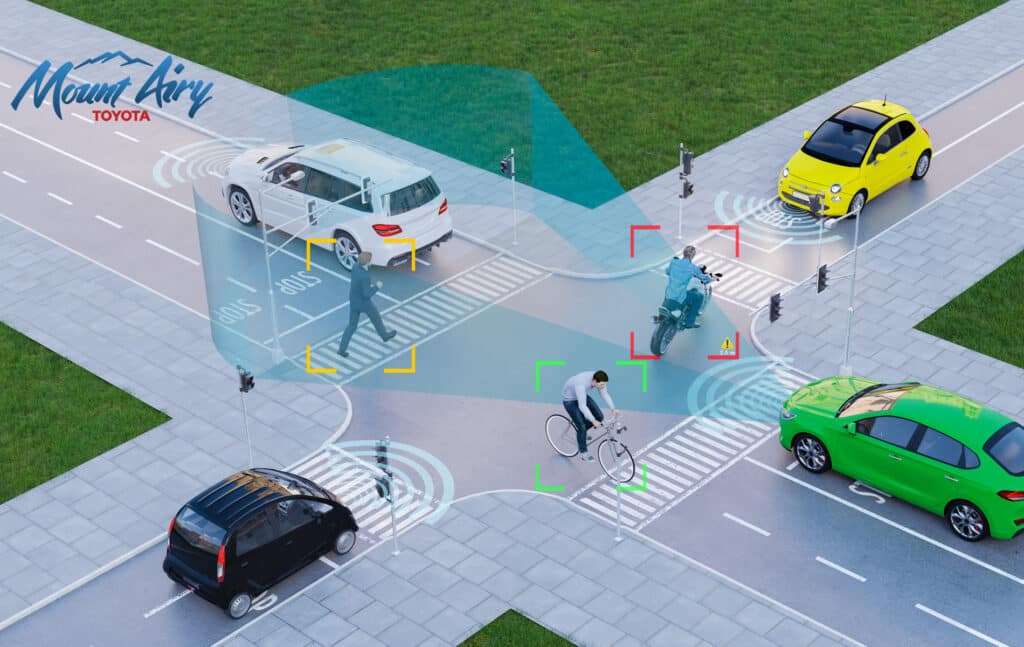
Toyota continues to lead the way with its commitment to safety and innovation in the ever-evolving automotive technology landscape. One essential advancement in the modern era is the implementation of Advanced Driver Assistance Systems (ADAS) — a suite of cutting-edge technologies designed to enhance vehicle safety, improve driving experience, and pave the way for a more connected and autonomous future. Below, Mount Airy Toyota explains ADAS more thoroughly, delves into which Toyota vehicles boast these systems in 2024, and more. Understanding ADAS Advanced Driver Assistance Systems, commonly known as ADAS, refers to a set of technologies integrated into vehicles to assist drivers and boost overall safety. These systems leverage sensors, cameras, radar, and other advanced technologies to monitor the vehicle's surroundings, detect potential hazards, and provide timely alerts or interventions to prevent accidents.   ADAS features many functionalities, including adaptive cruise control, lane departure warning, automatic emergency braking, blind-spot monitoring, and more. It employs a sophisticated blend of hardware and computer algorithms to enhance vehicle safety and help drivers in various aspects of their journeys. The primary goal of ADAS is to prevent accidents by providing real-time information about the vehicle's surroundings and potential hazards. Here's the gist of how it works: Sensors and Cameras: ADAS relies on an array of sensors strategically placed around the vehicle. These sensors include radar, ultrasonic sensors, and cameras. Cameras are crucial for visually recognizing the environment and detecting objects, lane markings, and traffic signs. Data Collection and Processing: The sensors continuously collect data from the vehicle's surroundings to capture information about the position of nearby vehicles, pedestrians, lane markings, and potential obstacles. Onboard computers then process this raw data in real-time. lgorithms and Decision-Making: Advanced algorithms analyze the processed data to make sense of the environment. These algorithms are designed to recognize patterns, identify objects, and assess potential risks. The system then makes decisions based on this analysis, determining whether intervention is necessary to avoid a collision or improve overall driving safety. Alerts and Interventions: ADAS can provide various notifications or interventions depending on the detected risks. For instance, if the system senses an imminent collision with a vehicle ahead, it might trigger automatic emergency braking to reduce the severity of impact. Lane departure warning systems can alert the driver if they detect unintentional lane drifting, and some systems can even assist steering to keep the vehicle within its lane. Adaptive Functionality: ADAS features often adapt to different driving conditions. Adaptive Cruise Control (ACC), for example, can automatically adjust the vehicle's speed to maintain a safe following distance from the car ahead, facilitating a more relaxed driving experience on highways. ADAS combines input from various sensors, cameras, and radar systems with sophisticated algorithms to enhance driver awareness and intervene when necessary. It ultimately makes driving safer and more enjoyable. ADAS vs. Toyota Safety Sense (TSS) ADAS is a general term encompassing various safety technologies, and Toyota Safety Sense is Toyota's specialized implementation of ADAS that brings a specific set of safety features to enhance the driving experience for Toyota owners. ADAS often includes automatic emergency braking, blind-spot monitoring, parking assistance, and more. Other automakers may have their own variations of ADAS with unique features and branding that reflect their commitment to safety and innovation. Toyota Safety Sense (TSS) Toyota Safety Sense is a comprehensive suite of safety features developed by Toyota to provide extra protection for drivers, passengers, and pedestrians. TSS integrates various ADAS technologies to address different safety aspects; it primarily focuses on collision prevention and mitigation. The TSS package typically includes a combination of the following features: Pre-Collision System (PCS): This feature uses sensors and cameras to detect potential collisions with vehicles or pedestrians ahead. It can then initiate automatic braking or warn the driver to avoid or mitigate the impact. Lane Departure Alert (LDA): LDA alerts the driver if the vehicle unintentionally drifts out of its lane. In some models, it can provide steering assistance to keep the vehicle centered in its lane. Dynamic Radar Cruise Control (DRCC): This technology maintains a set following distance from the vehicle in front by automatically adjusting the vehicle's speed. It offers a more relaxed driving experience, especially in highway traffic. Automatic High Beams (AHB): AHB enhances visibility during nighttime driving by automatically switching between high and low beams based on the presence of oncoming traffic. Blind Spot Monitor (BSM): This feature alerts the driver if there's a vehicle in the blind spot during lane changes, which does wonders for overall awareness and safety. Road Sign Assist (RSA): RSA recognizes traffic sign information and displays it on the vehicle's multi-information display; it essentially informs drivers of speed limits and other important road signs. TSS focuses on a core set of safety features integrated into the vehicle to prevent and mitigate collisions. Whether you're driving a compact sedan, a versatile SUV, or a powerful truck, there's a good chance your Toyota is equipped with some level of ADAS. Which Toyota Models Incorporate ADAS? As of 2024, Toyota has made significant strides in integrating ADAS across its diverse lineup of vehicles. These systems are designed to enhance safety, improve overall driving experience, and pave the way for a future of connected and autonomous driving. Let's take a closer look at some of the Toyota models that feature ADAS: Toyota Camry The Toyota Camry, a staple in the sedan segment, is equipped with an array of ADAS features. Drivers can benefit from technologies like Pre-Collision System (PCS), Lane Departure Alert (LDA), Adaptive Cruise Control (ACC), and more. It’s widely recognized as one of the safest cars for daily commutes and longer journeys. Toyota RAV4 The popular Toyota RAV4 is a versatile and stylish SUV that includes a lot of ADAS features in  a compact form. Automatic High Beams (AHB), Road Sign Assist (RSA), Blind Spot Monitor (BSM), and many other technologies contribute to an elevated driving experience. Toyota Corolla Similar to the RAV4, the Toyota Corolla is a compact vehicle that embraces many ADAS technologies. Features like Lane Tracing Assist (LTA) — which helps keep the vehicle centered in its lane — and Dynamic Radar Cruise Control (DRCC) are integrated into the Corolla's safety suite. High reliability and efficiency ratings also make this car one of the best overall purchases for consumers. Toyota Highlander The Toyota Highlander is a midsize SUV designed for families and boasts a comprehensive suite of ADAS features. With technologies like Rear Cross-Traffic Alert (RCTA) and Bird's Eye View Camera, the Highlander prioritizes safety and convenience for both the driver and passengers. And it looks beautiful on the road! Toyota Tacoma Toyota's durable and capable pickup truck, the Tacoma, is most known for its fantastic blend of ruggedness and style. It also happens to incorporate ADAS to enhance safety on and off the road. Technologies like Pre-Collision System with Pedestrian Detection (PCS w/ PD) and Lane Departure Alert with Sway Warning System (LDA w/ SWS) contribute to a secure driving experience. The modern “Taco” is as safe as it is attractive and functional. Toyota Prius As a pioneer in hybrid technology, the Toyota Prius also embraces ADAS to complement its fuel efficiency. The Prius features Lane Departure Alert with Steering Assist (LDA w/ SA) and Intelligent Clearance Sonar (ICS) for added safety during city driving and parking. Save money on gas while keeping yourself and your passengers secure on the road. Toyota Avalon The Toyota Avalon is a full-size sedan known for its comfort and sophistication. Full-Speed Range Dynamic Radar Cruise Control (DRCC), Automatic High Beams, and a slew of other features contribute to a refined and secure driving experience. This car is classy, safe, and smooth to drive. Toyota Sienna Redesigned as a hybrid minivan, the Toyota Sienna prioritizes safety for families. It includes ADAS features like Front and Rear Parking Assist with Automatic Braking (PA w/ AB) and Road Sign Assist (RSA), which make it a reliable choice for anyone seeking a spacious and secure family vehicle. These are just a few examples of the Toyota models equipped with ADAS in 2024. It's important to note that Toyota continues to innovate and update its lineup, and additional models may feature advanced safety technologies to meet evolving industry standards. Toyota remains committed to integrating ADAS into its vehicles so that drivers across various segments benefit from these sophisticated safety features. TSS technologies contribute to a safer and more enjoyable driving experience whether you're navigating city streets, highways, or off-road terrain. Repairing and Calibrating ADAS As technology continues to play a crucial role in enhancing vehicle safety, your vehicle’s ADAS is integral to your driving experience. These systems are designed for durability and reliability, but there may be instances when repairs or calibrations are necessary. Here are seven things to do if your car's ADAS requires attention. Be attentive to warning signs. Pay close attention to any signs of issues with your ADAS. Unusual error messages on your dashboard, malfunctioning safety features, or minor collisions can trigger the need for repairs or calibration. Ignoring these warnings can compromise your safety on the road. Refer to your owner's manual. Your Toyota's owner's manual is a valuable resource for understanding the intricacies of your vehicle's ADAS. Familiarize yourself with the manual's TSS section to grasp the functions of each system and learn potential troubleshooting steps. A well-informed owner is better equipped to address issues promptly. Contact Mount Airy Toyota Service Center. In the event of ADAS concerns, promptly contact our authorized Mount Airy Toyota Service Center. Our skilled technicians have the expertise and specialized tools required to accurately diagnose and effective resolve ADAS issues. Early intervention can prevent minor problems from escalating. Provide detailed information. When communicating with our service center, provide clear and detailed information about the symptoms or incidents that led to the ADAS malfunction. A precise account helps our technicians assess the situation accurately and expedite the repair or calibration process. In other words, accurate information streamlines the diagnostic process! Trust certified technicians. ADAS repairs and calibrations demand precision and technical knowledge. Trust our certified technicians at Mount Airy Toyota to handle these tasks. They have access to genuine Toyota parts and cutting-edge equipment to ensure your ADAS functions optimally post-repair. Certified technicians guarantee the quality of service that other mechanics cannot. Consider regular maintenance checks. Take a proactive approach by incorporating regular maintenance checks for your ADAS during routine service appointments. These checks can help identify potential issues early on, prevent more significant problems, and keep your ADAS features working reliably. Regular checks contribute to long-term system health. Be patient and stay informed. Depending on the issue’s complexity, ADAS repairs or calibrations may take some time. Exercise patience, and feel free to ask our technicians about the progress. We strive to keep you informed every step of the way to ensure your satisfaction. Anyone driver can tell you that patience and communication contribute to a positive service experience! The Bottom Line Toyota continues to push the boundaries of automotive technology with the widespread integration of ADAS in 2024. These cutting-edge features ultimately contribute to safer roads and redefine the driving experience for car owners. As you embark on your journey with a Toyota vehicle equipped with TSS, remember to stay informed about these systems’ capabilities  and proactively address any repair or calibration needs. With Toyota's unwavering commitment to safety and innovation, the road ahead promises to be exciting and secure. Connect with Mount Airy Toyota today to learn about the vehicles on our lot or schedule a service for your existing model!

The UAW Strike, Toyota, and You: Who Stands to Benefit the Most?

The UAW Strike, Toyota, and You: Who Stands to Benefit the Most? As unionized workers walk out of big-named auto manufacturing companies by the thousands, customers are left wondering how they will be impacted by this, as the possibility looms that even non-unionized car companies, like Toyota, could be making some changes. Presently, the United Auto Workers’ strike is in full swing, affecting more than 20 states across the country–including North Carolina. The strike is targeted towards The Big Three automotive companies: General Motors, Stellantis (Chrysler), and Ford, and this is the first time in history these three have been impacted by a strike at the same time. The strike came about at exactly midnight on September 14th, which is precisely when the union’s contract with the companies expired. The strike began with 13,000 workers walking out of each of the three assembly plants with a warning that more would be walking from other locations if significant progress in contract negotiations hadn’t taken place. Unfortunately, not enough progress was made through these negotiations, and the UAW announced more walk-offs. As it stands, 362,000 auto workers are on strike. What exactly are they negotiating for? The UAW wants better pay and better benefits, citing that the CEOs of these companies have made historic profits as of late, yet the workers have received nothing. The Effect on the Consumer Now that we know why the strike is taking place, what about its effect on the consumer? The good news is that you will still be able to shop for cars, even for those being targeted by the strike. Though pressure is being put on The Big Three, dealerships will not be shutting down since they are individual franchises that are owned independently of the company whose logo is shown on the front dealership. That said, these dealerships may receive their car orders from the car companies involved in the UAW strike, so although most–if not all–dealerships currently have plenty of vehicles on hand, it might not be that way for long. Luckily, economists (such as Jonathan Smoke, a chief automotive economist) are saying that the impact of the strike on consumers will not be anything like what we experienced during the Covid pandemic and the shortage of computer chips that ended up shutting down the entire auto industry for a little while. Something else to note, car dealers also sell used cars, and plenty of these are still on hand. So, if the new flow of cars were to stop all of the sudden, dealerships will still have plenty of older vehicles available–even if older means by a year or so. Thanks to the preparedness of auto dealers who have learned from previous periods of manufacturing crises, we–the consumers–may be able to skirt through this situation without much of a disruption. The Non-Unionized One thing to bear in mind is that not all automakers are unionized, and therefore are not all experiencing a strike at the moment. Toyota, one of the biggest, most trusted car companies in the world is not unionized and is still producing cars, trucks, and SUVs. Though the company is still in full production mode, it could be impacted by the UAW strikes to a degree. With the lack of production from The Big Three, there could be a period of time where there is a shortage of parts, even cars. This would leave a lot of The Big Three’s consumers left in the lurch, looking for a product. Will these consumers begin shopping at Toyota? They might have to. And if this were to happen, Toyota could –not to say that it would–capitalize even more by raising prices. So a new group of consumers and more money being made overall. But, wait, there’s more! If non-unionized car companies raise their prices on vehicles, The Big Three will most likely follow suit and raise theirs as well once the UAW strike is ended (whenever that may be). Only time will tell, but there is a clear risk of supplies being pushed down while prices go up, and in this situation it is the consumer who loses. Let’s hope negotiations are worked out soon. Buy Now or Wait and See What Happens? It’s a tricky spot to be in if you are looking at buying a car in the near future. How long these strikes will last, nobody knows. And even if they do end soon, when will we notice the lack of production that took place during the strike? Though you may not have been planning to start shopping yet, it could benefit you to trade in what you have now for that car you wanted later, while it’s still around. Despite what is happening in the world of auto production, trading in a car still carries true monetary worth and can save you tons of cash on your new purchase. Best of all, the process of trading in a car for a new one is quite easy and straightforward. The first step is to drive your car to Mount Airy Toyota and ask for some professional advice on how much money your car is worth and your best options for getting a new vehicle. You can then take the car you want to purchase for a test drive, and depending on how much research you have done already, yo can go over different trim levels, color options, etc. Once you return from your drive, an offer will be made on the car you wish to trade in, and that cash can be applied to the car you hope to buy. If you accept and find yourself a nice car, the deal is concluded by signing over the title and getting you into your new one. Another option is you can trade your car in for cash and take that money to a private seller, but there are two issues with this: 1) it takes more time and there is going to be more paperwork; 2) dealerships tend to give a bigger cash offer if you plan on buying your next one from them, and everything is done right there. If you do decide to wait it out, keep in mind that these strikes are happening at specific factories that make a few specific models of cars. There is a chance that the car you want, or will eventually want, will not be impacted by any part shortages. Do also keep in mind that the longer the strikes go on, the more likely car prices are to go up.

Toyota Tundra Pro iForce Hybrid Electric Truck at Mount Airy Toyota, NC

Toyota Tundra iForce: The New Breed of Hybrids at Mount Airy Toyota

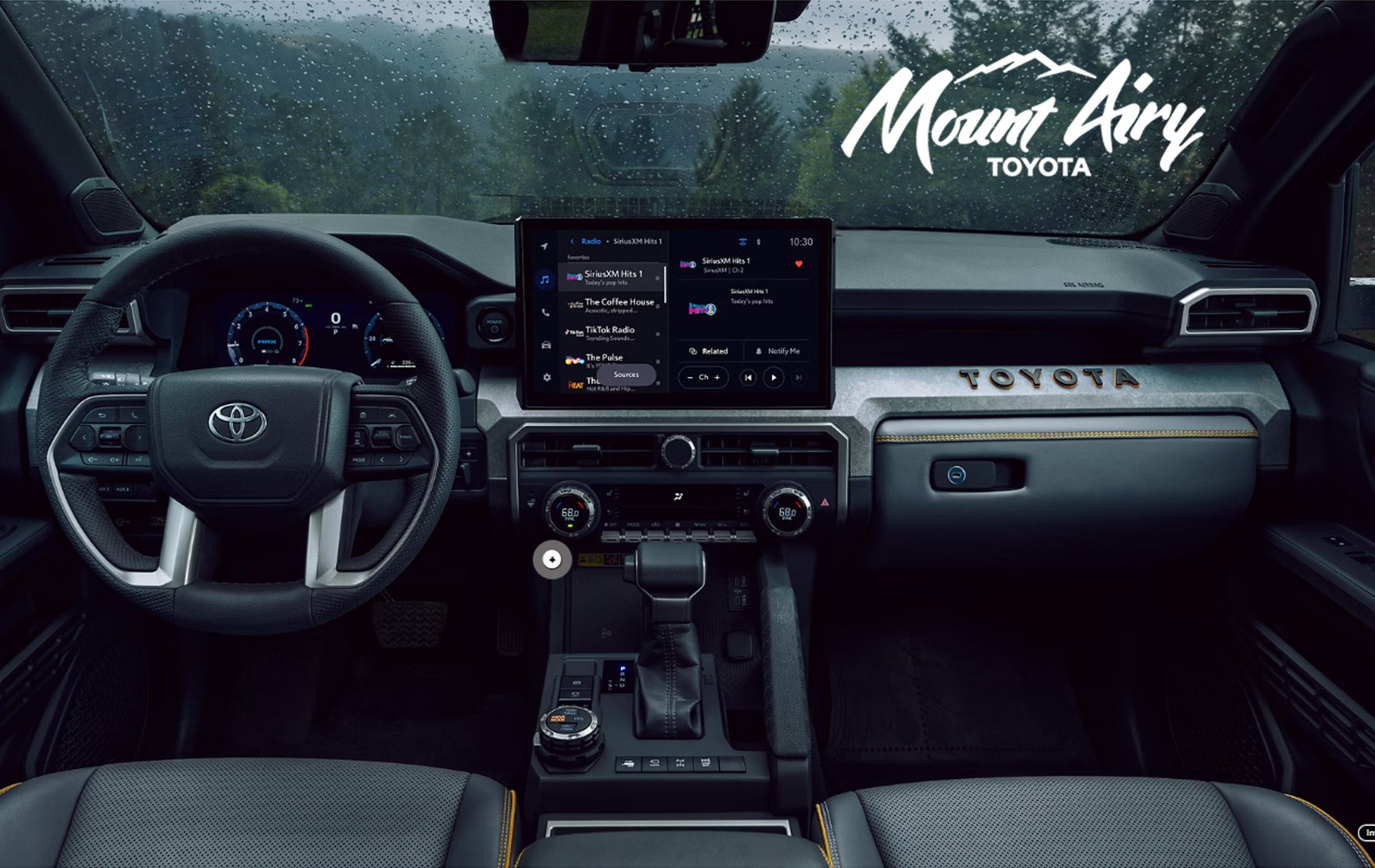
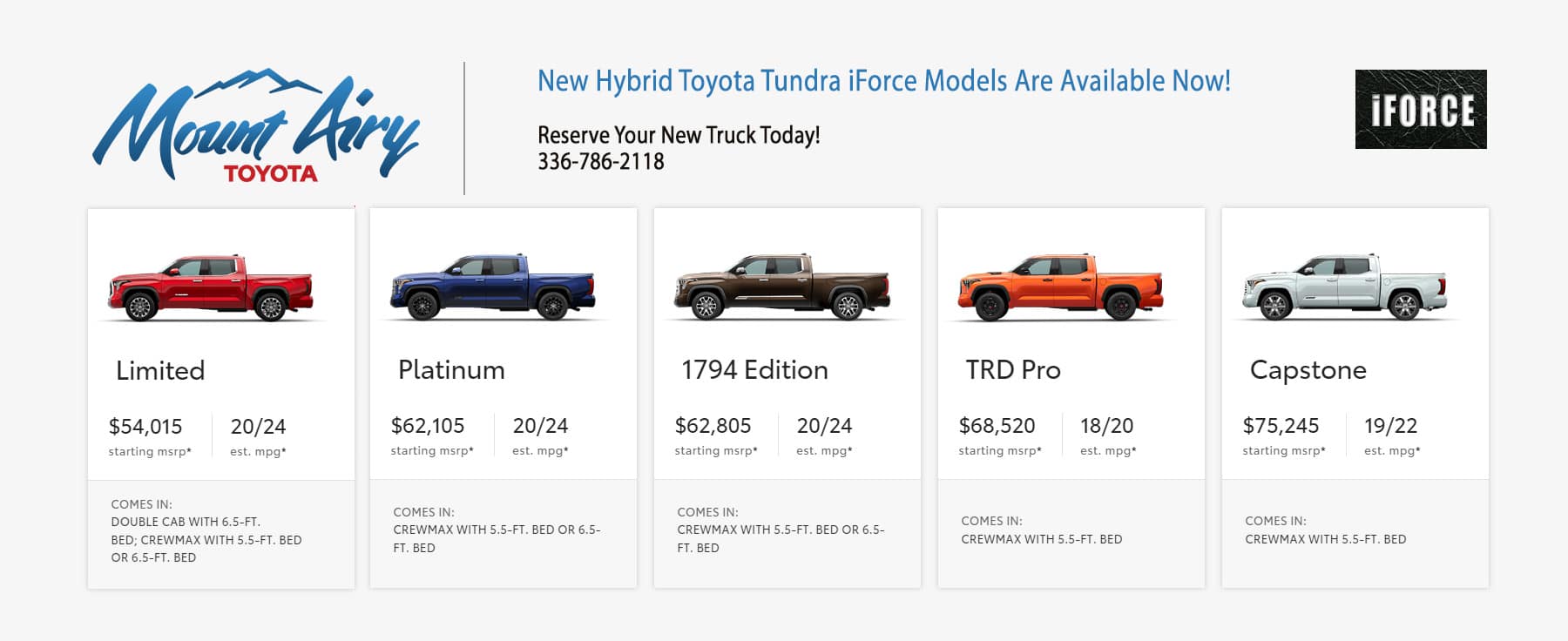
Toyota's 2022 lineup has something for everyone. Sedans like the Toyota Camry and Avalon refine and deliver on the very style of sedan vehicles. Energy efficiency is at the forefront of pioneer models like the Prius, implementing innovative measures along the way. And the GR Supra is guaranteed to scratch that more sporty itch, with speed and performance that’s unmatched. With those examples alone, it's clear, Toyota has a lot to offer prospective car buyers. And if you are in the market for a brand new Toyota from the 2022 lineup, Mount Airy Toyota is the dealership for you. Offering a stacked lineup of models that continue to impress. Still, even more impressive is the new breed of hybrid Toyota has unleashed in its 2022 lineup — The Toyota Tundra iForce. The Tundra iForce has succeeded in merging fuel efficiency and sustainability with high power and performance, and the result is an iForce that does what no other modern truck can. But don’t take our word for it, let’s look at a breakdown of the Tundra iForce and learn what sets it apart. Toyota’s Legacy of Hybrid Innovation Only a few years ago, it seemed impossible that an electric truck could equal or be more powerful than traditionally powered trucks but today’s Toyota Tundra surpasses expectations.  Toyota has made investments in hybrid technology that has led to the creation of the Tundra iForce and made the impossible, possible. This trailblazing of the hybrid world isn’t unknown to Toyota. The Toyota Prius was the world’s first mass-produced hybrid vehicle and revolutionized the entire automotive industry. For many, the innovation of hybridization was destined to stay with smaller vehicles. Though as the years progressed and the desire for hybrid vehicles grew, the questions centered on a hybrid truck only increased. Though just what that would look like was unclear. Toyota was no stranger to building a vehicle that faced unknowns. Take for example the Prius’ introduction. Toyota set the framework for what consumers wanted in a hybrid passenger car — and now they’ve done the same with a high-performance hybrid truck. Our customers are smart shoppers.  They know that they want, and they want electric options.  The demand for hybrid trucks is high because our customers know these hybrid vehicles are great money savers and, as always with the Toyota brand, they hold their value. The Tundra iForce stands apart, exceeding expectations, and claiming its place as a technological breakthrough and it’s ready to deliver for your family. Powerful Design Features The Tundra iForce reaches its unique level of power by utilizing an electric motor and V6 engine in tandem. This use of dual motors is what allows the Tundra to perform at such high levels, outpacing other trucks on the market and resulting in more power than a regular V8 engine. This setup is known as the i-FORCE MAX one-motor system and is certain to change the entire world of hybrids. You can find the electric motor nestled between the traditional engine and transmission, a necessary placement to achieve the level of power Toyota engineers were seeking. The electric motor helps supplement the engine when required, and at certain times the motor will shoulder the whole power load, resulting in peak fuel efficiency. Most importantly, switching between the two engines is virtually unnoticeable to the driver, with the only result being a powerful and responsive driving experience. The Tundra iForce puts its power to use, with 437 horsepower and 583 pound-feet of torque. It’s capable of hauling up to 1,665 pounds in its payload and can tow up to 11,450 pounds with confidence. To summarize, the powertrain system present in the Tundra iForce is a shining example of a vehicle that refuses to trade outstanding power and torque for better fuel efficiency. A Look On The Inside The Tundra iForce doesn’t relegate its top qualities to the hybrid i-FORCE MAX, it also has a lot to offer drivers on the inside. Standard in every iForce, owners will find a system compatible with wireless apple or android play, an 8-inch audio touchscreen with a robust speaker system to boot, advanced backup camera technology, trailer sway control, and automatic climate control to keep you comfortable. All of these features can be found in every Tundra iForce but aren’t exhaustive of every bell and whistle that’s standard, there are a few optional features that go above and beyond to improve an already impressive interior comfort suite. Potential buyers will have these options to improve their interior; 14-inch multimedia audio touchscreen, wireless smartphone charging, multiple leather 10-way power adjustable seats, and 4-way power-adjustable lumbar support. Regardless, if you decide to opt for a full suite of comfort features, or stick to those standards across the model, you’ll be guaranteed to find a comfortable truck that is as dedicated to impressing with its interior as it is with its next-generation power design. Where To Buy the New iForce The 2022 Toyota Tundra iForce hit dealerships in December of 2021, so the trail-blazing truck has been on the market for some time. Though buyers may have to wait before they can get their hands on this model. Vehicle chip shortages, a delay in global shipping, and a huge demand for the revolutionary truck have all caused an increase in wait times, placing the iForce on some buyers’ wishlists. While it can’t be guaranteed, we recommend you reach out to a certified Toyota dealership and place an order on the Tundra iForce if it’s at the top of your list. You can expect some delay, but making the jump sooner, rather than later, will increase your chances of joining the Toyota brand ahead of the curve. And when placing that order, any Toyota dealership may feel like a viable option, though there are some dealerships that stand out above the rest. Mount Airy Toyota - Maintaining Toyota’s Legacy of Innovation While we touched on it earlier, it’s tough to overstate the commitment the Toyota brand has to the green energy initiative in the automotive industry. Whether they’re introducing the world's first mass-produced hybrid (Prius) or building one of the most powerful hybrid truck models the market has ever seen (Tundra iForce), it’s clear that Toyota delivers vehicles that not only please consumers but adapt to a changing world. Much like the main Toyota brand, Mount Airy Toyota has spent years trying to perfect the car buying experience, and they’ve been more than willing to experiment and innovate to get there. Mount Airy Toyota has refined what it means to be a dealer. Here are just a few ways they seek to perfect buying a vehicle and joining the Toyota family. A Large Selection of Specials Mount Airy Toyota offers a huge selection of specials that make buying a car, new or old, easy and affordable. You can even find 2023 models for a deal! A Helpful Finance Center Mount Airy Toyota understands that financial status can often impact your ability to buy a car. They’ve streamlined a financing center and payment calculator to give you the answers to all your car-buying questions. Unrivaled Customer Service Mount Airy Toyota has been serving Surry County and beyond for a number of years, and throughout all that time they’ve only received praise for the type of customer support and service they employ. So, when it comes to your vehicle, start the process early when buying and go with Mount Airy Toyota. Reach out today and see what you can do to get your hands on the new Toyota Tundra iForce and have professionals ready to help you along the way. Call 336-786-2118 to schedule a test drive.

All New Electric Vehicles Mount Airy

The Toyotas That Can Do Everything

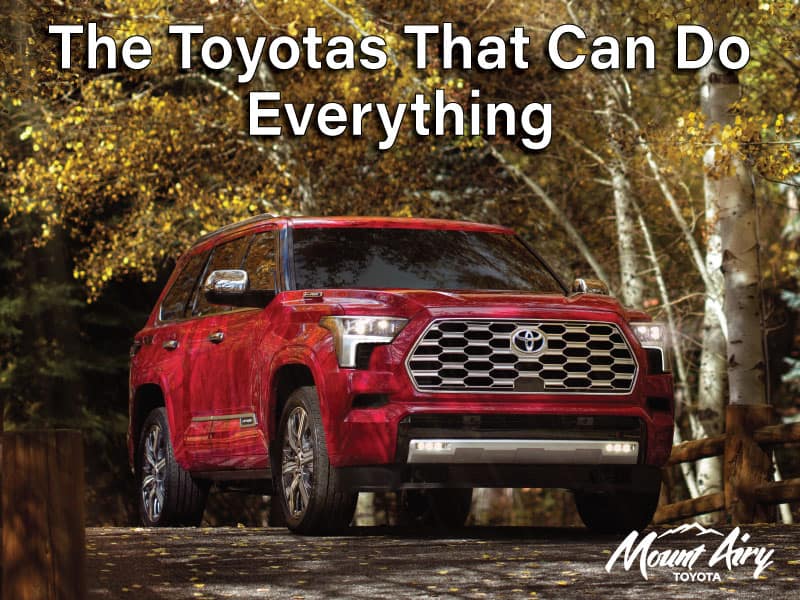
2022 marked the first time that a majority of consumers wanted a hybrid or electric vehicle. And while the imagined hybrid of old may seem stuffy, or lacking in features that inspire awe, Toyota’s lineup of hybrid and electric vehicles has enough to make everyone happy. With rising gas prices, opting for a new electric car is more attractive than ever. While those gas prices are an element that can impact your decision when buying a car there may be some other driving forces. As you’re shopping dealership to dealership you may be asking yourself, “Is it efficient?” “Will it work for my family?” “Is it reliable?” And maybe even, “Is it cool?” Well, look no further — Mount Airy Toyota is ready to provide an electric vehicle that can do it all. This isn’t your grandma’s Toyota, this is the Toyota lineup of 2022, prepared to outperform any competition on the road. Toyota’s Electric and Hybrid Lineup Toyota’s 2022 selection has a number of electric and hybrid vehicles that have solidified themselves as mainstays in the fuel efficiency realm. All of which offer advanced fuel technology, limit emissions and have top-of-the-line reliability. Those perks expand over compact, mid-size, and full-size sedans, all the way to mid-size and full-size SUVs — this means you’re sure to find an electric vehicle that works for you. 2022 Toyota Prius The Prius is among the most recognizable electric vehicles. The 2022 Prius has seen leaps and bounds in innovation and design. Creating a sleek, aerodynamic, body that’ll catch eyes, all while dispelling the narrative of its early days, like that the Prius wasn’t fast, high performing, or sought after. 2022 Toyota RAV4 Hybrid The RAV4 is a perfect example of a versatile SUV that also prides itself on fuel efficiency. And while the perception of most hybrids and electric vehicles places them on the low-end of power, the RAV4’s all-wheel drive and horsepower can conquer terrain and handle any family vacation. 2022 Toyota Sienna The Toyota Sienna has long been the go-to mini-van for countless families across the world. The center of so many family memories and vacations has now made a huge step into the world of efficiency, giving you the ability to go further with less. Rows of seating with options also give you room for the whole family and whatever cargo or storage you’re bringing with you. 2022 Toyota Tundra Pro i-FORCE MAX The Toyota Tundra Pro shows just how powerful a hybrid truck can be. Delivering up to 437 horsepower and 583 lb.-ft. of torque, while also leading the way in trucks regarding fuel efficiency. You’ll be able to haul, work, and ride as well, if not better, than competing trucks while simultaneously saving more on gas in the process. The Tundra also leads the way in truck design and technology, ensuring you’ll be riding in luxury. 2022 Toyota Camry Hybrid The Toyota Camry is one of the biggest successes ever in the mid-size sedan market. Cementing itself as a consumer favorite for its design, reliability, and efficiency. The 2022 model has undergone some tweaks that create an all-around sophisticated driving experience. A lightweight frame and focus on aerodynamics propel the mid-size sedan ahead of competitors, letting you outpace everyone, on the road or in the school pick-up line. And while those models are by no means an exhaustive list of Toyota’s new hybrid and electric vehicles, it does a good job at showing the range in which Toyota can provide a reliable, fuel-effective, sustainable ride. And while those covered are from the list of 2022 options, you’ll likely be surprised with what’s joining Toyota’s hybrid lineup this summer. The 2023 Sequoia Toyota has a redesign coming to the Sequoia this summer and seeing as it's the first major change to the model in 13 years, there have been some substantial upgrades and modifications. One of the most notable changes is that the new Sequoia is coming in a hybrid-only form. That energy supports the SUVs' twin-turbo V6 power and 437 hp and 538 lb-ft of torque, power which is nearly unrivaled by other hybrids of a similar size. The redesign spans more than just a move away from a traditional gas engine. It’s been completely overhauled on both the exterior and interior, with a new rear-end, and complete streamlining of the interior for comfort being some of the most noticeable changes. Not to mention the technology that’s become standard for modern Toyota’s, like safety sense features, touchscreen displays, and multimedia support. Whatever the case, the launch of the Sequoia signals investment in a hybrid SUV never seen before, and that pays off because it’s shaping up to be the peak of the modern SUV market. Perks Of The Hybrid - Hybrid Synergy Drive While we’ve touched on the hybrids Toyota has to offer, we’ve only scratched the service on what exactly a hybrid can provide to your family and lifestyle. Toyota’s Hybrid Synergy Drive is at the next level in hybrid technology. Combining a petrol engine alongside an electric motor, the vehicle can switch between the two as necessary. Here are just a few features that come with a car that makes use of the Hybrid Synergy Drive technology. A Quiet Ride: Vehicles that switch into hybrid mode result in one of the quietest rides on the road. Leaving you to focus on your driving in peaceful tranquility. Reduction In Emissions: For those seeking to limit their CO2 emissions, investing in a hybrid is the way to do it. With over a quarter of the United States' emissions being attributed to transportation, seeking to limit the impact of your daily driving is a key way to reduce your overall footprint. Capturing Energy: Hybrid synergy vehicles can, in essence, recycle energy. This means as you’re going down hills, braking, etc. the vehicle can capture that energy and reuse it, resulting in peak efficiency. Saving On Fuel Costs: Arguably one of the most important perks, especially given gas prices, is what you can save at the pump. When in the electric mode you’ll be using no gas at all, and, with some of Toyota’s lineup, you can switch between the two at will. So, if you’re going below a certain speed you’ll be sure that you’re not using a drop of gas while on the way to your destination. Riding In Style With Mount Airy Toyota If any of the listed hybrids, or Toyota technology, piqued your interest you should heavily consider seeing some of them for yourself at a reliable dealership and Mount Airy Toyota is a perfect fit for just that. If you’ve ever worried about reliability, fuel efficiency, or even having a car that turns heads, investing in a new Toyota hybrid is the right decision. Be ready to be the talk of the school pick-up line, the cause for turned heads at the marathon meet-up, or at the receiver of points and faces of awe as you drive through town because the sleek hybrid line-up was designed for just that. Schedule an appointment in person today, or take a look at their digital model showroom for an up-close look online. And, if financing is a problem, they’ve got you covered. In the same way, it’s hard to go wrong when investing in a reliable hybrid, it’s hard to go wrong when you partner with a dealership like Mount Airy Toyota. So, get ready to ride in style while saving money, and get your hands on a Toyota hybrid today.

Best New Electric Vehicles

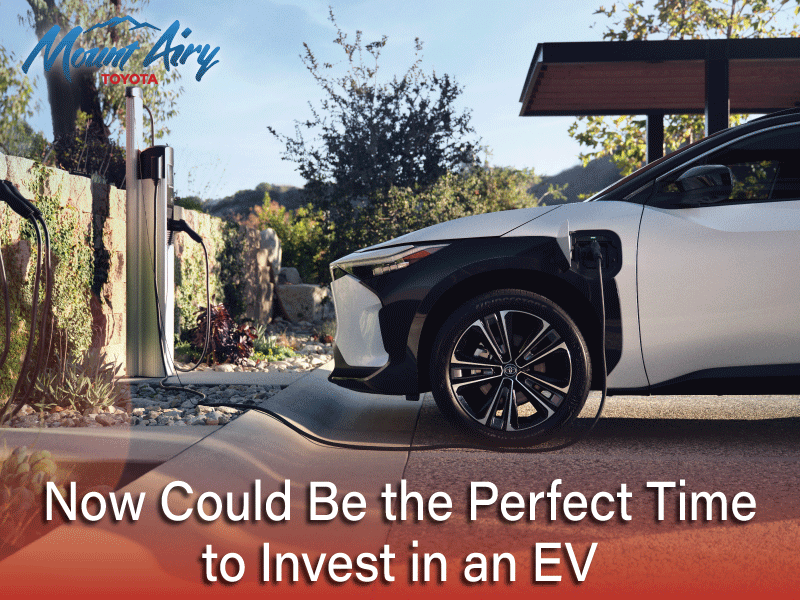
Now Could Be the Perfect Time to Invest in an EV

A vast majority of Americans are experiencing the impacts of soaring inflation in their daily lives. And with record-high gas prices, many people are starting to think more broadly about their transportation options. The electric vehicle (EV) industry has a long way to go. Automakers must figure out how to reduce the environmental impact of lithium-ion batteries. More charging stations must be installed across the country, especially in non-metropolitan areas. And price tags for new EV models must come down. With that said, automakers are making strides and moving quickly toward an all-electric future. And if you can budget for it, investing in an EV can help you fight inflation and save you pain at the gas pump. Let’s discuss how different brands are rising to the challenge and touch on some of the electrified Toyota models stealing the show! Brands Embracing an Electric Future Nearly every mainstream automaker is taking actionable steps towards electrifying their lineups, many of which have elaborate plans to be all-electric within the next 10 – 20 years. GMC recently released the Hummer EV truck and SUV, while other GM brands are soon to follow with their own EVs. The new Ford Mustang Mach-E has turned out to be a hit, and we can expect the same from the brand’s F-150 Lightning and E-Transit van coming this year. Kia, Hyundai, and Nissan already offer electric versions of their compact cars. Other prominent automakers to observe over the next few years include: Audi BMW Honda Lexus Mazda Mercedes-Benz Rivian Tesla Volkswagen Volvo Current Toyota Hybrid Models It’s no secret that Toyota has long been a leader in the electrification movement. Here are a few hybrid models you can buy today to save money and the environment: 2022 Tundra i-FORCE MAX The redesigned Toyota Tundra comes available with a 3.5-liter twin-turbo V6 engine and an electric motor. The hybrid pickup provides 437 horsepower and 583 pound-feet of torque, and it’s one of the best-looking trucks in its class. 2022 RAV4 Hybrid The 2022 Toyota RAV4 Hybrid produces 219 horsepower and 41 MPG in the city. You can add sport-tuned suspension and styling with the hybrid-exclusive XSE grade. 2022 Corolla Hybrid Toyota has pulled no punches in the Corolla’s most recent design. It’s modern, tech-laden, and looks and drives like a much more expensive vehicle than it is. Opt for a hybrid sedan or hatchback and get 52 combined MPG. 2022 Toyota Prius The Prius was the first mainstream hybrid vehicle ever to hit the market. The 2022 versions offer the most tech, safety, capability, and style to date. The All-New Toyota bZ4X Toyota is no stranger to hybrid cars, but the brand is poised to get back into the all-electric vehicle segment in the coming year. The 2023 bZ4X crossover showcases edgier styling than its gas-powered SUV siblings. The bZ4X will be available at Toyota dealerships across the country (unlike the RAV4 EV). The crossover, co-developed with Subaru, offers a 252-mile driving range and a choice between all- and front-wheel-drive. Toyota offers two grades for the 2023 bZ4X: XLE and Limited. The XLE starts at $43,215, while the Limited is $47,915. Both trims run dual motors and all-wheel drive or a single motor and front-wheel drive. Performance and Efficiency The bZ4X comes standard with front-wheel drive and a single motor that yields 201 hp, while the all-wheel-drive version produces 215 horses. On-road comfort is where the crossover shines; it handles bumps and rough pavement easily, and its responsive steering helps drivers feel secure and confident. The single-motor bZ4X uses a 63.4-kWh battery pack, while the dual-motor model runs on a 65.5-kWh pack. Depending on the grade, you can expect 242 – 252 miles on a charge with the front-wheel-drive version and 222 – 228 miles with all-wheel drive. Toyota has stated that drivers can charge their bZ4X battery 80 percent in under an hour. Comfort and Features The 2023 bZ4X has a spacious cabin to go with its stunning exterior. Standard features include a 12.3-inch central infotainment touchscreen, a seven-inch digital gauge display, navigation, wireless smartphone mirroring, and an optional heating element for the front passenger’s legs. Toyota’s infotainment system is one of the best on the market and provides an onboard Wi-Fi hotspot. Drivers can choose between the standard six-speaker audio system or the nine-speaker JBL stereo. Further, the bZ4X offers a wealth of standard driver-assistance features, such as automated emergency braking, lane-keeping assist, and pedestrian and cyclist detection. Conclusion Like most drivers, you might think an EV could come in handy now. Evaluate your budget to see if purchasing an electric car is realistic, and remember that the initial investment can pay off big in the long run. We have an impressive inventory of electrified Toyota models, so connect with Mount Airy Toyota or come by our dealership today for a test drive!

Electric Vehicles in Mount Airy

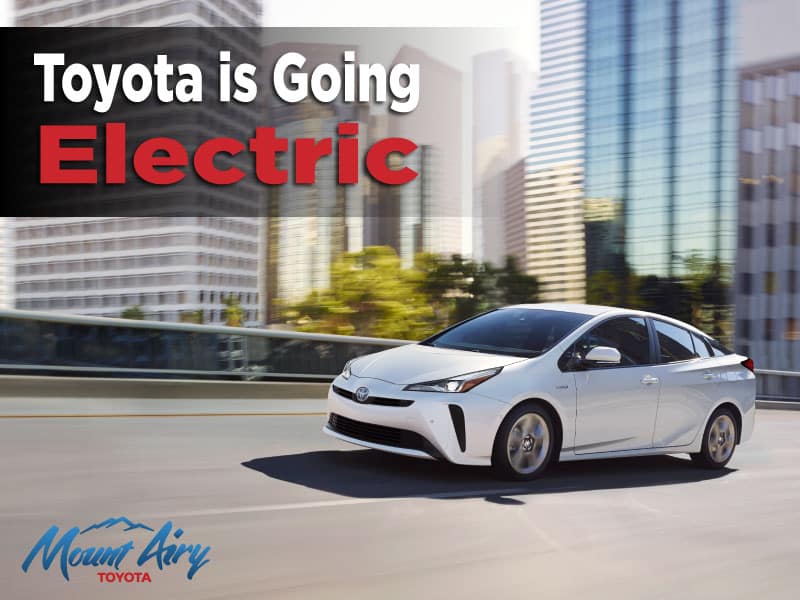
Toyota is Going Electric!

Though the adoption of all-electric vehicles has been rather slow over the years, forward-thinking car companies like Toyota are making the pivot to e-vehicles because they understand the only reason car drivers are tip-toeing towards the idea of driving electric is because it’s a new concept, but once the benefits to driving electric catch on, it will be a massive hit. Over the recent years, there has been a push for car companies to create electric versions of our favorite makes and models. Why go electric? For starters, you can save a ton of money on fuel and maintenance by driving an electric vehicle. On top of that, it looks as though electric vehicles are the future of driving because they are better for the environment, much cheaper on fuel, and require much less maintenance. Just imagine having only one thing to take care of with your car—keeping it charged. No gas, no grimy oil changes, no multi-speed transmission. Kind of difficult to imagine, isn’t it? But in due time, it will be a reality. Anytime new technology is introduced, people become wary of it, especially when that technology is to replace something we have grown accustomed to using, like a gas-powered, oil-slugging machine. We don’t like change, even when that change is for the better. Car manufacturers such as Toyota know change is inevitable, which is why they are gearing up to engage in the electric-vehicle phenomena. Toyota actually has plans to introduce a family of electric vehicles by 2025, with the first of them to be revealed in 2021! Toyota’s All-Electric Crossovers It’s true, Toyota does have plans to reveal an entire family of e-vehicles, and it’s also true that the first of those will be revealed this year. The e-TNGA ( which is aptly named after the modular architecture of the electrical system used) will be an all-electric SUV crossover. This will be Toyota’s first e-vehicle to be released in the U.S. and Toyota enthusiasts are very excited to actually touch and drive the company’s impressive new vehicle. Unfortunately, we don’t know a lot about Toyota’s release of the new all-electric vehicles, since the car company is keeping a lot of the details about them close to the vest—for instance, the company has only released a simple silhouette of one of the vehicles. The silhouette Toyota has let slip out to the public doesn’t give much away, except we can tell that it is the e-TNGA and that it will be a rather squatted, sleek, and cool looking vehicle. We also know that Toyota chose to use the e-TNGA framework (this framework has been used for a number of Toyota vehicles, namely hybrids) because it is so versatile. The electric crossover will have a dual motor, an all-wheel-drive powertrain, and a modular battery pack. Toyota has big aspirations for their new line of e-vehicles, as they plan to sell 5.5 million electric vehicles every year by 2025. There’s no denying it, electric cars are here, and they are only going to become more prevalent. Toyota has plans for an entire family or fleet of all-electric vehicles to be fully unleashed by 2025. This is the venerated car company’s first big move towards electric, but it’s no real surprise. For years, Toyota has been making and releasing all-electric transportation devices (scooters and micro-cars, mostly) in Japan. It’s clear the company has been playing with and perfecting electric motors on all sorts of levels for some time, and it’s very exciting to think about what will be coming from them in the future. Until we get Toyota’s new EV vehicles, Mount Airy Toyota has plenty of new and used Prius model options on our lot. Have a look at these great deals: New 2020 Toyota Prius Limited 5 FWD. MSRP: $33,880. Our price: $32,776 Pre-owned 2016 Toyota Prius 5 DR, Car FWD. Our price: $16,995 New 2021 Toyota Prius LE 5 FWD. Our price: $27, 816 And we have plenty more! Come visit us at Mount Airy Toyota, or visit us online, today.

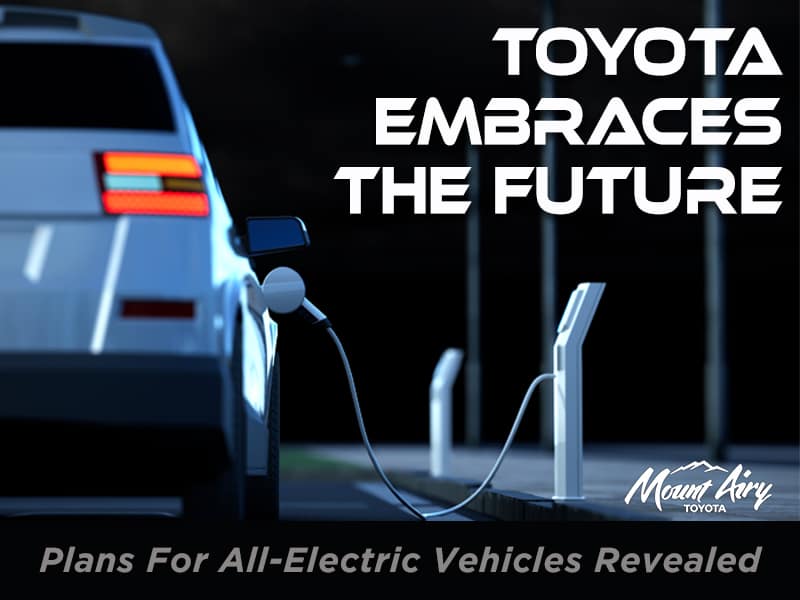
Toyota Embraces the Future: Plans For All-Electric Vehicles Revealed

Toyota has plans to introduce a family of electric vehicles by 2025, with the first of them to be revealed in 2021! That’s right, Toyota is creating all-electric cars and crossovers and at Mount Airy Toyota, we are so excited we can hardly contain it. Electric cars are not the wave of the future—they are the rage now! Any car company worth its salt either has all-electric cars in the works or currently has them on the roads. Though the adoption of all-electric has been slow over the years, car companies like Toyota are making the pivot to e-vehicles because they understand the only reason car drivers are tip-toeing towards the idea of driving electric is because it’s a new concept. Anytime new technology is introduced, people become wary of it—especially when that technology is to replace something we have grown accustomed to using. We don’t like change, even when that change is for the better. Toyota knows another piece of very important information: though we may be wary of it, once we spend a little time with a new, safer method of driving, we will become obsessed. And when you see what Toyota is about to unleash, in terms of electric vehicles, obsession will certainly ensue. Introducing the e-TNGA It’s true, Toyota does have plans to reveal an entire family of e-vehicles, and it’s also true that the first of those will be revealed this year. The e-TNGA (named after the modular architecture of the electrical system used) will be an all-electric SUV crossover. This will be Toyota’s first e-vehicle to be released in the U.S. Unfortunately, Toyota is keeping a lot of the details about the e-TNGA close to the vest—for instance, the company has only released a simple silhouette of the vehicle—but we did some digging and found out a few important details. First of all, the silhouette doesn’t give much away, but we can tell that the e-TNGA will be a rather squatted, sleek, and cool looking vehicle with very modern aerodynamics. We also know that Toyota chose to use the e-TNGA framework (this framework has been used for a number of Toyota vehicles, namely hybrids) because it is so versatile. The electric crossover will have a dual motor, an all-wheel-drive powertrain, and a modular battery pack. Toyota has big aspirations for its new line of e-vehicles, as they plan to sell 5.5 million electric vehicles every year by 2025. There’s no denying it, electric cars are here, and they are only going to become more prevalent. The Benefits of Driving an Electric Vehicle There are obvious reasons why e-vehicles are beneficial—lower cost of fuel and maintenance are the first to come to mind—but chances are, there are more reasons than what you might think. Here are some important things to consider if you are still a bit wary of making the switch from gas to electric: 1. Environmentally, a Much Better Option Electric vehicles produce less pollution than gas-powered vehicles by reducing harmful exhaust emissions (in fact, e-vehicles have zero exhaust emissions!). Another environmental benefit to driving e-vehicles is that you can drastically reduce your greenhouse gas emissions by recharging the vehicle with a solar PV system during the day rather than using energy from a grid. You can also take it a step further and purchase Green Power from your local electricity company. This way, no matter when you charge your vehicle, the electricity transferred has minimal toxic emissions. That’s not all! Since electric vehicles tend to be produced in a more eco-friendly manner (with recycled materials, and with the absence of toxic materials needed for gas-powered vehicles) you are promoting a safer lifestyle and environment the moment you purchase one. 2. Improved Safety Features Since electric vehicles have a low center of gravity, it makes them less likely to roll over. And, because there are fewer working parts and an absence of gasoline and other highly-flammable materials, they have a much lower risk for fires or explosions. 3. A Healthier Driver Reducing the output of harmful exhaust emissions is a big deal. Better air quality certainly leads to a reduction in health problems, as well as, overall costs due to air pollution. And it’s not only air pollution electric vehicles reduce. Because e-vehicles are drastically quieter than gas-powered drivers, noise is less of an issue as well. 4. Less Expensive to Run Running costs are incredibly low with an e-vehicle. The power to charge an EV takes about a third as much effort as it does when gassing one up at the tank. This may not seem like a big deal, but consider years of driving an EV, and with more and more people adding to the equation, the energy used to charge a vehicle is less than it takes when filling up the tank. There are plenty more benefits to driving an electric vehicle, but let’s take a minute and have a look at some of the reasons people shy away from purchasing and driving EVs. Fears of Going Electric One of the biggest issues for potential EV drivers is what’s called, “range anxiety.” Since the typical range of an all-electric vehicle is less than most gas-powered vehicles, this concern is valid. But, it is important to think of why there is such a difference in range. The biggest reason is there are simply not as many charging ports as there are gas stations; however, this is changing—and at a very fast pace. Charging ports are popping up all over the country (in grocery store parking lots, on the sides of highways) while electric vehicles are simultaneously being created that can go for longer distances. With that said, most modern all-electric vehicles can currently cover the average driver’s daily commute, including a few joy rides, without a problem. Another common concern with EVs is the amount of time it takes to charge them. It is true that it takes much longer to charge your car than to gas it up, but keep these things in mind: one charge can (typically) handle a daily commute; charging times are continually decreasing as advancements are made in the technology used to charge; and, a 15-20 minute charge will, for most cars, allow for a couple of hundred miles. One other issue often voiced is that the batteries powering every aspect of the car will eventually wear out, and once the battery is out, the car is rendered useless. What this thinking fails to consider is the fact that the life of most gas-powered cars is between 150,000-200,00 miles (and a lot of money spent on gas and maintenance in-between), and the projected mileage of EVs is to be anywhere from 350,000-500,000 miles. That’s a big difference and huge savings. Operating under a single power source (the car’s battery) drastically reduces the possibility of having to pay for all the common maintenance that arises with gas-powered vehicles—all those moving parts create so many more possibilities for something to go wrong. The Future of Toyota As stated earlier, Toyota has plans for an entire family or fleet of all-electric vehicles to be fully unleashed by 2025. This is the venerated car company’s first big move towards electric, but it’s no real surprise. For years, Toyota has been making and releasing all-electric transportation devices (scooters and micro-cars, mostly) in Japan. It’s clear the company has been playing with and perfecting electric motors on all sorts of levels for some time, and it’s very exciting to think about what will be coming from them in the future. At Mount Airy Toyota, we are looking forward to the wave of the future—it’s electric! Come in today to see what we have to offer in gas-powered, electric-hybrids, and all-electric vehicles today.

It Starts with Yui: Toyota’s plans to design the car of the future

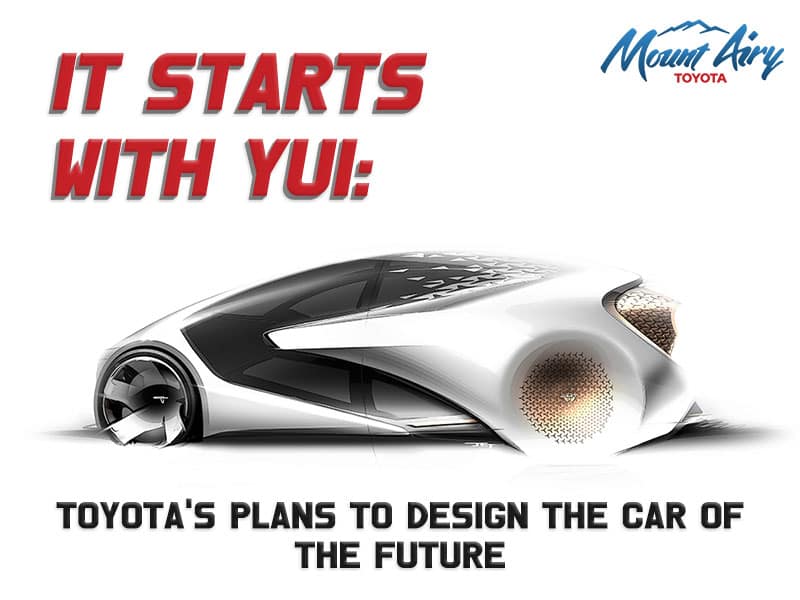
It Starts with Yui: Toyota’s Plans to Design the Car of the Future

When you close your eyes and think of the future, do the cars look the same as they do now? Probably not. You probably envision something with clean lines, a sleek exterior, and an almost seamless interior. There probably are not a lot of buttons, but the vehicle is certainly still engaging. The car you see when you close your eyes is on another level from anything on the road today, but that car that you are thinking of is exactly what Toyota is striving for with the futuristic designs they have released for Concept-I, rightfully named “Yui.” While the images released of this vehicle appear strikingly realistic, they are just that, images; the Concept-I vehicle is not set to be released anytime soon. Rather, this concept is a plan for vehicles of the future. By creating this model, Toyota hopes to begin to predict how vehicles of the future will behave and look. To accomplish this, Toyota has had to ponder some of the most important questions to drivers everywhere: What will our cars look like? How will they function? Will we drive them, or will they drive us? Appearance It should not come as a secret that drivers want their vehicles to take them places safely and efficiently; however, as sportier models have become more popular, many drivers have felt a need to enjoy the thrill of their drive at the same time. While Toyota is trying to cater to these driving desires, they also want the car to feel warm, friendly, and engaging. In order to have the vehicle meet the aesthetic they were chasing, Toyota took a user-centric approach to designing the concept, moving from the inside out with a strong focus on how the user would experience all that the vehicle has to offer. Toyota has released images of the white version of the vehicle; however, it is unclear if they already have other color options in mind. The trendy white and bronze-gold interior of the vehicle appears to comfortably seat four passengers, with room for rear storage. Functionality was not the only feature in consideration when designing Concept-I; the geniuses behind the vehicle also included expressive sculptural qualities and elegant graphic abilities. The minimal, yet stylistic, interior is designed to help further support the user experience and Yui’s ability to communicate with the driver using light, sound, and touch. Grow as Yui Go Along with its stellar interior appearance, the Concept-I is designed to focus on connecting with the actual mind of the driver. To do this, Yui is equipped with a powerful artificial intelligence system that learns the driver’s patterns and preferences to foster a beneficial relationship between the human and the vehicle. Along with understanding your schedule, there are also plans for the Concept-I to connect with the driver on a deeper level. By combining a range of intelligent technologies, there is hope that the vehicle will be able to gauge the driver’s emotions. For example, if the driver is beginning to feel tired or has been driving for a long time, the vehicle might offer to take over driving functions so the user can sit back and enjoy the rest of the ride. The same can also be said if the driver is feeling sad. Having the ability to understand the driver and their needs means that the intelligence system within the vehicle will eventually be able to anticipate when and where a driver might need assistance. Because of this, the Concept-I will be able to increase driving safety, hopefully creating a bond between the human and the vehicle that is more friendly than necessary. Building these types of personal connections will help ensure that the user connection is built like any other strong relationship on the values of trust and loyalty. Toyota has even said that they hope the immersive technology will lead drivers to feel like Yui is more of a friend than a car that they are navigating the road with. Planning Ahead Since the release of the concept, there has been a great deal of excitement around when the vehicle will be available for purchase. According to the masterminds at Toyota, the vehicle should be released for testing and public trials sometime in 2020. While some critics have said that the release of these vehicles has been too long, Toyota executives have made it clear that their focus on the importance of user safety far outweighs the timeframe these critics had in mind for the vehicle’s release.     Written by Morgan Evans

Electric Cars

How BEVs Could Be the Future (And Why They May Not Be)

Demand for plug-in electric vehicles (EVs) is growing, though they still only claimed about 2% of the U.S. market share in 2018 (global market share is similar). That number includes battery-operated vehicles (BEVs) and plug-in hybrid electric vehicles (PHEVs). The thought on everyone's mind: is this the future of driving? The primary difference between the two types of vehicles is that a BEV runs solely off the energy from the vehicle's battery, while a PHEV uses the battery alongside a fuel tank that kicks in at various intervals. There would be clear benefits to drivers and the environment if BEVs were to become mainstream. However, there are currently just too many drawbacks to know how successful the BEV market can become. While many proponents are hopeful that BEVs will eventually become commonplace, the future of these vehicles remains largely unknown due to a number of unanswered questions and issues yet to be resolved. For instance, how will drivers have access to charging their vehicles? Will there be convenient charging stations like there are gas stations? Also, can we expect improvements to be made with batteries in the future? This article will explore the potential advantages of a BEV-driven world and the challenges that BEV drivers currently face, and we'll take a look at some of the main questions and issues that are too prevalent to be ignored. ADVANTAGES OF A BEV-HEAVY MARKET Even though we are still in the early stages of developing electric vehicles, BEVs currently come with many benefits, and it's not hard to see how these benefits could become even more impactful as technology improves. Lower Operating Costs For one, it's much cheaper to charge a BEV than it is to run a traditional vehicle off of gas; it's actually about one-third of the cost. Also, a BEV contains very few moving parts compared to a traditional vehicle, which means it's less expensive to maintain. For instance, with a BEV you don't have to worry about servicing a starter motor, fuel injection system, exhaust system, or radiator, among many other components. Though many improvements need to be made to these vehicles' batteries, most BEV manufacturers provide an eight-year warranty on their batteries even now. Environmental Benefits Some of the most obvious advantages are those that benefit the environment. BEVs have virtually no exhaust emissions, which means they emit much less pollution than traditional vehicles do. And if you use renewable energy for charging, greenhouse gas emissions are reduced even lower. For example, rather than charging from the grid, you can use a polar PV system while there's daylight. If you must use the grid, you can still minimize greenhouse gas emissions by purchasing green power from your electricity company. Even the manufacturing of some of the top BEVs is eco-conscious. For instance, the Ford Focus Electric and Nissan Leaf are largely made of recycled and bio-based materials, such as plastic bags, water bottles, and second-hand car parts and home appliances. Health and Safety Along with the financial and environmental benefits, BEVs can help improve our health and safety. Less pollution from exhaust means better air quality, which can reduce health problems caused by pollution, and BEVs create much less noise pollution than traditional vehicles. Also, since BEVs typically have a lower center of gravity, they are less likely to roll over. Furthermore, fires aren't as much of a risk, and the body structure of BEVs can prove more durable in a collision. DISADVANTAGES OF CURRENT BEV MARKET Of course, there are also drawbacks to BEVs. While they have enjoyed success, it has been with a limited group of consumers. Charging Times Tesla has led innovation in the BEV market in many ways, including its Supercharger networks, which can charge vehicles in about 30 minutes. However, that's still a lot more time than it takes to fill the gas tank of a traditional vehicle. What's more, scientists behind the efforts of manufacturers like Tesla and Toyota have their doubts about the possibility of reducing charging times enough to satisfy mainstream consumers. And since Toyota has been in the electric vehicle game for over 20 years, that speaks to the magnitude of this problem. Electricity Generated Another prevalent issue with BEVs is that they require electricity, which must come from somewhere. In states like California, most of the electricity comes from natural gas supplies, but states like West Virginia use coal to generate up to 90% of its electricity. Overall, about 38% of electricity in the United States is generated by coal. This begs the question: just how clean and green are electric cars? In short, it depends on where in the country you are driving. Furthermore, the lithium-ion batteries used by manufacturers like Tesla contain components that can potentially harm the environment by way of ecological toxicity and contributing to global warming. Limited Categories Finally, you don't see any BEVs that fall under the heavy-duty truck category. This is mainly because the technology isn't workable for truck applications—and it won't be anytime soon. This is a serious problem because there are 2 to 3 million heavy-duty trucks on the road in the U.S. Much of the American economy depends on Class 8 commercial trucks, which guzzle 30 times more gas than the average automobile (about 35 billion gallons each year). It's difficult to see how BEV technology could advance enough to accommodate the heavy-duty truck category in the foreseeable future. However, if such trucks were able to be produced in an electric format, it could drastically decrease oil dependence and significantly benefit the trucking industry financially. THE IMPORTANCE OF CHARGING STATIONS There are currently about 20,000 public charging stations and 57,000 outlets for plug-in electric vehicles in the U.S. Here's the thing: 4,800 of those stations and 18,200 of those outlets are found in California. Not surprisingly, California has also accounted for almost half of all BEV sales in the country since 2011. If there is hope for the BEV market to experience continued growth—and especially if battery-operated cars are to become mainstream—there must be more charging stations created throughout the country. In a sense, the future popularity of BEVs in any particular area of the country depends on the accessibility of charging stations in that area. However, it gets tricky because states that don't sell a lot of BEVs are less inclined to invest in public charging stations, but if they never decide to invest, then their sales will probably not improve by much. Therefore, there must be a break in the cycle at some point if BEVs are to become commonplace in the future. Sure, there are some people who could charge their BEV at home, but that's a limited category of consumers. Without an adequate number of charging stations open to the public, much like gas stations are, BEVs will never reach the mainstream. To put it into perspective, there are approximately 168,000 public gas stations in the U.S.—more than eight times the number of charging stations. The majority of consumers will never make the jump to BEVs until that gap is dramatically closing. THE ROLE OF BATTERIES As essential as charging stations are for the future of BEVs, batteries may play an even more important role. And BEV batteries need to undergo a lot of development if electric vehicles are to become commonplace. Battery Anxiety The term "battery anxiety" is often used in reference to one running out of battery power on their smartphone. We've all seen the symptoms: a family member searching frantically for a charger cable; a co-worker turning their desk over, only to ask you if they can borrow a charger; even a stranger asking if they can PowerShare with your phone. Chances are you've experienced the symptoms yourself. In a study administered by electronics manufacturer LG, 9 out of 10 people showed signs of battery anxiety. The same logic is behind the term "range anxiety" in reference to electric vehicles. If such a phenomenon has that kind of grip on people with smartphones, you can imagine the impact of this anxiety when it comes to driving a car. Range anxiety is one reason why many consumers won't even consider going the BEV route. Most BEVs allow drivers to go about 100 miles fully charged (the Tesla Model S is an exception, as it allows drivers around 250 miles). This is another reason why the scarcity of charging stations is such a severe problem. Nonetheless, many manufacturers have pledged to develop BEVs that will hit about 200 miles per charge. That would surely make a big difference, but it's still a far cry from a conventional vehicle that can go 300 to 400 miles on a full tank of gas. The Problem with Lithium-Ion Batteries Most newer electric cars these days are powered by lithium-ion batteries. These batteries are not without their advantages, such as the fact that they are light-weight (as compared to lead-acid batteries), relatively low-maintenance and can last for 8-10 years. However, there are some serious issues to consider as well. For example, lithium-ion batteries are expensive. While a high-end lead-acid battery—as used in most traditional vehicles—costs around $120, a typical lithium-ion car battery costs in the $1,700 range. Also, lithium is highly reactive. This means if they are damaged or installed incorrectly, they can explode. Moreover, the cells used in lithium-ion batteries are made with rare-earth metals; the supply of these metals is limited, and they're dangerous to mine. Most workers who are tasked with retrieving rare-earth metals are laboring in harsh conditions, to say the least (and in some cases this means illegal child laborers). The Prospect of Flow Batteries Enter a new hope for BEV proponents: the "flow battery." Scientists are currently working on this new type of refillable battery that they hope will replace lithium-ion as the commonplace battery in BEVs. The strongest appeal of the flow battery is that it solves most of the biggest problems consumers have with BEVs. Depending on the model of vehicle and the power source used, it can take anywhere from 30 minutes to 10 hours to fully charge a lithium-ion battery in a BEV. If the flow battery is a success, it will allow drivers to empty their battery liquid and pump in new liquid in minutes—roughly the same time it would take to fill a gas tank. What's more, since the basic infrastructure is already there, it would be easier for gas stations everywhere to be retrofitted to pump this battery liquid in place of gas. This means that the scarcity of charging stations would no longer be a problem—thus, no more range anxiety. There is still a lot of progress to be made in the development of flow batteries, but it's possible we will see some form of them in the next three years. THE BOTTOM LINE It's easy to see how drivers and the environment would benefit from a BEV-driven market. All things considered, they are a more eco-conscious alternative to traditional vehicles, they are cheaper to operate, and they offer health and safety benefits. That said, BEVs have their share of drawbacks as well. If BEVs are ever to enter the mainstream, more charging stations and better batteries must be made available. It looks like the work is being done to solve these issues, but only time will tell whether or not BEVs are indeed the future.


Contact Us

Fill out this form below and we'll contact you shortly
*Required Fields