
Blog / Toyota Technology

Blog

All Toyota Technology Toyota Toyota Safety Camry Rav4 Tacoma Trucks Highlander Events Corolla Service 4Runner Tundra Electric Cars Auto News by Mount Airy Toyota Toyota History Car Care Sienna Tires Avalon Mount Airy Toyota Dealer Toyotathon Trade- In Mount Airy Toyota Service Prius Supra Toyotacare Used Trucks Prius V Sequoia Used Cars C-HR Landcruiser SUV Crossover Employees End of the Year Savings Hatchback New Pickup Trucks Yaris ARB Safari Snorkel Explained Crown Difference between i-Force Max & i-Force Fox Internal Bypass QS3 Shocks Mount Airy Used Cars Old Man Emu Shocks Tacoma Onboard Air Compressor Toyota Hybrid Trucks & Cars Toyota Tundra Trailhunter vs TRD Pro TRD vs Trailhunter Suspension Venza What are Rock Sliders
Toyota maintenance tips

Mount Airy Toyota Insider Tips: Straightforward Advice on Car Maintenance, and Hidden Features

At Mount Airy Toyota, we believe car ownership should be empowering—not confusing. That’s why we created the Insider Tips Series, a collection of straightforward tutorials and proven advice on everything from car buying to maintenance, ownership, and service. Each episode takes a practical look at real-world driving challenges and offers expert guidance that helps you save money, avoid costly mistakes, and get more out of your Toyota. To kick off the series, we’re highlighting two important topics: how mountain driving affects your car and the hidden features built into Toyotas that many drivers never use. Mountain Driving: What Wears Out First Driving in the North Carolina mountains is a unique experience. The steep climbs, sharp descents, and winding roads don’t just challenge drivers—they also put extra stress on vehicles. In one of our first videos, Mount Airy Toyota Certified Technician Chris Pack explains that tires, brakes, and fuel consumption take the biggest hit when you drive in the mountains. Tires The constant uphill climbs and downhill braking cause tires to wear out faster than on flat terrain. Mountain drivers often find themselves replacing tires sooner than expected, making regular inspections essential. Keeping an eye on tire tread and alignment can prevent uneven wear and extend the life of your tires. $$$ SAVINGS TIP - Keep your Toyota driving safely with a fresh set of tires—and save big while you do it! Watch our website and social media for the Mount Airy Toyota Tire Sales.  We often advertise buy three tires and get the fourth tire FREE. Expert Toyota Certified installation Tires matched for your model and driving needs Boost safety, performance, and fuel efficiency Brakes Brakes are one of the most important—and most overlooked—parts of mountain driving. Frequent downhill braking generates more heat and friction, which can wear out pads and rotors at a much faster rate. Getting your brakes serviced on time doesn’t just improve safety; it also saves money. When brake pads are replaced before they wear down completely, you avoid damaging rotors and calipers, which can lead to costly repairs. In other words, preventative service now means avoiding major expenses later. Fuel Efficiency Steeper terrain requires more power, which means more fuel. While there’s no way around the physics of climbing mountains, keeping your tires properly inflated, maintaining a clean air filter, and following regular service intervals can help maximize your fuel economy. The takeaway is simple: regular maintenance is not optional—it’s essential. Staying ahead of tire and brake service not only keeps you safe on mountain roads but also protects your wallet from unexpected repair bills. Hidden Features: Getting the Most From Your Toyota Our second video in the series dives into something many drivers overlook: the hidden features built into their Toyotas. These features are designed to make daily driving easier and more convenient, but too often, owners never use them. Key Fob Technology Your Toyota key fob is more than just a way to lock and unlock your car. Depending on your model, it can roll down your windows, open the trunk remotely, and even activate a panic alarm with specific button combinations. These functions can save time, add convenience, and improve safety, yet many Toyota owners never take advantage of them. Watch this video by Mount Airy Toyota Certified Tech, Chris Pack to learn about your Key Fob. Additional Features Drivers Forget Automatic High Beams – Many Toyota models include this feature, which automatically switches between high and low beams to improve nighttime driving safety. Eco and Sport Driving Modes – These selectable modes adjust throttle response and fuel efficiency. Eco mode helps save gas, while Sport mode sharpens performance for a more responsive drive. Rear Seat Reminder – Designed to alert you to check the back seat before leaving the vehicle, this safety feature helps prevent accidents and forgotten belongings. Toyota Safety Sense Alerts – From lane departure warnings to adaptive cruise control, Toyota’s safety systems have customizable settings that many owners never personalize. Taking the time to adjust them can improve your driving comfort and confidence. By exploring these hidden features, our goal is to help you get the most out of your vehicle. After all, you invested in Toyota quality—you deserve to enjoy every feature it offers. Why This Series Matters Between car buying myths, confusing service schedules, and overlooked technology, drivers face a lot of uncertainty. Our Insider Tips Series was created to clear up that confusion. We want to provide: Clarity – Cutting through myths with honest, straightforward answers. Confidence – Helping you understand your vehicle so you can make informed decisions. Cost Savings – Showing you how preventative maintenance and smart ownership habits save money over time. Each video features our certified technicians and experienced team members, giving you access to insider knowledge without the jargon. Whether it’s understanding how mountain driving affects your brakes or learning a hidden feature on your key fob, the series is designed to make car ownership easier and more enjoyable. Who Should Watch This series is for everyone who owns—or is thinking about owning—a Toyota: New drivers will gain practical tips without feeling overwhelmed. Long-time owners will discover features they might not know about and learn ways to extend their vehicle’s life. Families on a budget will find strategies for saving money without compromising safety. In short, the Insider Tips Series is for anyone who values transparency, expertise, and peace of mind when it comes to their car. Join the Conversation The Mount Airy Toyota Insider Tips Series is more than just videos—it’s a resource for our community. We’re here to answer questions, share knowledge, and help you make the most of your Toyota ownership experience. 👉 Subscribe to our channel and follow along as we roll out new episodes. With each one, you’ll gain insights that make driving safer, smarter, and more affordable. At Mount Airy Toyota, we’re not just here to sell cars—we’re here to help you enjoy every mile.

How ChatGPT Can Help You Get the Best Trade-In Value

How ChatGPT Can Help You Get the Best Trade-In Value

At Mount Airy Toyota, we’re proud to say we have some of the best trade and finance managers in the business. Our team of auto buyers is honest, experienced, and incredibly sharp — and they do their best to give every customer a fair and accurate trade-in value. But let’s be honest: it’s a tough job. Most of the time, they’re working with just a few quick forms and maybe a photo or two of your vehicle. That’s not a lot to go on! So, what if you could help them — and help yourself — by walking in with a clearer idea of what your vehicle might actually be worth? That’s where ChatGPT can come in handy. Using AI to Prep for Your Trade-In ChatGPT is an Artificial Intelligence Tool that can help you gather all the right information that goes into calculating your car’s trade-in value. The more context you give it, the better it can guide you toward a realistic number — even before you set foot in the dealership. Here are some helpful questions and factors you can plug into ChatGPT to get a smarter, more customized idea of your car’s value: Vehicle Condition & History What’s the exact year, make, model, and trim? Trim levels matter — an LE and a Limited can have very different values. How many miles are on it? Mileage is one of the biggest value factors. Even “low miles” means different things depending on age. Have there been any accidents? Yep, even minor dings count. Transparency helps get a fair trade-in estimate. Any dents or scratches? Be honest — normal wear is expected, but big scratches or panel damage should be mentioned. How’s the paint looking? Fading, oxidation, or peeling? Or is it still shiny and showroom-fresh? Are there any warning lights on? That orange triangle or red exclamation point is something you don’t want to ignore. Is the check engine light on? It might be nothing — or something — but definitely worth disclosing. Are all systems working? We’re talking about the AC, power windows, radio, heated seats, cruise control, and beyond. Any leaks under the car? Oil, coolant, or anything else dripping? That could impact value or you may need to top it off before you visit the dealership. How are the brakes and suspension? Smooth stopping and a comfy ride are good signs. Squeaks or rattles? Not so much. Any weird noises when you drive? Squealing, grinding, knocking — anything strange should be shared upfront. Any active recalls? If there are outstanding recalls, they can affect the resale offer — and safety, too. Any history of flooding or water damage? Flood-damaged cars lose a lot of value — and it’s something dealers check for. Interior Condition How do the seats and upholstery look? Are they spotless or stained, torn, or sun-faded? Does it have any lingering smells? Smoke, mildew, food, pets — odors can seriously impact value. Has anyone smoked in it? Smoke is tough to get out and worth mentioning. Got kids? We love ‘em, but they’re tough on cars. Sticky fingers, melted crayons, ketchup stains and snack crumbs leave their mark. Any pets ride along? Hair, scratches, or that unmistakable “dog car” smell — be honest! Do the seatbelts and airbags work? Safety equipment needs to be in good shape to pass inspection. How’s the infotainment system? Touchscreens, speakers, navigation, or scratches on the screens — any issues there? Has the interior been cleaned or detailed regularly? Clean interiors say “well cared for” — and that helps. Usage & Ownership How many owners has it had? One-owner cars often mean better documentation and history. Has the title ever been branded? Salvage, rebuilt, flood, or lemon law branding will definitely affect value. How did you use the car? Was it a weekend cruiser, a daily commuter, or a worksite warrior? Was the vehicle used for Uber, Lyft, or delivery services? High daily mileage and heavy usage tell a different story than casual use. What kind of driving did it mostly do? Highway miles are easier on a car than city driving or off-road use. Was it used to tow? If you hauled trailers, boats, or campers, that’s something to note. Where do you live? Region affects value. A 4WD SUV in Colorado might be worth more than the same one in Miami. What’s the weather like there? Snow, salt, heat, and humidity all age a car in different ways. Where do you park your car? Home Garage, Public Garage, Driveway or Street parked? A garage adds a layer of protection and value. Maintenance & Care Do you have maintenance records? Receipts and service logs, especially from an authorized dealer, help you prove the car’s been cared for. Did you stay on top of routine service? Oil changes, filter swaps, tire rotations — consistency builds confidence. Was service done at a dealership or local shop? Both are fine, but brand dealerships tend to be yield more comprehensive service results over time. Have major parts been replaced? Think spark plugs, timing belt, or transmission fluid — the big-ticket stuff. How are the tires? Lots of tread or nearly bald? That affects road safety and trade-in value. Are they all-season, winter, or summer tires? The type tells a story about use and prep. Are the tires all the same brand and age? Mismatched tires may raise red flags. Matching sets look more cared-for. Any parts recently replaced? Battery, brakes, alternator — fresh parts are a bonus. Was it recently inspected or certified? A clean bill of health from an inspection or certified program can increase your offer. Modifications & Add-Ons Have you added any aftermarket parts? Upgraded wheels, lights, grills — let us know what’s custom. Were those installed professionally? Pro installs usually increase value (and reduce liability concerns). Any performance mods? Suspension kits, exhaust systems, or engine tuning definitely matter. Does it have a remote starter or roof rack? Those extras might be worth more than you think! Any tech upgrades? Dash cams, parking sensors, rearview cameras — small gadgets add convenience and appeal. Are the windows tinted? And was it done at a shop or DIY? That matters for legality and longevity. Added any upgrades or accessories? Running boards, cargo organizers, premium floor mats — even small things can add value. Most importantly, share your vehicle photos with ChatGPT.  Here’s how: How to Share Photos with ChatGPT for Trade-In Evaluation To help ChatGPT give a more complete evaluation of your vehicle, consider uploading clear, high-quality photos. Be sure to include: Exterior shots from multiple angles (front, back, sides, and diagonal views) Close-ups of any damage, scratches, or dings Interior shots showing seats, dashboard, infotainment, and any signs of wear Tire photos showing tread depth (hold a penny or tread gauge up close for scale) Photos of the odometer, VIN, and service stickers (if available) Once you upload these, ChatGPT can give you more insight into how your car’s condition may affect trade-in value. Keep in mind that while AI can’t replace an in-person appraisal, it can help you be better informed — and that means a stronger negotiating position when you’re ready to trade. Think Ahead: What’s Your Next Toyota? Once you’ve used ChatGPT to get a ballpark trade-in value, you can also start dreaming about your next Toyota. Let ChatGPT help you crunch the numbers and figure out what fits your budget. Just add some of your financial details, like: How much you owe (if anything) on your current vehicle How much you’ve saved for a down payment Your estimated monthly budget for a car payment Whether you're planning to finance or lease ChatGPT can then walk you through payment estimates, potential financing options, and what models might be a good fit based on your lifestyle, estimated trade-in, and budget. The Bottom Line Using ChatGPT doesn’t replace talking with our expert trade and finance managers — but it can absolutely help you come in more prepared. You’ll have a better sense of your car’s worth, be ready to ask the right questions, and maybe even speed up the whole process. At Mount Airy Toyota, we want you to feel confident, informed, and excited about your next car. So go ahead — chat with ChatGPT, gather your info, and then come see us. We’ll take it from there!

Dashcams are a great way to capture evidence should you be in an accident.

The Dish on Dashcams

The Dish on Dashcams YouTube dashcam posts are everywhere now! Activities caught on dashcams include meteors, animals crossing, winding mountain roads and accidents. Beyond unbearably cute bear families, having dashcam footage can protect you from potential liability for accidents, particularly when the other driver is at fault, uninsured or drives off in a hurry. At Mount Airy Toyota, we want you to travel safely, and we know that anything can happen while you’re driving and it’s good to be prepared. Dashcams are a great way to capture evidence should you be in an accident. Dashcams (dash cameras) have become more popular than ever in recent years. In 2023, it was estimated that 10-15% of U.S. drivers had dash cams (Yahoo! finance). In early 2024, Yahoo Finance also reported that dashcams sales had a revenue of $4 billion in 2022 and it was estimated that this will increase to $12 billion by 2033. The article further went on to state, “The growth of the market is attributed to the amplifying rate of road accidents around the world. According to the World Health Organization, more than 1.19 million individuals die in road crashes and about 20 to 50 million people experience injuries that lead to disability. An increase in the number of cars and other vehicle purchases across the globe is projected to hike the demand for the dashboard camera market.” The desire to have a dashcam in vehicles varies by driver, but the main reason is to protect yourself from liability in a traffic accident, particularly from incidents such as a staged accident, false insurance claims or hit-and-runs. Dashcams can also be useful to monitor your vehicle when you are not in it or to record disputes or incidents. While insurance companies typically don’t offer discounts if you have one, it can help you with claim resolution by proving you were not at fault. Many commercial vehicles rely on dash cam videos to document road incidents. Law enforcement and emergency services use dashcam footage for a variety of purposes. There are many options to choose from on the market and here are some considerations: Do you need a dashcam with a screen? What about an interior camera? Would you like the dashcam to monitor vehicle speed and have GPS locating? How well does it work at night? Is it legal in your area and what does your car insurer think about them? It is legal in North Carolina to have a dashcam (be sure it’s not obstructing your view) and you should ask your insurance company if they offer any discounts for having one. Best Dashcams In 2024, Car and Driver Magazine compiled a list of their dashcam picks that focused on options, price and overall quality. For overall use, they chose the Vantrue N4. “The Vantrue N4 is an exceptional value, offering a dashcam, cabin-facing camera, and rearview camera. It attaches to the windshield with a suction mount, and its cameras can be adjusted for optimal coverage. The front dashcam records at 2560 by 2160 pixels but drops to 2560 by 1440 when all three cameras are used. The cabin and rear cameras have 1920 by 1080 resolution. The cameras have wide fields of view with minimal distortion, and the cabin camera includes infrared lighting for low-light conditions.” Car and Driver adds, “The N4's integrated screen features a picture-in-picture mode that displays all three cameras' feeds simultaneously, along with settings and recording modes. It offers low-frame-rate and low-bit-rate recording modes, but we found these can drain the car battery. The device also includes collision and motion detection, automatically saving relevant footage. A 128 GB micro SD card holds about 6.7 hours of footage.” Car and Driver noted this pick for best overall dashcam was because of the reasonable price point, quality of image in various lighting conditions and features.  List price $289.99 Amazon In the premium range, Car and Driver went with the Cobra SC 400D. “As far as pure visual performance, the Cobra SC 400D was the best dashcam we tested thanks to its 4K resolution. We agreed that its video footage genuinely looked the best too. We found the touchscreen to be easy to operate and responsive, and the Cobra uses its proprietary DriveSmarter app to provide police alerts and other driver reports. If we had one minor grumble, it would be that the mount only swivels forward and backward, not side to side. However, the wide angle of the lens practically eliminates the need to do so. The Cobra secures to the windshield via a large sticky pad for the mount and a very strong magnet for the camera itself.” Shares Car and Driver. List price $399.95 Amazon For a dashcam that won’t break your budget, Car and Driver picked the Car and Driver 1080P HD Dashcam. Shares Car and Driver, “We appreciate that we'll probably get some flak for including this model in this test when there are so many dash cams out there. But we were determined to evaluate our (licensed) namesake unit on its own merits—and darned if it didn't step up as the best budget option we tested.” “The Car and Driver 1080P Dashcam has front and rear cameras and a touchscreen interface for easy driver control. The unit has standard features like parking mode, collision detection, and a G sensor to keep one eye open after you've left the vehicle. “ “One thing we really liked about this model is its dual tripod option that allows different mounting iterations from the top or bottom of the camera. This feature made it easy to adjust the dash cam according to the angle of the windshield. This budget-friendly dual camera covers all the essential features and has adjustable orientations. It's an excellent choice for dashcam beginners.” List price $49.99 Walmart Another entry-level dashcam is the Nexar Beam. “ With a reasonable price tag, it boasts the standard features you'd expect to find, like parking guardian and G-sensor collision detection, and advanced features like GPS connectivity for data overlay. Another unique option is that the app can generate an insurance incident report aligning with footage and handy GPS coordinates.” List $129.99 Amazon For a compact model, Car and Driver’s petite pick is the Garmin Mini 2. “The Garmin Mini 2 is an excellent choice for someone looking to keep their dashcam discreet and out of the way. It's compact enough to tuck behind your rearview mirror if so desired. The app functionality is quite nice as well, and the 1080p matched up well against the competition despite its diminutive size.” Car and Driver continues, “While it's a nice set-and-forget dashcam, we found that it's a bit tricky to determine whether everything is set up correctly without checking it via the app. The lack of a screen makes it difficult to see if the camera is lined up properly. Additionally, there are a few different lights that blink on the cam, and it's confusing at first to know what they all mean. But once you get that all set, the Garmin Mini 2 is a solid choice for a tiny dash cam.” List price $129.99 Amazon. If you want to dash in a flash, The MAXcam 360c primarily serves as a radar detector with a secondary dash-cam function and is Car and Driver’s pick for a combination device.  It isn't ideal for those seeking only a dashcam. But for anyone wanting a radar detector with a competent camera, it’s a solid choice. “The dashcam boasts a 2560 by 1440 resolution with a Sony Starvis image sensor that captures 30 frames per second and offers a 143-degree field of view. The video quality is contrasty (sharp), with noticeable noise reduction and compression that significantly impacts image quality. We found the MAXcam 360c performed well in low-light conditions, although finer details became blurry. It clearly captured license plates up to ten feet away under ideal conditions, but beyond that, its clarity is a miss, even in the most ideal conditions.” Car and Driver adds, “This product isn't suitable for everyone due to its high cost and the complexity of using a radar scanner. But if you're looking for a radar detector as well as a dashcam and want to kill both birds with one stone, this Escort fits the bill.”  List $849.95 Amazon. What about my Toyota? Some recent Toyota models came with Toyota Integrated Dashcam. This was available on the following vehicles: 2022-2023 Toyota Camry 2022-2023 Toyota Highlander 2023 Toyota Prius 2023 Toyota RAV4 2023 Toyota RAV4 Prime 2023 Toyota Sequoia Hybrid 2021-2023 Toyota Sienna Hybrid 2022- 2023 Toyota Tacoma 2022-2023 Toyota Tundra 2021-2023 Toyota Venza Toyota Genuine Dashcam was available with the 2019-2023 Toyota 4Runner. Both of these systems include interesting event reporting, parking surveillance and more.  If you need assistance using your Toyota dash camera product, reach out to the team at Mount Airy Toyota.

Distracted Driving and Advanced Driver Assistance Programs

What You Need to Know About Advanced Driver Assistance Systems & Distracted Driving

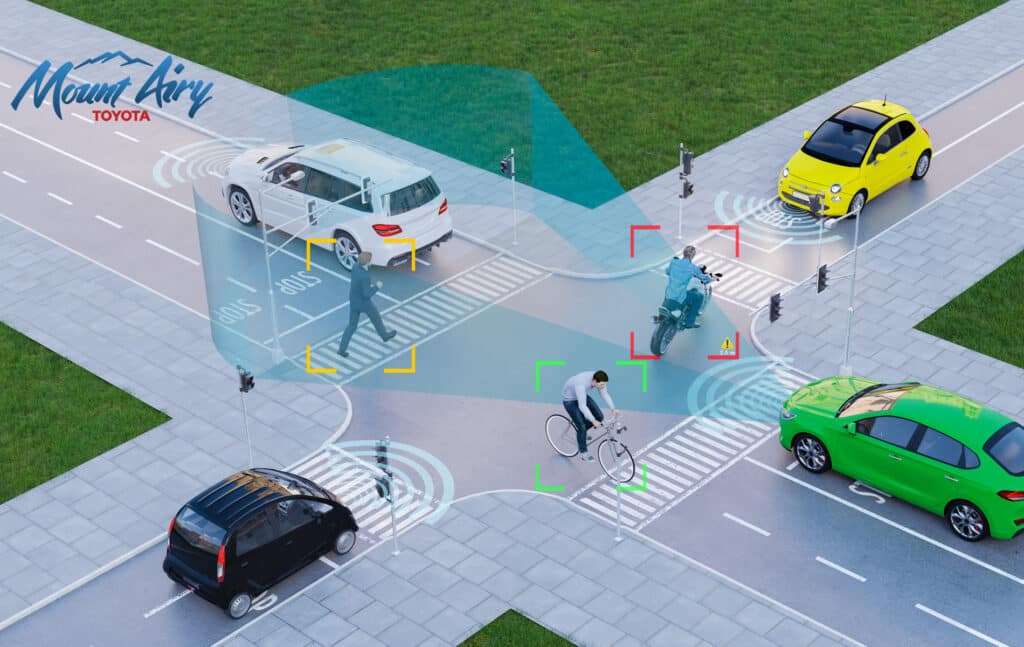
What You Need to Know About Advanced Driver Assistance Systems Though advanced driver assistance systems are considered a modern marvel when it comes to driving, there are some concerns being raised about them. These newer hands-free vehicle systems do provide a higher level of safety, there’s no question about that, but some believe they can cause additional distractions as well. Hands-free calling, texting, GPS, and other modern, high-tech features take our minds off traffic, especially in the evening hours, which heightens the possibility of drivers losing focus. Winston-Salem, NC made the news recently, as both television and print outlets all over the state (including Charlotte) have reported on the dangers of distracted driving, citing specific accidents in areas around town. Though some of the information provided in these reports was a bit cherry-picked, much of what was reported is insightful information. For instance, did you know that from 9 pm to 11:59 pm on Friday and Saturday nights is the most dangerous time to be on the road? Whether you are driving through a small or big town, a congested or seemingly open road, there are plenty of ways to become distracted while driving, and this report points to the fact that advancements in the way we drive are not necessarily eliminating distractions–conversely, they may be enhancing them. What Are Driver Assistance Systems? Advanced Driver Assistance Systems, or ADAS, are various technologies created to improve the driving experience, namely, to promote vehicle safety. This process involves the implementation of automated assistance to the driver to help reduce the possibility of human error. This is done by using sensors, cameras, radar, and other advanced tech features to monitor the vehicle’s surroundings at all times and to assist in various driving tasks–such as adaptive cruise control, lane-departure assistance, automatic emergency braking, and parking assistance. But are these systems doing too much for us? Are they causing us to pay less attention to the technicalities of driving and spending more time letting our minds wander?   For some car companies, like Toyota, these advanced systems are nothing new, though they are often updated. The availability of specific assistance features can depend on the trim level and options chosen for each vehicle, but a variety of them can be found in most versions of Toyota’s Camry, RAV4, Corolla, Highlander, Tacoma, Prius, Avalon, and Sienna.   Before we get into some details on how these systems work, and how we can keep from letting our minds wander while they are in use, let’s have a look into how incorporating ADAS provides clear benefits both drivers and passengers: Improved Safety: we can already see how ADAS helps prevent car accidents by providing safety assistance to drivers through the use of emergency braking, lane departure warning, and adaptive cruise control. Enhanced Convenience: ADAS can make the driving experience more comfortable and less stressful by assisting with tasks such as maintaining a safe distance behind other vehicles, keeping your vehicle centered in its lane, and aiding in parking maneuvers, such as the dreaded parallel parking. Reduced Driver Fatigue: by incorporating ADAS, drivers can get alerts and assistance when necessary if experiencing fatigue. These technologies can keep drivers from falling asleep and/or get them to pay attention to certain aspects of driving–for instance, if there is flooding, icy conditions, animals crossing, etc. Potential Insurance Discounts: some insurance companies offer discounts for vehicles equipped with ADAS, as these technologies have already proven their ability to reduce the likelihood of accidents and even minimize potential damage in the case of an actual collision. Environmental Benefits: certain features of ADAS, such as adaptive cruise control, can help with fuel efficiency by maintaining a consistent speed and following distance. Over time, this can lead to a drastic reduction in fuel consumption. Lower emissions means your car is better for the environment, and you are able to save money by visiting the gas station less often. Assistance for Drivers with Disabilities: ADAS can provide helpful assistance to drivers with disabilities by helping them operate aspects of the vehicle through automated prompting, the use of warning lights, etc. It can also assist those with limited mobility by setting itself to take care of things like the usage of blinkers and headlights without the prompting of the driver. Clearly, ADAS plays a crucial role in improving road safety and enhancing the driving experience, and this process of technological integration is only starting–who knows what the future holds! But how do we keep from losing focus since ADAS does so much of the work for us? To be honest, it doesn’t take special training or working through a series of steps. Focused driving simply requires a change in the way we communicate with our vehicle: though your car can now do more for you than ever before, it’s necessary to watch the processes take place. For instance, rather than constantly looking around your car as you drive alongside other vehicles on the highway, keep your attention on the dash and on your side mirrors, and let the ADAS system communicate to you what is going on through the sounds and images it shouts out to you. Always keep in mind that Advanced Driver Assistance Programs are meant to make driving easier, but they are not meant to take over completely. The same amount of attention is needed while driving, but now a lot of that attention can be directed to listening to what your car is telling you. You and your vehicle should be working in tandem to create a safe, enjoyable drive. How ADAS Works Integrated systems such as ADAS are quite complicated, but gaining a basic understanding of how they work can better inform drivers on how and when to use them. On the most basic level, ADAS uses a combination of sensors, cameras, radar, lidar, and software algorithms to monitor the vehicle’s surroundings. All of these technologies are used to assist the driver. Here is a general overview of how it all works: Sensors and Cameras – Small sensors and cameras are strategically placed around the vehicle so that they can continuously collect data on the car’s surroundings, including nearby vehicles, pedestrians, road markings, traffic signs, and obstacles. Data Processing – The data collected by sensors and cameras are processed in real time through the use of onboard computers. These computers use special algorithms to analyze the data received in order to identify objects on or around the road, detect potential hazardous situations, and assess the vehicle’s position in relation to the road and other vehicles. Decision Making – Once incoming data has been processed, ADAS makes decisions about the appropriate actions to take so that the driver is assisted, and safety mechanisms are enhanced. For example, if it is detected that the vehicle is drifting in and out of its lane without signaling, lane departure warnings and/or the steering assistant may be employed to alert the driver and to keep the vehicle in its proper placement on the road. Driver Feeback and Intervention – One of the great aspects of this sort of enhanced driving system is that ADAS provides feedback to the driver through visual, auditory, and haptic alerts in order to inform them of potential hazards in the moment. Not only that, but in some cases ADAS can also intervene directly by applying the brakes, adjusting steering, and even controlling the vehicle’s speed. Integration with Vehicle Controls – Most often, Advanced Driver Assistance is integrated with the vehicle’s existing control systems–like braking, steering, and throttle–so that there is active vehicle control when necessary without the prompting of the driver. Essentially, this means that ADAS does not have to wait for human interaction for it to kick in. This makes sense if you are heading towards danger without knowing it, you want your vehicle to know to apply the brakes whether your foot hits the brake pad or not. Continuous Monitoring and Improvement – What’s so great about ADAS is that it is continuously working. It is always monitoring the vehicle’s surroundings and performance–even if you are not–and it knows how to adapt and change driving conditions, and this effectiveness has actually improved over time. Manufacturers regularly update ADAS software to enhance performance, address potential issues, and introduce new safety features.   One other feature we like about the incorporation of ADAS is that if repairs or calibration are needed for the ADAS system in Toyota vehicles, a quick trip to the dealership is all that is required. Once on site, a certified technician can calibrate and/or repair any necessary areas. And there is no guesswork here, as your ADAS will let you know if there are necessary repairs or adjustments needed so that there is no compromise in the effectiveness of the system.   Driving is still about having fun and enjoying the open road but be careful driving your new Toyota Camry or Tundra. The hands-free features are terrific, but your mind still needs to be on the road. Take advantage of ADAS by letting your car communicate with you!

Mount Airy Toyota’s Comprehensive Guide to Advanced Driver Assistance Systems (ADAS)

Mount Airy Toyota’s Comprehensive Guide to Advanced Driver Assistance Systems (ADAS)

Toyota continues to lead the way with its commitment to safety and innovation in the ever-evolving automotive technology landscape. One essential advancement in the modern era is the implementation of Advanced Driver Assistance Systems (ADAS) — a suite of cutting-edge technologies designed to enhance vehicle safety, improve driving experience, and pave the way for a more connected and autonomous future. Below, Mount Airy Toyota explains ADAS more thoroughly, delves into which Toyota vehicles boast these systems in 2024, and more. Understanding ADAS Advanced Driver Assistance Systems, commonly known as ADAS, refers to a set of technologies integrated into vehicles to assist drivers and boost overall safety. These systems leverage sensors, cameras, radar, and other advanced technologies to monitor the vehicle's surroundings, detect potential hazards, and provide timely alerts or interventions to prevent accidents.   ADAS features many functionalities, including adaptive cruise control, lane departure warning, automatic emergency braking, blind-spot monitoring, and more. It employs a sophisticated blend of hardware and computer algorithms to enhance vehicle safety and help drivers in various aspects of their journeys. The primary goal of ADAS is to prevent accidents by providing real-time information about the vehicle's surroundings and potential hazards. Here's the gist of how it works: Sensors and Cameras: ADAS relies on an array of sensors strategically placed around the vehicle. These sensors include radar, ultrasonic sensors, and cameras. Cameras are crucial for visually recognizing the environment and detecting objects, lane markings, and traffic signs. Data Collection and Processing: The sensors continuously collect data from the vehicle's surroundings to capture information about the position of nearby vehicles, pedestrians, lane markings, and potential obstacles. Onboard computers then process this raw data in real-time. lgorithms and Decision-Making: Advanced algorithms analyze the processed data to make sense of the environment. These algorithms are designed to recognize patterns, identify objects, and assess potential risks. The system then makes decisions based on this analysis, determining whether intervention is necessary to avoid a collision or improve overall driving safety. Alerts and Interventions: ADAS can provide various notifications or interventions depending on the detected risks. For instance, if the system senses an imminent collision with a vehicle ahead, it might trigger automatic emergency braking to reduce the severity of impact. Lane departure warning systems can alert the driver if they detect unintentional lane drifting, and some systems can even assist steering to keep the vehicle within its lane. Adaptive Functionality: ADAS features often adapt to different driving conditions. Adaptive Cruise Control (ACC), for example, can automatically adjust the vehicle's speed to maintain a safe following distance from the car ahead, facilitating a more relaxed driving experience on highways. ADAS combines input from various sensors, cameras, and radar systems with sophisticated algorithms to enhance driver awareness and intervene when necessary. It ultimately makes driving safer and more enjoyable. ADAS vs. Toyota Safety Sense (TSS) ADAS is a general term encompassing various safety technologies, and Toyota Safety Sense is Toyota's specialized implementation of ADAS that brings a specific set of safety features to enhance the driving experience for Toyota owners. ADAS often includes automatic emergency braking, blind-spot monitoring, parking assistance, and more. Other automakers may have their own variations of ADAS with unique features and branding that reflect their commitment to safety and innovation. Toyota Safety Sense (TSS) Toyota Safety Sense is a comprehensive suite of safety features developed by Toyota to provide extra protection for drivers, passengers, and pedestrians. TSS integrates various ADAS technologies to address different safety aspects; it primarily focuses on collision prevention and mitigation. The TSS package typically includes a combination of the following features: Pre-Collision System (PCS): This feature uses sensors and cameras to detect potential collisions with vehicles or pedestrians ahead. It can then initiate automatic braking or warn the driver to avoid or mitigate the impact. Lane Departure Alert (LDA): LDA alerts the driver if the vehicle unintentionally drifts out of its lane. In some models, it can provide steering assistance to keep the vehicle centered in its lane. Dynamic Radar Cruise Control (DRCC): This technology maintains a set following distance from the vehicle in front by automatically adjusting the vehicle's speed. It offers a more relaxed driving experience, especially in highway traffic. Automatic High Beams (AHB): AHB enhances visibility during nighttime driving by automatically switching between high and low beams based on the presence of oncoming traffic. Blind Spot Monitor (BSM): This feature alerts the driver if there's a vehicle in the blind spot during lane changes, which does wonders for overall awareness and safety. Road Sign Assist (RSA): RSA recognizes traffic sign information and displays it on the vehicle's multi-information display; it essentially informs drivers of speed limits and other important road signs. TSS focuses on a core set of safety features integrated into the vehicle to prevent and mitigate collisions. Whether you're driving a compact sedan, a versatile SUV, or a powerful truck, there's a good chance your Toyota is equipped with some level of ADAS. Which Toyota Models Incorporate ADAS? As of 2024, Toyota has made significant strides in integrating ADAS across its diverse lineup of vehicles. These systems are designed to enhance safety, improve overall driving experience, and pave the way for a future of connected and autonomous driving. Let's take a closer look at some of the Toyota models that feature ADAS: Toyota Camry The Toyota Camry, a staple in the sedan segment, is equipped with an array of ADAS features. Drivers can benefit from technologies like Pre-Collision System (PCS), Lane Departure Alert (LDA), Adaptive Cruise Control (ACC), and more. It’s widely recognized as one of the safest cars for daily commutes and longer journeys. Toyota RAV4 The popular Toyota RAV4 is a versatile and stylish SUV that includes a lot of ADAS features in  a compact form. Automatic High Beams (AHB), Road Sign Assist (RSA), Blind Spot Monitor (BSM), and many other technologies contribute to an elevated driving experience. Toyota Corolla Similar to the RAV4, the Toyota Corolla is a compact vehicle that embraces many ADAS technologies. Features like Lane Tracing Assist (LTA) — which helps keep the vehicle centered in its lane — and Dynamic Radar Cruise Control (DRCC) are integrated into the Corolla's safety suite. High reliability and efficiency ratings also make this car one of the best overall purchases for consumers. Toyota Highlander The Toyota Highlander is a midsize SUV designed for families and boasts a comprehensive suite of ADAS features. With technologies like Rear Cross-Traffic Alert (RCTA) and Bird's Eye View Camera, the Highlander prioritizes safety and convenience for both the driver and passengers. And it looks beautiful on the road! Toyota Tacoma Toyota's durable and capable pickup truck, the Tacoma, is most known for its fantastic blend of ruggedness and style. It also happens to incorporate ADAS to enhance safety on and off the road. Technologies like Pre-Collision System with Pedestrian Detection (PCS w/ PD) and Lane Departure Alert with Sway Warning System (LDA w/ SWS) contribute to a secure driving experience. The modern “Taco” is as safe as it is attractive and functional. Toyota Prius As a pioneer in hybrid technology, the Toyota Prius also embraces ADAS to complement its fuel efficiency. The Prius features Lane Departure Alert with Steering Assist (LDA w/ SA) and Intelligent Clearance Sonar (ICS) for added safety during city driving and parking. Save money on gas while keeping yourself and your passengers secure on the road. Toyota Avalon The Toyota Avalon is a full-size sedan known for its comfort and sophistication. Full-Speed Range Dynamic Radar Cruise Control (DRCC), Automatic High Beams, and a slew of other features contribute to a refined and secure driving experience. This car is classy, safe, and smooth to drive. Toyota Sienna Redesigned as a hybrid minivan, the Toyota Sienna prioritizes safety for families. It includes ADAS features like Front and Rear Parking Assist with Automatic Braking (PA w/ AB) and Road Sign Assist (RSA), which make it a reliable choice for anyone seeking a spacious and secure family vehicle. These are just a few examples of the Toyota models equipped with ADAS in 2024. It's important to note that Toyota continues to innovate and update its lineup, and additional models may feature advanced safety technologies to meet evolving industry standards. Toyota remains committed to integrating ADAS into its vehicles so that drivers across various segments benefit from these sophisticated safety features. TSS technologies contribute to a safer and more enjoyable driving experience whether you're navigating city streets, highways, or off-road terrain. Repairing and Calibrating ADAS As technology continues to play a crucial role in enhancing vehicle safety, your vehicle’s ADAS is integral to your driving experience. These systems are designed for durability and reliability, but there may be instances when repairs or calibrations are necessary. Here are seven things to do if your car's ADAS requires attention. Be attentive to warning signs. Pay close attention to any signs of issues with your ADAS. Unusual error messages on your dashboard, malfunctioning safety features, or minor collisions can trigger the need for repairs or calibration. Ignoring these warnings can compromise your safety on the road. Refer to your owner's manual. Your Toyota's owner's manual is a valuable resource for understanding the intricacies of your vehicle's ADAS. Familiarize yourself with the manual's TSS section to grasp the functions of each system and learn potential troubleshooting steps. A well-informed owner is better equipped to address issues promptly. Contact Mount Airy Toyota Service Center. In the event of ADAS concerns, promptly contact our authorized Mount Airy Toyota Service Center. Our skilled technicians have the expertise and specialized tools required to accurately diagnose and effective resolve ADAS issues. Early intervention can prevent minor problems from escalating. Provide detailed information. When communicating with our service center, provide clear and detailed information about the symptoms or incidents that led to the ADAS malfunction. A precise account helps our technicians assess the situation accurately and expedite the repair or calibration process. In other words, accurate information streamlines the diagnostic process! Trust certified technicians. ADAS repairs and calibrations demand precision and technical knowledge. Trust our certified technicians at Mount Airy Toyota to handle these tasks. They have access to genuine Toyota parts and cutting-edge equipment to ensure your ADAS functions optimally post-repair. Certified technicians guarantee the quality of service that other mechanics cannot. Consider regular maintenance checks. Take a proactive approach by incorporating regular maintenance checks for your ADAS during routine service appointments. These checks can help identify potential issues early on, prevent more significant problems, and keep your ADAS features working reliably. Regular checks contribute to long-term system health. Be patient and stay informed. Depending on the issue’s complexity, ADAS repairs or calibrations may take some time. Exercise patience, and feel free to ask our technicians about the progress. We strive to keep you informed every step of the way to ensure your satisfaction. Anyone driver can tell you that patience and communication contribute to a positive service experience! The Bottom Line Toyota continues to push the boundaries of automotive technology with the widespread integration of ADAS in 2024. These cutting-edge features ultimately contribute to safer roads and redefine the driving experience for car owners. As you embark on your journey with a Toyota vehicle equipped with TSS, remember to stay informed about these systems’ capabilities  and proactively address any repair or calibration needs. With Toyota's unwavering commitment to safety and innovation, the road ahead promises to be exciting and secure. Connect with Mount Airy Toyota today to learn about the vehicles on our lot or schedule a service for your existing model!

New Electric Toyota Mount Airy

Toyota … What’s Next?

Change is in the air, and Toyota is not resigned to letting the times pass them by. 2022 has been home to some impressive news and advancements regarding the whole Toyota brand. New models and technology continually impress and deliver for customers; with some Toyota designs celebrating countless years of performance. Whichever way you look, there has never been a better time to be a part of the Toyota family. And, if you’ve been looking for a sign to purchase your first, or replace an older Toyota, this article may be just that. If that’s the case, take a look at Mount Airy Toyota. They’ve served the Mount Airy area for years, garnering a track record of excellent customer service and the ability to provide any potential customer with a car that’ll fit their lifestyle. If you’re still hesitant about making the leap to a Toyota, that’s natural. Though wait and read about all that’s next for Toyota and that hesitation is likely to slip away! New Manual Transmission Patent Toyota knows how important it is for some to have the manual option. As they continue to change, improve, and introduce a wide array of vehicle models, they want to make sure that everyone will find something they love. Manual purists will be pleasantly surprised to hear about the patents Toyota has recently filed that signal an increase in investment regarding manual transmissions. Coming To The GR Supra The GR Supra has only been around for a couple of years and it’s already solidified its place in the hearts of many. The model embodies the joy of driving while also having racing and high-performance capability built in from the ground up. Now, the upcoming 2023 GR Supra has two editions that will scratch the itch of driving manual while also keeping you in the familiar Supra. You’ll find this change in transmission on the 3.0, 3.0 Premium, and a limited A91-MT Edition model. So, if you want a car that blends function, form, and beauty, that’s whole design is made for the perfect driving experience, and also want that feeling of a manual drive, that possibility is right around the corner. You can read more about the GR Supra and pricing options here, through Mount Airy Toyota. With some additional information and details on trims, color, and cost, you’re a lot more likely to make a move on the sleek Supra. Innovation in EVS This news is less concrete than an upcoming launch like the GC Supra, though its potential to impact the vehicle industry is unbelievable. Recently, a slew of patents has been filed by Toyota for electric manual transmissions. As it stands, EVs marked a possible end to the option of manual in modern cars. And while the details aren’t all released it stays in line with the Toyota legacy of innovation. The patent shows a “pseudo clutch pedal” and a gear shift built to emulate and capture the feel of a traditional manual vehicle. And for those less enthused about manual options, the vehicles with this planned addition will have a regular EV mode they can make use of as well. So, for the manual purists, know that an EV from Toyota will soon be able to deliver on every aspect. Stay tuned to Mount Airy Toyota for updates and continual news related to this exciting new development. And, if an EV has been on your mind, check out Mount Airy’s EV lineup here. Continual Innovation in Safety Toyota has long been a leader in safety innovation. This year is no different, with most Toyota models coming with a suite of safety features that’ll protect you and your entire family. Safety Sense Improves Safety Sense, Toyota’s patented line of safety features, continues to be a mainstay in all modern models. You can count on these features and more in every modern Toyota — Pre-Collision Systems can detect pedestrians, cars, and other potential hazards, reducing the rate of crashes across the board. Dynamic Radar Cruise Control provides cruise control that adapts to the cars around you, giving you a driving experience that has never been easier. Lane Departure alerts monitor where you’re at on the road, letting you know if you’ve drifted out of lanes or onto the shoulder of the road. Automatic High Beams detect the darkness around you, switching in between high beams and low beams to keep every driver protected and keep your visibility clear. Road Sign Assist reads the signs around you and projects them onto an interior display, helping you navigate in a multitude of weather conditions. Safety Features To Protect Your Children Toyota understands that when it comes to a vehicle’s safety, customers want to make sure that their little ones are protected first and foremost. While the Safety Sense suite has placed Toyota at the top of ratings regarding vehicle safety, they know that you can never do too much to protect little passengers. This was the driving force behind the new tech Toyota recently announced, Cabin Awareness. Cabin awareness is designed to monitor everyone who is sitting in the car, letting you know if someone is still inside the vehicle after turning it off. Alerts are sent to your phone to then warn you that a passenger is still inside, preventing any possibility of an accident. This feature is slated for the future so we can’t announce the exact timeline of its release but we can promise you that it will lead the entire auto industry in additional child safety features and technology. But, before that technology hits the market, you can rest assured that current models of Toyota have your children's safety in mind too. All modern Toyota’s come with LATCH connection, made to secure car seats safely. That feature, alongside the advancements in technology and the Safety Sense suite, make Toyotas something worth considering investing in. 4runner Turns 40 Another exciting development is that 2023 marks the 4Runner’s 40th anniversary, which Toyota is keen on celebrating. The 4Runner stands out as an iconic SUV with off-roading capability and power that is reliable and impressive and has served as a mainstay in thousands of families since 1984. Now, Toyota has found the perfect way to pay tribute, announcing the 2023 4Runner 40th Anniversary Special Edition. Based on the 4Runner’s SR5 trim the anniversary edition will have both luxury and performance to boot. It’s a limited edition, has a unique colorway complimented by small emblems and details, and, if you end up getting your hands on the anniversary edition, you’ll have one of 4040 models – something truly astounding. Pricing has yet to be announced but it’s certain to go on sale later this year. Stay up to date on Mount Airy Toyota’s digital model showroom here to make sure you have a chance at securing your own. Finding What’s Next All of the news and upcoming releases surrounding Toyota can be a bit overwhelming. Even more daunting, we never know just what the future holds. There is one way, however, you can eliminate some of that uncertainty, and it’s by going with a car dealership with experience. Mount Airy Toyota has been long committed to providing the best car buying experience for every customer. Whether you’re looking for a new and improved Supra, an electric vehicle that pushes the boundaries of EVs, or getting your hands on a limited edition model like the anniversary 4Runner, Mount Airy Toyota has you covered. So, now that you’ve found out what’s next for Toyota, reach out to Mount Airy Toyota today to see what’s next for you in your car buying journey.

2021 Land Cruiser Mount Airy

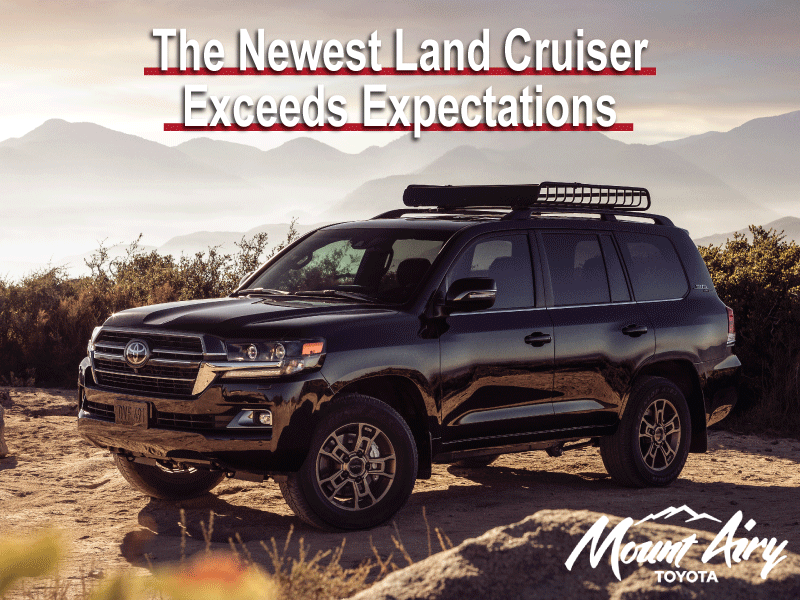
The Newest Land Cruiser Exceeds Expectations

Toyota revealed the newest Land Cruiser model this Summer. Building on its 70-year heritage, the 300 Series—now the flagship model—seems to take all the best parts of previous Land Cruisers while evolving in areas that needed improvement. The automaker has proclaimed “reliability, durability, and off-road performance” as the reasons for more than 10 million worldwide sales throughout the nameplate’s history. And Toyota also boasts that the new Land Cruiser equips drivers to “go anywhere and everywhere, and bring you back safe and well.” Let’s take a closer look at what you can expect from the new Toyota Land Cruiser 300 Series: Upholding Tradition The very first Land Cruiser came in the form of a 1951 Toyota BJ, which was a four-wheel-drive vehicle that offered a powerful engine and unprecedented performance on adverse terrain. The BJ became a standard police patrol automobile throughout Japan, and from there the Land Cruiser nameplate has maintained legendary status. In fact, Toyota estimates that more than 300,000 units have sold per year since then in 170 countries and regions across the globe. Simply put, there’s no other vehicle in its class that matches the reputation of the Land Cruiser. The SUV has long been a staple in humanitarian aid and disaster relief efforts, a one-of-a-kind tool that enables people to get around in areas of the world where travel would otherwise be impossible, and a vehicle that helps enrich lives by facilitating safari explorations and other experiences that no other vehicle can provide. Toyota has kept all of this in mind while developing the new Land Cruiser. But as can be expected, it also hasn’t shied away from incorporating new technology and making improvements that push the vehicle to even higher standards. Evolving Where Necessary Succeeding the 200 Series as the flagship Land Cruiser, the 300 Series is a station wagon model. It rides on the new GA-F platform, which is based on TNGA. While it maintains the frame structure of previous models, this structure has been redesigned to reduce total vehicle weight and boost rigidity. Several new technologies have been incorporated to increase the overall safety and comfort for drivers and passengers, such as improved wheel articulation, an upgraded suspension system, and an automatic driving mode selector, among others. On the Outside Both the exterior and interior of the new Land Cruiser can be described in a single phrase: functional beauty. This year’s Land Cruiser is as attractive as you will find, especially if you’re into off-road vehicles. From the bumper shape to the light positions, every design aspect stays true to the rich heritage this vehicle has garnered over seven decades. The overall vehicle size is identical to the previous model; the total length and width, wheelbase, and approach and departure angles all promote optimal off-road function and performance. On the Inside Toyota has enhanced operational comfort in the new Land Cruiser. The repositioning of switches and controls allows for intuitive, practical operation in tough situations. And new color and shape designs aid drivers as well. Moreover, drivers are assisted by a horizontal instrument panel, which captures the vehicle’s position in all-terrain environments. Powertrain and Performance The world’s leading automaker is improving both performance and environmental standards at every turn, and that philosophy is clearly demonstrated in the new Land Cruiser. The vehicle gets an all-new V6 twin-turbo engine that comes in either a 3.5-liter gasoline or 3.3-liter diesel. It also gets a newly developed 10-speed automatic transmission—the DirectShift-10AT. Combining the engine, transmission, and lighter body weight, this year’s Land Cruiser is more eco-conscious than ever. That said, the Land Cruiser’s performance has also improved. Simply put, it offers the most effective and pleasant driving experience of any Land Cruiser before it, especially when it comes to off-road situations. The new model has adopted the first-of-its-kind E-KDSS (Electronic Kinetic Dynamic Suspension System), which improves the vehicle’s ability to hold to the road. Via the Multi-Terrain Select feature, the new Land Cruiser can automatically assess road surfaces and choose the ideal driving mode. Additionally, the Multi-Terrain Monitor reveals obstacles in the driver’s path that would otherwise go unnoticed (until it was too late). Safety The new Land Cruiser comes standard with the Toyota Safety Sense active safety package, as well as two additional functions that help drivers prevent collision or damage by detecting surrounding vehicles, cyclists, and pedestrians. Furthermore, the Land Cruiser has adopted Toyota’s new Parking Support Brake, which ultimately helps reduce the risk of parking lot accidents. Conclusion If reliability, durability, and off-road performance are top priorities for you, then it doesn’t get better than the new Toyota Land Cruiser. Stay posted with Mount Airy Toyota on when you can expect a North America release of this exceptional vehicle. And remember that we offer superior service for all Toyota vehicles. Whether you need a transmission replacement or a simple oil change, come to us for top-tier repairs and customer service!

Leaving Your Child, Pet, or Belongings in a Hot Car: How Not To

Life moves fast these days, and chances are you’re just as busy as the next person. Between work, family, and other commitments, we all have a lot on our plate. And to expect ourselves to remember everything all the time would simply be unrealistic. That’s why most of us can say that we’ve forgotten something in our car before. Maybe it was a bottle of sunscreen or a laptop. Perhaps it was a pair of sunglasses or a container of medications. In many cases, even children or pets have been left in a car, leading to tragic consequences. The stresses of everyday life can cause memory lapses in the most diligent and responsible of us. And with the hottest days of the year approaching, we must all be extra conscious when we leave our vehicles. Mount Airy Toyota has different strategies for remembering who and what is in our cars, general car seat safety tips for the summer, and much more. Leaving Your Child in a Hot Car Most parents cannot imagine that they would ever leave their child in a hot car. Nonetheless, since 1998, almost 900 children have died of Pediatric Vehicular Heatstroke (PVH). And in more than half of these incidents, the caregivers had unknowingly left the children behind. While many would assume that only negligent or unfit parents would forget their child in a vehicle, the truth is it can happen to anyone. According to neuroscientist and UCF Tampa psychology professor David Diamond, Ph.D., forgetting a child in such a circumstance isn’t a negligence problem; it’s a memory problem. If you think about how much our routines change during summer, this makes sense. Whether it’s because of vacations, children being out of school, or any number of other reasons, many families drastically alter their regular routines. And in each of these tragic occurrences above, such disruptions were a common contributor. The first step of ensuring that your child stays safe this summer is to reject the mindset that it can’t happen to you. PVH has claimed the lives of children from five days old to 14 years old, and the caregivers involved have come from varying backgrounds: law enforcement officers, doctors, nurses, teachers, military officers, social workers, clergymen, and the list goes on. From an objective review of the data, it’s clear that education and socioeconomic status have had quite little to do with these tragedies. Prospective and Semantic Memories Prospective and semantic memories are parts of an individual’s working memory. In short, prospective memory enables us to prepare our minds for something in the future, and semantic memory allows us to fulfill tasks on autopilot, such as driving home from work without being able to remember details of the trip. In order to alter our routines, prospective and semantic memories must work in tandem. Take, for instance, a father who’s tasked with dropping his child off at daycare on the way to work when the mother usually does it. Or, imagine a mother who realizes that she needs to add an errand to her to-do list. Heightened stress or distraction can cause our working memories to fail. And this can lead to disastrous consequences, such as failing to take essential safety steps that would normally be a habit. Our brains multitask, and our brains are not perfect. This means that awareness of our surroundings can easily be lost, even if we are loving and attentive parents. Simple Strategies to Prevent PVH Finding ways to manage your stress, getting the sleep your mind and body need, and being aware of how a change in routine affects your brain is critical to avoiding tragic hot-car incidents. Here are some other strategies that you can implement: Use the front seat. While driving, keep an item of your child’s in the front passenger seat (e.g., hat, diaper bag, backpack, etc.) to remind you that your child is in the car. Make a habit of looking in the backseat. Every day, keep something in the backseat that you need for work, such as your briefcase or phone so that you will have to retrieve it every time. Use phone reminders. Set a reminder on your phone to confirm with your spouse or partner that they dropped off your child at daycare or school. Work with your childcare provider. Promise that you will always notify the childcare provider if your child is going to be absent or tardy, and have the childcare provider pledge to let you know if your child ever fails to arrive at their normal drop-off time. Other Summer Car Safety Tips Children are particularly susceptible to heatstroke. Not only can the inside of cars reach deadly temperatures within 30 minutes on a 72-degree day, but children’s bodies will heat up three to five times quicker than adults. Along with following the tips above, here are some other precautions you can take to ensure your child stays safe and healthy this summer: Buy a Car Seat Alarm There is no substitute for taking common-sense precautions, such as never leaving your child in a hot car or and always checking the backseat before leaving a vehicle. But as we’ve seen, even the most well-intentioned parents can have forgetful moments. For an extra layer of protection, consider investing in a car seat alarm or monitor. There are car seats that come with built-in sensors and notify caregivers when temperatures become alarming or when a child is left alone. For instance, the Cybex Eternis S SensorSafe Convertible Car Seat features a sensor clip that connects to your smartphone. If your child unbuckles their harness while the vehicle is moving, your child is left alone, or the ambient temperature in the vehicle gets too high or too low, then you will get an alert on your phone. You can also buy an independent car seat alarm that syncs with your phone. The Elepho eClip Car Seat Alarm will attach to your child’s car seat or safety belt and senses your child’s presence by monitoring their motion or weight. The alarm can either sync with your phone or with an accompanying key fob through Bluetooth. If you leave your vehicle and walk more than 15 feet away, the sensor will detect the difference in proximity and alert you immediately. If you don’t respond to the alarm (i.e., you don’t notice it), then the eClip will notify a spouse, a friend, or another person you trust. Moreover, the sensor is designed with a thermometer that monitors the vehicle’s cabin temperature. There’s one other type of product you can purchase that can help you prevent a nightmare scenario like PVH: a car tracker. While it’s typically used to stop car theft, the CarLock Advanced Real Time 3G Car Tracker & Alert System has a feature that will detect unusual vibrations in your vehicle. For example, if your child begins crying or thrashing around, the device will alert your phone. The system provides real-time tracking and updates every 30 seconds when your vehicle is parked. Use Car Seats Correctly This might sound obvious, but you should always ensure you’re using your child’s car seat the right way. Some parents may want to put a towel between their child’s swimsuit and the car seat, or underneath the car seat, after a day at the pool, for instance. But while that may help to keep your seats in good shape, it can hinder the car seat’s effectiveness during a crash. Instead, always bring along an extra set of dry clothes that you can put on your child. Never Use Someone Else’s Car Seat You never really know the condition of a car seat unless it’s yours. If you ever need to rent a car this summer, bring your own car seat with you. Even if the rental agency has the car seat or booster you need, you can’t be sure that the family that used it before you didn’t make any incorrect adjustments to the seat which would compromise its performance. Prevent Heat Rash Heat rashes are prevalent during summer. And if your child sweats while in their car seat, they can easily get a rash, especially if they’re more susceptible to heat rash in the first place due to excessive sweating or sensitive skin. Regularly monitor your child for heat rash from their car seat. If heat rash occurs, use diaper rash cream before long car rides, contact the car seat company about sending you a car seat cover with a different fabric, and frequently wash the car seat cover. Keep Items Secure If you’re like most families, you drive around with lots of supplies in your vehicle, particularly when taking a long trip. Always make sure that every item in your car is secured, including toys, snacks, drink bottles, and anything else that could fly around and injure someone if you stop suddenly or crash. Leaving Your Pet in a Hot Car There’s a common misconception that as long as you crack the windows, it’s safe to leave your dog in the car. But thinking like that can lead to catastrophic consequences. On a 70-degree day, the inside of a car can reach 100 degrees in 20 minutes. In the peak of summer, a car can reach 140 degrees in less than an hour. A study by the American Veterinary Medical Association (AVMA) found that cracking a window does not significantly lower the temperatures inside a vehicle. In fact, such a vehicle will heat up at almost the same rate as if the windows were completely rolled up. All dogs are prone to heatstroke by nature. Any time you drive with your dog in the car and you know that you will have to get out of the car along the way, bring another adult with you on the trip so that they can stay in the vehicle with the air conditioning running. Items You Should Never Leave in a Hot Car While not leaving children or pets in a hot car should definitely be at the top of your mind, there are also some inanimate objects that you should avoid leaving in your car during summer. Some products will melt, warp, or significantly change in composition in other ways. Not only can this lead to a major mess in your vehicle, but it can decrease the effectiveness of the product, if not destroy it altogether. Here are some things that you should never leave in a hot car: · DVDs or CDs · Electronic devices (e.g., laptops, tablets, smartphones, etc.) · Eyeglasses or Sunglasses · Medications · Sunscreen · Hairspray · Makeup · Food · Soda, wine, or beer · Crayons or markers · Ink pens or disposable lighters Conclusion The hottest season of the year is here, which means it’s time to take extra precautions. Along with finding ways to reduce stress and minimize distractions in your everyday life, remember the tips above for how you can remind yourself not to leave your children or pets in a hot car. And try to avoid leaving behind the other items mentioned as well. Most importantly, remember that none of us are above experiencing a tragic incident. Do everything you can to practice summer safety in the months ahead!

New Tech for Toyota

Toyota’s Newest Tech Helps You Stay Connected and Safe

From the moment it began disrupting the American automobile industry in 1937 to the creation of the first mass-produced hybrid-electric vehicle in 1997, Toyota has long been known to be a company of innovation. As of 2020, it leads all other carmakers in global sales. The innovation hasn’t stopped. Each year, Toyota offers significant upgrades to its models and consistently sets the industry standard for design, performance, safety, and comfort. And this year is no different. Among other developments, the 2021 model year brings with it cutting-edge technologies to help you stay connected to others on the road, as well as improvements on an already-groundbreaking suite of safety features. Below, we’ll discuss these upgrades in more detail and provide a brief rundown of available upgrades for a few of the leading Toyota models. ENTUNE INFOTAINMENT SYSTEM Every new Toyota model comes standard with the manufacturer’s Entune infotainment system. This system only adds to the functionality, safety, and comfort that has been provided by Toyota vehicles for decades. In terms of infotainment interfaces, it doesn’t get easier to use and navigate than Entune, and it’s perhaps the most efficient interface on the market. Entune 3.0 It was hard to imagine the previous version of Entune getting much better. But here are we are, and it is. The latest version of Toyota’s infotainment system comes with several notable upgrades. A remote connect feature allows you to view engine diagnostics, lock and unlock your doors, start your engine, and track down your vehicle in a parking lot—all on your smartphone, from wherever you may be. Entune 3.0 also comes with Verizon’s 4G LTA Wi-Fi connection, which means that you can stay connected pretty much anywhere you go without eating up your data plan. And navigation has been taken up a notch. When you opt for the Entune 3.0 Premium Audio Suite, you’ll get Dynamic Navigation, which shows you up-to-the-minute navigation and points of interest on your journey. Even better, the navigation system runs on a hard drive so that you don’t have to use your phone’s data. Unsurprisingly, the newest version of Entune still comes with Apple CarPlay, Android Auto, and Bluetooth capabilities, among a slew of other tech features. Entune Audio and Audio Plus Entune Audio comes on most Toyota models, and it includes a couple of notable features. For instance, it provides efficient Bluetooth connectivity, which allows you to talk on your phone, stream music and podcasts, and much more without using your hands. And if you have an iPhone, you can use Siri to perform a variety of functions, just like you would from your phone. The available Entune Audio Plus includes the features mentioned above and adds a few more. You’ll get access to Scout GPS Link, which is an app that provides simple, accurate turn-by-turn directions. It even shows real-time updates for traffic, cloud movement, and more! Entune Audio Plus also comes with the option for HD Radio—a feature that boosts the sound quality of any audio you play. Furthermore, a free three-month trial of SiriusXM radio is automatically included when you upgrade to Entune Audio Plus. Entune App Suite Last but not least, the Entune App Suite is your go-to platform for a wide array of helpful apps. Do you want to listen to your favorite station on Pandora or to a new album on Apple Music? What about that weekly podcast you’ve been waiting on? Or, perhaps you need to make dinner reservations or compare gas prices? Entune App Suite has everything you need. TOYOTA+ALEXA APP If you’re an Amazon Alexa customer, you likely know a little bit about what she can do. The latest version of Alexa can perform tens of thousands of functions, and with the Toyota+Alexa app, you get access to all of those services and skills right there in your vehicle. By using this app, you can do all kinds of things. You can order lunch, check the weather, assess traffic patterns, ask for directions, listen to the news, operate your smart home devices, and much more. Since Alexa is a cloud-based system, she automatically updates with new features and capabilities. And the best part is that Alexa is super simple to use, and you never have to lift a finger! SAFETY SENSE 2.5 PLUS Toyota Safety Sense (TSS) is just one example of how the manufacturer has proven to remain a pioneer in today’s auto industry. The innovative suite of standard safety technologies has garnered award after award, and the 2021 Camry is equipped with the latest version: Safety Sense 2.5 Plus. Other Toyota models are expected to receive the upgrade in the coming months and years. The focal point of the development of TSS 2.5+ was to mitigate frontal collisions, nighttime mishaps, and unwanted lane departures. As with previous versions of TSS, it’s all about using forward-thinking tech to prevent as many accidents as possible. TSS 2.5+ is by far the most advanced and sophisticated safety suite on the market, and it integrates cameras, radars, and an uber-powerful computer to get the job done. Carryover Features The Pre-Collision System with Pedestrian Detection and Full-Speed Dynamic Radar Cruise Control remain two of the primary technologies in the latest TSS suite. The former warns you of a potential collision with the vehicle in front of you, alerts you when there is a pedestrian within range, and implements automatic emergency braking when your vehicle is too close for comfort. The latter is Toyota’s adaptive cruise control, which adjusts your vehicle’s speed depending on surrounding vehicles (if you’re coming up hot on the car in front of you, it will automatically reduce your speed). Other technologies that carry over from previous TSS versions include automatic high beams, road sign assistance, lane-departure warning with lane-keeping assistance, and lane-centering assistance. Enhanced Features Though the forward collision warning and automatic braking of older TSS suites are remarkable in their ability to prevent accidents, TSS 2.5+ takes these technologies up a notch. In short, the system is more proactive and functional. Along with sensing vehicles ahead, it now detects preceding pedestrians and cyclists, whether it’s sunny or dark outside. If there is a vehicle, pedestrian, or cyclist making a left turn in front of you, the updated feature will alert you through sound and visuals. If necessary, the automatic braking will kick in. Moreover, the adaptive cruise control technology in TSS 2.5+ offers a brand-new function that makes passing slower vehicles easier and safer. After slowing down while using adaptive cruise control, there is typically a significant delay before the vehicle starts accelerating again. TSS 2.5+ gets rid of this problem. The revamped Full-Speed Dynamic Radar Cruise Control senses when you are coming up on a slower vehicle, and when you turn on your indicator and engage the steering wheel, the system automatically accelerates your vehicle. This puts you in a better position to pass the vehicle in front of you. The adaptive cruise control feature will then keep accelerating until you hit your established cruising speed. TECH UPGRADES BY MODEL We’ve covered some of the newest tech available from Toyota, but not every model will get all the same features. So, let’s touch on what you can expect from a few of the big hitters in the manufacturer’s 2021 lineup: Camry The 2021 Camry is one of Toyota’s most decked-out vehicles when it comes to technology. The Entune infotainment system is displayed on either a seven- or nine-inch touchscreen that floats gracefully on the dashboard. The Camry is also the first model to feature TSS 2.5+ (though others are soon to follow). Another notable feature is the Dynamic Torque Control AWD system, which comes in the North America-only Camry AWD. This system is matched with a high-efficiency 2.5-liter Dynamic Force engine (four-cylinder) and an eight-speed Direct-Shift automatic transmission. Corolla This year, buyers can opt for an eight-inch touchscreen for their Entune 3.0 system in the Corolla. There are several hard buttons around the large touchscreen, as well as rotary volume and tuning knobs, for easy and safe controlling while on the road. You can also opt for wireless charging and a premium JBL sound system. As of now, the 2021 Corolla comes with Safety Sense 2.0, including the pre-collision system, road sign assistance, and lane departure warning with steering assistance. Prius Anyone who has ever seen a Prius knows that it revolves around technology. It is, in fact, one of the vehicles that have strengthened Toyota’s reputation for being innovative. One hallmark feature that remains is the digital gauge panel mounted on the center of the dashboard, which includes two 4.2-inch full-color display screens and allows drivers to customize the wealth of content they see by using their steering wheel controls. On the Prius Prime, buyers will get a seven-inch touchscreen to facilitate Entune 3.0 unless they upgrade to the 11.6-inch vertical screen that comes in the XLE trim. The 2021 Prius Prime is available with Safety Sense 2.0. 4Runner Yes, even the rugged 4Runner comes with some impressive tech! All 2021 models feature Entune 3.0 and an eight-inch touchscreen. Of course, you get the physical buttons and rotary knobs to go with the infotainment interface, and you can opt for built-in navigation and a 15-speaker JBL sound system. Toyota Safety Sense P (TSS-P), which is a suite of active safety systems, comes on each 2021 4Runner. Also included is the Star Safety System, which provides traction control, vehicle stability control, Smart Stop Technologies (SST), and more. Rav4 The RAV4 is a little sibling to the 4Runner. And although it proves capable off the beaten path, it features more modern, polished styling and is more tech-focused. A seven-inch infotainment touchscreen is standard on the 2021 RAV4, and an eight-inch screen is available. As in the other Toyota models, the Entune 3.0 system provides a 4G LTE mobile hotspot and capabilities for Bluetooth, Apple CarPlay, Android Auto, and Amazon Alexa. The premium JBL sound system is available as well, as are enhanced navigation and a wireless charging pad. Even if you don’t choose a model with built-in navigation, you can use the Scout GPS Link app to display your smartphone’s map and directions on the touchscreen. TSS 2.0 comes standard on all 2021 RAV4 models, making it one of the safest compact SUVs on the road. CONCLUSION Toyota has long been known to produce vehicles that stand the test of time without shying away from technology. In fact, it remains a pioneer in innovative tech that helps drivers stay connected and improves performance, safety, and comfort. The model year 2021 sees a number of significant upgrades across the Toyota lineup, including the Entune infotainment system, Toyota+Alexa app, and Safety Sense technologies. Come by Mount Airy Toyota or browse our website to see the wide selection of Toyota models on our lot. We would love to talk with you about the tech that each model offers and schedule a test drive so that you can see what all the hype is about!

Contact Us

Fill out this form below and we'll contact you shortly
*Required Fields