Blog / Car Care

The Best Road Trip Playlists, Stations and Music-Streaming Platforms for 2020

Nothing beats cruising down the road with your windows down, blaring your favorite music as you let go of all your worries for just a moment. OK, so if your road trip is taking place during winter, the windows-down part might not be a thing. But the music can still happen!There are countless playlists and stations that span across various music platforms for streaming and listening, and it can be difficult to know which are the best ones. After all, analyzing all of them would take hours upon hours, and you probably have plenty of other things to focus on as you plan your road trip. That’s why we’ve done the heavy lifting for you. Below, we’ll discuss some of the best playlists and stations we’ve found and cover the benefits of using four of the most popular streaming/listening platforms—SiriusXM, Pandora, and Spotify.   THE BEST PLAYLISTS AND STATIONS OF 2020 Before you determine which music platforms to use for your road trip, let’s see a little bit of what each has to offer:SiriusXM There are well over a thousand stations on SiriusXM, so the ones that you listen to will depend on the type of music and entertainment you enjoy most. If you like listening to modern Top 40 music, stations like The Pulse and SiriusXM Hits 1 might float your boat. You can also choose pop music stations by the decade, such as ‘50s on 5, ’60s on 6, ‘70s on 7, and so on. If rock music is more your speed for traveling, check out Classic Rewind, Lithium, or Alt Nation. For hip hop fans, stations like Hip Hop Nation and The Heat are very popular, as are The Highway and Willie’s Roadhouse for country listeners. There are also plenty of stations that cater to other types of genres like dance/electronica, talk, and sports.    PandoraWith Pandora, you can either stream current radio schedules or record shows for listening later. And there are a lot of great shows and stations for enjoying either of these functions. For instance, Family Road Trip Radio is perfect for those with children in tow, as it offers a mix of pop, rock, reggae, classic rock, children’s music, and other genres. Country Road Trip Radio plays songs from Thomas Rhett, Luke Bryan, Jason Aldean, and other top country artists. And if you’re looking for a great sing-along experience with others in the vehicle, try Lip Sync Road Trip Radio, which plays everything from Queen to The Fugees.    SpotifySpotify is strictly a music-streaming service, which means that you listen to whatever song you like at any time, rather than having to wait for a song to come on or record a show. While there are millions of songs to choose from, maybe you would rather sit back and enjoy the work that curators have put into their playlists. Indie Rock Road Trip contains songs from Local Natives, Vampire Weekend, Freedom Fry, and other popular indie artists. The Road Trip playlist is tailored more for college-age drivers with the likes of Taylor Swift, Billie Eilish, and Charli XCX controlling the waves. And Rockin’ Road Trip will provide you with songs by artists like ZZ Top, Bloc Party, and The Wild Feathers.    THE BEST MUSIC PLATFORMS Now that you have an idea of what each of these platforms has to offer in terms of music and entertainment, let’s briefly look at their benefits:SiriusXMThe biggest advantage of using SiriusXM is that, unlike Pandora and Spotify, you don’t need to use data or download content. It works just like traditional radio except there are more options—like, a lot more options.    PandoraPandora offers both a free and premium option for users. The free service allows you to create playlists and curate your stations over time, though you will have to deal with ads and you can only skip six songs per hour. With Pandora Plus ($4.99/month), you don’t have to worry about ads and you can skip as many songs as you like, as well as rewind songs. And if you want to go all the way, choose Pandora Premium ($9.99/month), which allows for unlimited mobile playback and customizable playlists, among many other features.    SpotifySpotify also allows users to create a free or premium account. When it comes to radio functions and discovering artists, Pandora has the upper hand. But Spotify generally offers more in every other category. For example, the free Spotify service allows you to listen to any song you want on-demand (though you’ll still have ads). If you upgrade to Spotify Premium ($9.99/month), you can listen to almost any song you can think of in top-notch sound quality, you don’t have to sit through ads, and you can listen offline.    ConclusionWhen you’re in the midst of planning your road trip, don’t forget to prepare for your music and entertainment along the way. Look into SiriusXM, Pandora, and Spotify to determine which platform(s) will most enhance your travels, and consider the stations and playlists mentioned here. Finally, keep researching because there are a plethora of stations and playlists that might be the perfect fit for you and your family!
Posted in:

Related Posts

Rodents are small, but the damage they leave behind inside a car engine can be surprisingly big.

Rodents and Brakes Are Squeaking in Your Car! How to Catch Damage Before It Costs You Big

The Problem of Waiting Too Long Tech Tips from Chris Pack at Mount Airy Toyota Many drivers treat auto inspections like an afterthought — “I’ll schedule it when something breaks.” But the reality is, by the time symptoms are obvious (squealing brakes, pulling, fluid leaks), damage is often deep enough to require expensive repair or replacement. A multi-point inspection catches small issues—worn pads, fluid level drops, loose components—before they evolve into bigger problems. The cost of treating early warning signs is negligible compared to full part replacement or safety failures. Set your service appointment today! RATS! RATS! RATS! Rodents are small, but the damage they leave behind inside a car engine can be surprisingly big. Warm engine bays attract rats and mice looking for shelter, and once they settle in, chewing becomes inevitable. Wiring harnesses, hoses, and insulation are prime targets because rodents use them to sharpen their teeth. What may look like a minor bite mark can quickly escalate into warning lights, electrical issues, or even a car that won’t start. The cost of replacing chewed wiring harnesses often shocks vehicle owners, since what seems like a small problem usually requires major repairs. Why the Air Filter Area Matters Most One of the first places rodents tend to show up is in the air filter box. It’s an easy entry point, and the filter material makes convenient nesting material. The bigger danger, however, comes from rodent droppings. Rat feces inside or around your air filter can contaminate the air moving into your cabin and circulate harmful bacteria and allergens into the vehicle. Beyond the health risk, droppings and debris can clog the filter, reducing airflow and hurting engine performance. This is why routine checks of the air filter are so important—they’re often the first line of defense against a bigger infestation. Catching the Problem Early The best way to avoid expensive repairs and potential health hazards is through regular vehicle service. Trained technicians know where to look for early signs of rodent activity, from chewed wiring to nests near the intake. If caught early, rodents can be deterred before they make it past the air filter and into critical components. Waiting too long can turn what could have been a simple cleaning into a costly replacement job. By keeping up with inspections, you not only protect your engine but also ensure the air you breathe inside your car stays safe and clean. Why Brakes & Pads Deserve Extra Attention Brakes and pads are among the most critical components for safe driving — and also among the ones that deteriorate gradually. Wear can be uneven, pads may degrade without you hearing or feeling it right away, and brake fluid leaks can sneak up. During a multi-point inspection, technicians closely examine rotor thickness, pad depth, fluid levels, and hardware integrity. They can spot unusual wear patterns, impending failures, and other red flags well before you ever need to hit the brakes hard in an emergency. The Hidden Benefits That Go Beyond Safety Of course, safety is paramount — but early detection brings a cascade of benefits. You’ll enjoy lower repair costs, improved fuel efficiency (no dragging or misaligned parts), and enhanced vehicle longevity. Regular inspections also build trust between you and your auto shop; you’re not paying for “surprises,” you’re paying for maintenance. In the long run, a proactive maintenance mindset means fewer breakdowns, fewer roadside emergencies, and more confidence behind the wheel.

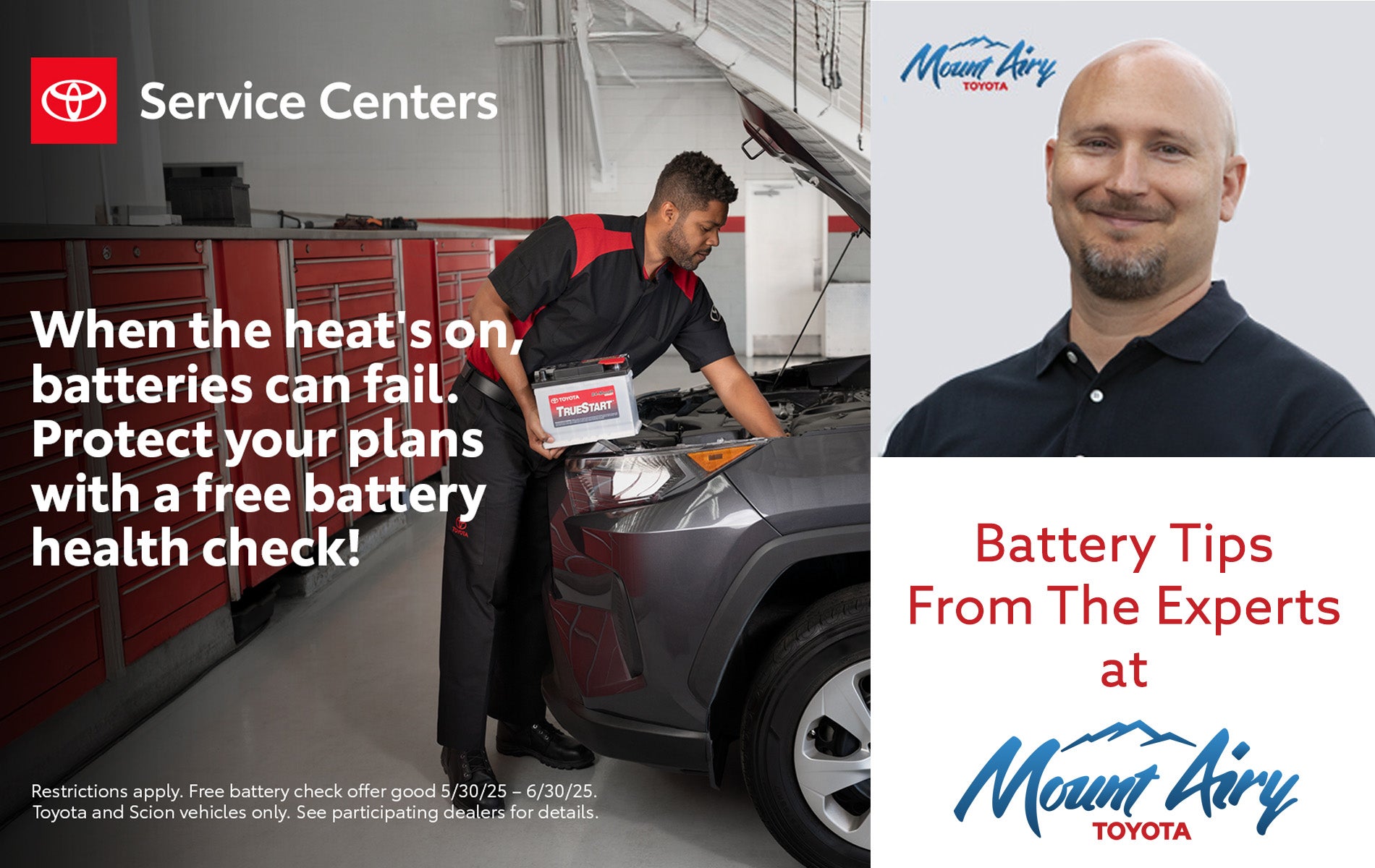
Battery Information from Mount Airy Toyota

July Is the Month for Watermelon and Dead Batteries!

It happens every year about this time.  We get a rush of customers with battery issues because of the rapid rise in temperature.  It catches people off guard in Mount Airy because we're used to the extreme cold weather, but never quite as prepared for the heat of summer.  To help our customers be more prepared we've provided information, special cost savings on batter installation, and tips from our expert mechanics. Dead Battery? Here’s What You Need to Know (Before It Happens to You) We’ve all experienced that sinking feeling when you hop in your car, press the start button or turn the key, and nothing happens. No engine noise, no dashboard lights, no response at all. A dead battery can leave you stranded at the worst possible moment, whether you're heading to work, picking up the kids, or preparing for a road trip. Fortunately, a little knowledge goes a long way. Understanding how your car battery works, recognizing the warning signs, and knowing what to do in an emergency can help you avoid unnecessary stress. In this guide, we’ll break down everything you need to know about your vehicle’s battery so you can stay powered up and prepared for the road ahead. What Exactly Does Your Car Battery Do? Your car’s battery is much more than a simple power source. It plays a vital role in the operation of your vehicle from the moment you turn it on. At its core, the battery provides the jolt of electricity needed to start your engine. Without it, your car simply won’t run. Once the engine is started, the alternator takes over to generate electricity and recharge the battery—but that initial burst is critical. In addition to helping your vehicle start, the battery powers all of your electronic components when the engine is off. These components include: Interior and exterior lights Power windows and locks Infotainment systems and radios Climate control systems USB chargers and other accessories If your battery is weak or dying, any of these systems may become sluggish, glitchy, or stop working altogether. What To Do If Your Battery Dies If you find yourself with a car that won’t start, there’s a good chance your battery is to blame. But don’t panic, there are a couple of reliable methods to get back on the road.  If you're near Mount Airy Toyota, give us a call or schedule service.  We're ready to help! 1. Try a Jump Start Jump-starting is one of the most common and immediate solutions when dealing with a dead battery. You’ll need a pair of jumper cables and another vehicle with a fully charged battery. Step-by-Step Instructions: Position the vehicles: Park the working car close enough to the dead car so the cables can reach, but make sure the vehicles are not touching. Turn off both engines and remove the keys. Connect the cables in the following order: Red clamp to the positive terminal (+) on the dead battery. Red clamp to the positive terminal (+) on the working battery. Black clamp to the negative terminal (–) on the working battery. Black clamp to an unpainted metal surface on the engine block or chassis of the dead car (not the battery). Start the working car and let it run for a few minutes. Try starting the dead vehicle. Safety Tip: If you’re unsure of where the battery terminals are or how to properly connect the cables, consult your owner’s manual or call a professional. Incorrect connections can cause sparks, damage to the battery, or even injury. 2. Use a Portable Battery Jump Starter A more modern solution is the portable battery jump starter, often called a “jump box.” These compact, rechargeable devices are a must-have for emergency preparedness. Unlike jumper cables, a jump starter doesn’t require a second vehicle. Simply connect the clamps to your battery, turn it on, and start your car. Many models feature automatic polarity detection, spark-proof technology, and built-in safety alarms, making them very user-friendly. Some jump starters also double as: USB phone chargers Flashlights Tire inflators or air compressors If you travel frequently, live in a remote area, or simply want peace of mind, a jump starter is a smart investment. Why You Should Check Your Battery Regularly Like any other part of your vehicle, car batteries don’t last forever. On average, a battery will last between 3 to 5 years, depending on usage, weather conditions, and maintenance habits. Extreme heat and cold are especially hard on batteries. In hot weather, internal fluids evaporate faster, leading to corrosion and reduced performance. In freezing temperatures, a battery’s ability to hold a charge can drop significantly. That’s why routine battery checks should be part of your regular vehicle maintenance plan. At Mount Airy Toyota, our technicians can test your battery in just a few minutes during any scheduled service and, if the battery needs replacing, we can have it done in around 15-20 minutes. We check: Voltage – Is your battery fully charged? Cold Cranking Amps (CCA) – Can it deliver the power needed to start the car in cold conditions? Overall health – Is your battery near the end of its useful life? Pro Tip: Identifying a weak battery before it fails can save you the cost and inconvenience of a tow truck or emergency repair. What Happens If You Don’t Replace a Weak Battery? Ignoring the warning signs of a failing battery might seem harmless at first, until your car refuses to start when you need it most. A dying battery can cause a variety of problems beyond just an inconvenient breakdown. Here’s what you risk by waiting too long: Car won’t start – Often at the worst possible moment (late at night, in bad weather, far from home). Strain on the alternator – The alternator may work overtime to compensate, potentially shortening its lifespan. Malfunctioning electronics – Lights, radios, navigation systems, and other electronics may start acting erratically. Roadside assistance costs – Towing, jump-starts, or emergency service calls can get expensive fast. Prevention is always cheaper and easier than an emergency. Signs Your Battery Might Be Failing Car batteries usually don’t die suddenly. In most cases, they provide warning signs days or even weeks in advance. Recognizing these early symptoms can help you take action before you get stranded. Common Signs of Battery Trouble: Slow engine crank – The engine takes longer than usual to turn over. Dim headlights – Especially noticeable when idling or using multiple electronics. Clicking noise – A rapid clicking sound when you turn the key or press the start button. Dashboard warning lights – Battery or check engine lights may flash intermittently. Electrical issues – Infotainment system resets, malfunctioning power windows or locks. Corrosion – White or blue powder around the battery terminals is a sign of acid leakage. Swollen battery case – This can be caused by overcharging or extreme temperatures. If you notice any of these, it’s time to have your battery inspected by a professional. Pro Tips to Make Your Battery Last Longer While you can’t control everything, good maintenance habits can significantly extend your battery’s lifespan. Here are some tips to help you get the most out of your car battery: Drive regularly: Short trips or long periods of inactivity can drain your battery. Try to drive your car at least once a week. Turn off electronics: Before shutting off the engine, turn off lights, radio, and climate control to reduce drain. Clean battery terminals: Dirt and corrosion can prevent proper current flow. Use a wire brush and baking soda solution for cleaning. Tighten loose connections: Make sure the cables and terminals are snug and secure. Avoid extreme temperatures: Park in a garage or shaded area when possible. Extreme heat and cold are tough on battery cells. Disconnect when storing: If you're storing your vehicle for a long time, consider disconnecting the battery or using a trickle charger. Final Thoughts: Stay Charged, Stay Confident Your car’s battery might not be something you think about often—but when it fails, you’ll notice immediately. That’s why staying proactive is so important. A simple battery check today could prevent a major inconvenience tomorrow. Whether you're gearing up for a summer road trip or just commuting to work, take a few minutes to ensure your vehicle is ready to roll. Don't wait for warning signs or bad weather to catch you off guard. Need your battery checked or replaced? Come visit Mount Airy Toyota! Our expert technicians are here to help with quick, reliable battery inspections and replacements. We’ll make sure your Toyota stays powered up, safe, and ready for every mile ahead.

Understanding how to drive in severe weather could mean the difference between a safe and perilous journey.

Navigating Severe Weather Season: The Everyday Driver's Guide to Safety

The world is changing, and so is the weather. Severe weather events are becoming more frequent and intense, posing significant challenges for drivers on the road. Whether it's heavy rain, floods, lightning, hailstorms, or wind events, understanding how to respond can mean the difference between a safe and perilous journey. Mount Airy Toyota has put together this guide to equip you with the most critical information and strategies for staying safe when Mother Nature unleashes her fury on the road. Let’s start with some practical tips before getting into more details: Heavy Rain and Flooding Driving in heavy rain reduces visibility and causes slippery roads, a treacherous combination that increases the risk of accidents. Here's what you should do: Slow down: Reduce your speed to match road conditions. Hydroplaning becomes a risk when driving too fast on wet roads. Increase your following distance. Maintain a safe distance from the vehicle in front of you; stopping distances increase on wet roads. Use headlights. Turn on your headlights, even during the day, to improve your visibility and help others see you. Avoid puddles. Don't drive through standing water or flooded areas; it's hard to judge the depth, and your car can get stuck or swept away. Stay informed. Keep an eye on weather reports and road closures. Consider delaying your trip if conditions worsen. Lightning and Thunderstorms There’s nothing fun about driving in a thunderstorm, but following these tips can help you stay safe: Pull over. If possible, find a safe place to pull over and wait for the storm to pass. Avoid parking under trees or tall structures. Stay in the vehicle. Your car provides some protection from lightning strikes. Keep the windows up and avoid touching metal surfaces inside the vehicle. Turn on your hazards. Push that double-triangle to make your vehicle more visible to other drivers. Listen to weather updates. Tune into local radio or use a weather app to monitor the storm’s progress. Hailstorms Hail can cause significant damage to your vehicle. When you encounter a hailstorm, be sure to: Find shelter. Seek a sturdy shelter, like a gas station or parking garage. Protect your vehicle. If shelter isn't available, cover your car with a blanket or car cover to minimize hail damage. Reduce speed. Slow down to avoid losing control on slippery roads created by hail accumulation. Wait to drive. Listen to weather updates to know when it's safe to resume your journey. Wind Events It’s not talked about as much as some other severe weather conditions, but high winds can make driving challenging, especially for high-profile vehicles like trucks and RVs. Follow these guidelines: Maintain control. Keep both hands on the wheel and maintain a firm grip to counteract gusts of wind. Reduce your speed. Slow down to reduce the impact of wind on your vehicle's stability. Avoid overtaking. Don't attempt to pass large vehicles because wind can make them less predictable. Beware of debris. Remain alert for flying debris on the road, and steer clear of it. Severe weather season demands extra caution from drivers. Staying informed, adjusting your driving habits, and knowing when to seek shelter are crucial for staying safe. The takeaway is that your safety and the safety of others on the road should always be your top priority. Be prepared, stay vigilant, and drive responsibly. Toyota Safety for the Win Nothing is more important than safety when it comes to purchasing a new car. Fortunately, Toyota has a reputation for providing its drivers with cutting-edge safety features. From built-in cameras that help you keep your car in the lane to industry-leading braking systems, the newest Toyota models are at the forefront of car safety. In fact, Toyota provides its Safety Sense package as standard across most of its lineup. Pre-Collision System This is one of the key features of Toyota Safety Sense. It’s an advanced system designed to detect and prevent potential collisions. Equipped with a Pedestrian Detection function, the pre-collision feature uses cameras and radar to identify pedestrians before alerting you if you’re about to hit someone. Blind Spot Monitor The newest Toyota models come with a Blind Spot Monitor that uses radars mounted on the rear bumper to detect other cars in your blind spot. The system issues visual and audio warnings when cars are in your blind spot, making it easier to change lanes safely. Lane Departure Alert The Lane Departure Alert helps you to stay in your lane by warning you if you start to veer out of it. The system sends signals to alert you when it detects you drifting out of your lane, helping you avoid dangerous collisions. Full-Speed Dynamic Radar Cruise Control Toyota’s Full-Speed Dynamic Radar Cruise Control automatically adjusts your speed to maintain a safe distance between you and the car in front of you. It’s particularly useful on highways where speeds can fluctuate suddenly and often. Enhanced Vehicle Stability Control Toyota’s Enhanced Vehicle Stability Control helps you maintain vehicle control in the event of sudden turns or other difficult driving situations. The system can automatically apply the brakes or reduce engine power to help keep your car on the road and out of danger. The latest Toyota models come equipped with a range of advanced safety features that have been designed to keep you and your passengers safe on the road. The Toyota Safety Sense system is one of the most comprehensive and effective safety packages on the market today. If you’re looking for the ultimate in automotive safety, connect with Mount Airy Toyota to view our new and certified pre-owned options! Is Your Vehicle Ready for Severe Weather? Before hitting the road during severe weather, it's crucial to ensure your car or truck is in optimal condition to handle the challenges that Mother Nature may throw your way. Here are 11 essential checks to determine if your vehicle is safe for severe weather: Use the "penny test" or a tread depth gauge to confirm your tires meet the minimum tread depth requirement (typically 2/32”). Adequate tire tread is essential for maintaining traction on wet and slippery roads. While you’re at it, check your vehicle's recommended tire pressure and ensure all the tires are properly inflated. Make sure your brake pads and rotors are in good condition. Spongy or unresponsive brakes can be dangerous, especially in wet conditions. Confirm that all your lights are working correctly; proper lighting is crucial for visibility during heavy rain, fog, or storms. Have your vehicle’s battery tested to ensure it's in good health, especially if it's been a while since your last inspection. Cold weather and heavy electrical use during storms can strain it. Check for any cracks or damage to your windshield. A compromised windshield can shatter more easily during impacts. Also, make sure your wiper blades are in good condition and effectively clear rain or debris from your windshield. Replace them if they streak or leave streaks. Ensure that all the fluid levels (e.g., oil, transmission fluid, coolant, etc.) are within the recommended range. Adequate fluids help your engine run smoothly in extreme weather. Pack an emergency kit in your vehicle that includes a flashlight, first-aid supplies, blankets, non-perishable food, water, a tool kit, and other essentials. If your vehicle is equipped with four-wheel drive (4WD) or all-wheel drive (AWD), check that these systems are functioning correctly. They can be invaluable during slippery or challenging driving conditions. Make sure your traction and stability control systems are operational. They can assist in maintaining control during sudden maneuvers in adverse weather. Keep up with routine maintenance, such as oil changes and inspections, to catch and address potential issues before they become major problems. Take your vehicle for a test drive in a safe area to ensure everything feels and functions as it should. Listen for any unusual noises and pay attention to how your vehicle handles. You’ll be better prepared to navigate severe weather with confidence by performing these checks and staying proactive about your vehicle's maintenance. If you have any doubts about your vehicle's readiness for severe weather, consult a trusted mechanic for a thorough inspection and necessary repairs. How To Break Out of a Submerged Car Imagine the unthinkable: Your car has veered off the road and plunged into deep water. In such a dire situation, it's vital to remain calm, as panic can cloud your judgment and waste precious seconds. The first step to escaping a submerged vehicle is to unbuckle your seatbelt immediately to prepare for your escape. Next, try to open a window as quickly as possible. If your car has electric windows, be aware that they may fail as the vehicle begins to sink, so act swiftly. If the windows won't open, you must resort to using a specialized car window-breaking tool or any hard, pointed object (e.g., a screwdriver, a steel-tipped umbrella, metal prongs of a headrest, etc.) to break the glass. Aim for the corners or edges of the window since that’s where the glass is weakest. Moreover, let a small amount of water into the car before attempting to open the door; doing so will equalize the pressure inside and outside so it’s easier to open the door. Once the pressure is balanced, open the door slowly and exit the vehicle. If you have passengers, help them exit before you. And swim to the surface as quickly as possible. What To Do If Your Car Is Hit by a Tree Encountering a falling tree while driving can be a terrifying experience. In such a situation, it's imperative to stay calm, take a deep breath, and assess the scene. After confirming that neither you nor your passengers are harmed, activate your hazard lights to alert other drivers to the accident. If it's safe to do so, carefully exit your vehicle while being cautious of any fallen branches or debris that may pose additional risks. Once outside, inspect your car for damage. If the tree has fallen onto the vehicle but you can exit safely, it's crucial to stay clear of it since it might have caused structural damage to the car. Promptly contact the authorities to report the incident, especially if the fallen tree is blocking the road and needs to be removed. Try to take pictures of the scene for insurance purposes. Keep in mind that you should seek medical attention even if you don't immediately feel injured. Some injuries may not be immediately apparent but could manifest later. Keeping the Right Emergency Equipment as Parents Ensuring the safety and well-being of your children while on the road is a top priority. Storing specific safety and emergency equipment in your car can help you do just that. Some of the essentials include: A car seat or booster seat that meets your child’s age, height, and weight requirements. A well-stocked first-aid kit with bandages, antiseptic wipes, adhesive tape, scissors, and any necessary medications or medical supplies specific to your child's needs. Non-perishable snacks and bottled water to ensure your child has access to food and hydration in case of unexpected delays or emergencies. Blankets and extra clothing that are suitable for the current weather conditions. A list of important emergency contacts, including pediatricians, family members, and friends who can be reached if needed. A dedicated window breaker and seatbelt cutter tool so you can quickly free your child from the vehicle. A flashlight with extra batteries for providing illumination in the dark or signaling for help. Reflective triangles or flares to alert other drivers to your presence in case of a breakdown or accident. Child comfort items such as blankets, stuffed animals, or toys to keep your child calm and distracted during stressful situations. Entertainment (e.g., books, coloring materials, or electronic devices with headphones, etc.) to occupy your child’s attention. Remember to regularly check the expiration dates on items like car seats and first-aid supplies, and periodically review and update your emergency equipment to ensure it's in good condition and suitable for your child's evolving needs. Being well-prepared can provide peace of mind and keep everyone safe while traveling. Don’t wait to grab the necessary equipment, and contact Mount Airy Toyota to schedule an inspection today!