- Follow Pandemic-Specific Guidelines
- Practice General Vehicle Safety for Kids
- Stay Focused on the Road



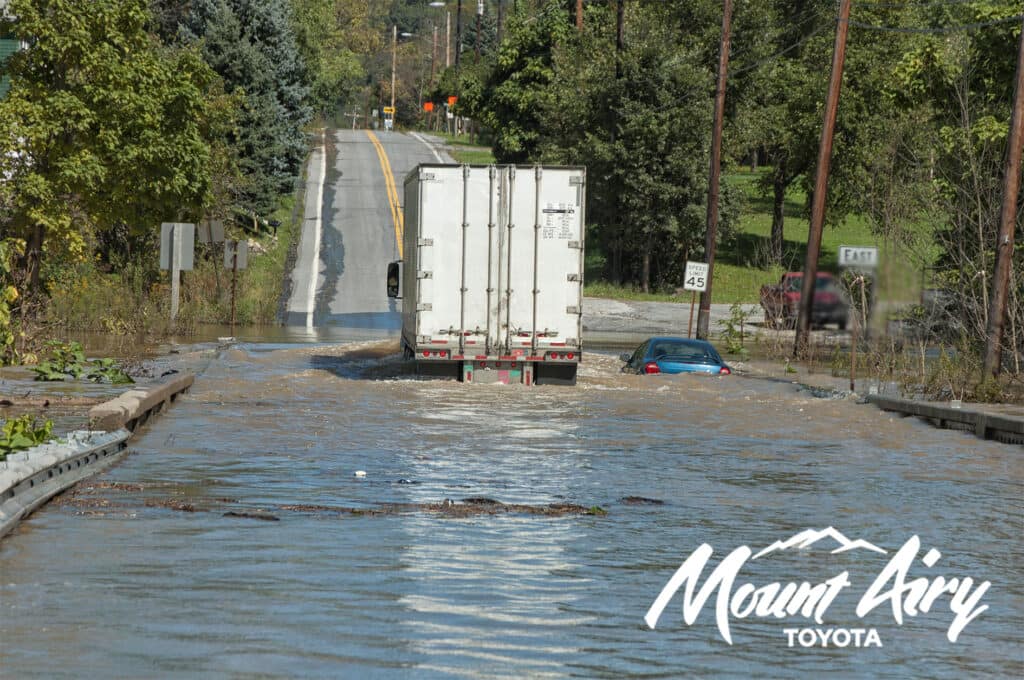
Driving during heavy rains can be treacherous especially if flash floods are predicted. Weather forecasters are already expecting heavier rainfall for this summer. According to Weather.com, El Nino might cause “wetter than average” conditions and may cause more thunderstorms for the Carolinas. According to co.surry.nc.us, the most dangerous place to be during flooding is on the road. At Mount Airy Toyota, we want drivers to be prepared and know how to drive in a flood. If you are driving when it is or has recently been raining heavily, you could have to deal with flooded roads. Here are some tips for driving in a flood: Prepare in Advance. The old adage from the Boys Scouts of “Always Be Prepared,” is still great advice. Pack an emergency kit that includes maps, drinking water, radio with batteries, flares, blanket, and flashlight. Also, be aware of roads and areas that are more likely to flood and avoid those routes during heavy rains. Slow Down. When you are approaching standing water, slow down. If there are other cars, let each car pass through the water one at a time. Only drive through standing water if it is less than six inches deep Estimate Depth. Before driving through standing or pooling water, estimate the depth of the water by looking at other indicators on the road. If it appears to be more than 6 inches, turn around. A car can stall in as little as six inches. A foot of water can make a car or even an SUV float and 2 feet of water can make the car float away. Respect Closed Roads. If you see a barricade, do not try to drive through it or around it. The barricade means the passage is unsafe and you should turn around. Get to Higher Ground. If your car stalls while driving through water, get out of the car and get to higher ground. Be sure to call 9-1-1 for help. If you can’t get to higher ground without wading through the flood water, get on top of your car to wait for emergency help. Remember, your car is not a boat! Driving through floodwaters can be a dangerous gamble. Be aware of alternate routes, so that you can always turn around and go a different way. For more information on preparing for a flood, visit: https://ncdisaster.ces.ncsu.edu/disaster-factsheets/preparedness/ Mount Airy Toyota is located just south of the Virginia state line at 508 N Andy Griffith Pkwy, Mount Airy, NC. For more information call 336-786-2118 or visit their website at MountAiryToyota.com.
The safety features that come with a car have become increasingly important when consumers are considering what to buy next. Some reports say well over half of car buyers want features that assist with driving, blind spot recognition, backup cameras, and other features that help guarantee well-being. Mount Airy Toyota offers top-of-the-line Toyota products that lead the market in safety measures, made possible with state-of-the-art technology. This is because all Toyota products come with Safety Sense, a patented technology unique to the brand and designed to keep your family safe. For those with a family, keeping your children, pets, friends, and others safe is likely a driving force behind many of your decisions. A safe car is the first piece, but there are other measures you can take and invest in that can better protect your loved ones. Car Seat Installation Crashes are a leading cause of injury for children from 1 to 13. Properly installing and utilizing a car seat for your children is a key way to protecting your child from injury in the event of a crash. A car seat alone isn’t enough to increase safety, it’s vital that you properly install the seat to minimize risk. Tips For Installation While it may seem as simple as placing it in your backseat and clicking the buckle, you’d be surprised at what comes with your car seat. Here are some key ways to get the most out of your car or booster seat for your young ones. Read Up Car seats don’t include an instruction manual for the sake of light reading, they include it because it’s necessary to understand how it can help. Car seats need to be secure, using anchors or the seatbelt as a way to include the piece in its place. Making sure it’s not moving side to side is a key way to tell if the installation is going correctly. Know What You’ve Bought Car seats are varied, with differences between forward-facing and backward-facing seats, convertible seats, and booster seats, all with a wide arrangement of materials. Being aware of what you have and how to best aid its effectiveness is important. Make Sure the Seat Works For Your Child A car seat that isn’t designed for your child can prove more dangerous than you may expect. Seats not made to hold a child of a specific size, that secure your child properly, or that are compatible with your vehicle can all provide a false sense of safety when driving. Knowing when to move your child to a booster, the number of straps necessary, or when to take them out of a safety seat altogether is another vital part of child safety. A good rule of thumb is that the harness needs to be snug and secure, and children should age out of car seats into boosters somewhere around age 8. Innovation In Car Seats Car seats are constantly evolving and tackling issues that are prevalent risks for children. As the weather warms up headlines may appear discussing the tragedy of a child being left in a hot car. This isn’t just a possibility, leaving a child in the car is a reality for some. Horribly, 37 children a year die from being left in a hot car. Hectic days and errands can leave a parent slipping from the car without checking the back seat and any amount of time spent in the car alone is likely too much. For instance, children’s bodies can heat up around 3 to 5 times as quickly as an adult's. This means that even on cold days, heatstroke is something to worry about. Innovations in car seats have created alerts and sensors that can let you know if your children are still in the car. And while the measure may seem unnecessary, sometimes being safe is better than being sorry. A Nod To Pets While we’re on the topic of heat-related injuries, it’s important to touch on our furry friends. Hundreds of dogs a year die from being left in a hot car. While some folks think that a cracked window or a cooler day will make the car a safe place for your pet, it’s more dangerous than you may think. On a 70-degree day, a car is capable of hitting temperatures of up to 100 within 20 minutes, temperatures well over the amount safe for every pet possible. The only real way to protect your pet is to leave the car running while occupied by another adult, allowing the AC to work its magic and keep your beloved pet safe and cool. If your pet is a frequent ride-along, it’s also necessary to teach them good commands related to exiting a vehicle. Parking lots can be dangerous for pets, making sure they respect wait commands and come commands can make it easier when you both hit the road. Toyota As A Safety Leader For those who have read most of this article, you’re likely truly dedicated to safety. While the tips listed earlier are a great way to improve safety, they’re only as useful as the vehicle they’re in. Vehicles with the highest safety ratings are rated that way because of diligent testing and numerous metrics that validate their safety measures. Toyotas consistently rank as some of the safest cars on the market. Scoring as leaders in surveys from multiple national leaders. Safety sense is a great example of a brand’s commitment to safety as a core tenant of the product they provide. Safety sense is included in every new model of Toyota and boasts a few key ways to make driving as safe as possible. Pre-Collision Detection: Camera and radar systems alert the driver of both cars and pedestrians, reducing the likelihood of countless collision possibilities. Dynamic Radar Cruise Control: Cruise control that adapts to the car in front of you, maintaining a safe speed and distance away from others, preventing rear-ends, and making long drives easier. Lane Departure Alert: Cameras help keep you in your lane and alert you when you’ve crossed too far, keeping your attention and your vehicle on the straight and narrow. Automatic High Beams: Using cameras to detect the lights of vehicles around you, your Toyota can identify when to turn on and off your high beams, maximizing your vision during dark drives. Lane Tracing Assist: Lane tracing assist can help you stay in the line by using tracing of your surroundings, helping you stay centered and away from danger. Road Sign Assist: Your Toyota can detect the signs around you, displaying them for ease of your travel. This can range from speed limits, do-not-enters, yields, etc. Whatever the case, you’ll know what the signage is saying. With all of these features being included in newer Toyota models, you’ll have peace of mind in the safety of your new car. Buying For Safety If you’re planning on buying a safe vehicle, check out Mount Airy Toyota today. A leading dealership in providing some of the safest cars on the market. As mentioned earlier, all new models come with the included safety sense features. And if you’re still unsure about making the jump into the Toyota brand, just examine some of the few customer testimonials after buying from Mount Airy Toyota. While at the end of the day, there’s more to safety than just the car. Car seats, preventative measures, and attention to detail help create and build a robust safety experience. Still, a safe car is the most important foundation in the building block to safety. If keeping safety drives your decision in vehicle buying, consider joining the Toyota family today.
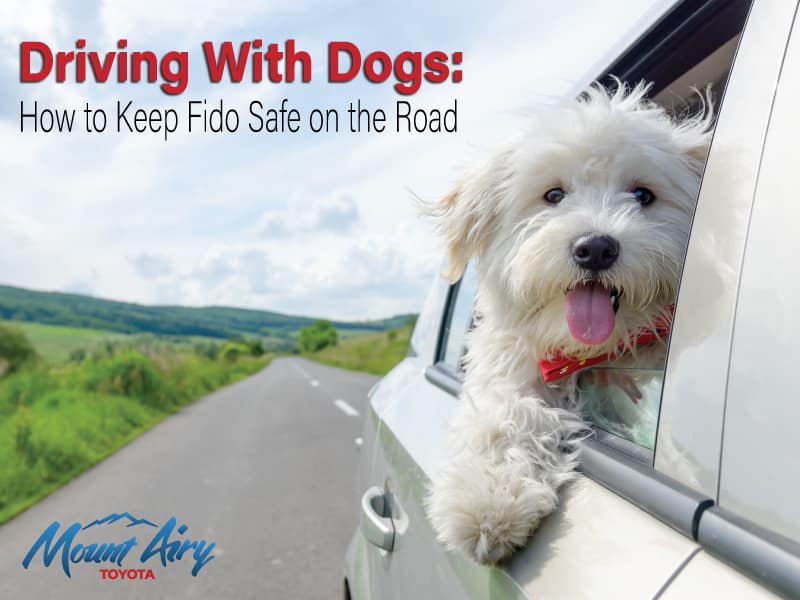
Many dogs can’t wait to go for a joyride, while others suffer from vehicle anxiety. But no matter what side of the spectrum your pup falls on, you want them to be as safe and comfortable as possible anytime they are in the car. There are many potential dangers to consider. Your dog could jump out of an open window from excitement or anxiety, get injured from an airbag in the front seat, or even become a projectile during a collision, to name a few. But your furry family member can also distract you from safe driving, whether it’s by incessant barking, leaping into your lap, or bustling around the cabin and blocking your sight. By taking some precautions and making a purchase or two, you can provide an extra level of protection for Fido. Below, Mount Airy Toyota discusses how you can keep your dog safe and secure during car trips. Safety Precautions First of all, dogs should always ride in the backseat of a moving vehicle. Sure, it might be cute when your pup plops down in your lap (or even the passenger’s lap), but this can prove dangerous for you and your dog. It not only can cause distractions for the driver, but if your dog gets excited or anxious, they could even hit the steering wheel unintentionally. And whether or not your dog is in a carrier, they could be crushed if an airbag in the front seat is deployed. Another common hazard for dogs in vehicles is when the owner allows them to hang their head out the window. While this can be exhilarating for canines, it can also result in sand, dirt, and other debris flying into their eyes and ears. Plus, a window that is open too far can tempt dogs to jump out of the vehicle. Furthermore, your dog will be the safest during car trips if they are contained via a crate, carrier, seat belt, or barrier. Crates and Carriers Perhaps the most practical way to ensure your dog is secure in your vehicle is to invest in a crate or carrier. There are many quality products by PetSafe, Petmate, Diggs, Sleepypod, Sherpa, and other manufacturers that will do the trick. Make sure your dog’s crate or carrier is the right size; you want your pup not to feel too restricted, but you also don’t want them to be able to stand up and turn around too easily. Plus, you’ll need to be able to get the crate or carrier in and out of your car without issue. And choose a product that is made of quality materials and provides adequate ventilation. Seat Belts Yes, you read that correctly! These days, there are seat belts designed specifically for our four-legged companions. Just like with the human versions, these seat belts can go a long way in restraining your pup and protecting them from harm. Consider your dog’s size and breed, and research the market for the best product you can find. Vastar, Kurgo, Pawaboo, Bwogue, and Mighty Paw manufacture some of the best-reviewed safety belts, harnesses, and tethers for canines. Barriers Another option for securing Fido while on the road is to install a barrier between the front and rear seats. There are a lot of different barrier styles on the market—the perfect option for your dog will depend on your dog’s size and tenacity, as well as what kind of vehicle you have. You can find metal or mesh barriers that stretch across the front seats. You can find barriers that fit between the two front seats, or hammocks that encompass the entire backseat. There are even barriers that are tailored to fit either sedans, SUVs, or trucks. Look to brands like PetSafe, Starroad-Tim, Dykeson, Bushwacker, and Frisco for quality products. Ramps Let’s not forget about getting your pup in and out of your car! Some dogs can benefit from a ramp, especially those that are older, have joint problems, or deal with other limitations. Similar to barriers, there are ramps specifically designed for sedans, SUVs, or trucks. But there are also products, such as telescoping and collapsible ramps, that can work with a wide range of vehicles. Petstep, Pet Gear, Titan, and PetSafe manufacture some of the best dog ramps available. Conclusion Your furry friend means the world to you, which is why it’s critical to ensure their safety on the road. Consider the precautions and products above as you look to keep your dog secure during car trips. Visit us at Mount Airy Toyota to find the perfect vehicle for you and your furry friend. You’ll have more peace of mind knowing you are minimizing distractions and other dangers!

TOYOTA CERTIFIED SERVICE & PARTS EXPERTS
Your vehicle deserves expert care from the people who know it better than anyone else. We employ factory trained technicians who use state-of-the-art technology and equipment to help you keep your vehicle running like new.
Schedule Now