Blog / Mount Airy Toyota Dealer

The Ultimate End-of-Year Car Buying Guide: How to Get the Best Christmas Deal at Mount Airy Toyota

The Ultimate End-of-Year Car Buying Guide
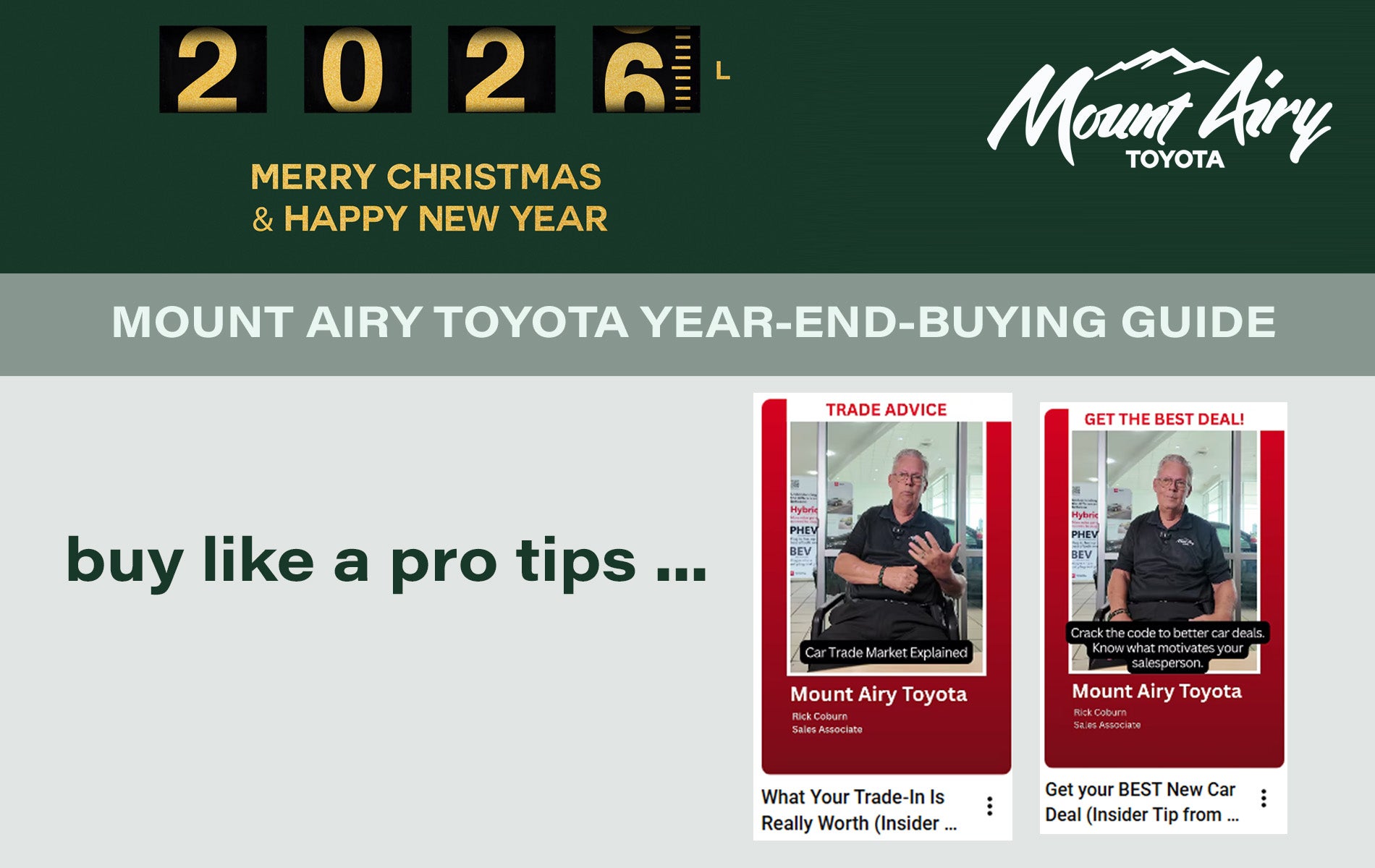
If you’re thinking about buying a car during the Christmas season or before the end of the year, you’re already on the right track. Year-end is one of the best times to buy—but only if you understand how dealerships actually think, buy, sell, and value vehicles.
To help local buyers make smart, confident decisions, Mount Airy Toyota salesperson Rick Coburn recently shared insider tips straight from the sales floor. His advice cuts through common myths and focuses on what truly gets buyers the best possible deal—both on the vehicle they’re purchasing and the one they’re trading in. This end-of-year buying guide combines Rick’s insights into one practical roadmap, so you can walk into Mount Airy Toyota prepared, informed, and positioned to win.

Why End-of-Year Is a Smart Time to Buy a Car

December isn’t just about holiday sales—it’s also a critical time for dealerships. Manufacturers have annual sales targets, dealerships are closing out the year, and new inventory is already on the horizon. That combination creates opportunity—but only for buyers who are serious and ready. Rick Coburn emphasizes one important truth:
Salespeople are most motivated to give their best deals to buyers who are truly ready and able to purchase.

For more “Insider Tips” Watch Rick's Video on How To Get Your Best Deal

Insider Tips on Year End Toyota Buying That means preparation matters just as much as timing. Step One: Be a “Ready Buyer” Before You Ever Walk In One of the biggest mistakes buyers make is showing up to a dealership “just to look” during peak buying season. While browsing is fine, the best deals go to customers who come in prepared. According to Rick, a ready buyer has three things in place:
  1. Financing or Funding
Whether you’re paying cash, using a credit union, or financing through the dealership, know your numbers ahead of time. Bring documentation or confirmation so there are no delays.
  1. Insurance Information
Have your insurance agent’s contact info or proof of insurance ready. This keeps the deal moving quickly and shows you’re serious.
  1. Research Done
Know the model, trim level, and general market value of the vehicle you want. You don’t need to be an expert—but walking in informed builds confidence and credibility. Why this matters: Sales professionals prioritize customers who are prepared because those deals are more likely to close smoothly. When a salesperson knows you’re ready, they’re far more motivated to work aggressively on your behalf.

How Dealers Actually Decide Who Gets the Best Deal

Here’s something many buyers don’t realize: dealerships don’t just sell cars—they also manage time, inventory, and risk. When a salesperson meets a buyer who is organized, decisive, and realistic, that buyer often gets access to better pricing flexibility than someone who is uncertain or unprepared. At Mount Airy Toyota, Rick explains that readiness signals commitment—and commitment gets rewarded.

Understanding Trade-Ins: What Dealers Really Want

Your trade-in can make or break your overall deal, especially at year-end. Rick Coburn clears up several misconceptions about how dealers value trade-ins.

For more “Insider Tips” Watch Rick's Video on How To Get The Most Money for Your Trade

How To Get A Good Trade In Deal - Insider Tips

Dealers Prefer Local Trade-Ins Over Auctions

This surprises a lot of people, but it’s true:

Dealers would much rather buy cars from their local community than from auction.

Why?
  • Local vehicles often have known histories
  • They’re easier to inspect accurately
  • There’s less transport cost and risk
  • Dealers can resell them faster and more confidently
That means if you’re trading in a vehicle locally at Mount Airy Toyota, you already have an advantage.

Prime Condition = Prime Money

Another key takeaway from Rick’s advice is simple but powerful:

If your car is in prime condition, dealers will pay prime money.

Before you trade in your vehicle, take time to:
  • Clean it thoroughly (inside and out)
  • Address minor cosmetic issues if affordable
  • Bring maintenance records if you have them
  • Be honest about condition and history
You don’t need perfection—but a well-maintained vehicle shows pride of ownership and reduces uncertainty for the dealership. Own Your Vehicle? Bring These Documents If you own your vehicle outright, Rick strongly recommends bringing:
  • The vehicle title
  • Current registration
Having these documents on hand speeds up the appraisal and buying process dramatically. During busy Christmas and year-end periods, efficiency matters—and smoother transactions often lead to smoother negotiations.

Why Kelly Blue Book Isn’t the Final Word

One of Rick’s most important warnings for buyers is this: Kelly Blue Book is not an appraisal tool. While KBB can give a general idea of value, it doesn’t account for:
  • Local market demand
  • Regional inventory shortages
  • Actual dealer reconditioning costs
  • What cars are selling for right now
At Mount Airy Toyota, trade values are based on real-world market conditions, not generic national averages. Trusting only an online estimator can lead to unrealistic expectations and missed opportunities. How to Maximize Your Trade Value at Year-End To get the best possible trade-in deal during Christmas or year-end sales:
  1. Trade locally instead of selling privately or relying on auctions
  2. Present your car in the best condition possible
  3. Bring title and registration if owned
  4. Be open to professional appraisal instead of online estimates
  5. Combine your trade with a ready purchase plan
When these pieces align, dealers are far more willing to be competitive.

Why Mount Airy Toyota Is Different

Mount Airy Toyota isn’t just focused on moving cars—it’s invested in serving the local community. Buying and selling vehicles locally helps strengthen relationships, build trust, and create better long-term outcomes for customers. Rick Coburn’s advice reflects a dealership culture that values transparency, preparation, and mutual respect. When buyers understand how the process works, everyone wins.

Christmas & Year-End Buying Checklist

Before visiting Mount Airy Toyota, make sure you have:
  • ✔ Financing or payment plan ready
  • ✔ Insurance information available
  • ✔ Vehicle research completed
  • ✔ Trade-in cleaned and prepared
  • ✔ Title and registration (if applicable)
  • ✔ Realistic expectations based on market conditions
This checklist alone can put you ahead of most buyers walking through the door in December. Final Thoughts: Preparation Is the Real Secret to a Great Deal End-of-year car buying isn’t about tricks, pressure, or gimmicks. It’s about preparation, timing, and understanding how dealerships operate. Rick Coburn’s insider advice makes one thing clear: The buyers who win are the ones who come in ready. If you’re shopping for a Christmas gift, planning a year-end purchase, or looking to maximize your trade-in value, Mount Airy Toyota is ready to help—especially when you’re ready too. For more insider tips, expert guidance, and current inventory, visit https://www.mountairytoyota.com and experience what informed car buying should feel like.

Posted in:

Related Posts

Dashcams are a great way to capture evidence should you be in an accident.

The Dish on Dashcams

The Dish on Dashcams YouTube dashcam posts are everywhere now! Activities caught on dashcams include meteors, animals crossing, winding mountain roads and accidents. Beyond unbearably cute bear families, having dashcam footage can protect you from potential liability for accidents, particularly when the other driver is at fault, uninsured or drives off in a hurry. At Mount Airy Toyota, we want you to travel safely, and we know that anything can happen while you’re driving and it’s good to be prepared. Dashcams are a great way to capture evidence should you be in an accident. Dashcams (dash cameras) have become more popular than ever in recent years. In 2023, it was estimated that 10-15% of U.S. drivers had dash cams (Yahoo! finance). In early 2024, Yahoo Finance also reported that dashcams sales had a revenue of $4 billion in 2022 and it was estimated that this will increase to $12 billion by 2033. The article further went on to state, “The growth of the market is attributed to the amplifying rate of road accidents around the world. According to the World Health Organization, more than 1.19 million individuals die in road crashes and about 20 to 50 million people experience injuries that lead to disability. An increase in the number of cars and other vehicle purchases across the globe is projected to hike the demand for the dashboard camera market.” The desire to have a dashcam in vehicles varies by driver, but the main reason is to protect yourself from liability in a traffic accident, particularly from incidents such as a staged accident, false insurance claims or hit-and-runs. Dashcams can also be useful to monitor your vehicle when you are not in it or to record disputes or incidents. While insurance companies typically don’t offer discounts if you have one, it can help you with claim resolution by proving you were not at fault. Many commercial vehicles rely on dash cam videos to document road incidents. Law enforcement and emergency services use dashcam footage for a variety of purposes. There are many options to choose from on the market and here are some considerations: Do you need a dashcam with a screen? What about an interior camera? Would you like the dashcam to monitor vehicle speed and have GPS locating? How well does it work at night? Is it legal in your area and what does your car insurer think about them? It is legal in North Carolina to have a dashcam (be sure it’s not obstructing your view) and you should ask your insurance company if they offer any discounts for having one. Best Dashcams In 2024, Car and Driver Magazine compiled a list of their dashcam picks that focused on options, price and overall quality. For overall use, they chose the Vantrue N4. “The Vantrue N4 is an exceptional value, offering a dashcam, cabin-facing camera, and rearview camera. It attaches to the windshield with a suction mount, and its cameras can be adjusted for optimal coverage. The front dashcam records at 2560 by 2160 pixels but drops to 2560 by 1440 when all three cameras are used. The cabin and rear cameras have 1920 by 1080 resolution. The cameras have wide fields of view with minimal distortion, and the cabin camera includes infrared lighting for low-light conditions.” Car and Driver adds, “The N4's integrated screen features a picture-in-picture mode that displays all three cameras' feeds simultaneously, along with settings and recording modes. It offers low-frame-rate and low-bit-rate recording modes, but we found these can drain the car battery. The device also includes collision and motion detection, automatically saving relevant footage. A 128 GB micro SD card holds about 6.7 hours of footage.” Car and Driver noted this pick for best overall dashcam was because of the reasonable price point, quality of image in various lighting conditions and features.  List price $289.99 Amazon In the premium range, Car and Driver went with the Cobra SC 400D. “As far as pure visual performance, the Cobra SC 400D was the best dashcam we tested thanks to its 4K resolution. We agreed that its video footage genuinely looked the best too. We found the touchscreen to be easy to operate and responsive, and the Cobra uses its proprietary DriveSmarter app to provide police alerts and other driver reports. If we had one minor grumble, it would be that the mount only swivels forward and backward, not side to side. However, the wide angle of the lens practically eliminates the need to do so. The Cobra secures to the windshield via a large sticky pad for the mount and a very strong magnet for the camera itself.” Shares Car and Driver. List price $399.95 Amazon For a dashcam that won’t break your budget, Car and Driver picked the Car and Driver 1080P HD Dashcam. Shares Car and Driver, “We appreciate that we'll probably get some flak for including this model in this test when there are so many dash cams out there. But we were determined to evaluate our (licensed) namesake unit on its own merits—and darned if it didn't step up as the best budget option we tested.” “The Car and Driver 1080P Dashcam has front and rear cameras and a touchscreen interface for easy driver control. The unit has standard features like parking mode, collision detection, and a G sensor to keep one eye open after you've left the vehicle. “ “One thing we really liked about this model is its dual tripod option that allows different mounting iterations from the top or bottom of the camera. This feature made it easy to adjust the dash cam according to the angle of the windshield. This budget-friendly dual camera covers all the essential features and has adjustable orientations. It's an excellent choice for dashcam beginners.” List price $49.99 Walmart Another entry-level dashcam is the Nexar Beam. “ With a reasonable price tag, it boasts the standard features you'd expect to find, like parking guardian and G-sensor collision detection, and advanced features like GPS connectivity for data overlay. Another unique option is that the app can generate an insurance incident report aligning with footage and handy GPS coordinates.” List $129.99 Amazon For a compact model, Car and Driver’s petite pick is the Garmin Mini 2. “The Garmin Mini 2 is an excellent choice for someone looking to keep their dashcam discreet and out of the way. It's compact enough to tuck behind your rearview mirror if so desired. The app functionality is quite nice as well, and the 1080p matched up well against the competition despite its diminutive size.” Car and Driver continues, “While it's a nice set-and-forget dashcam, we found that it's a bit tricky to determine whether everything is set up correctly without checking it via the app. The lack of a screen makes it difficult to see if the camera is lined up properly. Additionally, there are a few different lights that blink on the cam, and it's confusing at first to know what they all mean. But once you get that all set, the Garmin Mini 2 is a solid choice for a tiny dash cam.” List price $129.99 Amazon. If you want to dash in a flash, The MAXcam 360c primarily serves as a radar detector with a secondary dash-cam function and is Car and Driver’s pick for a combination device.  It isn't ideal for those seeking only a dashcam. But for anyone wanting a radar detector with a competent camera, it’s a solid choice. “The dashcam boasts a 2560 by 1440 resolution with a Sony Starvis image sensor that captures 30 frames per second and offers a 143-degree field of view. The video quality is contrasty (sharp), with noticeable noise reduction and compression that significantly impacts image quality. We found the MAXcam 360c performed well in low-light conditions, although finer details became blurry. It clearly captured license plates up to ten feet away under ideal conditions, but beyond that, its clarity is a miss, even in the most ideal conditions.” Car and Driver adds, “This product isn't suitable for everyone due to its high cost and the complexity of using a radar scanner. But if you're looking for a radar detector as well as a dashcam and want to kill both birds with one stone, this Escort fits the bill.”  List $849.95 Amazon. What about my Toyota? Some recent Toyota models came with Toyota Integrated Dashcam. This was available on the following vehicles: 2022-2023 Toyota Camry 2022-2023 Toyota Highlander 2023 Toyota Prius 2023 Toyota RAV4 2023 Toyota RAV4 Prime 2023 Toyota Sequoia Hybrid 2021-2023 Toyota Sienna Hybrid 2022- 2023 Toyota Tacoma 2022-2023 Toyota Tundra 2021-2023 Toyota Venza Toyota Genuine Dashcam was available with the 2019-2023 Toyota 4Runner. Both of these systems include interesting event reporting, parking surveillance and more.  If you need assistance using your Toyota dash camera product, reach out to the team at Mount Airy Toyota.

Are hybrid batteries safe?

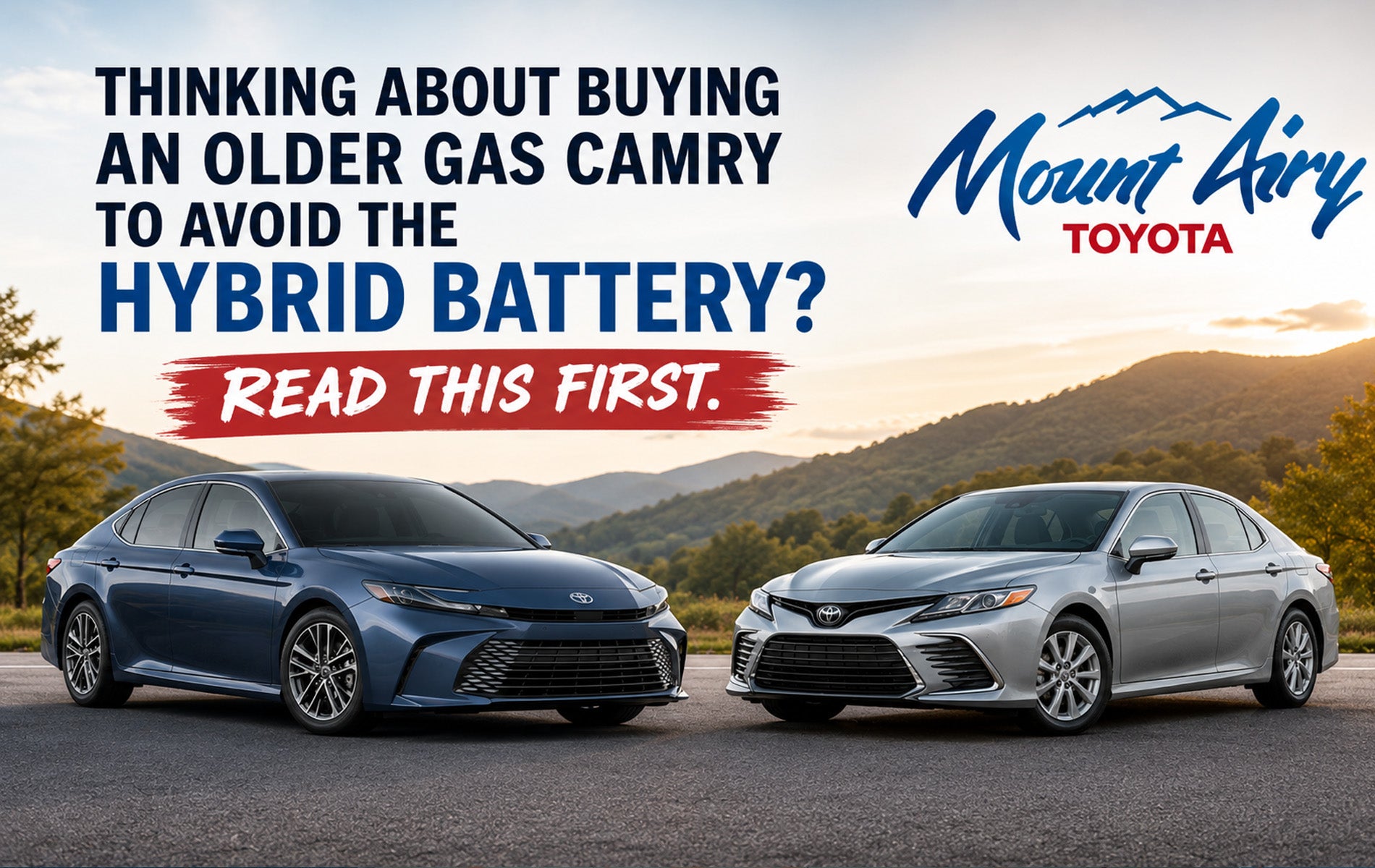
Thinking About Buying an Older Gas Camry to Avoid the Hybrid Battery? Read This First.

"Should You Buy a New Camry Hybrid or an Older Gas Camry? The Facts May Surprise You." For many Toyota shoppers, this is one of the biggest decisions they'll make. The good news is that today's Toyota hybrid technology has been on the road for more than two decades and has earned one of the strongest reliability records in the automotive industry. Still, that doesn't automatically make a new Camry Hybrid the right choice for every driver. For many shoppers, the decision isn't really about fuel economy. It's about the battery. Questions like these come up every day: How long does the hybrid battery last? What if it fails after the warranty expires? Will I be able to find someone to repair it? Are hybrid batteries safe? Should I avoid a hybrid altogether and buy an older gas-powered Camry instead? They're fair questions. The good news is that many of the stories you've heard probably refer to fully electric vehicles (EVs) rather than Toyota's proven hybrid technology. Before comparing ownership costs, let's clear up one of the biggest misconceptions. Hybrid vs. Electric Vehicle: They're Not the Same Thing Many people use the words hybrid and electric vehicle interchangeably.  They shouldn't.  Although both use batteries, they work very differently. A battery-electric vehicle (EV) relies entirely on a large battery pack that must be plugged into a charger. When the battery is depleted, you recharge before driving again. A Toyota Camry Hybrid never needs to be plugged in. Instead, it combines a gasoline engine with a much smaller high-voltage battery and electric motor. The battery automatically recharges while you drive using the gasoline engine and regenerative braking system. From the driver's seat, ownership feels exactly like a traditional gasoline vehicle.  You simply stop at a gas station, fill the tank, and drive away.Because of this, many concerns commonly associated with electric vehicles simply don't apply to the Camry Hybrid. For example: Concern EV Camry Hybrid Plug-in charging required ✔ ✘ Range anxiety ✔ ✘ Public charging stations ✔ ✘ Gasoline engine backup ✘ ✔ Regenerative braking ✔ ✔ Once shoppers understand this difference, many begin looking at hybrids very differently. Which Camry Costs Less to Drive? Let's compare a realistic ownership scenario. Assume a typical Mount Airy commuter drives: 15 miles each weekday (approximately 3,900 commuting miles annually) Plus shopping Weekend travel Family activities Vacations Total annual driving: 12,000 miles Using the average North Carolina gasoline price over the past several months (approximately $3.53 per gallon) and EPA combined fuel economy estimates: New Toyota Camry Hybrid vs 2022 Toyota Camry Gas Annual Miles 12,000 12,000 Combined MPG 51 MPG 32 MPG Fuel Used 235 gallons 375 gallons Annual Fuel Cost $830 $1,324 Estimated Annual Fuel Savings:  ~ $494 each year Five-year Savings:  $2,470 Unlike some hybrid comparisons where savings are relatively modest, the Camry Hybrid delivers meaningful fuel savings because of its excellent fuel economy. Fuel savings alone probably won't pay for the vehicle, but they're certainly enough to become part of the buying decision. Myth or Fact? "The Hybrid Battery Won't Last." The Concern Many shoppers picture the battery wearing out after 75,000 or 100,000 miles. The Facts Toyota has been building hybrid vehicles for more than 25 years.  Many original Prius and Camry Hybrid batteries remain on the road well beyond 200,000 miles, and some exceed 300,000 miles. Toyota carefully manages battery charging levels to reduce wear and maximize longevity.  Unlike your smartphone, the battery isn't constantly charged to 100% and completely discharged. Instead, it operates within a carefully controlled range designed to extend its useful life. Bottom Line - Mostly Myth Battery failures can occur, but they are far less common than many shoppers expect. "Replacing the Battery Will Cost a Fortune." The Concern This is probably the number one reason buyers avoid hybrids. The Facts Yes.  A hybrid battery replacement outside warranty can be expensive.  Depending on the model and repair option selected, replacement costs can range from a few thousand dollars to several thousand dollars. However...   Many owners never replace the battery while they own the vehicle.  In addition, today's buyers have more choices than they did fifteen years ago. Options now include: New Toyota batteries Factory remanufactured batteries Professionally rebuilt battery packs Independent hybrid repair specialists Bottom Line Partly Fact Replacement is expensive.  Replacement is also much less common than most shoppers believe. "Hybrid Vehicles Are Dangerous." The Concern News stories involving lithium batteries sometimes make shoppers nervous. The Facts Toyota hybrid systems include multiple safety features, including automatic high-voltage disconnects during many collision events and extensive crash testing.  It's also important to remember that a Camry Hybrid's battery pack is much smaller than the battery found in a fully electric vehicle.  Hybrid battery fires receive significant media attention because they're unusual—not because they're common. Bottom Line Mostly Myth Toyota hybrids have earned an excellent safety record. "North Carolina Summers Will Ruin the Battery." The Concern Heat damages batteries.  North Carolina gets hot.  Does that shorten battery life? The Facts Extreme temperatures can temporarily reduce battery efficiency.  However, Toyota designed its hybrid battery system with thermal management strategies intended to help protect long-term durability.  Like any vehicle, routine maintenance and keeping cooling systems functioning properly contribute to long battery life. Bottom Line Mostly Myth Hot weather may affect efficiency slightly on extremely hot days, but it typically does not significantly shorten battery life by itself. "Nobody Around Here Can Repair a Hybrid." Twenty years ago, this concern carried more weight.  Today, it's much less of an issue.  Toyota dealerships like Mount Airy Toyota service hybrid vehicles every day.  In addition, many independent repair facilities employ ASE-certified technicians trained to diagnose and repair hybrid systems.  Replacement parts are more widely available than ever before. For most owners, finding qualified service is no longer difficult. Bottom Line Myth "The Gas Camry Costs Less to Maintain." Many buyers assume hybrids are more expensive to maintain. In reality, both vehicles require: Oil changes Tire rotations Cabin air filters Coolant service Inspections However, the hybrid also benefits from regenerative braking, which often reduces brake wear.  Because the electric motor assists during acceleration, some drivetrain components experience less stress during everyday driving.  Routine maintenance costs are often surprisingly similar between the two vehicles. Bottom Line Mostly Myth "Hybrid Batteries Are Bad for the Environment." This is a more complicated discussion.  Hybrid batteries require materials such as lithium and nickel, and questions about mining and ethical sourcing are valid. At the same time, hybrids consume substantially less gasoline over their lifetime, produce fewer tailpipe emissions, and Toyota has invested heavily in battery recycling and responsible end-of-life management. Like nearly every modern technology, there are environmental trade-offs.  The question isn't whether hybrid batteries have an environmental impact—they do.  The better question is whether the lifetime reduction in fuel consumption and emissions outweighs those impacts.  Reasonable people can disagree, but it's important to understand the complete picture rather than focusing on only one side of the equation. Which Camry Is Right for You? Choose the used gas-powered Camry if: You want the lowest purchase price. You drive relatively few miles each year. You're comfortable buying a vehicle that's several years old. You prefer traditional automotive technology. Choose the new Camry Hybrid if: You commute regularly. You plan to keep the vehicle for many years. You want outstanding fuel economy. You value the latest Toyota Safety Sense technology. You appreciate lower operating costs over time. You want the peace of mind of a full factory warranty. The Bottom Line If you're considering an older gas-powered Camry simply because you're worried about hybrid batteries, today's Toyota hybrid technology deserves a closer look. Many of the concerns shoppers have—battery longevity, maintenance costs, safety, and repairability—were more understandable twenty years ago than they are today. Toyota has spent decades refining its hybrid system, and millions of owners have demonstrated that these vehicles can deliver outstanding reliability and low operating costs. That doesn't mean a new Camry Hybrid is automatically the right choice for everyone. An older gas-powered Camry remains one of the most dependable sedans on the road and may be the better fit for buyers focused on upfront affordability. The smartest decision isn't based on fear of a battery—it's based on understanding the facts, comparing the long-term costs, and choosing the Camry that best fits your driving habits, budget, and plans for the years ahead.

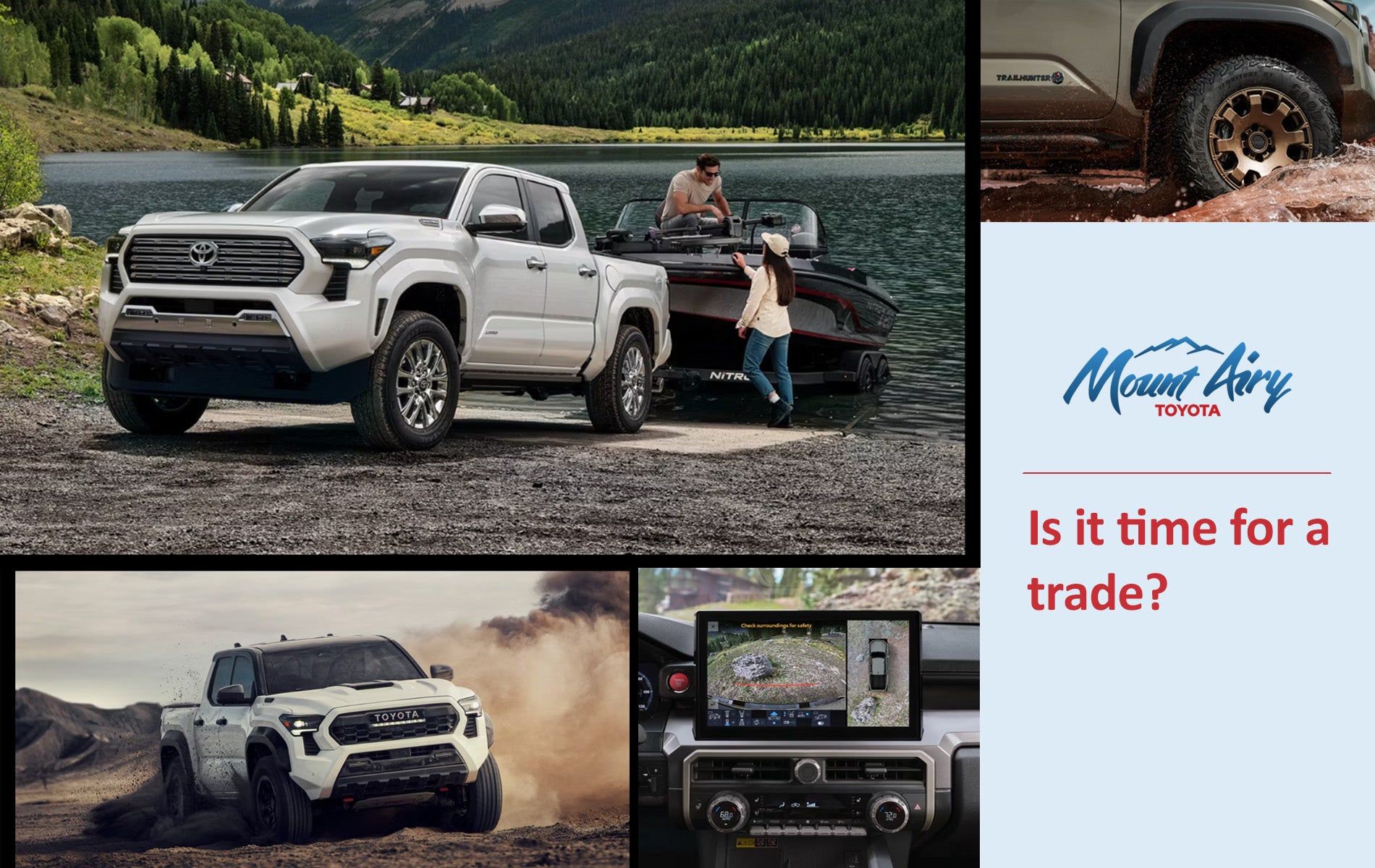
Is it time to trade your truck. Get insider information on truck trades and financial value.

How Long Should You Really Keep a Truck in North Carolina?

How Long Should You Really Keep a Truck in North Carolina? (And What Most Truck Buyers in Mount Airy Get Wrong) If you’re driving a truck around Mount Airy, Pilot Mountain, Cana, or anywhere in Surry County, you’ve probably asked yourself: “How long should I actually keep this truck before I trade it in for a new one?” Most modern trucks, including Toyota Tacoma, Ford Ranger, F-150, or RAM, can be reliable and relatively low cost up to 150,000 to 250,000 miles if properly maintained. So the question isn’t about the truck breaking down. It’s more about finding the smartest financial timeframe to trade. When does it stop making financial and practical sense to keep a truck? It’s also a very different situation if you are a truck driver versus a car or SUV driver. More is expected out of a truck, and they are more often used for work than for pleasure. How Long Do Most People Keep Their Trucks? Let’s start with the facts... We did a little research and found that across the U.S., the following ownership trends are fairly consistent with truck drivers in Surry County: The average vehicle on the road in the U.S. is about 12.5 years old Many truck owners keep their vehicles 10 years or longer The most common trade cycle is between 5 to 7 years That 5 to 7 year window is where things get interesting. That is usually the point where: Warranty coverage is ending or already gone Mileage is starting to climb between 60,000 and 100,000 miles Repair costs start creeping in Trade-in values are still relatively strong Why 5 to 7 Years Is the Sweet Spot Most trucks today come with: 3 year or 36,000 mile basic warranty 5 year or 60,000 mile powertrain warranty Once you move past that 5 year mark, you are on your own for most repairs. Now, that doesn’t mean your truck is about to fall apart. Not even close. But it does mean: Brake systems, tires, and suspension components start wearing down Electronics and sensors become more expensive to fix Maintenance costs become less predictable At the same time, your truck still holds solid resale value, especially if it has been well maintained. That is why a lot of financially savvy buyers in North Carolina choose to trade somewhere in that 5 to 7 year range. The idea is that you are not running the truck into the ground, but you are also not taking the biggest depreciation hit. How Trucks Wear in Surry County There are some differences between national averages and Surry County truck drivers because pickup trucks and work trucks wear differently in mountain areas. Not all miles are equal. Driving a truck in Surry County is not the same as driving one in flat city traffic somewhere else. Around Mount Airy and Northwest North Carolina, trucks tend to work harder. Hauling tools, materials, and equipment Driving up and down mountain roads like NC Highway 103 Towing trailers Stop and go driving combined with elevation changes All of that adds wear to brakes, suspension, transmission, and tires.  So while a truck can last 200,000 miles, how it is used locally matters. Many people work in the trades between Greensboro and up into Galax, Virginia. The long miles combined with the demands of construction work often age a truck faster than a commuter vehicle in a flat urban area.  It is similar to trucks from northern states. They tend to age faster because of salt, snow, and severe weather conditions.  These are important factors to keep in mind when you are considering the value of your truck. Why People Trade Trucks Sooner Than Planned Mileage and wear are the top reasons people trade between 5 and 7 years, but drivers commonly report the following reasons for trading sooner: Emotional - They want the enjoyment of driving a newer model. Jobs - A career change may require a different type of truck. Family - Adding a car seat changes everything. Towing C apacity - Some trucks simply handle towing better than others. Commuting Distance - Newer trucks often offer better fuel efficiency. Technology Improvements - Better sound, navigation, and comfort. Reliability Concerns  - Avoiding the risk of breakdowns. In a place like Surry County, your truck is not just transportation. It is part of your daily life. We may be a little biased as truck people, but most would agree it matters in this part of North Carolina. What Most Truck Buyers Get Wrong So how can you mess this up? Here is where a lot of buyers get it wrong. When it is time to buy, many people get caught up comparing numbers: Payload capacity Horsepower Towing ratings Price differences A few inches of space here or there On paper, a full size truck like an F-150 can look like the better deal. But here is the problem.  Most people do not actually use all those features they spent hours comparing.  And those small differences, like a few pounds of payload or a couple inches of bed space, do not matter three months after the purchase. What Actually Matters After You Buy Once you have owned the truck for a few months, the numbers fade away.  What does not fade is your daily experience. Are you comfortable driving to work? Are you getting good gas mileage running Highway 52 to Winston-Salem or Greensboro? Can you navigate Mount Airy traffic and parking lots easily? Is your family comfortable when heading up NC Highway 103 into the mountains? When you hit that same speed bump every day, does your truck glide over it or bump along? People consistently report that comfort, maneuverability, ease of use, climate controls, cup holders, and storage space matter most after a few months of ownership.  That is the difference between Best Truck and Best Fit. Final Thought Sometimes one truck looks better on paper, especially when you are deciding whether to keep your old one or trade.  The numbers might say one thing, but the reality is that you may be happier with a truck that fits your daily life.  For many drivers in Mount Airy, Pilot Mountain, and Surry County, a midsize truck like the Toyota Tacoma ends up being the better long term fit. Not because it wins every category, but because it is: Easier to live with day to day More comfortable on local roads Strong in resale value Known for long term reliability When you combine that with smart timing, trading before costs rise and value drops, it becomes a very practical ownership strategy. Insider Tip Sometimes the answer to “Should I trade this truck?” comes down to strategy. Watch this video from Rick Coburn to learn: Why Kelley Blue Book may not be your best pricing tool How dealers evaluate trade ins How to negotiate your trade more effectively If you are in Mount Airy, Pilot Mountain, Galax, or anywhere in Surry County and want to talk through your options, give us a call at 336-786-2118. We will help you find a truck that actually fits your life, not just your spreadsheet.