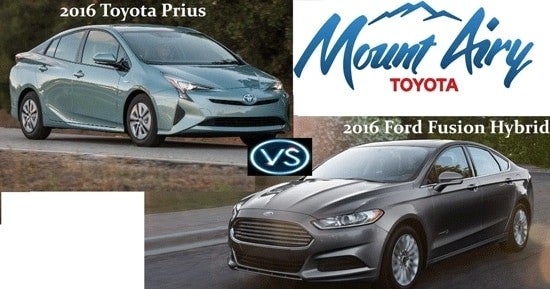
2016 Toyota Prius vs 2016 Ford Fusion Hybrid
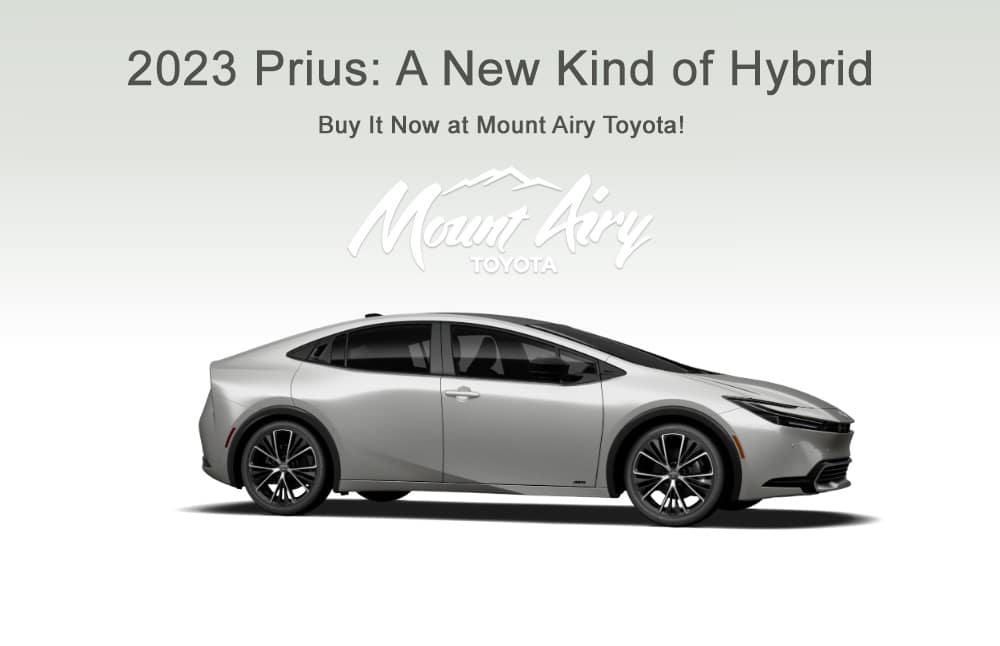
A sleek and futuristic hybrid car will be on the market in 2023. With 57 miles per gallon, a nearly unheard level of efficiency, accompanied by a high power-horsepower engine, the vehicle stands out as a speedy newcomer in the next generation of the automotive industry. Some readers may be thinking of a Tesla or other competitors, but what we just described is the 2023 Toyota Prius, fresh from a brand-new overhaul. This ambitious re-design is sure to turn heads and cement the Prius once again as a trailblazer among hybrid, fuel-efficient vehicles. When we heard rumblings about this new Prius, we knew we just had to learn more. So, we’ve reached out to the folks who know more about Toyota’s models than anyone — Mount Airy Toyota. Richard Coburn, one of the many qualified professionals who help Mount Airy Toyota’s customers find the perfect car, worked alongside us to bring you the best information possible about the new model. “ I think Toyota has really captured a wider audience for the Prius with its new design, and all of our customers waiting are very excited, including all of us here at Mount Airy Toyota.” - Richard Coburn But before we check in further with Mr. Coburn about his take on the ambitious new model, it’s important to know how we got to the Prius of 2023. The Toyota Prius — A Retrospective In January 1992, over 31 years ago, Toyota introduced a “Global Environment Charter.” The whole charter is well ahead of its time, though a key section under Toyota’s “Action Guidelines” serves as a foundation and launch pad for the Prius of old and today: A. Assign Top Priority to Environmental Concerns 1. Vehicles - Minimize overall exhaust emissions. - Purge harmful substances from emissions. - Develop vehicles that run on alternative energy sources. This top priority later led to the development and release of the original Prius in 1997, making it the world’s first mass-produced hybrid car. Before the 2023 Prius redesign, the car was still one of the best-selling vehicles on the market. Its original design set the tone for energy-efficient vehicles and led many other car manufacturers to look to the Prius as a baseline for efficiency. While it was a top seller, the old Prius took a few hits for its speed — a criticism that received some primetime pushback from Toyota themselves with the 2016 advertising campaign, featuring getaway robbers outrunning the police in a 2016 version model of the car. The takeaway quote from the ad came from chatter over the police radio, “It’s actually pretty fast!” A lot has changed since 2016, and the 2023 Prius upgrades are significant. If you thought the 2016 Prius was fast, wait till you see what the 2023 version has to offer! Speedy Performance Mr. Coburn had much to say about the new Prius’ performance capabilities: “The new Prius is the most powerful Prius ever built with an impressive 194 horsepower FWD and 57 mpg. For all-wheel drive Priuses, Toyota adds a high-output permanent magnet electric motor to the rear axle, bumping total powertrain output to 196 horsepower. That's a 60 percent power increase!” Mr. Coburn’s take on the Prius wasn’t an over exaggeration — the 2023 Prius is the quickest Prius ever. The new model's most potent trim can reach 60 seconds in seven seconds (3.5 seconds quicker than previous iterations!). The Prius didn’t just improve on its 0 – 60 tests; it performed much better on general acceleration tests as well. Testers report a much-improved quarter-mile time and a huge boost in the Prius’ 50 – 70 mph, which now climbs 20 miles on the odometer in just 5 seconds (a 2.1-second improvement). In other words, there’s no reason for concern when you tackle the highway in your new 2023 model. That said, if you want to push the model to its limit, the 2023 Prius can reach speeds of 100 mph in 18.8 seconds — 11.7 seconds quicker than older models! This shows just how exceptional the new Prius’ power levels are. Speed isn’t everything when it comes to performance, and many drivers are likely wondering how the new Prius “feels” when driving. There’s some great news in that department — it’s the best handling version of the Prius yet! Tweaks to suspension, improvements in braking systems, and boosters all create a responsive driving experience that leaves you in control, allowing you to handle all of the new speeds. “Love at First Sight Design” While the changes in performance are substantial, they aren’t what causes the initial shock. Anyone looking at the new 2023 Prius is sure to be stunned by its design. The new design takes elements from a number of notable sports and luxury cars, culminating in a vehicle that’s sure to draw you in as soon as you see it. That reaction the new Prius receives doesn’t happen by accident; it’s built-in, represented by a “Love at First Sight Design.” A design approach that chief engineer Satoki Oya sought since the beginning. The bedrock of the design is allowing designers the freedom to do as they please, unrestricted by traditions or a “relentless approach of aerodynamic efficiency.” This freedom pays off, creating a Prius that can compete with some of the most sought-after vehicles on the market while providing the power and fuel efficiency under the hood to make driving feel as good as the car looks. The good looks aren’t limited to the outside. The new Prius’ interior has also received a much-appreciated update. An increase in legroom creates a driving experience that’s less rigid and upright than previous interiors. A tweak on the instruments and dash creates a modern, simplistic look that captures the sleekness evident in the Prius’ exterior. That sentiment of capturing the sleekness is true to much of the interior changes, which match the significant exterior upgrades. What Do The Professionals at Mount Airy Toyota Think? We’ve infused a few quotes from Mr. Coburn throughout the article and his excitement for the new model is palpable. After talking at length about the leap in power and beautiful design overhaul, he added, “ We can’t wait to keep providing the best customer experience here at Mount Airy Toyota.” There’s a lot more we can say about the new Prius, though it’s best to see it yourself from behind the wheel. Feel free to reach out to Mr. Coburn to meet the professional who helped guide this article and see the Prius in person! Getting You the Right Car With Mount Airy Toyota Mount Airy Toyota has the knowledge when it comes to buying a Toyota. But while the professionals at Mount Airy Toyota are one of the dealership's best-selling points, they’re not all they can offer. Mount Airy Toyota’s website offers a robust set of resources to make the car-buying experience as easy as possible. A helpful finance center, a substantial amount of research, and online chat portals all cut through the problems typically associated with going to a dealership. Plus, the new Prius just hit the lot, releasing in January of this year. Getting your hands on a new sought-after vehicle can be difficult, so choosing the right dealership is an excellent way to save yourself some trouble. Not to mention their Digital Model Showroom that gives you an up-close look at the 2023 Prius in all its glory. Trim Overview The 2023 Prius has three trims to look out for, all starting at different values. The base LE trim starts at around $28,545. It offers the highest levels of fuel efficiency, ensuring a happy wallet in more than one way! The XLE falls in the middle with pricing that begins around $31,990. You can expect a wealth of additions, though some of the bigger highlights are the model’s rain-detecting wipers, eight-way adjustable driver's seat, and a wireless charging pad. The model with the highest price tag comes with some serious perks. The Prius 2023 Limited starts at $35,560 and comes with a larger touchscreen, a fixed glass roof, and heated and ventilated seats — just to name a few features. Whatever trim you feel best matches your needs, Mount Airy Toyota has you covered. You can reach out to a number of professionals and, most importantly, get the perfect 2023 Prius for your needs!
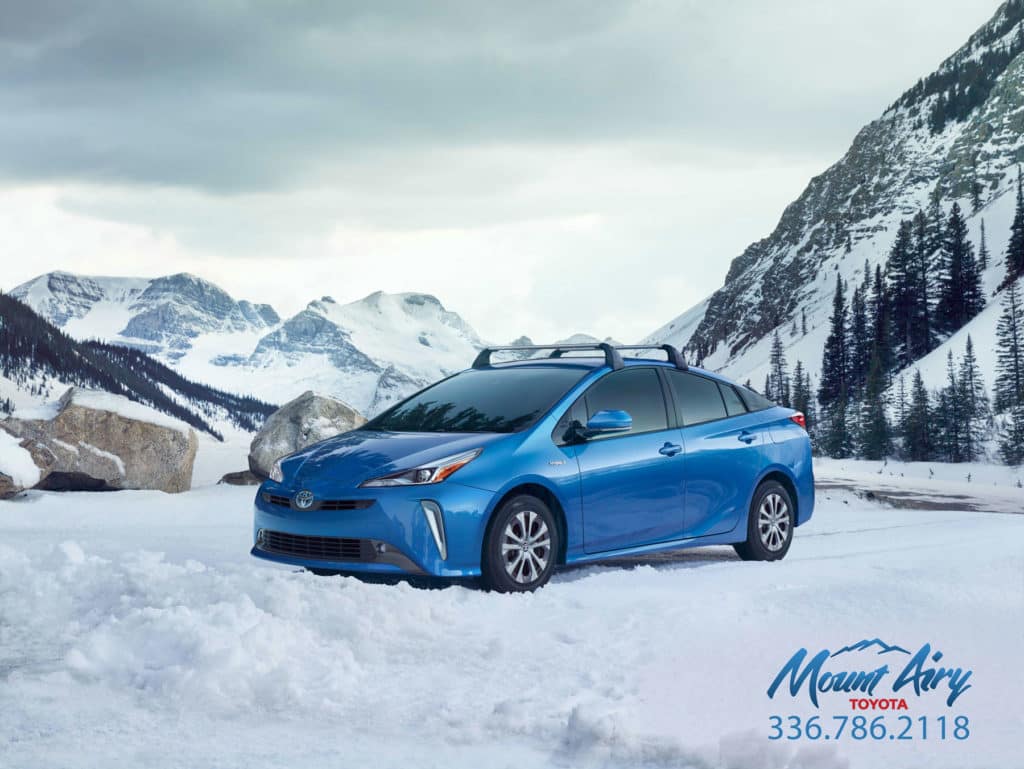
First manufactured in 1997 and introduced worldwide in 2000, the Toyota Prius was a car that appealed to a distinct subset of consumers: green-minded folks open to new car technology who put value on fuel economy and reliability. Once a dowdy little subcompact with a stubby nose and an under bite, the Prius has evolved into something you probably didn’t see coming. That is unless you pay attention to foreign car markets. Four years after being released in Toyota’s home country of Japan, an all-wheel-drive Prius is finally hitting the U.S. this month. The 2019 Prius AWD-e comes as one of the most fuel-efficient all-wheel-drive-equipped passenger cars available with estimates of 52 miles-per-gallon city / 48 miles per-gallon-highway / 50 mpg combined. The all-new Prius is so impressive, Motor1 had to say something about it: "Even with two decades of hybrid dominance, it finally took an AWD version to make the Prius an interesting drive. And this time it has nothing to do with its looks.” Beyond interesting, early 2019 Prius AWD reviews, like this one from Cnet’s Roadshow, have even tossed around words like fun and drift: To give me an idea of how the AWD-e system works, Toyota set up a small handling course in Kohler, Wisconsin, consisting of a 6 percent grade and a chicane, both of which were covered in fresh snow. There's no drama as the 2019 Prius stops halfway up the grade and accelerates from a standstill — moderate throttle application is met with the whir of the electric motor doing its business, and that's it. No muss, no fuss. On the chicane, however, the AWD Prius feels pretty darn lively. Not knowing when the system will activate the rear motor means the tuchus wiggles arrive suddenly, but not in a way that makes the car feel unstable or anything. It's just a little excitable, and judicious throttle application can, in fact, get a little bit of a drift going on. I'll even go so far as to say it feels fun in the snow. By comparison, the front-wheel-drive Prius feels a little more stable on the chicane. Having all the power go through the front wheels means that the rears will just follow suit all day long, with no ability to move under their own power. I wasn't allowed to take the FWD Prius up the 6 percent grade for comparison, and while I feel confident that a running start will get the car up a hill like this just fine, it's definitely easier to tackle in the AWD variant. On the roads in Sheboygan and Kohler, both Prius variants feel nearly the same. On cold, dry roads, the extra boost from the rear motor doesn't change how the vehicle acts when accelerating from a stop -- and again, it never engages over 43 mph, so both cars drive exactly the same at highway speeds. It's not a system that's supposed to be felt at all times, so in that sense, it works exactly as Toyota's engineers intended, offering extra peace of mind but only when necessary. Toyota’s press release for the 2019 Prius AWD-e doesn’t use the word horsepower even once. Instead they mention the car’s “ultra-low 0.24 coefficient of drag,” “electronically controlled planetary-type continuously variable transmission,” and “ultra-low internal friction and efficient combustion” that “exceeds 40 percent thermal efficiency, which is among the highest in the world for a gasoline engine.” This is the kind of talk you won’t hear about Ram trucks or GMC SUVs. Here are a few undeniable facts on the 2019 Prius AWD-e: The 2019 Prius AWD-e is redesigned with a new consumer in mind: the active adult who wants a bit of cool factor with their hybrid car. The AWD-e will offer available Genuine Toyota Accessory cargo crossbars for roof rack attachments. Think carrying bikes, kayaks, snowboards, or a cargo carrier. Inside there’s 62.7 cu. ft. of carrying space with the standard 60:40 split rear seatbacks lowered, which is more than most full-size sedans and some small SUVs. The standard Entune Audio system for AWD-e models includes the Entune Multimedia Bundle: 6.1 in. touch-screen display, AM/FM CD player, 6 speakers, auxiliary audio jack, one USB 2.0 port with iPod connectivity and two 2.1-amp USB charge ports, advanced voice recognition, Bluetooth hands-free phone capability, phone book access and music streaming, Siri Eyes Free, and an integrated backup camera display. The Limited grade comes standard with the Entune Premium JBL Audio with Integrated Navigation and App Suite, with a large 11.6” HD multimedia display. Note that the 2019 Prius does come as both a FWD and AWD in various trim configurations. On all 2019 Prius models, the driver’s door Smart Key System, and the Push Button Start and remote illuminated entry come standard, as does Toyota Safety Sense P (TSS-P), a comprehensive bundle of active safety features including: Pre-Collision System with Pedestrian Detection (PCS w/ PD), Lane Departure Alert with Steering Assist (LDA w/ SA), Automatic High Beams (AHB), and Full-Speed Range Dynamic Radar Cruise Control (DRCC). All models have been updated with piano black accents around the shifter, on the steering wheel, and on the center console cover plus two additional 2.1 USB ports, an enlarged Qi wireless phone-charging tray to accommodate larger phones, and a standard heated steering wheel on XLE, XLE AWD-eand Limited models. There also are two new colors for 2019: Supersonic Red and Electric Storm Blue. The 2019 Prius AWD-e is expected to come in around the same as the 2019 Toyota Camry Hybrid 's starting MSRP of $28,150. The FWD 2019 Prius has manufacturer-projected fuel economy estimates of 58 mpg city / 53 mpg highway / 56 mpg combined on the L Eco grade, while the LE, XLE and Limited have projected fuel economy ratings of 54 mpg city / 50 mpg highway / 52 mpg combined. The base front-wheel-drive L Eco trim starts under $25,000. AWD LE and XLE models will run closer to $30,000. All-wheel drive is not offered for the Limited trim, which is priced just over $33,000. For comparison, the 2019 Prius C, a hatchback, starts at $21,530. The 2019 Honda Insight LX starts at $22,930. The 2019 Nissan Leaf S starts at $29,990. The 2019 Prius comes with Toyota’s 36-month/36,000 mile basic new-vehicle warranty, which applies to all components other than normal wear and maintenance items. A 60-month warranty covers the powertrain for 60,000 miles and against corrosion with no mileage limitation. The hybrid-related components, including the HV battery, battery control module, hybrid control module and inverter with converter, are covered for 96 months/100,000 miles. The Prius also comes standard with ToyotaCare, a complimentary plan covering normal factory-scheduled maintenance for two years or 25,000 miles, whichever comes first. For Prius, the complimentary 24-hour roadside assistance is extended to three years (over the standard two years on other models). Overall, Toyota’s lineup for 2019 is extensive. Whether or not a Prius is right for you, there’s several Toyota vehicles from which to choose: 2019 Yaris $15,450 starting 32/40 est MPG 2019 Corolla $18,700 starting 28/36 est MPG 2019 Corolla Hatchback $19,990 starting 30/38 est MPG 2019 Prius C $21,530 starting 48/43 est MPG 2019 Camry $23,845 starting 29/41 est MPG 2019 Camry Hybrid $28,150 starting 51/53 est MPG 2019 Avalon $35,500 starting 22/32 est MPG 2019 Avalon Hybrid $36,500 starting 43/44 est MPG 2019 Mirai $58,500 starting 67/67 est MPG 2019 86 $26,455 starting 21/28 est MPG 2019 Sienna $31,115 starting 19/27 est MPG 2019 Tacoma $25,550 starting 18/22 est MPG 2019 Tundra $31,420 starting 15/19 est MPG 2019 C-HR $20,945 starting 27/31 est MPG 2019 RAV4 $25,500 starting 26/35 est MPG 2019 RAV4 Hybrid To be released spring 2019 2019 Highlander $31,330 starting 21/27 est MPG 2019 Highlander Hybrid $36,970 starting 30/28 est MPG 2019 4Runner $34,910 starting 17/21 est MPG 2019 Sequoia $48,700 starting 13/17 est MPG 2019 Land Cruiser $84,765 starting 13/18 est MPG Also on the horizon at the 2019 Nightshade editions of the Camry and Highlander. The Camry will sport black 18-inch wheels, a black spoiler, black window molding, black mirror caps, a black shark fin, black door handles, and black exterior Toyota emblems. It will comes in Midnight Black Metallic, Celestial Silver, and Super White. The Highlander follows suit with 19-inch black wheels, black lug nuts, and black headlights and fog lamps. The Highlander drops this month in a limited run of 5,000 available in Midnight Black Metallic, Predawn Gray Mica, Salsa Red Pearl, and Blizzard Pearl. The 4Runner Nightshade, available in Midnight black Metallic, Magnetic Gray Metallic and Blizzard Pearl, is out now. Don’t forget to check out our new vehicle specials available at Mount Airy Toyota, as we are still clearing 2018 stock to welcome these new 2019 models to the lot. You’ll also find great deals in our pre-owned inventory that includes certified Toyotas and other manufacturer trade-ins. We can work with you to value your trade and get you behind the wheel of something new. We invite you to explore our offers and incentives, learn more about our military and college grad. rebates, and schedule a test-drive. Come visit Mount Airy Toyota at 508 N. Andy Griffith Parkway in Mount Airy, NC. We’re open from 9 a.m. to 8 p.m. Monday through Saturday. You can always find us online at mountairytoyota.com or give us a call at 336.786.2118.
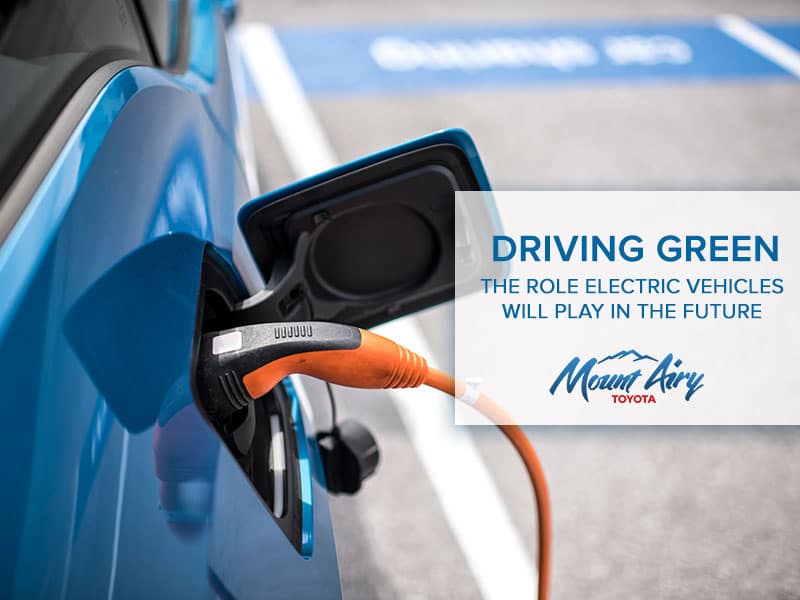
Electric vehicles are growing in demand each year, and creating more and more buzz as the technology continues to become better and more efficient. At Mount Airy Toyota, we’re interested not only in the overall automotive shift away from fossil fuels, but also in what that means for our dealership, our city, and way of life in Mount Airy. We wanted to know more about where Toyota fits into the electric vehicle market, when we might be seeing a full electric car release from Toyota, and what it means for Mount Airy Toyota in the future. Electric cars are the future; it's a statement we have heard before, that we have seen come into reality, and seems to become more and more standard, albeit at a slow pace, every year. With every global climate report delivering the same message about limited fossil fuels and negative climate impact, electric cars are gaining more traction and popularity. If you’re 35 or younger, it’s inevitable that you will be driving an electric car in your lifetime. The face of the automotive industry is rapidly producing new technologies to fill the needs of an electric driven economy. What is an electric vehicle? Electric vehicles are battery charged, and run at least partially on electricity. There are a variety of options to consider when you think about electric cars. Electric vehicles can range from plug-in hybrid electric vehicles, fuel-cell electric vehicles, hybrid electric vehicles that use plug-in rechargeable batteries, and there are pure electric vehicles. How do they work? Instead of vehicles running on gasoline like in internal combustion engine vehicles, electric vehicles run either partially or completely on electricity stored in a battery. Thus, electric vehicles don’t produce tailpipe pollution. They also minimize wasted energy by turning the car off when stopped and by charging the battery when braking. Electric vehicles are more energy- efficient than gasoline or diesel powered engines, which explains why they are in such high demand. Are electric vehicles clean? Producing electricity isn’t necessarily clean; electricity can produce heat-trapping gases, pollution at the source of the electricity generation, or in the extraction of fossil fuels. It’s definitely worth noting though that battery electric cars charged off of the dirtiest coal grid still produce lower pollution than their gasoline-powered counterparts. If electric vehicles are charged by wind or solar energy sources, they are virtually emission free! How do they charge? As mentioned before, they can charge when braking as you drive, but mainly they are charged at home. With a 240-volt outlet (a power similar to what it takes to run clothes in the dryer), most electric vehicles can charge fully overnight. Once fully charged, electric vehicles can typically drive between 70 to 100 miles per day (which is within the average range of what most Americans drive daily). Fast-charging stations can provide 60 to 80 miles of range for every 20 minutes of charging. Battery technologies will change, as we realize things such as the fact silicon batteries provide 30% more range, and as we find less expensive batteries. Battery technology is progressing so quickly, and it’s only going to get better. Between 2008 and 2014, the price of batteries dropped more than 70 percent. The development of larger and more powerful batteries means that batteries will also require larger charging systems and longer time requirements. Manufacturers are now willing to put the money forward to develop more electric vehicles. But, the main issue manufacturers face is the cost-curve of having electric vehicles more competitive in the market place, versus demand actually pulling them out of the manufacturers. EV’s are less than 2% of vehicle sales in America. In 2017, electric cars reached a global sales record with 1 million cars sold. What or who do you think of when you hear about electric vehicles? Elon Musk probably comes to mind, and for good reason. As recently as January 2019, the American-made company, Tesla, released their goal to have 400,000 new electric vehicles on the road. In March 2016, the Tesla Model 3 was released, and has, since then, reigned as the electric car to turn the electric vehicle market mainstream. Starting at $35,000, the Tesla Model 3 is reasonably affordable, and comes in with 220 miles of range and all the equipment to drive autonomously. With software updates that increase the mileage and efficiency of the vehicle without taking a trip to the dealership, the Model 3 has ruled in the electric vehicle domain, and we can see why. Tesla has put more electric cars on the road than any other company, but across the automotive industry, everyone has electric cars in the works for the coming years. What are the hurdles automotive industries are facing with electric vehicles? As battery-electric vehicles and hybrids become more popular, infrastructure everywhere will have to adapt. Beyond city hubs in California, and select other cities, the reality is that of fall 2018, there were an estimated 22,000 public charging stations between the US and Canada. Therefore, before most consumers can consider, or much less, commit to an electric car, they would have to consider the distances they want to drive in their electric vehicle, and if there are charging stations within reasonable distances. Of course, automotive manufacturers have to be concerned about the charging stations as well. Automakers can either build their own charging networks or rely on third-party networks. Tesla has 1,344 Supercharger stations worldwide, with around 580 of those in the US. While they have discussed the possibility of opening their network to other automakers, the stations only currently serves Tesla. Volkswagen plans to install 2,800 charging stations in 17 US cities by June 2019. Other automakers rely on third-party companies, which can be cheaper, but more uncertain with a lack of consistency for coverage. For example, Electrify America is installing charging stations at more than 100 Walmarts in 34 states. ChargePoint is increasing their charging stations 50-fold by 2025, building up from 53,000 charging stations. Building electric charging stations can be a bureaucratic situation with lots of red tape in the way, whether that’s finding real estate to build the station, or to negotiate with local utility companies. But the demand for charging stations is increasing, as more apartment and condo complexes are providing charging opportunities, and bus and trucking industries are also shifting towards electric power. Fun fact: Just as a comparison, there are about seven times more gas stations than charging stations in the US and Canada—about 168,000! What are the cons of owning or leasing an electric vehicle? It is not a surprise to the average American that electric vehicles are more expensive than the average car. The average price of an electric vehicle is about $30,000-$35000. But, the savings in gasoline can average about $1400 on gas, costing about $540 a year to charge an electric car, in comparison. To break even and offset the fuel savings, you would have to keep the car for around 11 years, which is actually the average time that most US drivers keep a car before trading in or selling. What are the pros? Although there is not a lot of data on what the exact savings are on electric car maintenance, there is a lesser chance of breaking down, the service packages are cheaper, and the vehicles themselves are much better than gasoline alternatives at converting energy to movement from a standing start. They don’t require oil changes or experience as much wear and tear on the brakes. Electric and hybrid vehicles can also enjoy discounts of up to 10% on car insurance, because they tend to be safer and less likely to break down. Some electric vehicles also receive tax breaks! How do they drive? For automotive enthusiasts, there’s something about the control over the vehicle, the roar of the engine, the power behind the wheel… and it’s enough to never consider making the switch to an electric vehicle. Electric vehicles do lack manual shifting, they are extremely quiet, and of course, there won’t really be a reason to stop at a gas station unless you’re needing snacks. Any electric car you sit behind the wheel of is a totally different drive than any other car. They are quiet, smooth, and refined. They are high-quality and are equipped with the latest technology. Why has Toyota not been seen in the electric car market yet? Toyota does not offer any full-electric vehicle in the United States. Moreover, Toyota has almost conspicuously not been producing or teasing any line-up of full battery-electric cars to come, and the reason might surprise you. Basically, it comes down to Toyota believing that hybrids are a better option between internal-combustion vehicles and hydrogen fuel cell-vehicles. There is a serious question about the range and capability of the electric car and what redesigns it will have to face in order to get adopted by the average American. Those challenges are being addressed with better batteries, larger range capabilities, and the implementation of charging stations. In the mean time, Toyota has an astounding line up of hybrid options, and they’re available at Mount Airy Toyota. Ranging from full-size sedans to sporty crossovers, these Toyota vehicles are all incredibly fuel efficient, cool, and provide ample battery capacity. Corolla Hybrid $22,950 starting msrp 53/52 est. mpg Pruis $27,770 starting msrp 54/50 est. mpg Prius c $21,530 starting msrp 48/43 mpg Prius Prime $27,350 starting msrp 54/133 est. mpg Camry Hyrbid $28,250 starting msrp 51/53 est. mpg Avalon Hybrid $36,550 starting msrp 43/44 est. mpg RAV4 Hybrid $27,700 starting msrp 41/38 est. mpg Highlander Hybrid $37.320 starting msrp 30/28 est. mpg What’s to come for Toyota? Currently, Toyota is able to produce enough batteries for 28,000 electric vehicles each year, which equates to 1.5 million hybrid cars. The amount of gas-electric hybrid cars Toyota sells currently impacts the environment more positively than it would by selling far fewer electric vehicles due to the market. Toyota has been more interested in hydrogen fuel-cell vehicles, but as the market slowly evolves in the U.S., Toyota is opening some of its patents to help hybrid car production. In total, Toyota has sold more than 13 million hybrids, globally dominating more than 80% of the market for hybrid vehicles. Mount Airy Toyota: The Future is Here Due to economic feasibility, battery efficiency, and the increase of Americans finding fossil fuel alternatives, electric cars are here to stay. Mount Airy Toyota has some of the leading hybrid vehicles on our lot. If you have never driven an electric vehicle before, we encourage you to come test drive and experience the difference. Give us a call today at (336) 786-2118, visit us online at mountairytoyota.com, or stop by and see us at 508 N Andy Griffith Parkway in Mount Airy, North Carolina. Learn more: Charlotte Talks: WFAE with Mike Collins If you’re interested in hearing more about this topic, check out the local broadcast, Charlotte Talks on WFAE with Mike Collins, where last month they discussed the future of electric cars with Brian Jenkins, Ezra Dyer, and Matt DeLorenzo.

TOYOTA CERTIFIED SERVICE & PARTS EXPERTS
Your vehicle deserves expert care from the people who know it better than anyone else. We employ factory trained technicians who use state-of-the-art technology and equipment to help you keep your vehicle running like new.
Schedule Now